Velké Dvorce: An Early Baroque Castle in Czechia
Site at a Glance
- Rating
- 4.1
- Popularity
- Very Low
- Country
- Czechia
- Primary era
- Modern
- Eras represented
- Early Modern, Modern
- Civilizations
- Austria-Hungary, Habsburg, Holy Roman Empire, Kingdom of Bohemia
- Site type
- Domestic
- Remains
- Castle
On this page7 sections
History
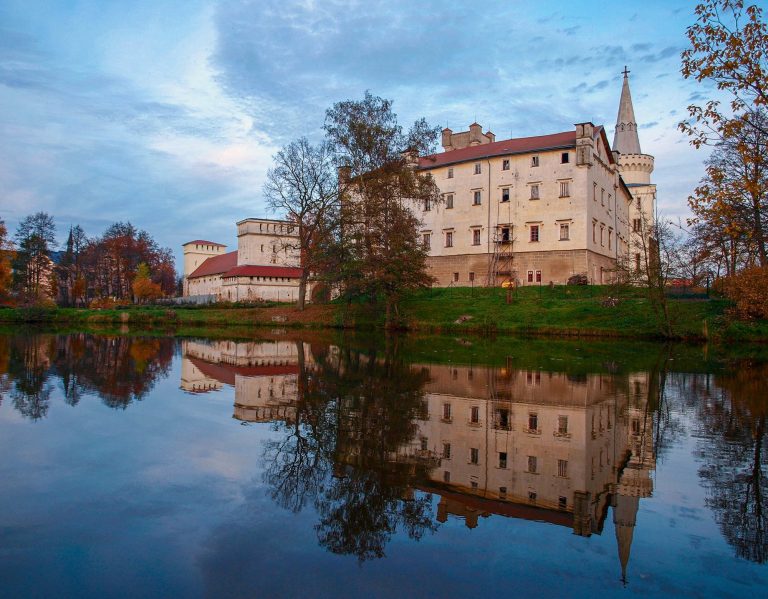
Velké Dvorce is an early Baroque castle in Czechia, located near Přimda, whose main building was completed in 1690. Count Jan Václav Novohradský of Kolowrat founded it as the center of a new family estate after purchasing the Přimda estate in 1675. He was still living at the castle in 1705.
The Novohradský and Libštejnský lines
The castle remained with Jan Václav’s descendants until 1829, when Johana died. She was the daughter of František Antonín Novohradský of Kolowrat and the last member of the Novohradský branch of the Bohemian Kolowrat family. Ownership then passed to František Antonín Libštejnský of Kolowrat.
František Antonín mainly used Velké Dvorce as a summer residence. He assembled paintings and books there, and after his death in 1861 his library was inherited by the National Museum, the principal state museum institution of the Czech lands. The castle passed to his relatives from the Krakovský branch of the Kolowrat family.
Fires, reconstruction, and wartime use
The castle suffered severe fire damage during the ownership of the Krakovský family. Leopold Filip Krakovský of Kolowrat ordered its reconstruction in the Neo-Baroque style, a revival of Baroque forms, between 1907 and 1910. Alexandr Josef Krakovský of Kolowrat later established film studios at the castle, but another fire in 1912 led him to move the studios to Vienna. The owners repaired the building after the fire, while Count Jindřich Kolowrat-Krakowský transferred his residence to Diana Castle.
During the First World War, Velké Dvorce housed a hospital. In the Second World War, it provided accommodation for the Hitler Youth, the Nazi organization that subjected children and adolescents to political and military-oriented training.
Loss of private ownership and later history
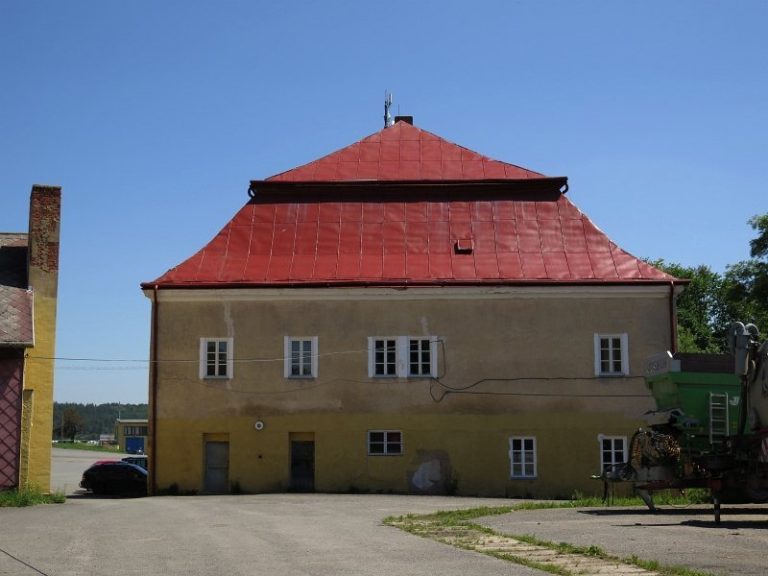
The Kolowrat family lost the castle in 1945. During the second half of the twentieth century, the complex was used by a state farm. After the Velvet Revolution, the largely peaceful political movement of 1989 that ended Communist rule in Czechoslovakia, Jindřich Kolowrat-Krakowský regained the castle. He sold it in 1992.
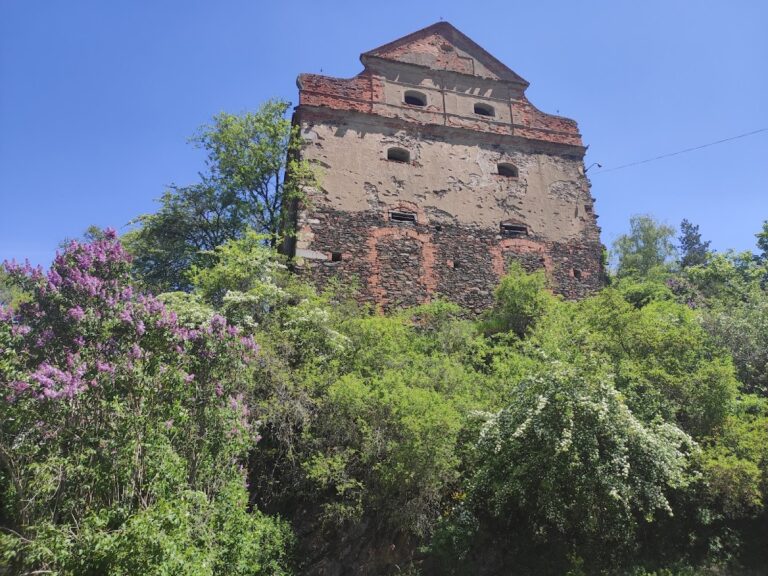
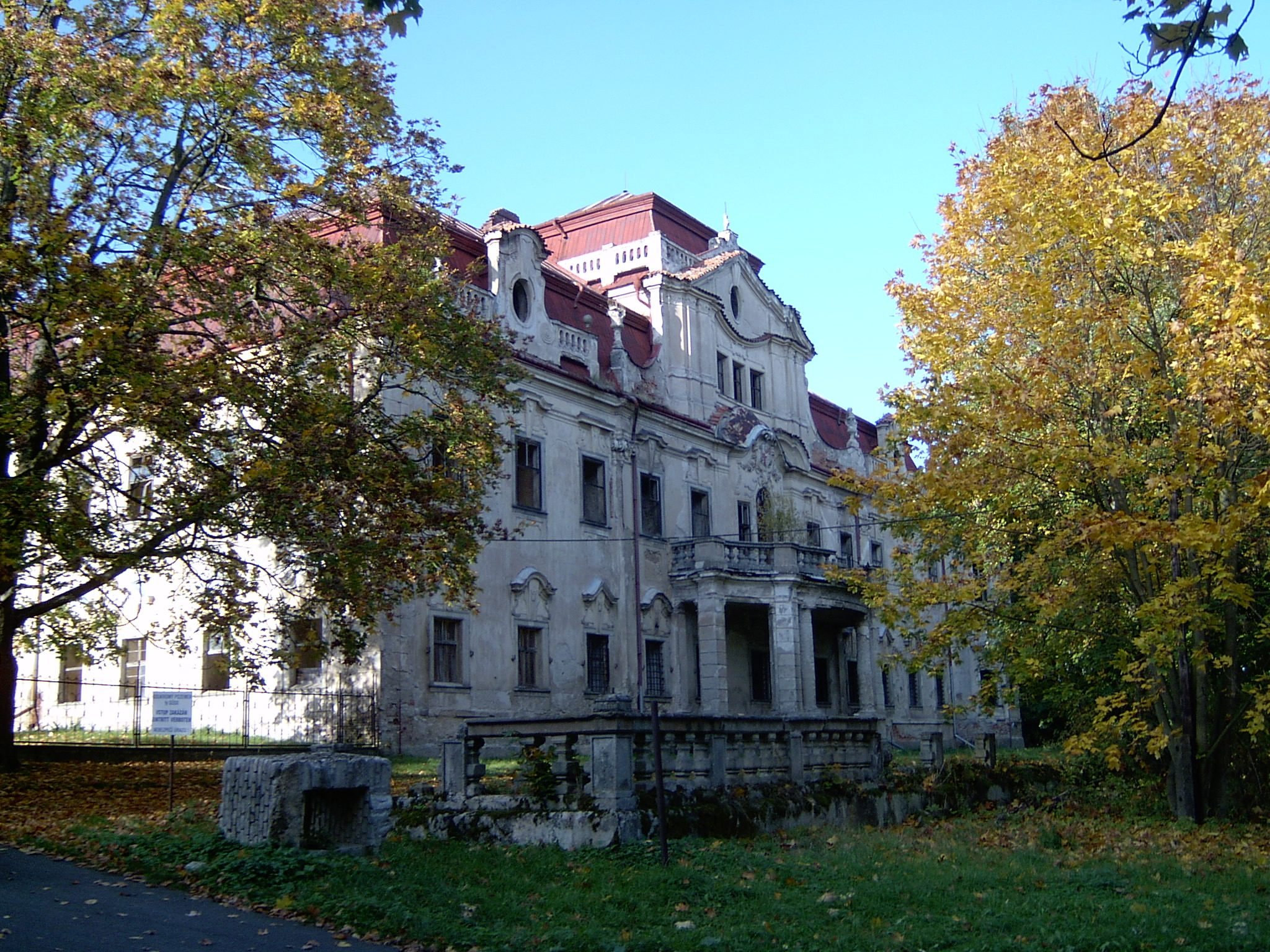
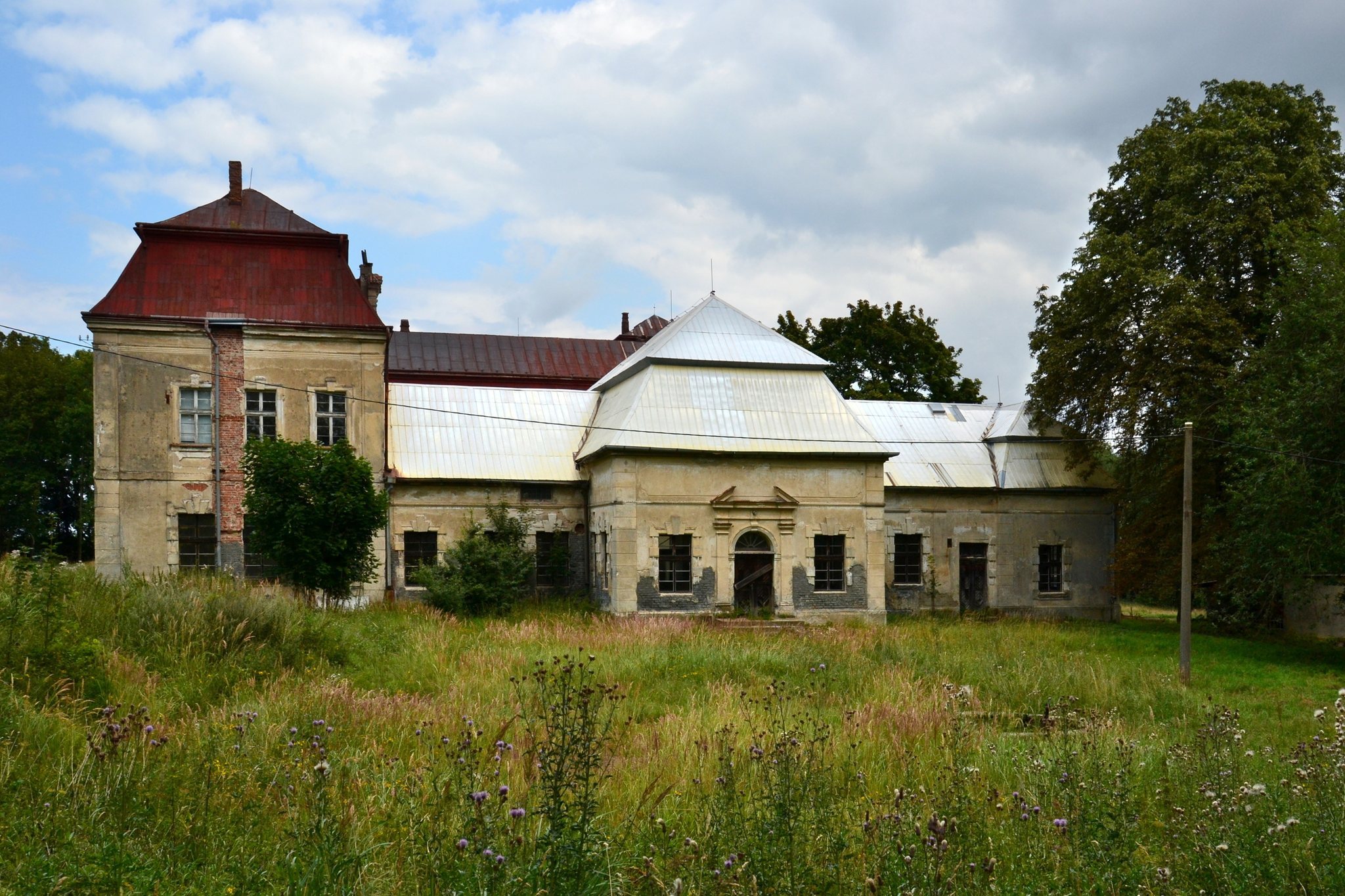
Velké Dvorce has been protected as a cultural monument since 1964. The complex is now in critical condition.
Remains
Main castle building
The surviving appearance of the principal building is chiefly the result of the 1907–1910 Neo-Baroque reconstruction, which reshaped the earlier late-seventeenth-century castle. Four wings surround a square courtyard. The main façade faces the garden and is dominated by a curved, convex-concave balcony with a similarly undulating gable above it.
The garden façade has alternating broken and segmental cornices above the ground-floor windows. A cornice is a projecting horizontal moulding that frames or caps part of a building. The upper windows have straight and gabled cornices, while the other façades use related but simpler decoration. The entrance portal is in the south wing.
Arcades with trefoil-headed openings border the courtyard, which contains a fountain. A trefoil-headed opening has a three-lobed outline. The arcaded corridors on both floors contain cross vaults, while the ground-floor rooms have complex cross vaults with lunettes, the semicircular areas incorporated into a vault. The upper-floor rooms have flat ceilings, apart from the corridor.
Administrative wing and grounds
An auxiliary L-shaped wing was probably added in the mid-eighteenth century for castle administration and servants’ accommodation. The protected complex also includes building no. 2, terraces with an early twentieth-century balustrade, and the park. A balustrade is a railing made from a row of short supporting posts. The park contains a statue of Saint John of Nepomuk dating from 1784.