Ivanovice na Hané Castle: A Late-Renaissance Estate Residence in Czechia
Site at a Glance
- Popularity
- Low
- Country
- Czechia
- Primary era
- Early Modern
- Eras represented
- Early Modern
- Civilizations
- Habsburg, Holy Roman Empire, Margraviate of Moravia
- Site type
- Military
- Remains
- Castle
On this page10 sections
History
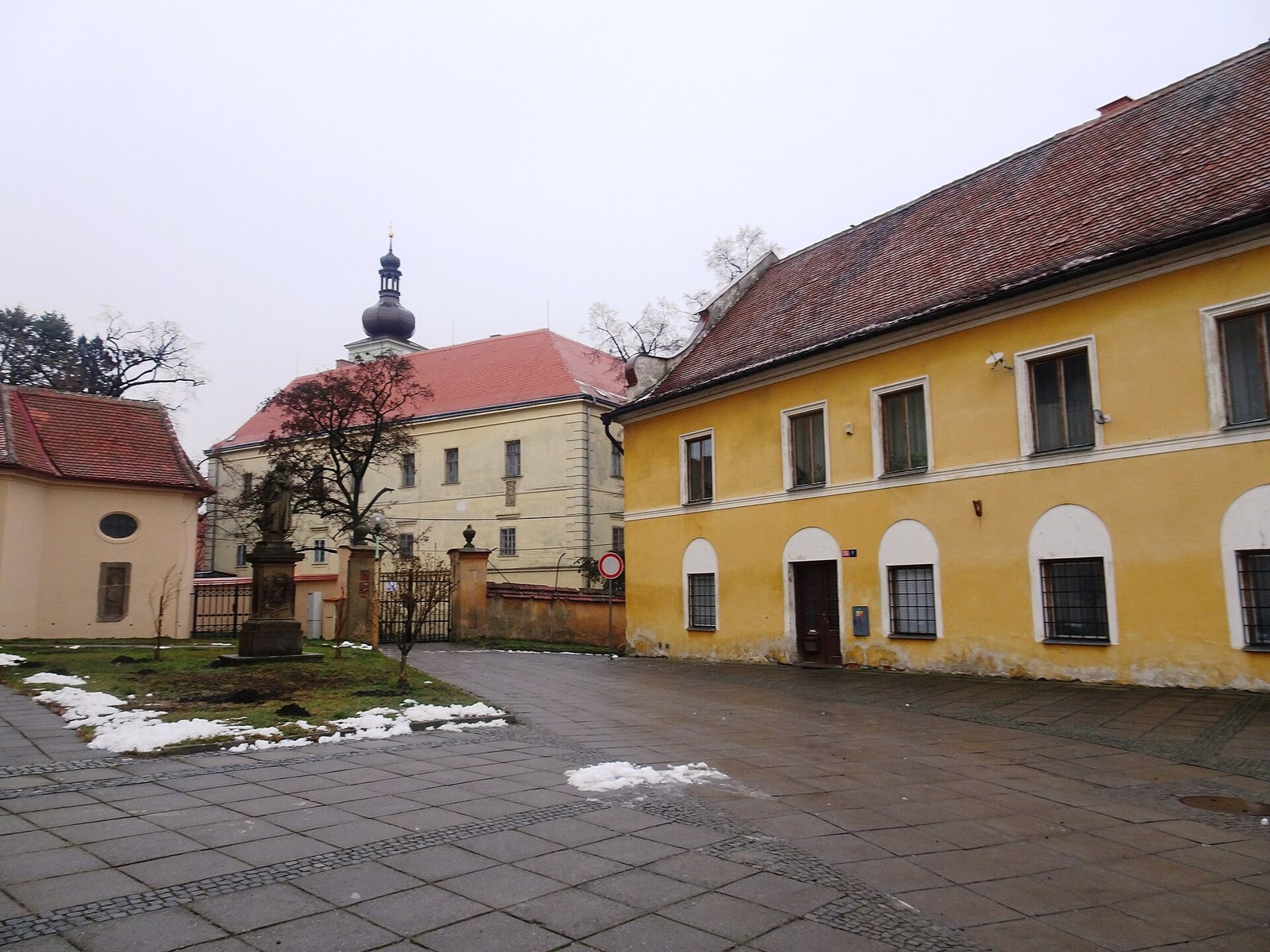
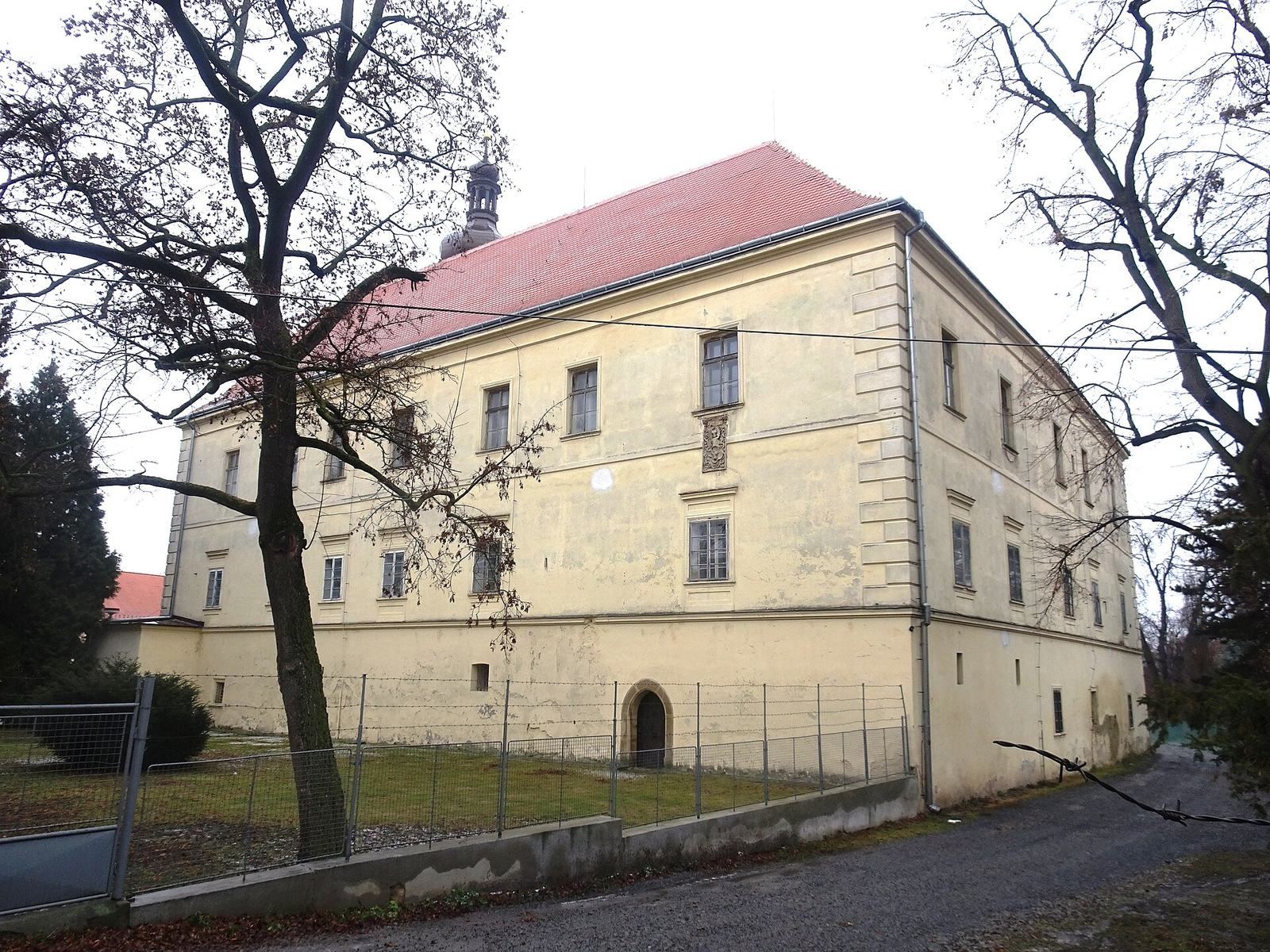
Ivanovice na Hané Castle is a late-Renaissance residence, from the later phase of Renaissance architecture, in Ivanovice na Hané, Czechia. Rebuilt in 1608, it incorporates a fortified manor house protected by a moat, first constructed in 1503 in the late-Gothic style, a later phase of Gothic architecture.
The Hospitaller estate and the manor
Ivanovice is first mentioned in writing in 1183, when it formed part of the Orlov estate, owned by the Knights Hospitaller, a medieval Catholic religious and military order. The estate also included Orlov Castle. Its commandery, a local administrative and residential centre of the order, was later transformed into a moated fortified manor at Ivanovice.
In 1482, the Hospitallers sold the estate to Jan Filipec, bishop of Varadín. The transaction included Orlovice, Ivanovice and its farm, Hoštice, Málkovice and its farm, and Medlovice and its farm. Jindřich Kropáč of Nevědomí acquired the estate in 1503, made Ivanovice its centre, and built the fortified manor there.
Renaissance rebuilding and the Swedish attack
After Jindřich’s son Bohuš died, his sisters inherited the estate. Their marriages brought it into the Pražma family of Bílkov, whose members burdened the property with heavy debts. Christina of Rogendorf, widow of Hynek the Elder Bruntálský of Vrbno, later held the estate and sold it to Jan Bukůvka of Bukůvka. In 1608, Bukůvka had the former commandery and manor rebuilt as a Renaissance castle. He died in 1611.
Swedish forces tried unsuccessfully to capture the castle in 1643. After several changes of ownership, Jan Přepyský of Rychemberk purchased the Ivanovice estate.
Jan Václav Přepyský and the unresolved murder
In 1725, Jan Přepyský’s son Jan Václav took over the heavily indebted estate. Though an effective manager, he harshly exploited his subjects to pay its debts and also acquired the Vícemilice estate.
Local legend says that Jan Václav sent his wife, Karla of Moravec, away the day after their wedding and thereafter shut himself inside the castle. He was said to live with two dogs and meet only his gamekeeper. Karla took refuge at a farm in Bučovice, where she lived in poverty and isolation; her relatives failed to obtain maintenance for her from Přepyský.
On 11 September 1765, Jan Václav was found beaten at the castle, allegedly after robbers attacked him. Several people suspected of murder were imprisoned and tortured, and some died in custody. The case was never solved.
Aristocratic ownership and state control
The Counts of Auersperg owned the estate from 1792 to 1837. In 1837, František Ferdinand d’Este, Prince of Modena, bought it. His daughter and heir, Maria Theresa of Austria-Este, became queen of Bavaria, and the castle passed to the Bavarian royal House of Wittelsbach. Ludwig III of Bavaria was its last owner.
By 1926, a State Bacteriological and Serological Institute had been placed in the castle after relocating several times. That year, parliamentary deputy Dominik Nejezchleb-Marcha urged the agriculture minister to arrange a state purchase of the castle and estate. The ministry decided to proceed after finding a way to compensate the owner, but the sale did not occur.
After 1945, the Czechoslovak state nationalized the castle under the Beneš decrees, postwar measures that included property confiscations. In the second half of the twentieth century, the building became part of Bioveta, a state veterinary-pharmaceutical enterprise. Some furnishings were stolen, some were taken away by Ludwig III, and some are held by the Vyškov Museum.
Remains
Castle building and grounds
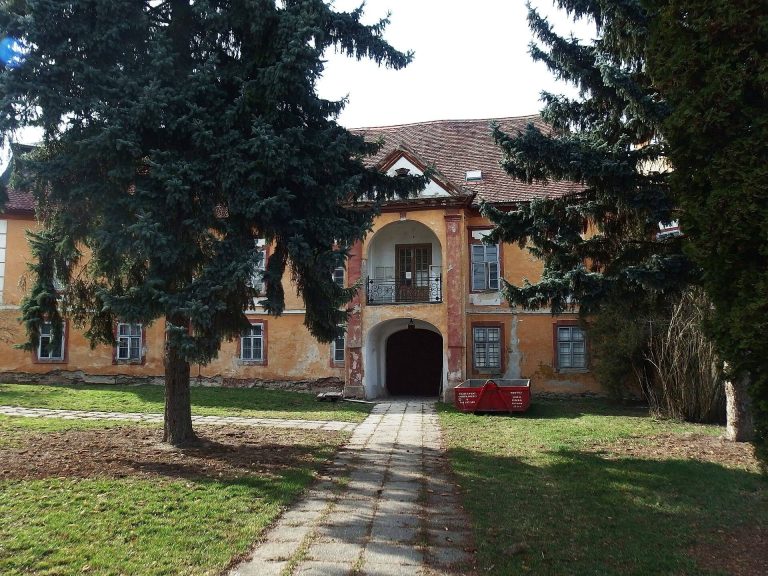
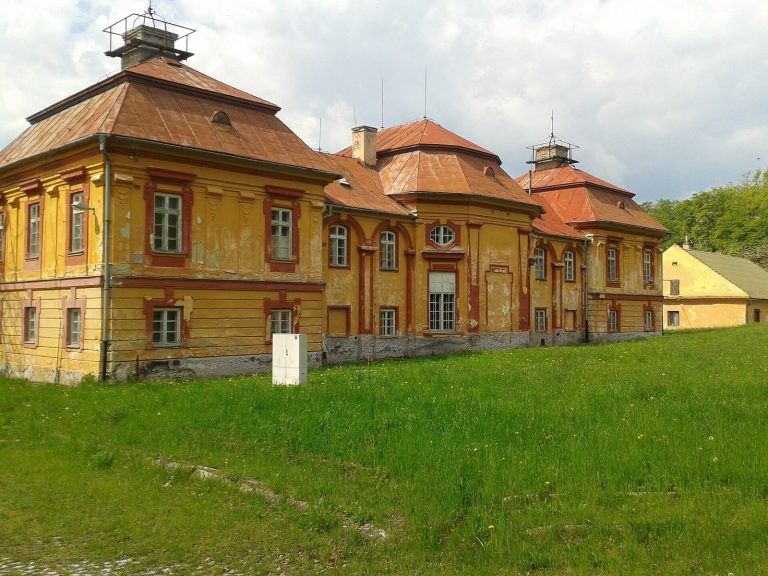
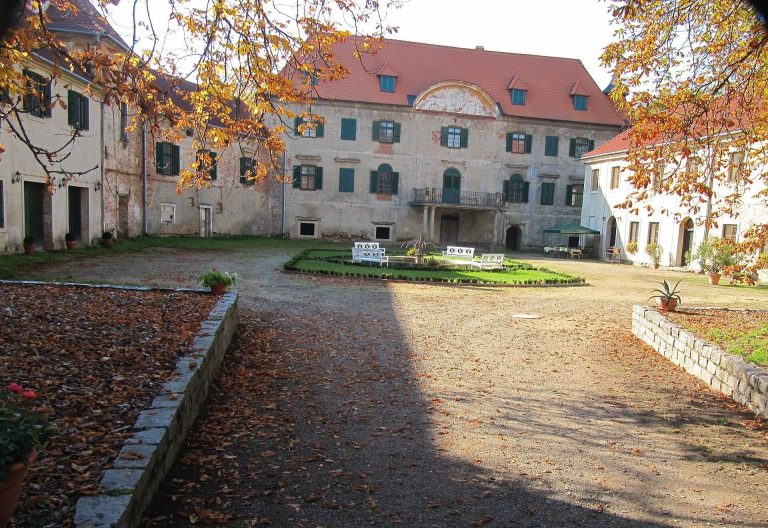
The castle is a four-storey, four-wing complex arranged around a rectangular courtyard. Its late-Renaissance form incorporates fabric dating to the earlier late-Gothic manor. A natural park was laid out around the building during alterations to the castle and its surroundings in the second quarter of the nineteenth century.
Courtyard and arcades
Two-storey arcades, rows of arches supported by piers or columns, run along the inner sides of three wings and survive today. Their arrangement links the courtyard to the wings around it.
Hall decoration and cannonball
The principal halls were decorated with genealogies of the Bukůvka family. A cannonball embedded in a castle wall is associated with the unsuccessful Swedish attempt to capture the building in 1643.
Park and repairs
The park belongs to the nineteenth-century alterations to the castle and its surroundings. The building became a characteristic landmark in the townscape and has been partially repaired.