Isenhagen Abbey: A Former Cistercian Nunnery and Lutheran Convent


Site at a Glance
- Rating
- 4.5
- Popularity
- Low
- Country
- Germany
- Primary era
- Medieval
- External website
- Open
- Eras represented
- Medieval, Early Modern
- Civilizations
- Holy Roman Empire
- Site type
- Religious
- Remains
- Monastery
On this page6 sections
History
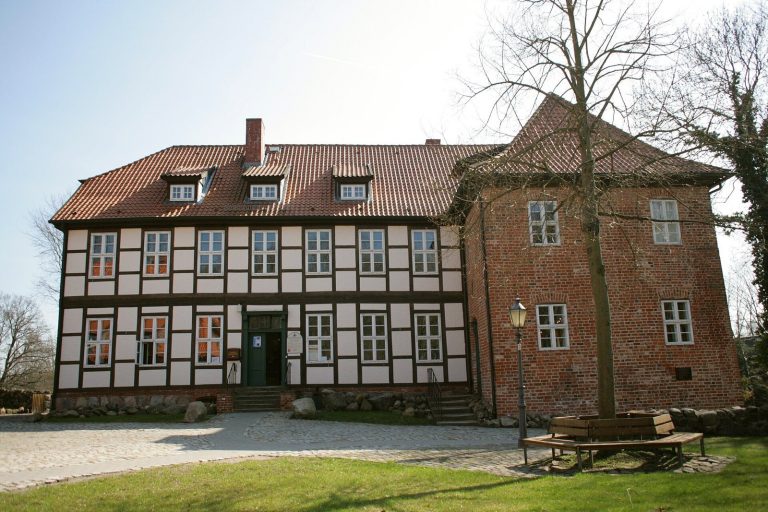
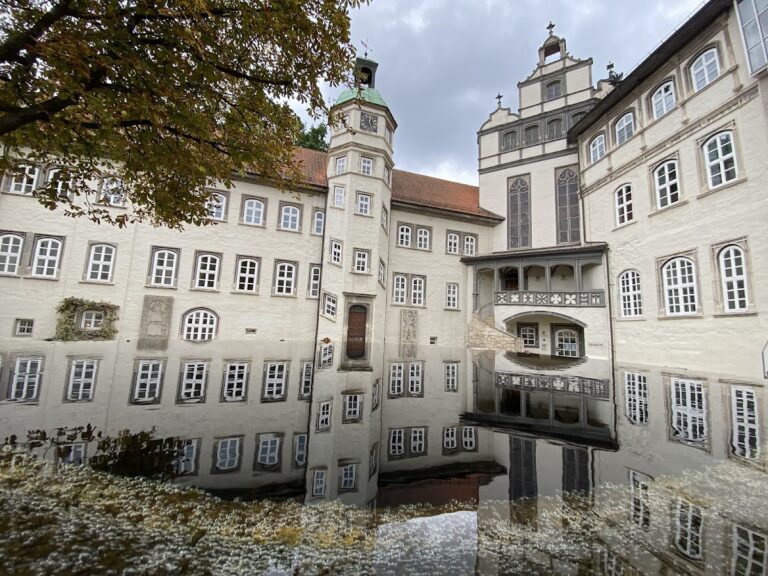
Isenhagen Abbey is a former Cistercian nunnery and present-day Evangelical Lutheran women’s convent in Hankensbüttel, Germany. Founded in 1243 as a Cistercian monastery for monks, it belongs to a reform movement within Western Christian monasticism that emphasized disciplined religious life and agricultural self-sufficiency. The surviving complex is built in the Gothic brick tradition and reflects several centuries of relocation and institutional change.
Foundation and Relocation
The name Isenhagen probably combines a reference to the River Ise with a term for woodland. The first monastery stood at present-day Alt Isenhagen within Hankensbüttel. Sixteen years after its foundation, it was destroyed by fire, and the community moved to Marienrode. In 1262, Isenhagen was re-established as a nunnery. The institution moved to Hankensbüttel in 1329, and construction of a third monastery complex began at the present site from 1345.
The monastery’s possessions also changed during the fourteenth century. In 1375, the Landbuch of Charles IV, the fourteenth-century Holy Roman Emperor, recorded an intermediate stage in the almost complete sale of the monastery’s holdings in the Altmark. Until the district reform, Isenhagen Abbey also housed the administrative seat of the district of Isenhagen.
Reformation and Lutheran Continuity
In 1540, Duke Ernest the Confessor of Celle converted the monastery into an Evangelical Lutheran women’s convent. The Reformation, a sixteenth-century religious movement that produced the Protestant churches and reshaped ecclesiastical administration and worship in parts of Europe, brought this institutional transformation. The nuns and the last Catholic abbess, Margarete von Boldensen, had resisted the change since 1529, but they were ultimately forced to accept the territorial ruler’s decision.
A women’s convent could retain a monastic institutional identity even after its members were no longer Catholic nuns. The modern convent is supported by the Monastic Chamber of Hanover, the state institution responsible for administering and supporting historic monasteries and convents in Lower Saxony, and is administered by its abbess. Modern abbesses have included Gisela Freiin Hugo von Spitzemberg, who served from 1952 to 1974; Brunhild von Oertzen, from 1974 to 2000; Barbara Möhring, from 2000 to 2009; Susanne Jäger, from 2010 to 2023; and Cornelia Renders, who has served since 2023.
During Brunhild von Oertzen’s tenure, the Hankensbüttel Cultural Association established its seat at the abbey as a secular experimental cultural initiative. Cornelia Renders has also been elected its chair. In 2023, the old Dutch lime tree north of the collegiate church was designated a National Heritage Tree.
Remains
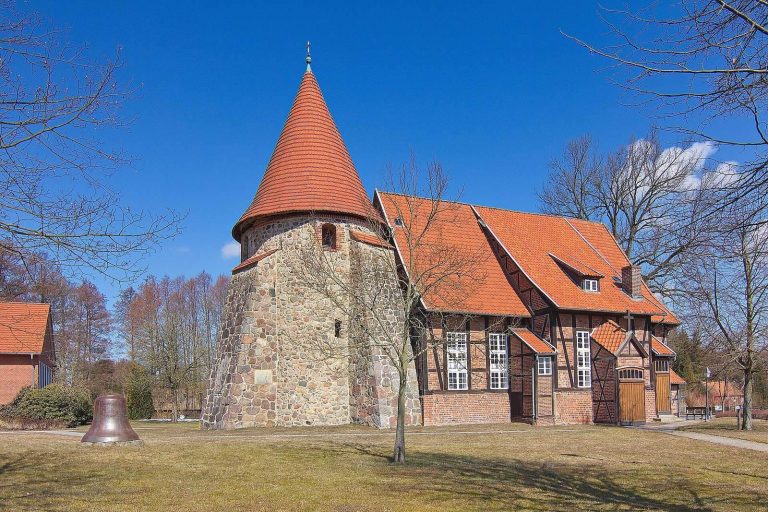
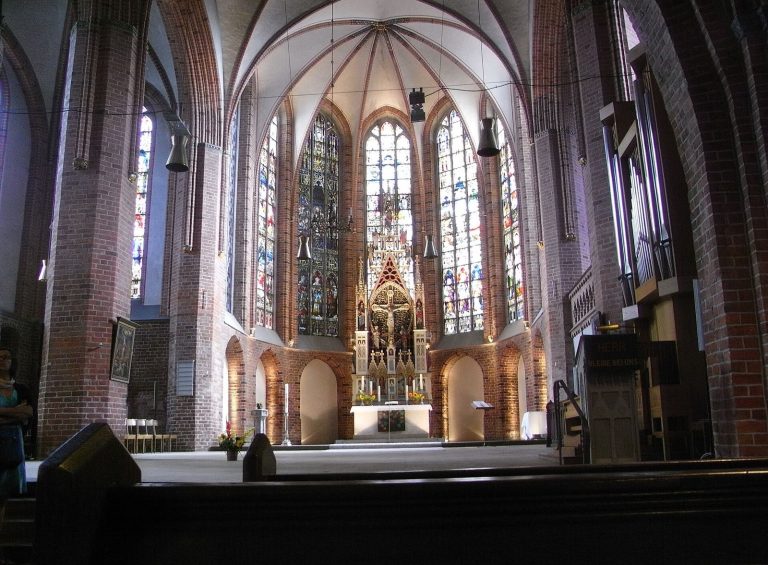
The present abbey complex is formed by Gothic brick buildings arranged within the monastery grounds. Its surviving interiors preserve medieval furniture and high-quality works of art, including carved and painted altars, sculptures, small devotional paintings, and embroidered altar cloths and altar frontals. Some of the textiles are decorated with golden reliefs and pearls.
Cloister and Chapter House
The east cloister contains a cross vault inserted in 1500. A cross vault is created by the intersection of two barrel vaults. Its limestone corbels carry corresponding scenes from the Old and New Testaments. The chapter house, once the monastery’s most important room, now serves for lectures and chamber-music events.
Garden and Lime Tree
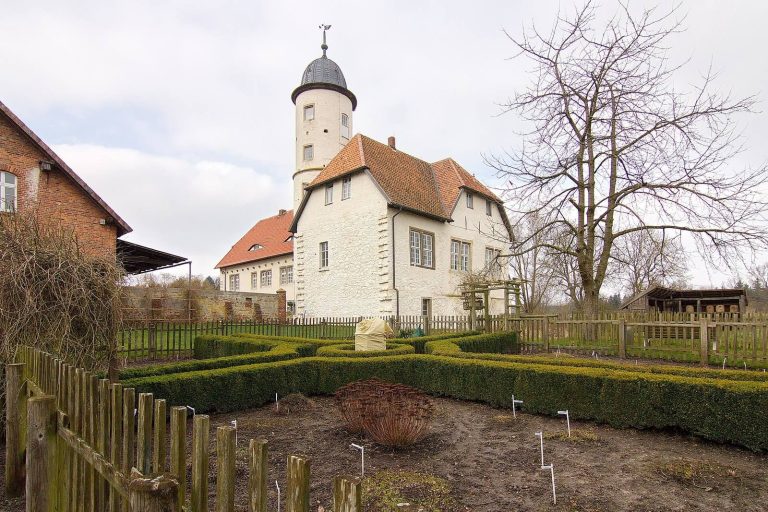
The monastery garden covers 2.5 Morgen and retains its original design from 1750. A Morgen was a traditional German land measure whose size varied by region, so the stated figure is not a precise modern area measurement. North of the collegiate church, in the northern part of the grounds, stands a Dutch lime tree estimated to be between 400 and 500 years old.