Abu al-Hassan Kharaqani Mausoleum: A Funerary and Religious Complex in Iran
Site at a Glance
- Rating
- 4.6
- Popularity
- Very Low
- Country
- Iran
- Primary era
- Medieval
- Eras represented
- Medieval, Modern
- Civilizations
- Mongolian
- Site type
- Religious
- Remains
- Tomb
On this page7 sections
History
The Abu al-Hassan Kharaqani Mausoleum is a funerary and religious complex in Iran associated with Abu al-Hassan Kharaqani, an eleventh-century Persian Sufi mystic linked with Kharaqan. It is described as dating from the fifth Islamic century, while its construction is attributed to the Ilkhanate, the Mongol dynasty that ruled much of Iran and neighboring regions during the thirteenth and fourteenth centuries. Its architectural classification is Ilkhanid.
Funerary and Religious Use
The complex was established around the memory and burial of Kharaqani and has served both funerary and religious purposes. A marble slab with engraved poetry marks his grave. The site is now used for cultural, historical, and tourism-related purposes, while the prayer space continues to serve visitors and pilgrims.
Restoration and National Recognition
Restoration took place in 650 AH, followed by further work in 1330 and 1351 in the Solar Hijri calendar. Shortly before the Islamic Revolution, a mosque was constructed around the surviving mihrab with the approval of Iran’s national archaeological administration. The mosque now provides a place of prayer for visitors and pilgrims to Abu al-Hassan Kharaqani.
The mausoleum was registered as an Iranian National Monument on 11 April 1967 under registration number 645.
Remains
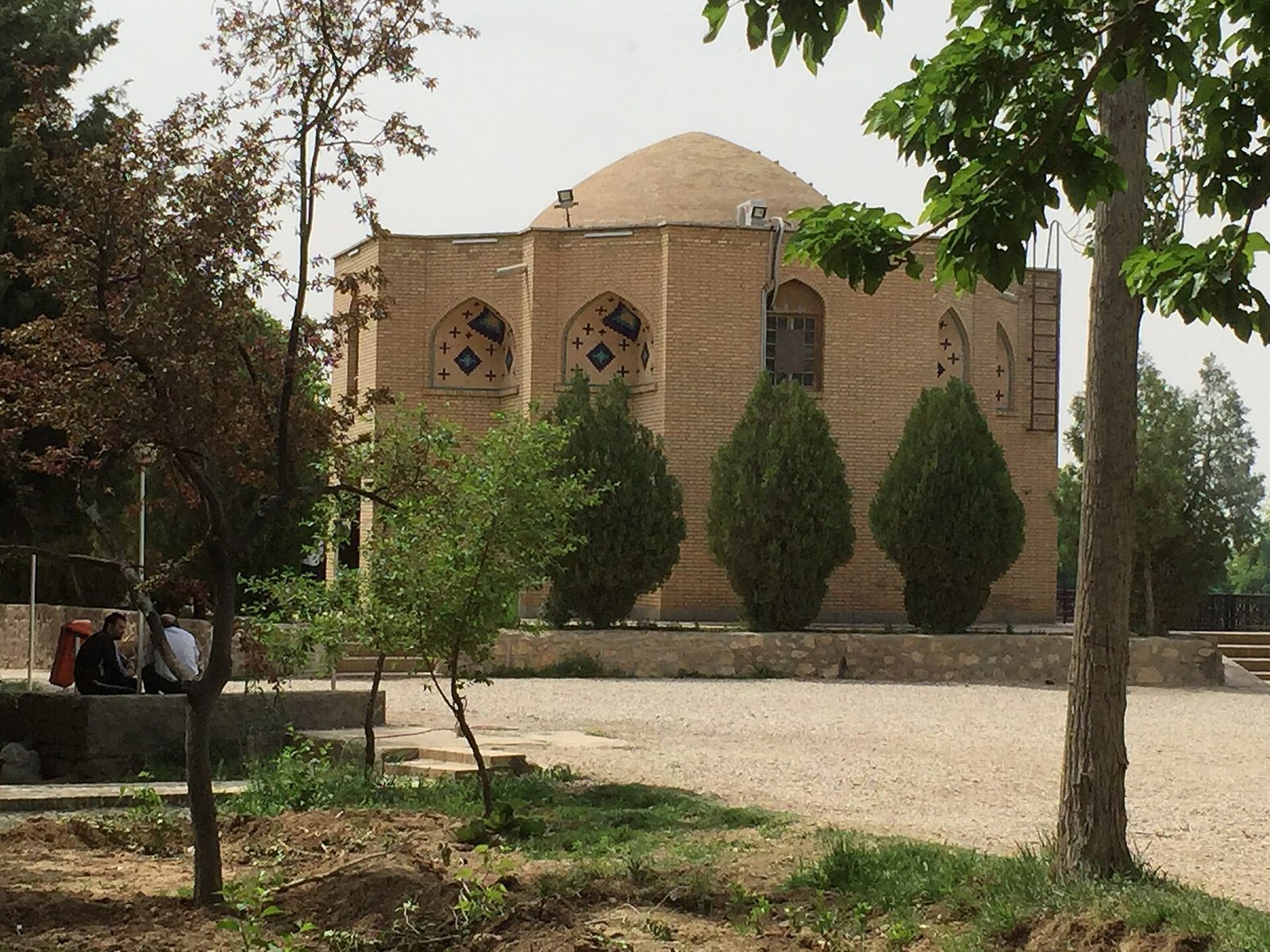
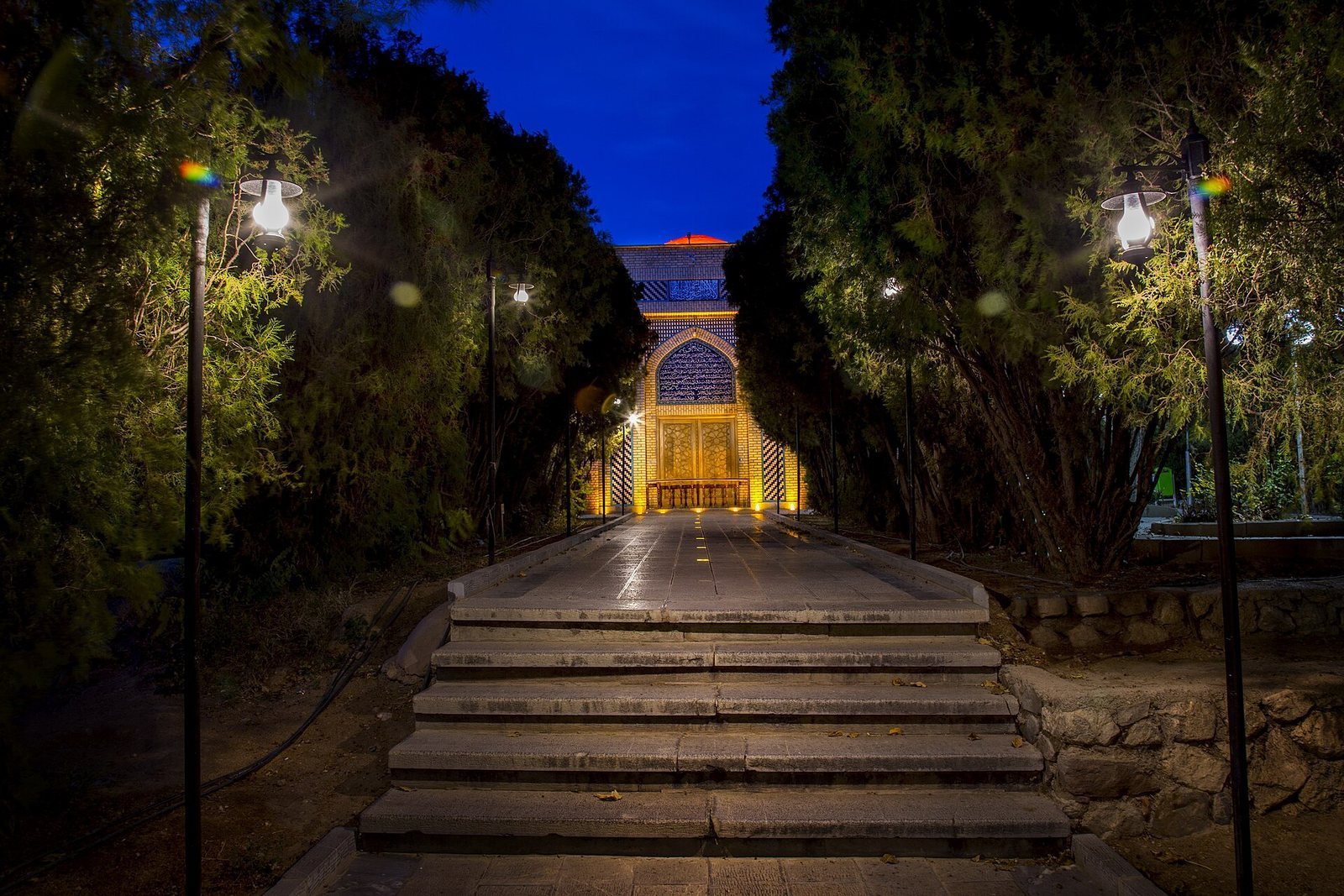
The complex stands on a hill about 24 kilometres from Shahrud, north of Qaleh Now-e Kharaqan in Semnan Province. It is arranged as a Persian garden in relation to the local topography, with a stream running beside it. The mausoleum is built from plain and glazed brick, and the grave of Kharaqani is identified by a marble slab bearing engraved poetry.
The Former Mosque and Surviving Mihrab
Earlier Mosque
A mosque formerly stood beside the mausoleum. It was said to have had a conical dome decorated with glazed tiles and two mihrabs, recessed architectural features that indicate the direction of prayer, or qibla. One of the mihrabs survives, and its westward orientation differs from that of mosques in the surrounding region.
Surviving Mihrab
The surviving mihrab has finely executed stucco decoration. Its upper inscription quotes a saying attributed to the Prophet: “The Prophet said, peace be upon him: the worshipper converses with his Lord.” An exterior inscription on the northern side includes a statement attributed to Ali: “The qiblas are five: the Kaaba is the qibla of believers; the Frequented House is the qibla of angels; the Throne is the qibla of those who pray; the Truth is the qibla of the chivalrous and the friends; and …”
Improper restoration destroyed the final portion of the inscription. Its missing conclusion was: “As for the heart, it is the qibla of the elect.” A later mosque was built around this surviving mihrab, and it serves as the complex’s prayer space.