Imamiya Shrine: A Historic Shinto Shrine in Kyoto


Site at a Glance
- Rating
- 4.3
- Popularity
- Medium
- Country
- Japan
- Primary era
- Early Modern
- External website
- Open
- Eras represented
- Medieval, Early Modern, Modern
- Civilizations
- Ashikaga shogunate, Japanese, Tokugawa
- Site type
- Religious
- Remains
- Sanctuary
On this page19 sections
History
Imamiya Shrine is a Shinto shrine in Kyoto, Japan, whose present institution was established in 1001 after earlier rites for pacifying epidemic calamities. Set in Murasakino, the shrine venerates kami including Okuninushi, Kotoshironushi, Kushinadahime, and Susanoo, and became the center of a large parish community extending across parts of present-day Kita and Kamigyo wards.
Origins in epidemic-pacification rites
A shrine venerating Susanoo, a major kami associated with storms and the protection or pacification of calamities, is said to have stood at the site before the capital moved to Kyoto in 794. Repeated outbreaks of disease led to rites at several Kyoto sanctuaries. In 994, during a major epidemic, the imperial court prepared two portable shrines and carried the epidemic deity from the local sanctuary to Mount Funaoka.
Musical offerings were performed there, and the calamity was transferred to ritual offerings that were floated down the Naniwa inlet. This community rite, called the Murasakino Goryoe, belonged to the tradition of goryoe, ceremonies intended to calm dangerous or angry spirits believed to cause epidemics and other disasters. It is regarded as the origin of the Imamiya Festival.
In 1001, the court moved the epidemic deity from Mount Funaoka and commissioned a sanctuary, sacred fence, and portable shrine. This act established the current Imamiya Shrine. The festival that grew from the earlier rites became an annual celebration held in May, while the shrine’s enshrined kami came to include Okuninushi, a major kami associated with the formation of Japan, prosperity, and good fortune, together with Kotoshironushi and Kushinadahime.
The Murasakino Saiin
Imamiya also became connected with the Kamo Saiin, the institution that supplied sacred princesses from the imperial family to serve major Shinto shrines. After the Kusuko Disturbance of 810, a political conflict at the imperial court, Emperor Saga established a Saiin residence at the nearby Murasakino Unrinin settlement. He appointed Princess Uchiko as its first sacred princess in fulfillment of a vow made after the victory.
When the Kamo Saiin institution was abolished in 1212, the spirits of its successive sacred princesses were enshrined at Imamiya’s Wakamiya Shrine. Imamiya consequently became known also as the Murasakino Saiin. Support from the imperial court, local residents, and warrior governments strengthened the shrine’s position, and it received Senior First Rank in 1284.
Medieval destruction and reconstruction
The shrine was burned during the Onin War, the fifteenth-century conflict that devastated Kyoto and weakened the authority of the Muromachi shogunate. The sanctuary was rebuilt in 1496 under Ashikaga Yoshizumi, a shogun of that government. Ashikaga Yoshiharu ordered the rebuilding of a portable shrine in 1525, and the shrine buildings were repaired in 1544.
In 1593, Toyotomi Hideyoshi, the late-sixteenth-century military ruler of Japan, restored the site used for the shrine’s ceremonial procession and donated a portable shrine. During the Edo period, the shrine received an estate assessed at 100 koku, a unit of agricultural yield conventionally associated with the rice needed to support one person for a year.
Keishoin and the Nishijin community
The shrine’s later development was closely associated with Keishoin, who was born O-Tama into a Nishijin greengrocer’s family. She became a concubine of Tokugawa Iemitsu, the third shogun of the Tokugawa shogunate, and the mother of Tokugawa Tsunayoshi, its fifth shogun. Her rise to the court rank of Junior First Rank is associated with an explanation of the proverb tama-no-koshi.
Keishoin’s devotion to Imamiya and her attachment to Nishijin led to extensive improvements in 1694. She sponsored the rebuilding of shrine buildings, donated an ox carriage and a ceremonial halberd, repaired a portable shrine, reorganized the rites, expanded the parish area, and revived the Yasurai Festival. Yasurai Matsuri is an epidemic-pacification festival involving music and dance. Under the designation name “Yasurai Hana,” it is an Important Intangible Folk Cultural Property and is counted among Kyoto’s three major unusual festivals.
The shrine’s parish boundaries recorded around 1717 extended from approximately Horikawa Street in the east to Shichihonmatsu Street in the west, Nijō Castle in the south, and roughly Gen’i Street in the north. Kamigoryo Shrine’s area adjoined the eastern boundary, while the southern part of the western boundary met the area of Kitano Tenmangu. The southern boundary adjoined Yasaka Shrine’s area, and the Paper River formed the northwestern boundary.
Later changes and continuing institutions
A Noh stage was completed at the ceremonial procession site in 1795 with financial support from Nishijin’s textile-producing community. Noh performances were held there in autumn until the decline of the textile industry, with the last performances taking place in the 1970s.
At the beginning of the Meiji period, Imamiya was classified as a village shrine and became a prefectural shrine in June 1881. Fire destroyed its buildings in 1896, and they were rebuilt in 1902. In 2018, thirty-two buildings connected with the shrine were registered as nationally registered tangible cultural properties. An Imamiya kindergarten was established within the precinct in 1930 and conducts shrine-based education. Older children visit the detached ceremonial procession site during the Imamiya Festival.
Remains
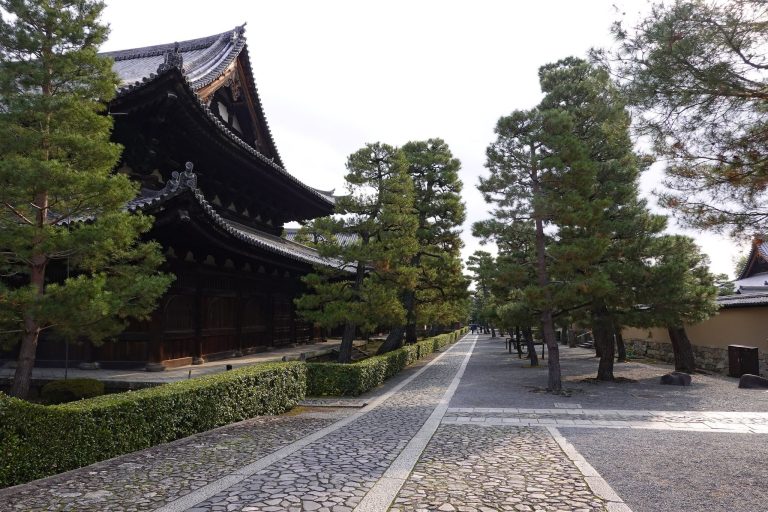
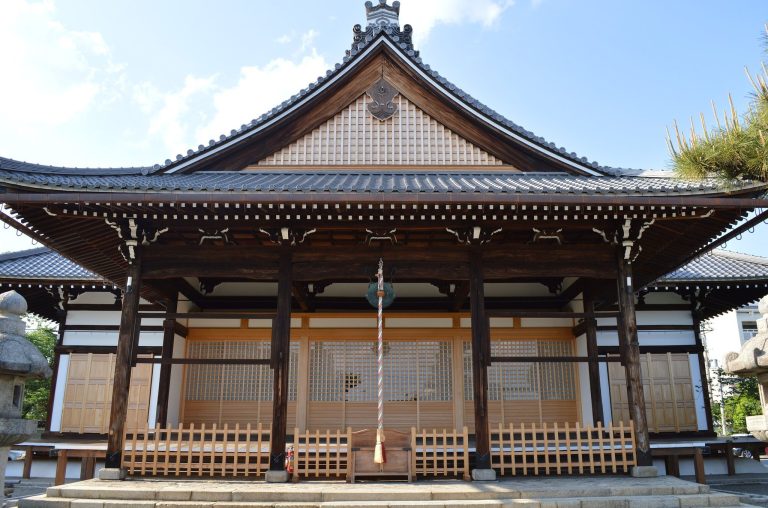
The shrine complex lies among large trees northwest of Daitoku-ji. Its layout combines the main sanctuary, halls for worship and offerings, gates, fences, subsidiary shrines, storage buildings, and ritual spaces. The surviving ensemble includes structures from the Edo period through the early twentieth century, including buildings rebuilt after the 1896 fire and buildings later moved or reconstructed.
Central shrine precinct
Main sanctuary group
The main sanctuary, the offering hall, the earthen wall enclosing the sanctuary, the cloister, and the worship place were rebuilt in 1902. The main sanctuary is the honden, the principal sacred building of a Shinto shrine, while the worship place serves formal prayer before it. Together, these buildings form the central architectural group of the precinct.
Worship and ritual buildings
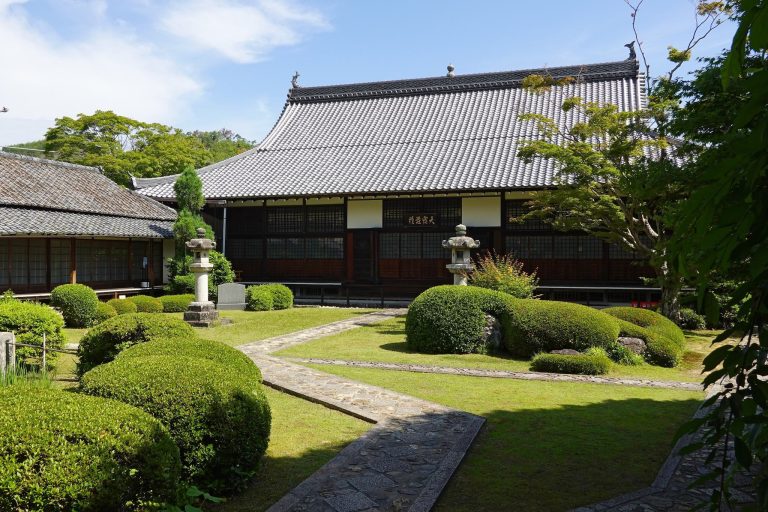
The worship hall was rebuilt under Keishoin in 1694 and repaired in 1846. It contains thirty-six portraits of poets mounted on plaques made from Nishijin textiles, donated in 2005. The kagura hall, used for ritual performances, was rebuilt in 1839 and repaired during the late Meiji period.
A ritual implement storehouse was built in the late Edo period and moved to its present location in the late Taisho period. The precinct also contains a stable for the sacred horse, an office, and a water-purification pavilion known as the O-Tama Well. The purification pavilion was rebuilt under Keishoin in 1694.
Gates and other features
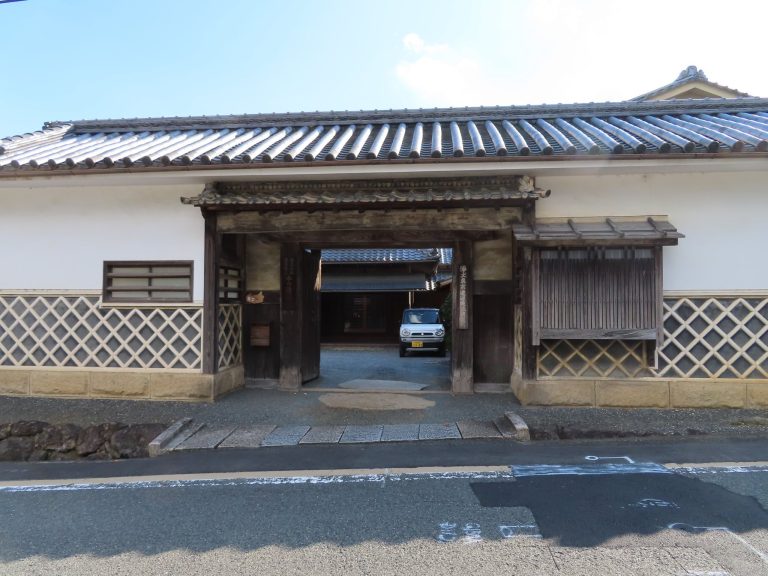
The east gate and its earthen wall were rebuilt in 1881. The main gate and its surrounding cloister were constructed in 1926. A portable-shrine storehouse was rebuilt during the late Taisho period, while a votive-picture hall was rebuilt in 1800.
The precinct also contains the Ahokashisan, a divination stone, and a relief of Keishoin. The stone is traditionally associated with healing and the granting of wishes. After it is rubbed and lifted, tradition holds that it will feel heavy; after three strokes accompanied by a wish, it is expected to feel lighter if the wish is to be fulfilled.
Subsidiary shrines
Epidemic and weaving-related shrines
The Epidemic Shrine is dedicated to Susanoo. Its sanctuary, covered passage, gate, and cloister were built around 1908. Orihime Shrine is dedicated to Takuhatachijihime, while the Eight Shrines group, built under Keishoin around 1694, enshrines the kami of Okuni, Ebisu, Hachiman, Atsuta, Sumiyoshi, Katori, Kagamitsukuri, and Suwa shrines.
Hachiman and Taishogun shrines
Hachiman Shrine is dedicated to Emperor Ojin, Hime Okami, and Empress Jingu and was built in the late Edo period. Taishogun Shrine, also called Taishogun Hachiman Shrine, is dedicated to Gozu Tenno and the Eight Princes. Its sanctuary and worship hall were built under Keishoin around 1695.
Inari, Hiyoshi, and Wakamiya shrines
Murasakino Inari Shrine is dedicated to Ukanomitama. Oda Inari Shrine is dedicated to Oda Nobunaga and his retainers and was moved to its present location in 1987. Hiyoshi Shrine, dedicated to Oyamakui and Ōmononushi, was built in the late Edo period.
Wakamiya Shrine enshrines Izanami, the spirits of successive Kamo sacred princesses, and the spirits of Fujiwara no Kusuko and Fujiwara no Nakanari. Its sanctuary, worship hall, gate, and see-through fence were rebuilt under Keishoin in 1694. A tamagaki, or see-through fence, separates a sacred precinct from surrounding areas.
Other subsidiary shrines
Jinushi Inari Shrine is dedicated to Kuranitama-no-Okami and Sarutahiko. Its sanctuary, worship place, and see-through fence were built in 1842. Tsukiyomi Shrine has a sanctuary, worship place, and see-through fence built in 1910. Munakata Shrine is dedicated to Takirihime, Tagitsuhime, and Ichikishimahime, and its sanctuary and worship place were built under Keishoin around 1694 and 1695.
Detached ceremonial procession site
Ritual buildings
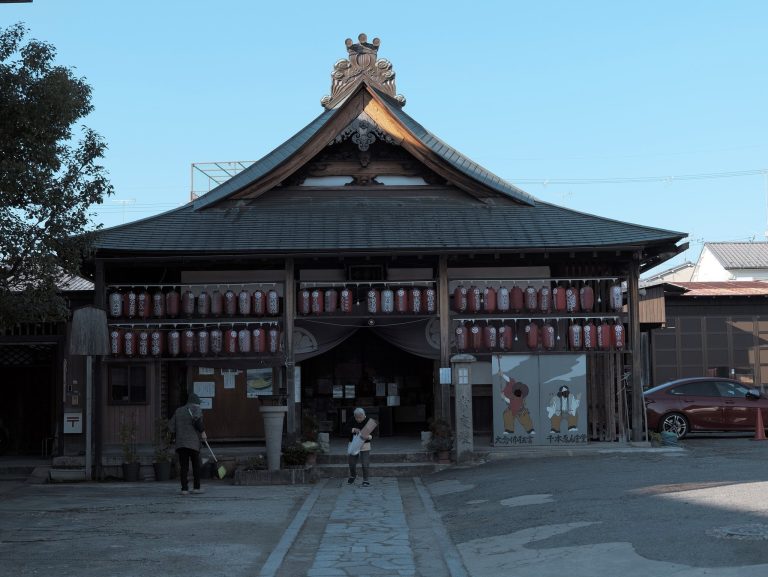
The detached ceremonial procession site lies in Wakamiya-yokocho in Kamigyo Ward. Its mirror room was rebuilt in the late Edo period. A Gonden Shrine and a Noh stage were rebuilt in 1795, while the portable-shrine storage hall was rebuilt in 1945. These buildings preserve the architectural setting associated with the shrine’s processions and performances.
Buddhist stone monument
A four-sided Buddhist stone bears an inscription dating it to 1125. It was formerly the principal image of a tahoto, a Japanese pagoda form with a square lower level and rounded upper section. The stone is an Important Cultural Property and archaeological material, and is deposited on loan at the Kyoto National Museum.