Church of San Marcos: A Parish Church in Jerez de la Frontera
Site at a Glance
- Popularity
- Medium
- Country
- Spain
- Primary era
- Medieval
- Eras represented
- Medieval, Early Modern
- Civilizations
- Crown of Castile, Spanish
- Site type
- Religious
- Remains
- Church
On this page14 sections
History
Parish foundation and rebuilding
The Church of San Marcos is a parish church in Jerez de la Frontera, Spain. It was one of six parishes established within the city walls after Jerez was definitively reconquered in 1264. King Alfonso X of Castile, known as Alfonso the Wise, oversaw the redistribution of the city, which also established San Lucas, San Mateo, San Juan de los Caballeros, San Dionisio, and the church of the Savior, now Jerez Cathedral.
The present church probably began to take shape around the middle of the fourteenth century and may have replaced an earlier mosque. Building work was under way by the mid-fifteenth century. A substantial rebuilding in the late Gothic style followed in the last third of that century, around 1480.
Parish life and modern conservation
The parish is associated with assemblies presided over by the Duke of Medina Sidonia, a holder of a high-ranking Spanish noble title. The meetings sought to settle conflicts among Jerez’s nobility.
On 3 June 1931, the church was declared a Monument and a Bien de Interés Cultural, a Spanish designation for properties recognized as being of cultural interest. Conservation work took place during the nineteenth and twentieth centuries. A 1955 intervention formed part of restoration projects used by the dictatorship of Francisco Franco to promote its ideology.
Remains
The church has a broad single nave, the main interior space, divided into four structural sections, with chapels along its sides and a plain, three-sided apse, the sanctuary end. Its surviving features bring together Mudéjar forms, which combine Islamic-derived designs and techniques with Christian architecture in Iberia, and later styles.
Interior and chapels
Nave and apse
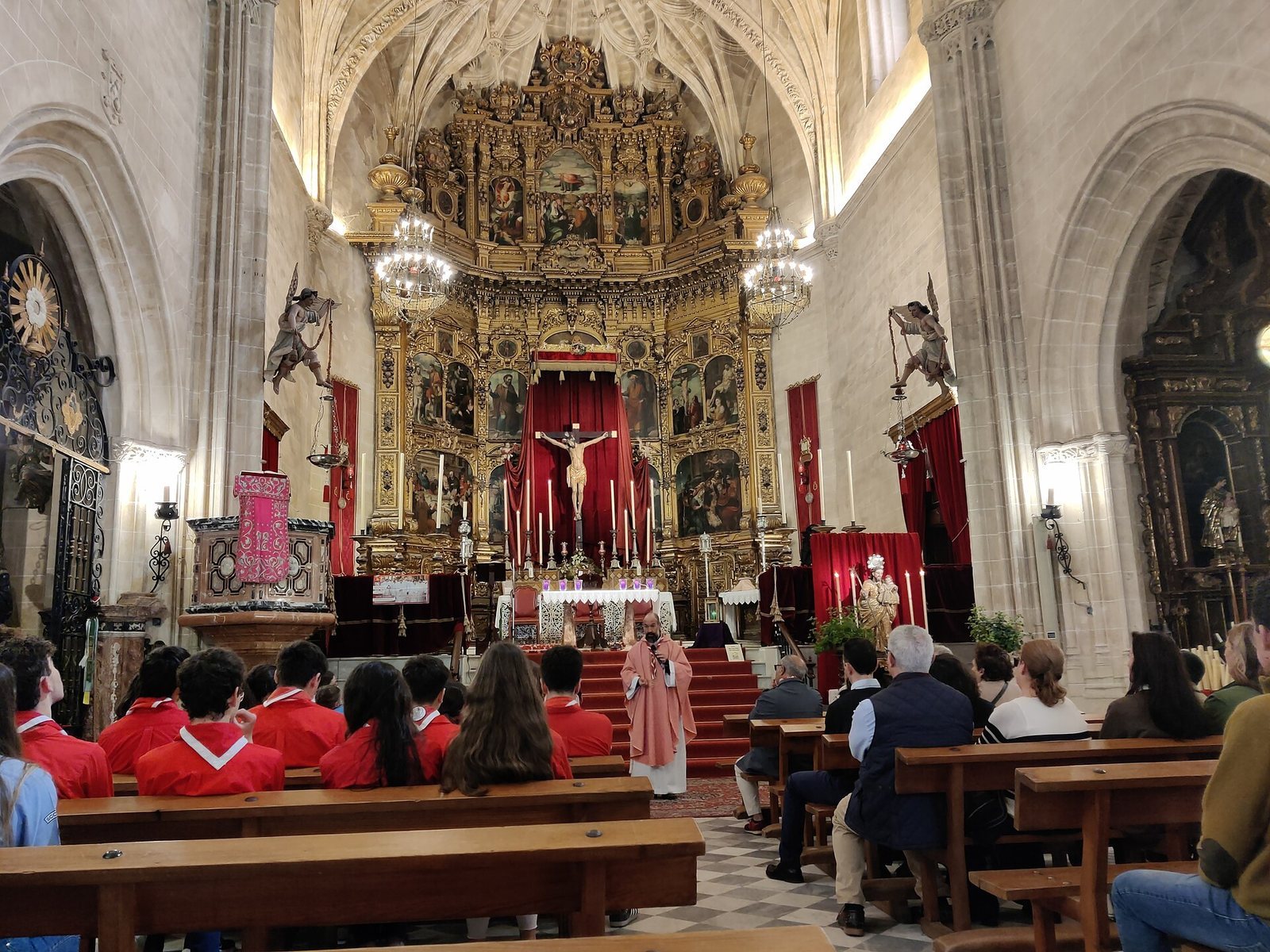
A star vault, formed by ribs arranged in a star pattern, covers the nave. Its pattern grows more elaborate above the apse and the first section of the nave.
Side chapels and sacristy
The side chapels show a range of Mudéjar forms. The sacristy, the room used to prepare for services, has a sixteenth-century star vault.
Baptism Chapel
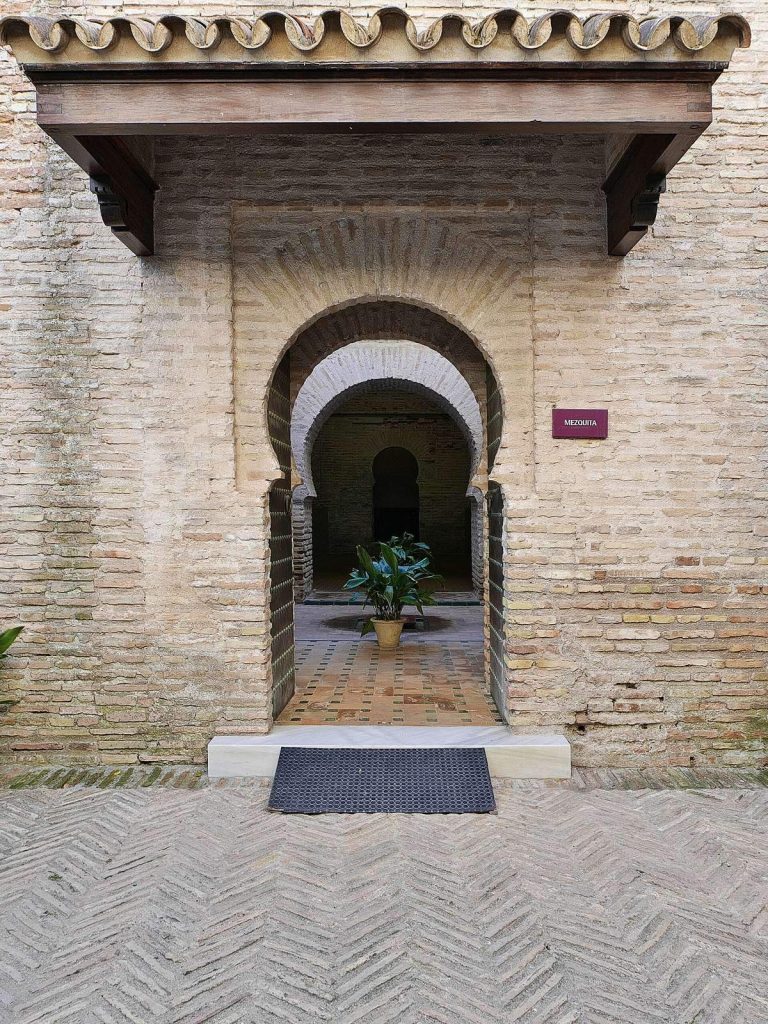
The Baptism Chapel has a gored vault, divided into curved sections, supported by squinches, structures that bridge corners. Its entrance is a semicircular arch set within an alfiz, a rectangular frame around an arch. Small, tiered muqarnas ornament the arch’s supports.
Tabernacle Chapel
The Tabernacle Chapel dates to the second half of the eighteenth century and is Baroque, a style known for elaborate ornament. Its grille bears the date 1795. The chapel’s altarpiece, a decorated structure behind an altar, is Neoclassical and draws on Greek and Roman forms.
Main altarpiece and devotional image
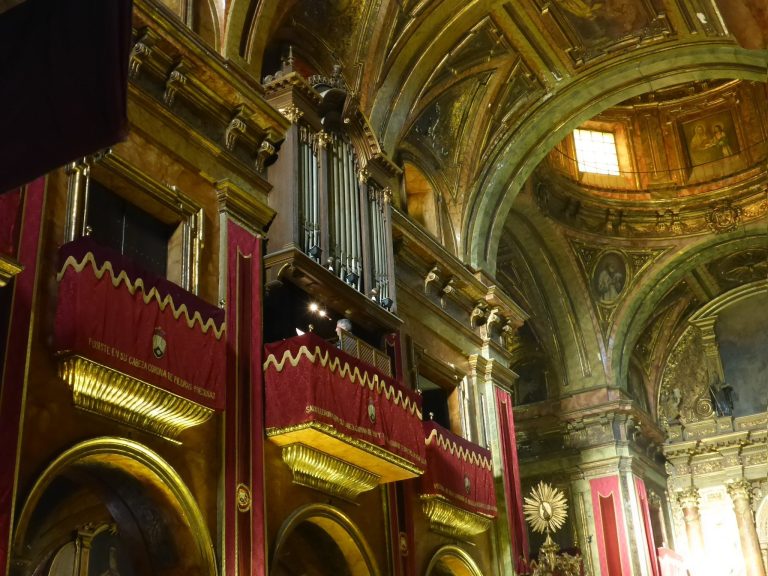
The seventeenth-century Baroque main altarpiece fills the polygonal apse. It incorporates painted sixteenth-century panels showing Gospel scenes and saints, varying in size and format. The panels sit within an elaborately ornamented, gilded wooden frame arranged in two main tiers with a stepped upper section. Carved, flat column-like supports carry an ornamented projecting band, while large pointed ornaments and coats of arms extend into the star-vaulted ceiling. The church also preserves a small late-fifteenth-century image of the Virgin of Bethlehem, a devotional title for the Virgin Mary.
Exterior and burial space
Facades and main entrance
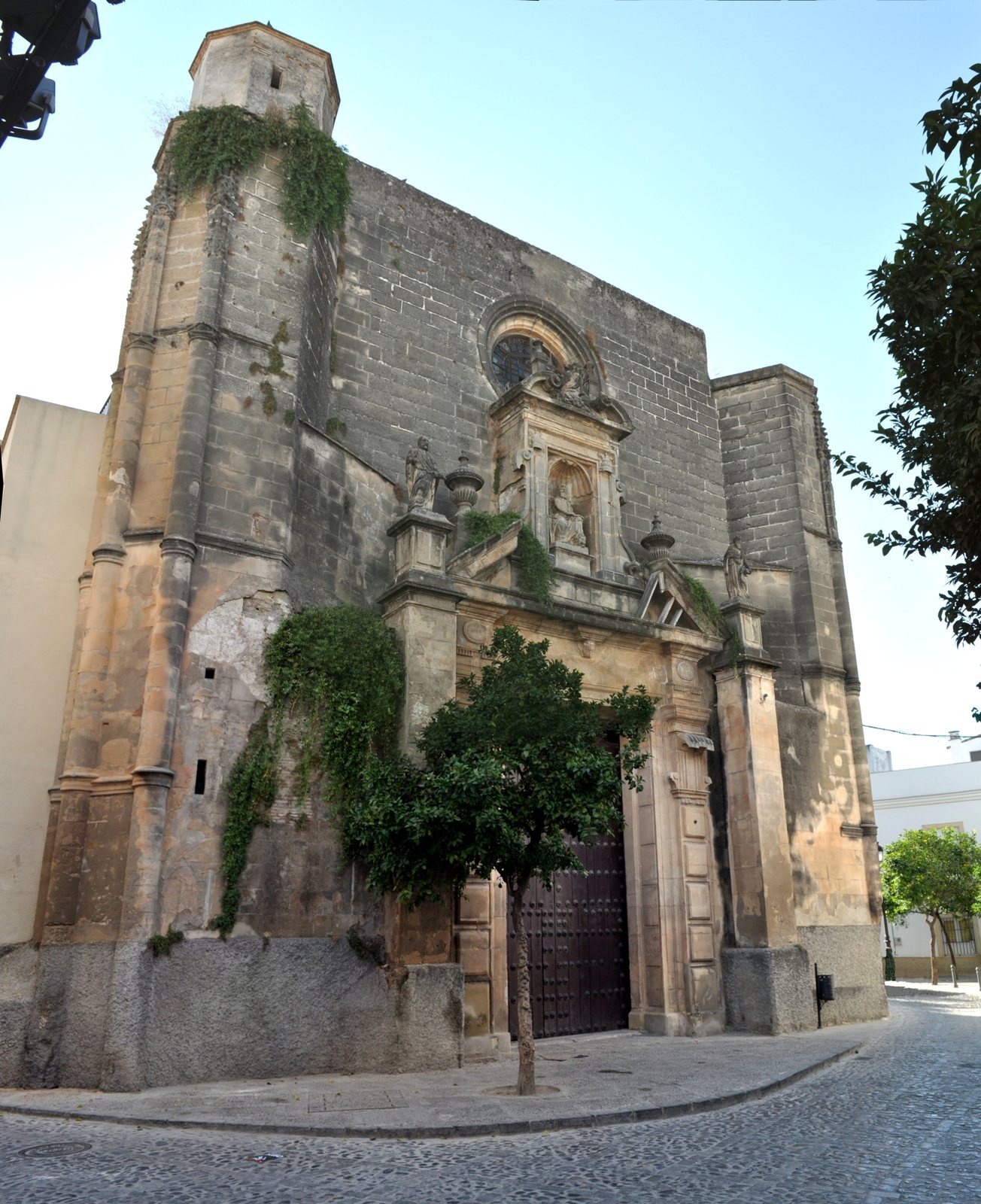
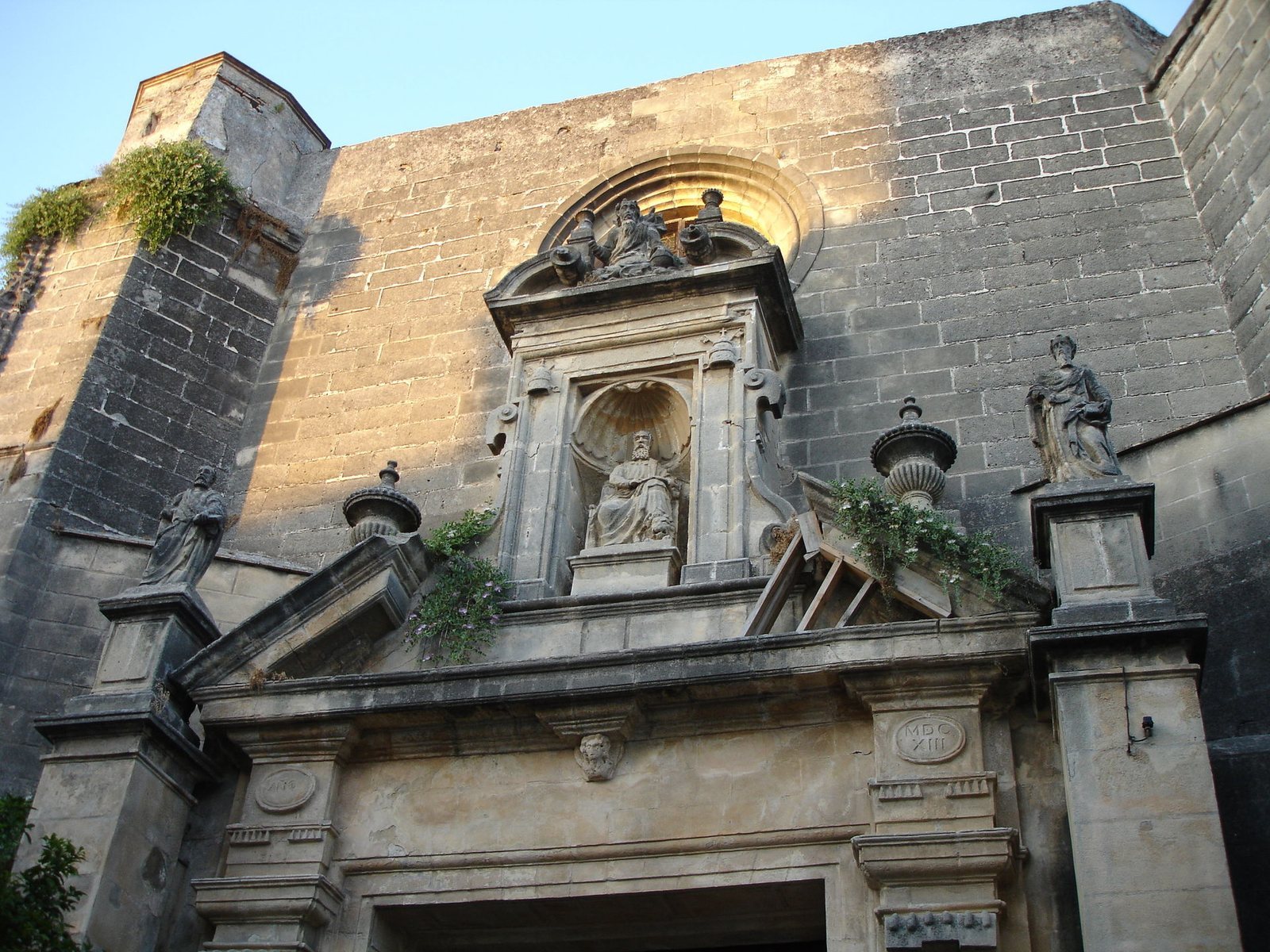
The church has three façades and a simple exterior. At its foot, the main entrance is a sixteenth-century Mannerist portal, in a late Renaissance style. Rough-faced pilasters, or flat wall supports, flank the doorway. Above it is a niche beneath a simple broken, straight-sided pediment.
Crypt
The crypt, an underground burial space, contains tombs of notable Jerez residents, including Diego Fernández de Herrera.
Condition
The church was in fairly good condition apart from its bell gable. A chapel’s poor condition was denounced in 2020, and its deterioration had worsened by 2023.