Hünenbetten von Daudieck: Neolithic Long-Barrow Tombs in Germany
Site at a Glance
- Popularity
- Low
- Country
- Germany
- Primary era
- Stone Age
- Eras represented
- Stone Age
- Civilizations
- Unclassified
- Site type
- Burial
- Remains
- Burial Mound
On this page7 sections
History
The Hünenbetten von Daudieck are three long barrows near Horneburg, Germany, dating broadly to about 3500 to 2800 BC. They were built by Neolithic communities in the later part of the Stone Age as megalithic burial monuments made from large stones. Grave goods point especially to a date around 3500 BC.
The monuments represent the earliest evidence for settlement along the edge of the Geest, the elevated, generally sandy glacial landscape of northern Germany, beside the Elbe’s former glacial valley. More broadly, Neolithic monuments are understood as expressions of the ideas and culture of their societies, and as evidence for social development.
Jürgen Deichmüller investigated Long Barrow C in 1970. A substantially later layer of charcoal within the monument indicates activity at the site after the barrow was built.
Remains
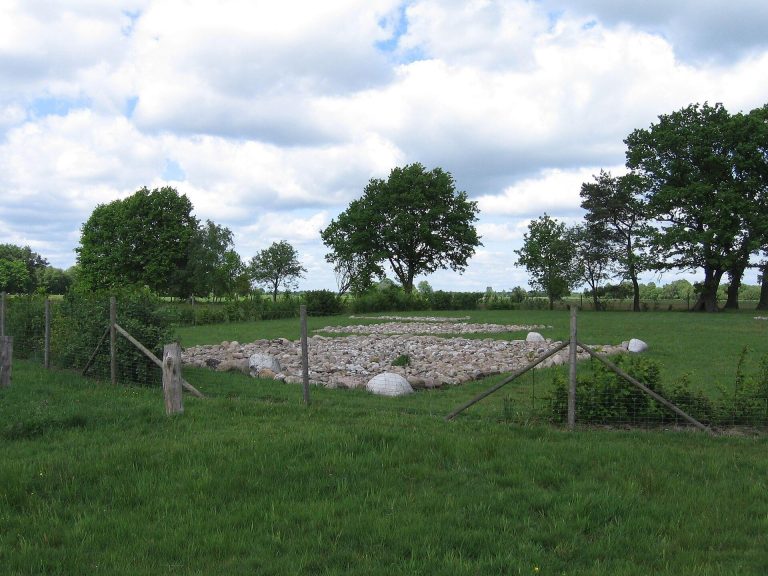
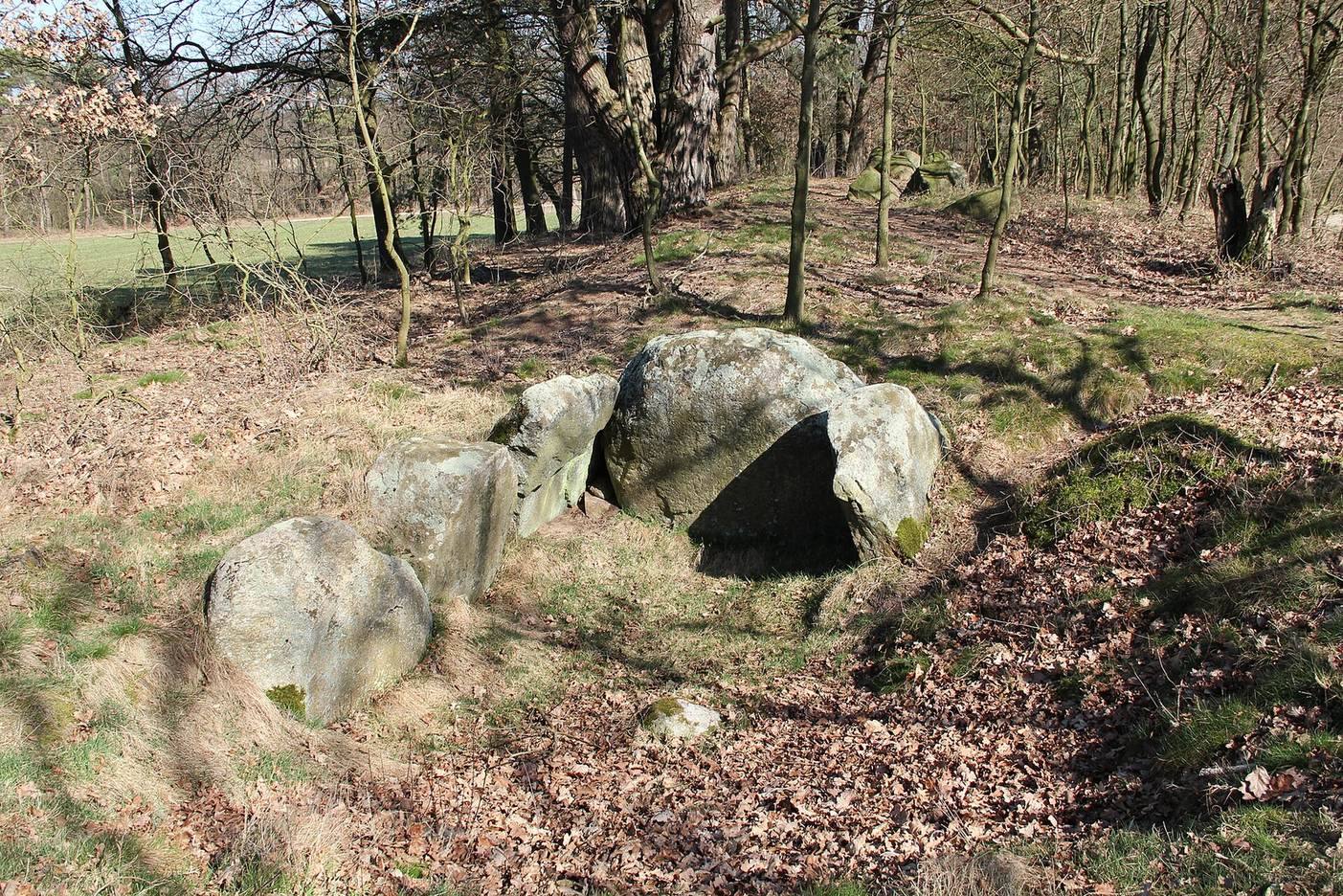
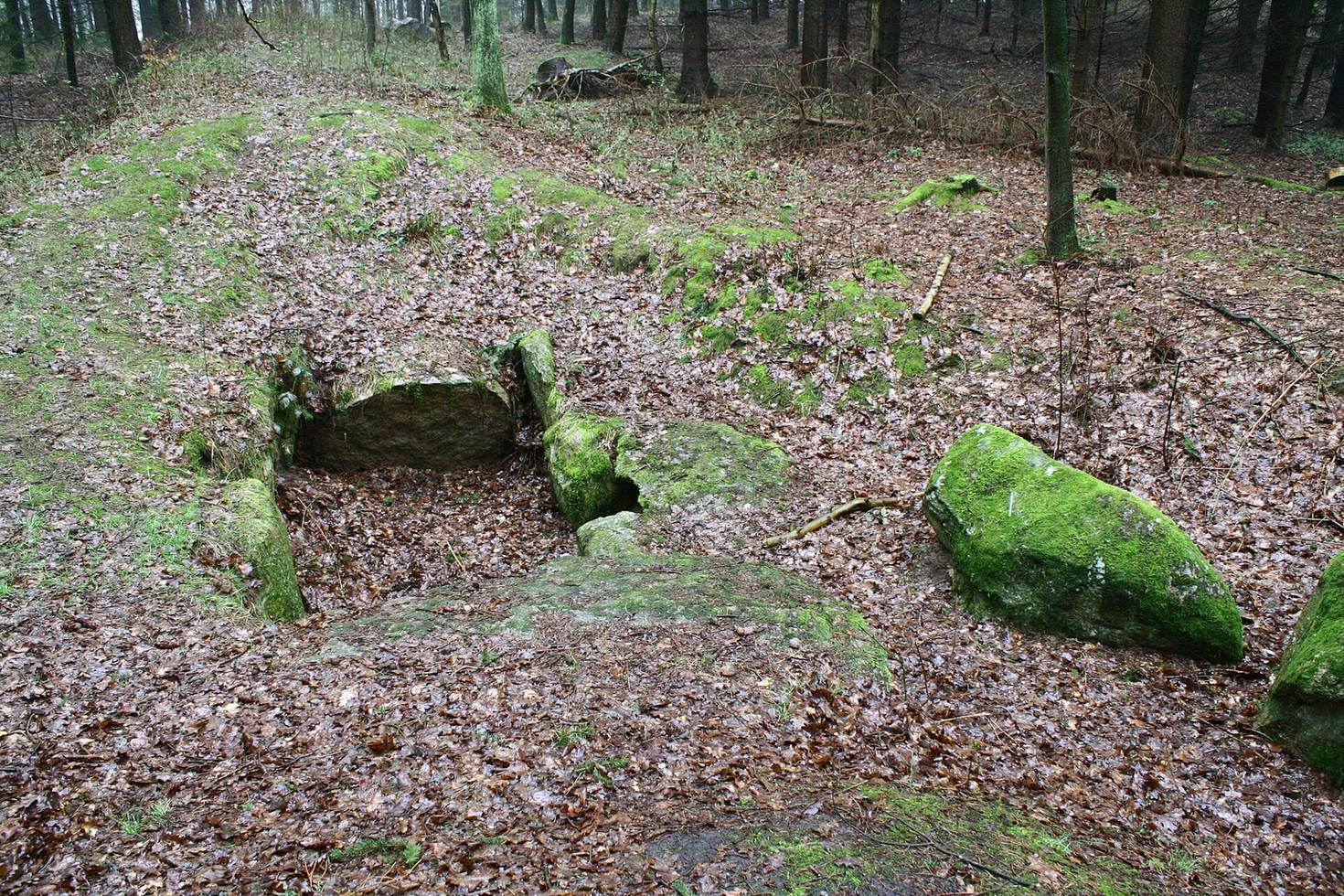
The three long barrows lie between Gut Daudieck and Issendorf, southwest of Horneburg and north of the Aue, which is called the Lühe from Horneburg onward. Their earthen mounds contain stone enclosures and burial chambers, preserved to differing degrees. The monuments are catalogued as Sprockhoff 661, 662, and 663, and as Horneburg 2, 3, and 4. Finds from all three barrows were sparse.
Long barrows
Long Barrow A
Long Barrow A, catalogued as Sprockhoff 661 and Horneburg 2, measures 73 metres long and 7 metres wide. A few enclosure stones remain along its southeastern side. A destroyed chamber lies near the western end, while an incomplete chamber is near the middle. The middle chamber’s original covering comprised four stones, two end stones and two transverse stones.
Long Barrow B
Long Barrow B, catalogued as Sprockhoff 662 and Horneburg 3, lies about 100 metres south of A and measures 48 metres long by 6 metres wide. Two enclosure stones survive. In the chamber remains at the centre, three supporting stones are still in place.
Long Barrow C
Long Barrow C, catalogued as Sprockhoff 663 and Horneburg 4, lies immediately east of B and is about 37 metres long. Almost none of its enclosure survives. Its single burial chamber is reached through an unusually narrow entrance on the south side. Eight supporting stones and two end stones form the chamber, with stone infill at four points. The western capstone remains on three supports; the other two capstones are missing.
Parts of the chamber floor survive in two layers, separated by 20 centimetres, a feature that suggests the chamber was reused. In the western part, two compartments lie one behind the other, each spanning the full width of the chamber. This arrangement is unusual in the region. Similar layouts, in somewhat different forms, occur chiefly in Mecklenburg-Western Pomerania and Sweden.
Stone burial chamber
A stone cist, a small stone-built burial chamber, lies southwest of the long barrows in a hollow on a hill. Its visible capstone is about 2 metres long and bears numerous cup-shaped depressions.