Houghton Hall in Norfolk: Sir Robert Walpole’s Country House
Site at a Glance
- Rating
- 4.7
- Popularity
- High
- Country
- United Kingdom
- Primary era
- Early Modern
- Eras represented
- Early Modern, Modern
- Civilizations
- British
- Site type
- Domestic
- Remains
- Elite Residence
On this page15 sections
History
Walpole’s building project
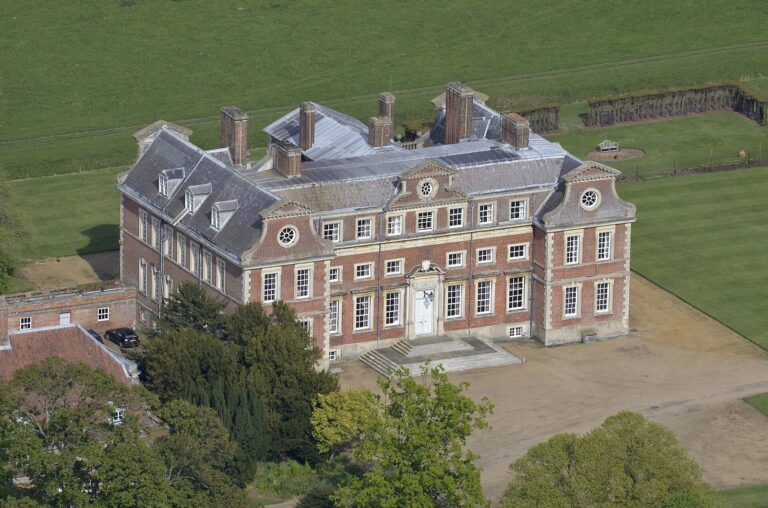
Houghton Hall is a country house in Norfolk, United Kingdom, commissioned by Sir Robert Walpole in 1722 and completed in 1735. Walpole, a leading British politician commonly regarded as the country’s first prime minister in all but name, built the house on an estate he had inherited in 1700. The new residence replaced earlier Walpole family houses on the property, which covered about 17,000 acres.
Before work began, Walpole arranged improvements to the existing house and grounds. In 1720, he had the buildings and nearby landscape surveyed, including a garden laid out in the style of garden designer Stephen Switzer. The first stone of the new house was laid on 24 May 1722. By 7 December, the brick cellars were finished and the first course of stonework was in place.
The design’s authorship and chronology remain disputed. Walpole probably first asked his friend Thomas Ripley to direct the project and appointed him surveyor in 1722. Colen Campbell is most often credited as the architect, while later in the work Ripley took a larger role in the exterior buildings and altered earlier designs by Campbell and James Gibbs. Gibbs designed the final tower domes. William Kent provided designs for ceilings in the reception rooms and ground floor, as well as some furniture. Walpole later estimated that the elaborate work inside and out had cost more than £200,000, and said that he had burned most of the receipts.
Political gatherings and the Walpole collection
Walpole used Houghton to entertain Norfolk landowners at hunting parties that could last for weeks, and royal visits were frequent. Each spring, political allies, particularly members of his Cabinet, gathered at the house for about three weeks. These meetings became known as the Norfolk Congress. Houghton was also intended to accommodate more than 400 Old Master paintings, meaning works by established European artists active before about 1800. The collection included paintings by Van Dyck, Poussin, Rubens, Rembrandt and Velázquez.
Walpole became the 1st Earl of Orford in 1742. In 1779, his grandson, the 3rd Earl, sold part of the painting collection to Catherine the Great, Empress of Russia, to help meet the estate’s debts. After that earl died in 1791, the estate passed to Horace Walpole, Robert’s youngest son and the 4th Earl of Orford. When Horace died in 1797, it passed into the Cholmondeley family through Lady Mary, Countess of Cholmondeley, wife of George Cholmondeley, 3rd Earl. Lady Mary had died in 1731, aged 26. Robert Walpole and his successors as Earls of Orford were buried at St Martin’s Church.
Cholmondeley ownership and later changes
The Cholmondeley family has maintained and altered Houghton since it came into the family. During much of the nineteenth century, the family lived mainly at Cholmondeley Castle in Cheshire and used Houghton chiefly for shooting. The house consequently escaped most Victorian remodelling and redecorating, and its interior has remained largely unchanged.
In the eighteenth century, the redesign of the park led to the demolition of Houghton village. Its medieval parish church, St Martin’s, was rebuilt at the park’s main gates, where it stands within the grounds. A book about the Archbishop of Bremen, borrowed from Sidney Sussex College by Colonel Robert Walpole in 1667 or 1668, turned up at Houghton in the mid-1950s and was returned to the college 288 years late.
The Cholmondeley Collection of Model Soldiers began in 1928 and was expanded by the 6th Marquess. It was transferred from Cholmondeley Castle to Houghton in 1980. Several artworks have also gone to the Victoria and Albert Museum. In the early 1990s, Hans Holbein the Younger’s Lady with a Squirrel and a Starling, painted in 1528 and hung at Houghton since 1780, was sold to the National Gallery. A major sale of paintings, furniture, silver and decorative objects followed at Christie’s in London on 8 December 1994.
Houghton remains the residence of David Cholmondeley, 7th Marquess of Cholmondeley. The house and its north and south attachments received Grade I listed status in 1953, the highest category for listed buildings in England. The park was placed in the highest category of the Register of Historic Parks and Gardens in 1987.
Remains
The Hall and its service buildings
Main house
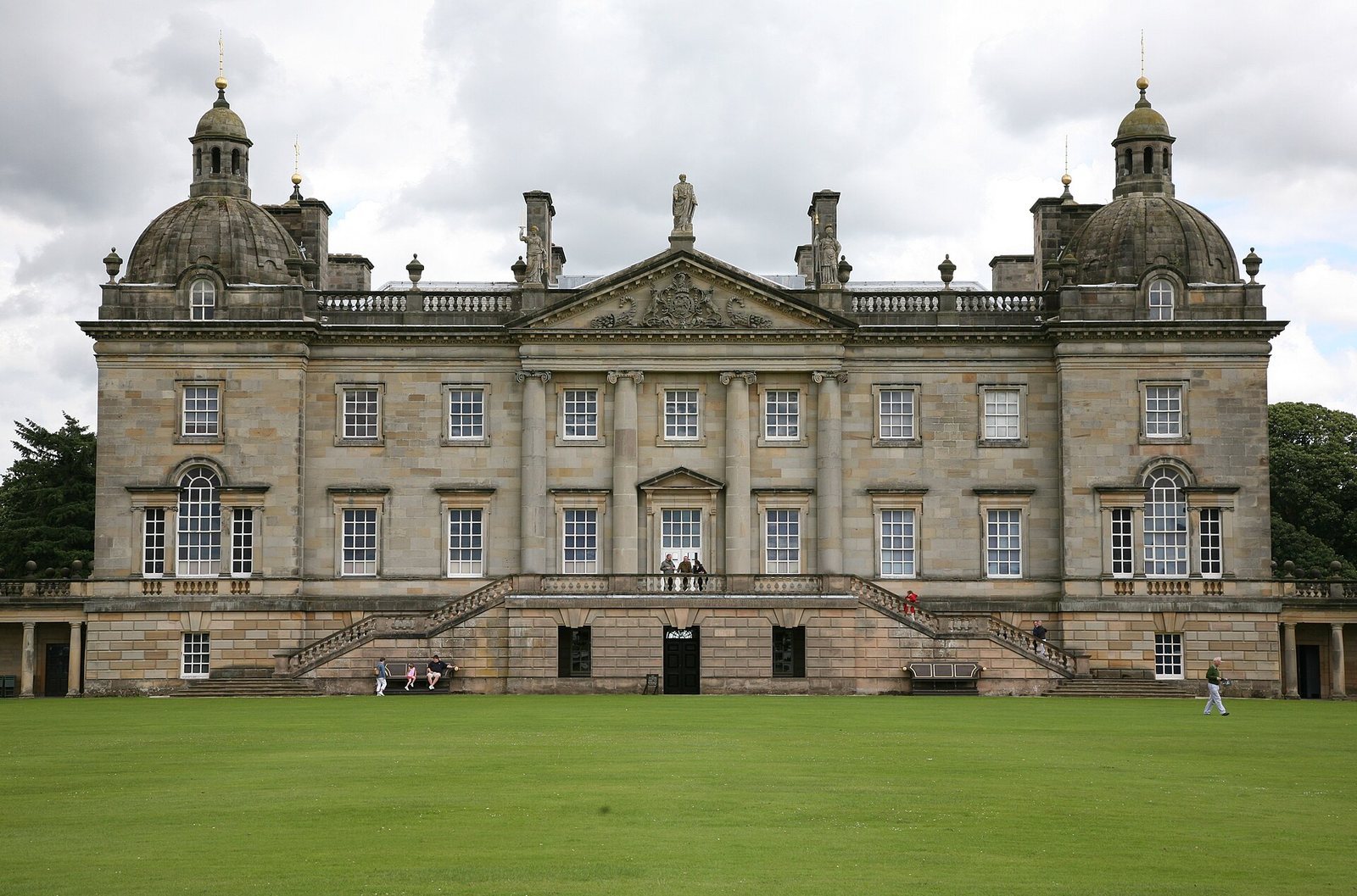
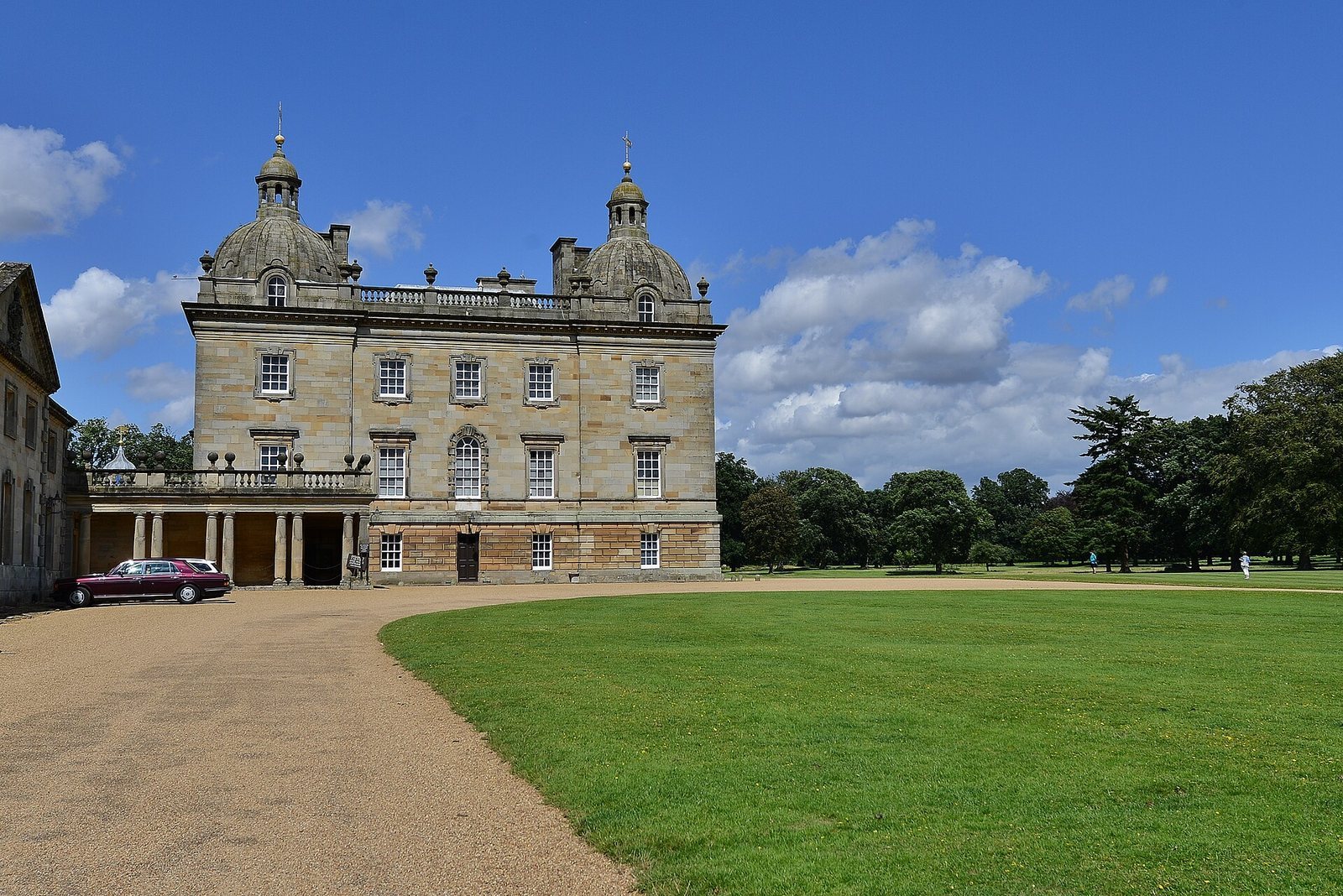
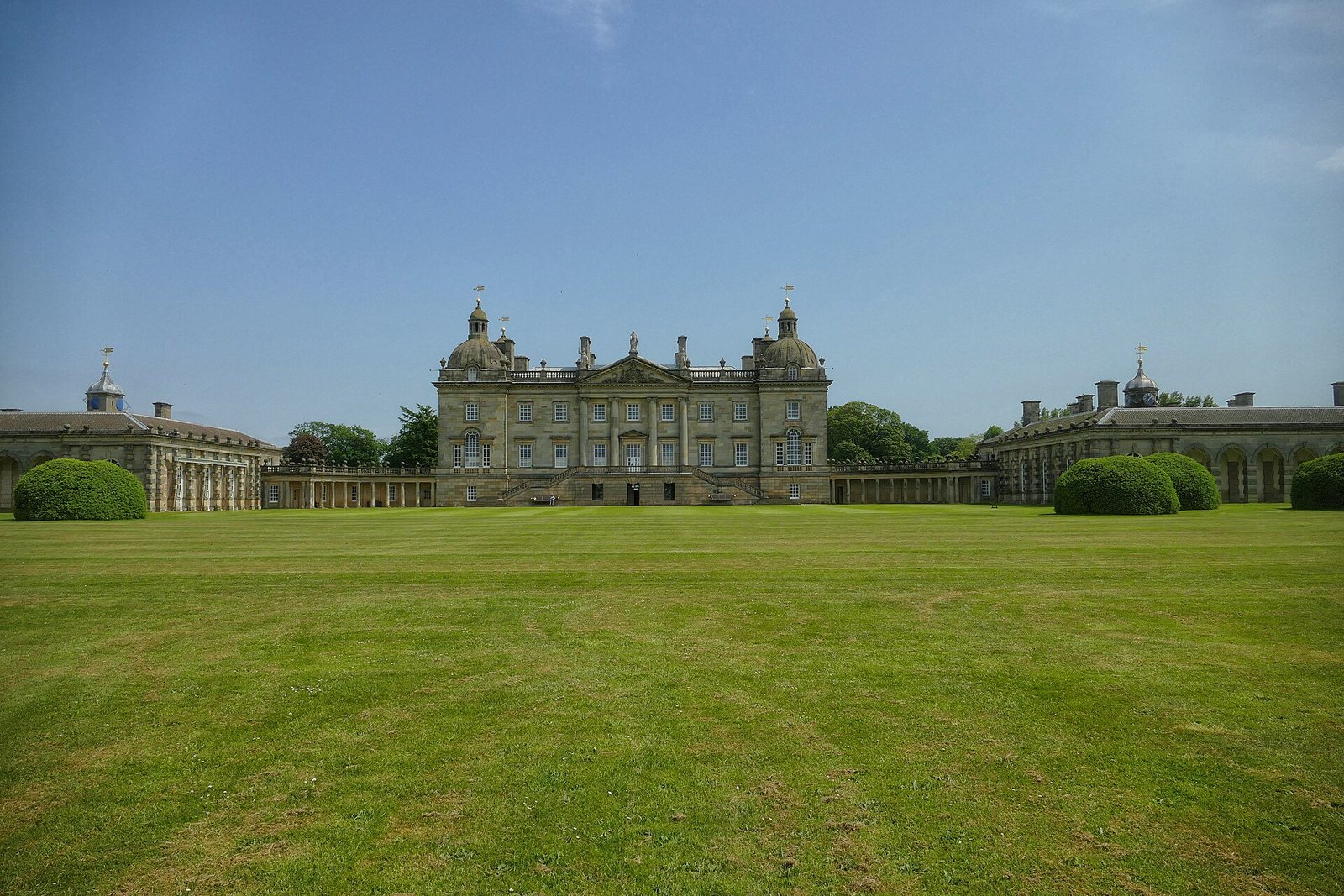
The house is arranged around a rectangular main block, with a basement at ground level, a principal upper floor, bedrooms above and attics at the top. The principal floor, known as the piano nobile, was the main ceremonial level. Two lower wings connect to the central block by colonnades, or covered rows of columns. The exterior is built of fine-grained, silver-white stone, with rough-faced masonry at basement level.
Domed towers mark the four corners of the main block. The south-west tower bears the date 1725, the south-east 1727, and the two remaining towers 1729. Inside, the colourful and richly decorated rooms contrast with the restrained stone exterior. Kent’s ceiling designs include work in the reception rooms and on the ground floor.
Stable block
A detached, four-sided stable block stands south of the house. It now houses the Cholmondeley Collection of Model Soldiers, which contains about 20,000 figures.
Park and gardens
Parkland and church
The park covers about 1,000 acres and extends into the parishes of Bircham and Harpley. Much of its landscape plan remains in place. Blocks of woodland and open parkland replaced intersecting formal avenues, while tree-lined views in four directions converge on the Hall. The park’s winding paths through wooded areas were cleared in the early eighteenth century and have been maintained since. The medieval parish church of St Martin stands on its own within the park, by the main gates.
The park includes ha-has, sunken boundaries that keep livestock out of gardens without blocking the view across the landscape. In his 1780 Essay upon Modern Gardening, Horace Walpole explained how such a boundary could make the land beyond appear continuous with the lawn and allow the garden to blend into less formal countryside.
Water tower
The park’s water tower is an ornamental folly, a structure built chiefly for picturesque effect. Robert Walpole had it built in 1731–32 to a design by Henry Herbert, 9th Earl of Pembroke. The tower was restored in 1982 and is Grade I listed.
Kitchen garden
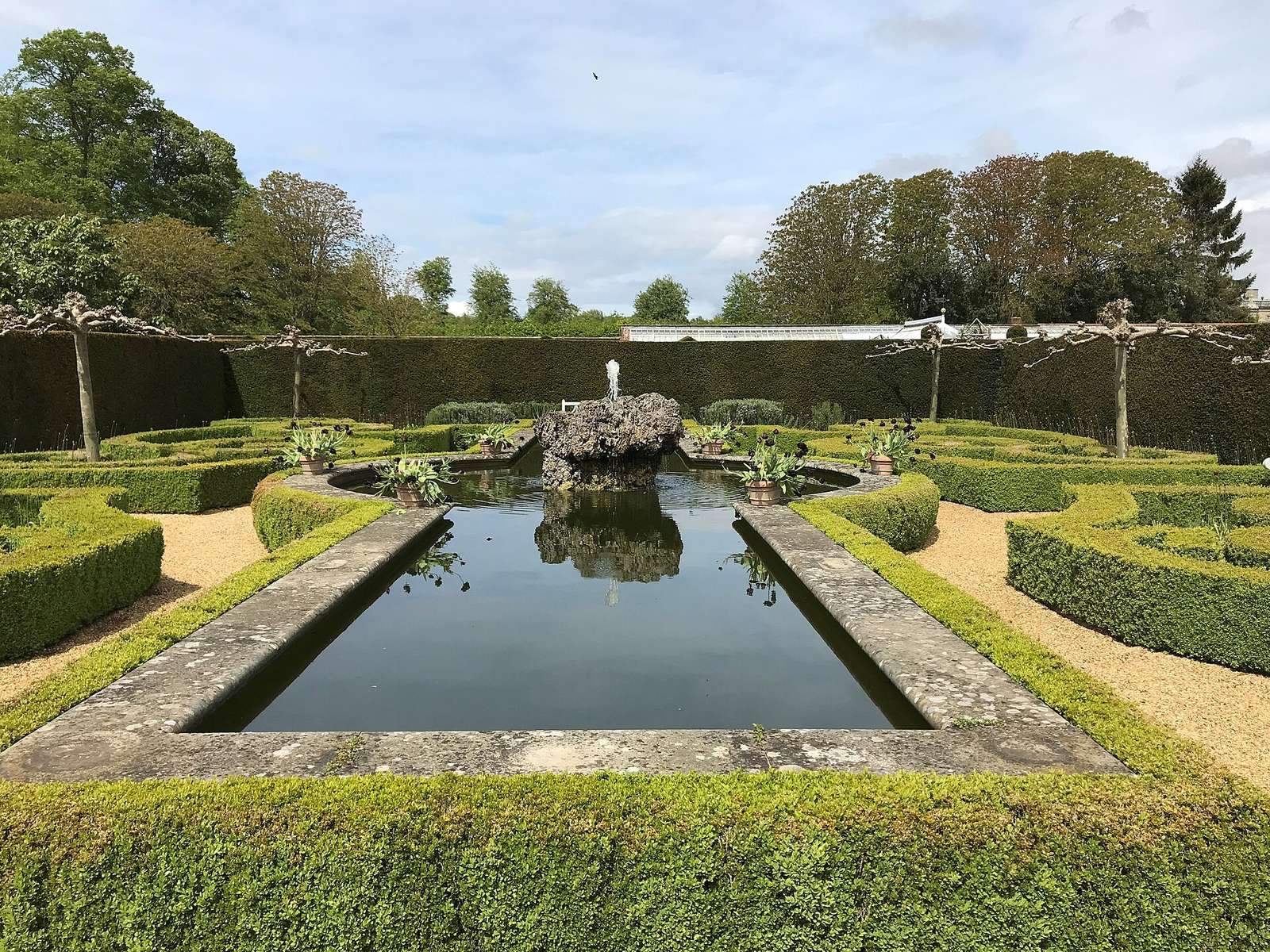
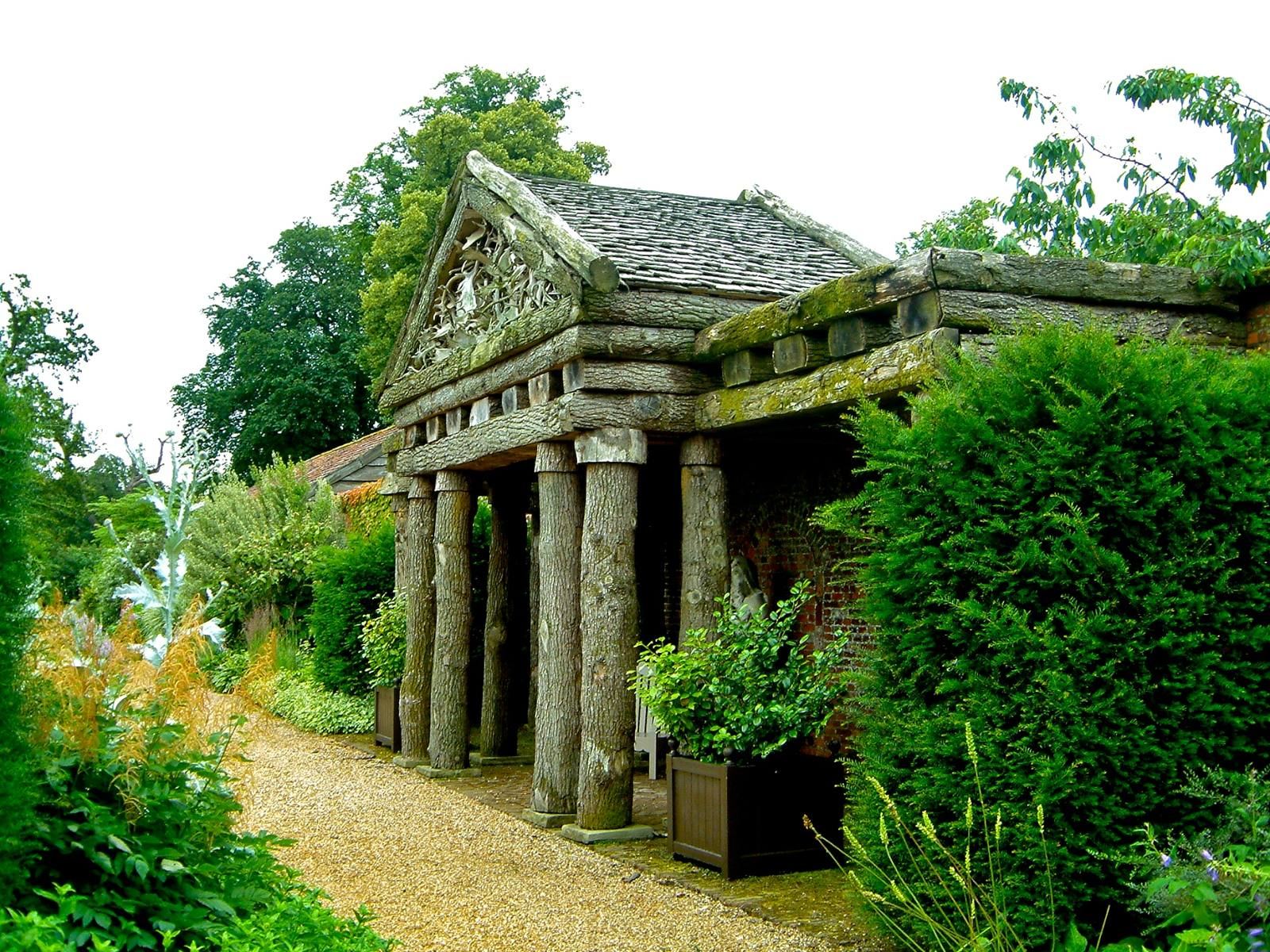
A walled kitchen garden of about five acres lies beyond the stables. After much of its productive area had diminished and the enclosure had become largely grassed over, it was replanted and redesigned in 1996. Yew hedges divide the garden into formal rooms, with some cut into swag shapes. The layout includes an Italian-style enclosure with box planting, a rose garden patterned on one of Kent’s ceilings, a French-style garden with lime trees trained into screens, and plum trees planted over spring bulbs. A croquet lawn and Jeppe Hein’s Water Flame, a fountain with a jet of water topped by a ball of flame, are also within the garden.
Artworks in the grounds
Landscape works and modern structures
West of the house, a circle of Cornish slate lies at the end of a path cut through the grass. The work was designed by British land artist Richard Long, whose art is made in relation to the landscape, often using natural materials or altering the land. Two modern ornamental structures occupy woodland beside the west front. James Turrell’s Skyspace is clad in oak and raised on stilts; its open roof frames the sky above a position that directs the viewer’s gaze upward. Nearby, Anya Gallaccio’s marble structure is shaped like a sarcophagus and stands at the end of a path.
Close to Gallaccio’s work, a copper-beech hedge is planted in lines that reflect the signature of Sybil Sassoon, the 7th Marquess’s grandmother. It is known as the Sybil Hedge.
Paintings
The paintings now at Houghton include Thomas Gainsborough’s Thomas Gainsborough, with His Wife and Elder Daughter, Mary, an oil painting of his family dated about 1751–52. William Hogarth’s portrait of the Cholmondeley family also remains on view in the house.