Davidovica Monastery: A Medieval Serbian Orthodox Foundation
Site at a Glance
- Rating
- 4.9
- Popularity
- Medium
- Country
- Serbia
- Primary era
- Medieval
- Eras represented
- Medieval
- Civilizations
- Byzantine, Serbian
- Site type
- Religious
- Remains
- Monastery
On this page7 sections
History
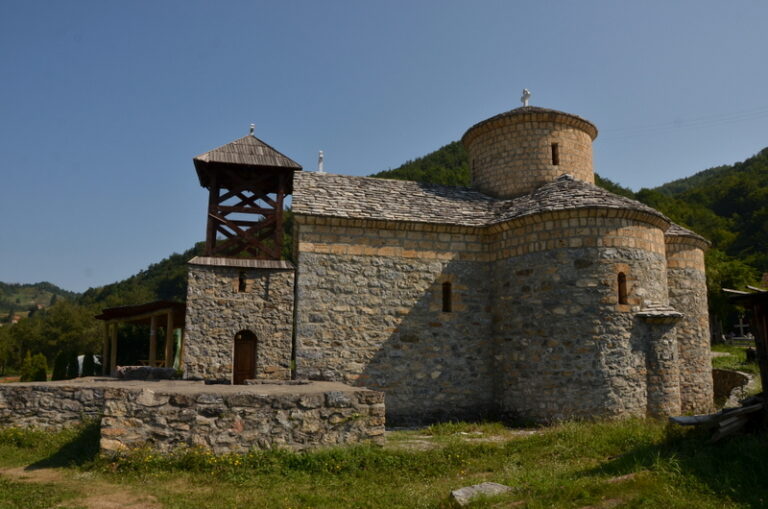
Davidovica Monastery is a Serbian Orthodox monastery near Brodarevo, Serbia. Founded in 1281 or 1282 as an endowment by Dmitar Nemanjić, it became one of the centers of medieval Serbian spiritual life. Its church follows the Raška school, a medieval Serbian architectural tradition combining eastern Roman and Romanesque influences. The monastery is dedicated to Epiphany, a Christian feast associated with the baptism of Jesus, and belongs to the Serbian Orthodox Church’s Diocese of Mileševa.
Foundation and medieval life
Dmitar was the youngest son of Vukan Nemanjić and a grandson of Stefan Nemanja, founder of the Nemanjić dynasty, Serbia’s medieval ruling house. He governed the area around Brodarevo as a regional noble. His patronage in the Holy Land and loans to Queen Jelena indicate his considerable means. He later became a monk under the name David, from which the monastery took its name.
A building contract dated 3 August 1281 commissioned Dubrovnik craftsmen Desin and his son Blažo to construct the monastery for 150 solidi, medieval coins then worth about the price of fifteen horses. The relatively low fee has been attributed to compulsory labor owed by local people to their lord. The monastery was completed in less than a year, in 1281 or 1282.
Dmitar is believed to have been buried at the monastery, though his burial remains uncertain. His grandson Vratko, the father of Princess Milica, governed the surrounding area. A nearby court associated with Dmitar and Vratko has been proposed as the birthplace of Milica and, if she had brothers, of them as well.
Ottoman rule and abandonment
The monastery was first sacked in the fifteenth century, probably around the time Ottoman forces first plundered Mileševa, several dozen kilometres upstream along the Lim River. A 1530 Ottoman register lists the monastery of David in the Bihor administrative district as part of a land-revenue assignment, with a payment of 50 akçe, Ottoman coins. A 1667 register records a payment of 200 akçe.
After 1667, the monastery is thought to have been plundered again by Ottoman forces and abandoned around 1690, during the Great Migration of the Serbs, a movement into Habsburg lands led by Serbian Orthodox Patriarch Arsenije III Čarnojević. The ruins were periodically looted during the long period of abandonment.
In 1907, during local guerrilla fighting, Muslims from Sjenica ploughed and dug over the monastery grounds in an unsuccessful search for Dmitar’s treasure. Local tradition also holds that the monastery’s books and treasure were hidden in a cave among nearby inaccessible rocks, whose entrance was walled up.
Rediscovery and revival
Serbian architect Aleksandar Deroko visited and documented the remains in 1931, drawing attention to their importance. Conservation work followed in 1960. A local initiative began reconstruction in 1998, with support from Serbia’s Ministry of Culture and supervision by the heritage-protection institute in Kraljevo. Monastic life resumed. The monastery is designated a cultural monument of great importance in Serbia.
Remains
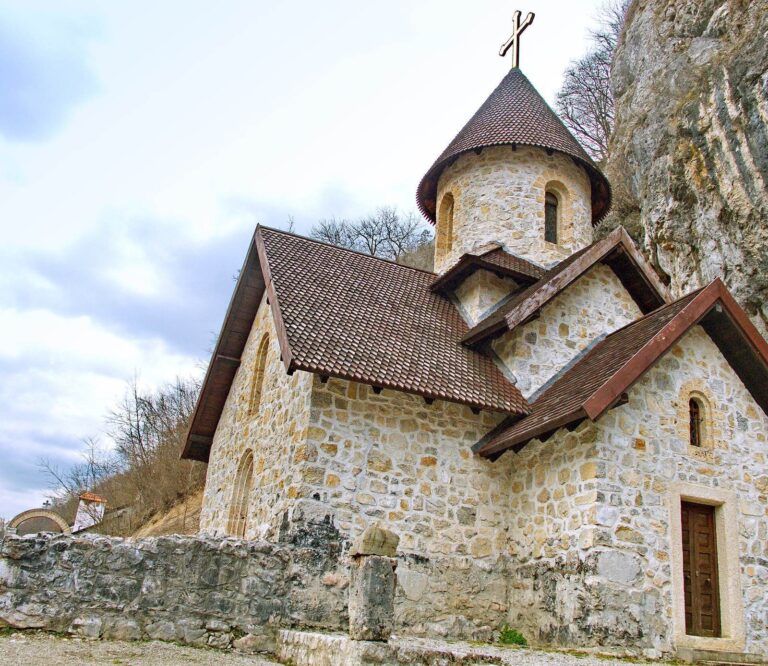
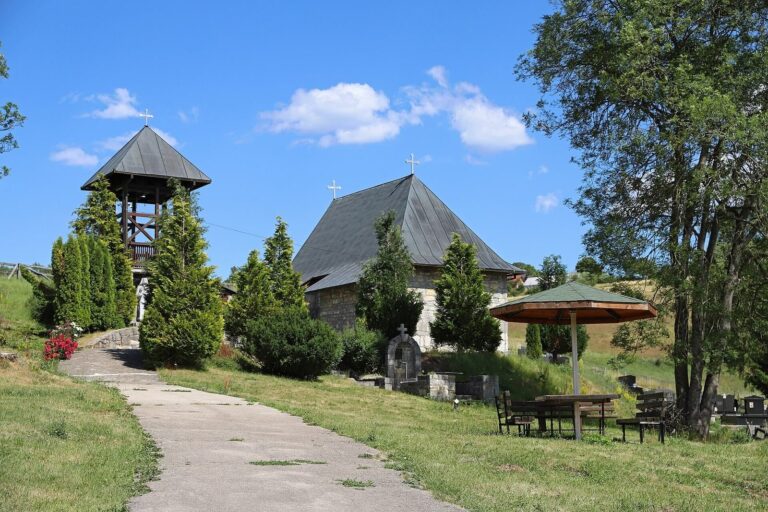
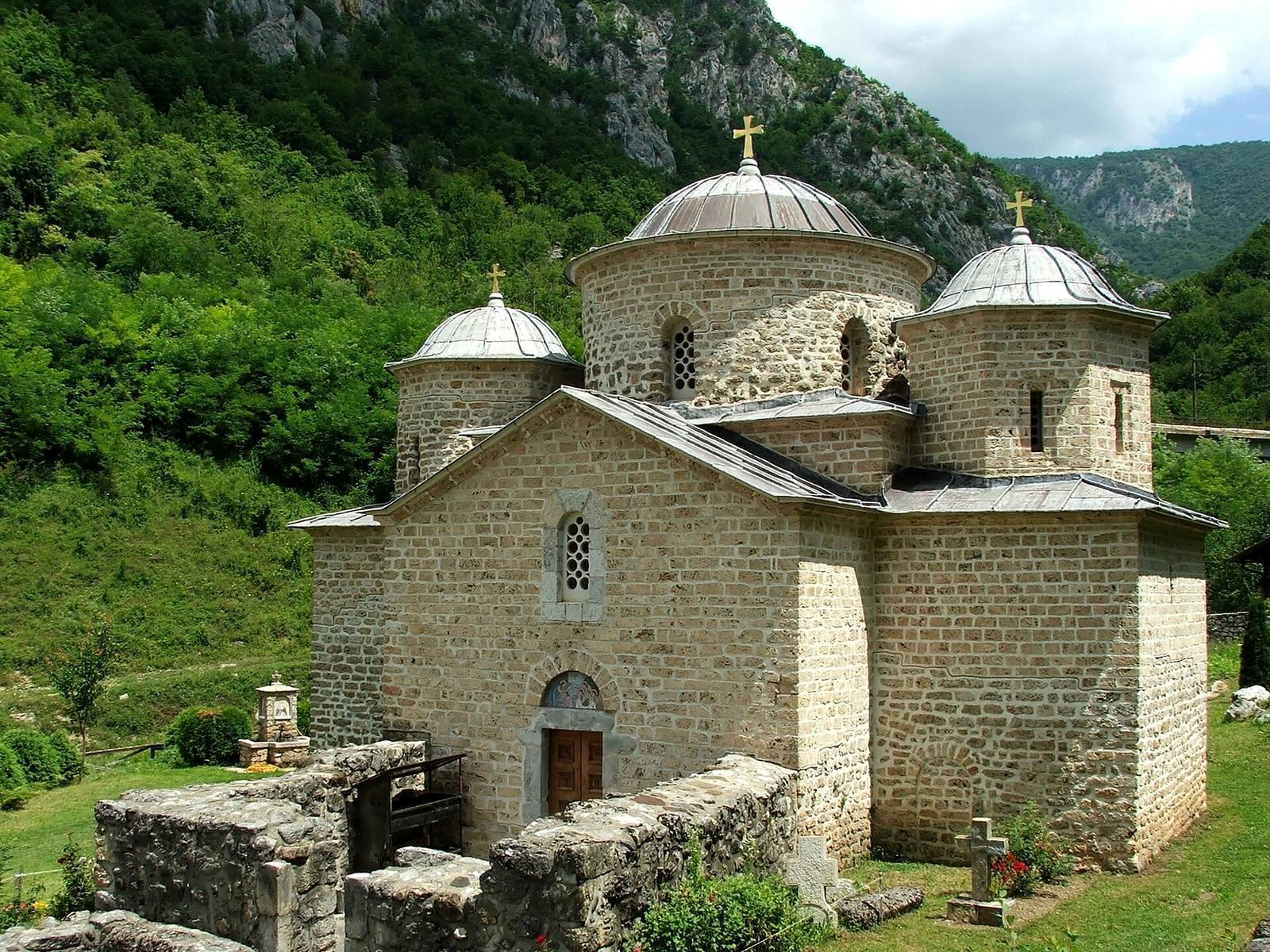
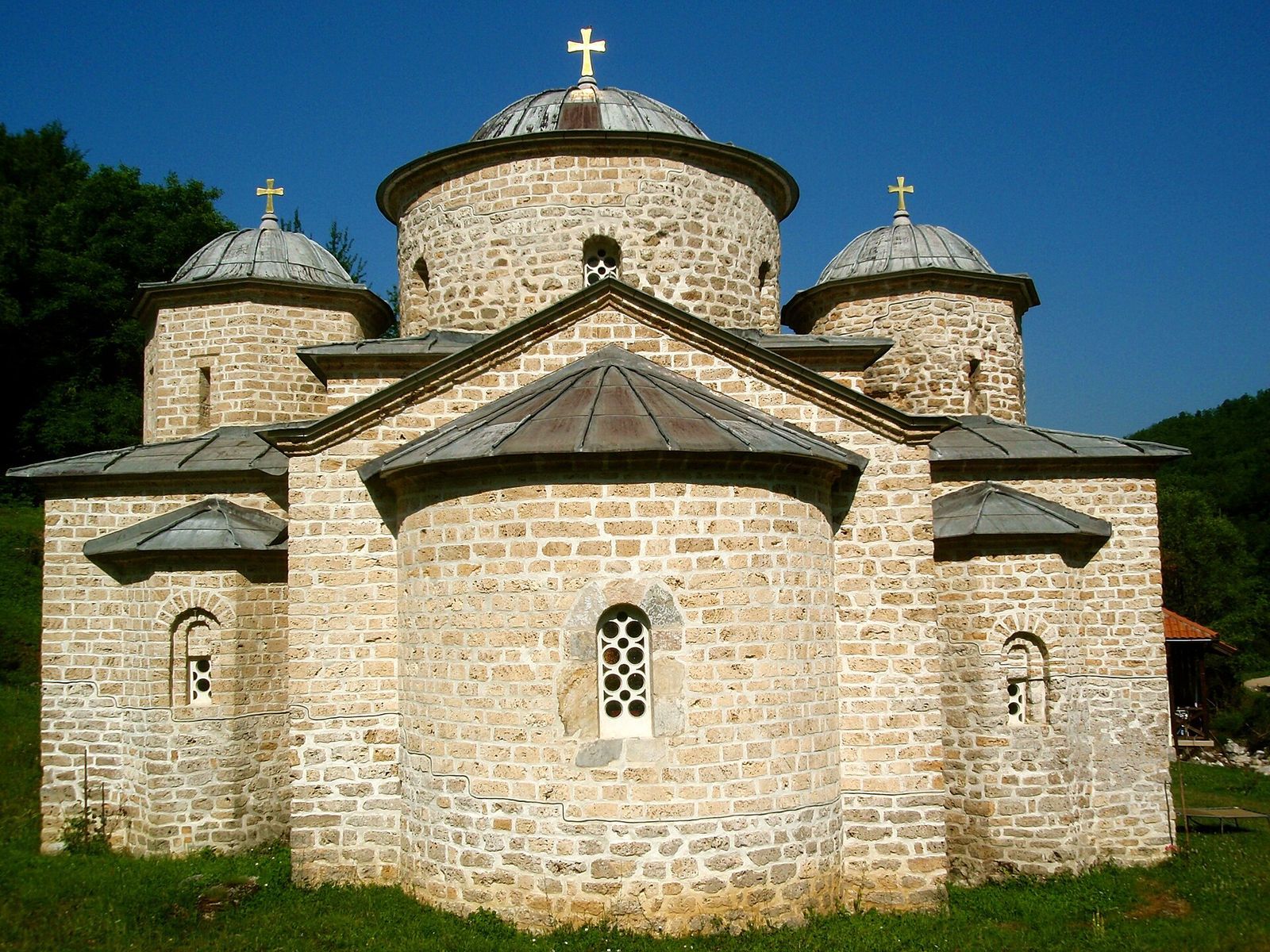
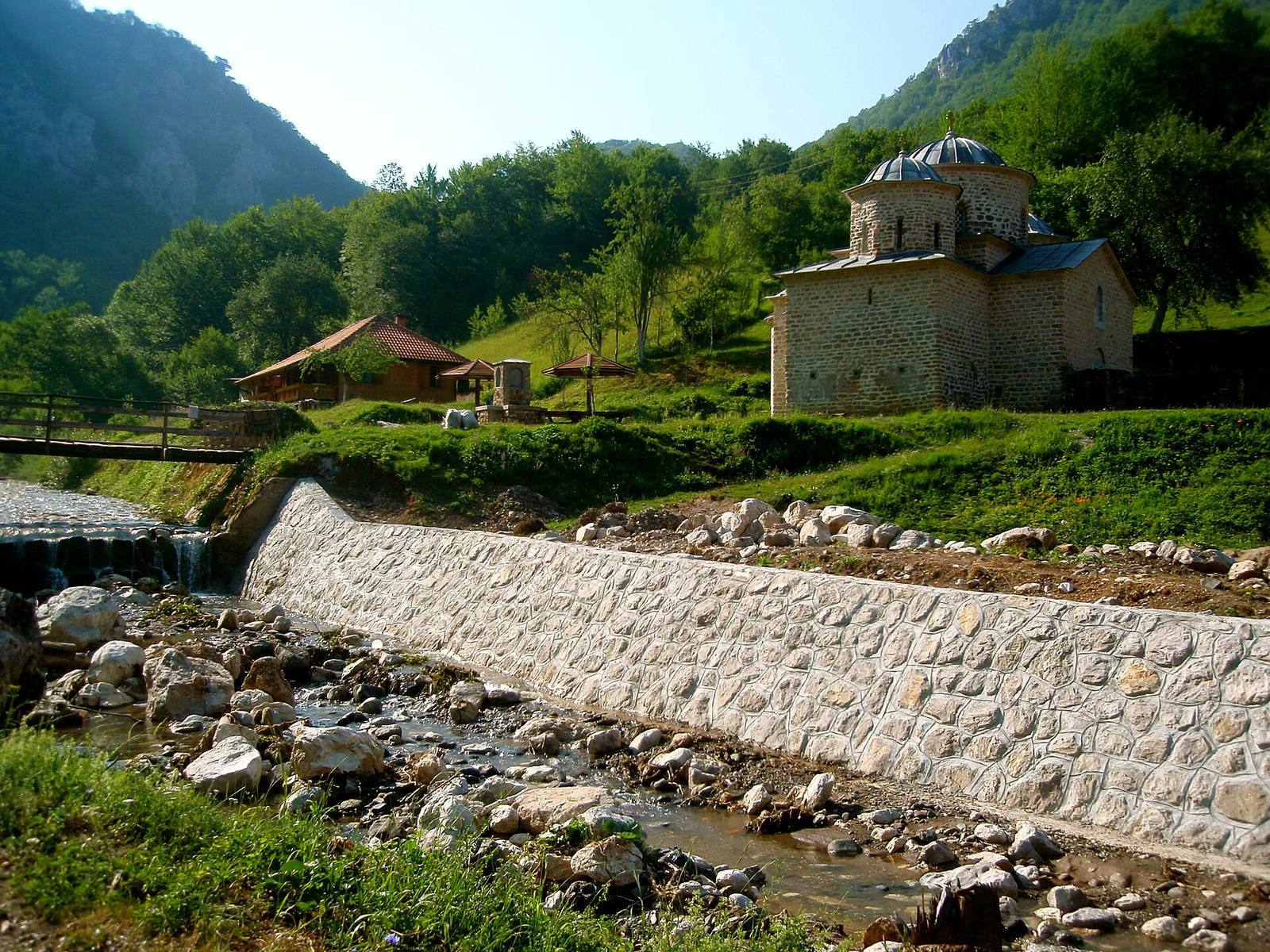
The monastery stands on the southern slopes of Jadovnik, near the Lim River and the village of Grobnice, formerly called Grobare. The name Grobnice is thought to refer to graves, probably those of the necropolis around the earlier church. The site is centered on a single-nave church with a dome and chapels on its north and south sides.
The church and its predecessor
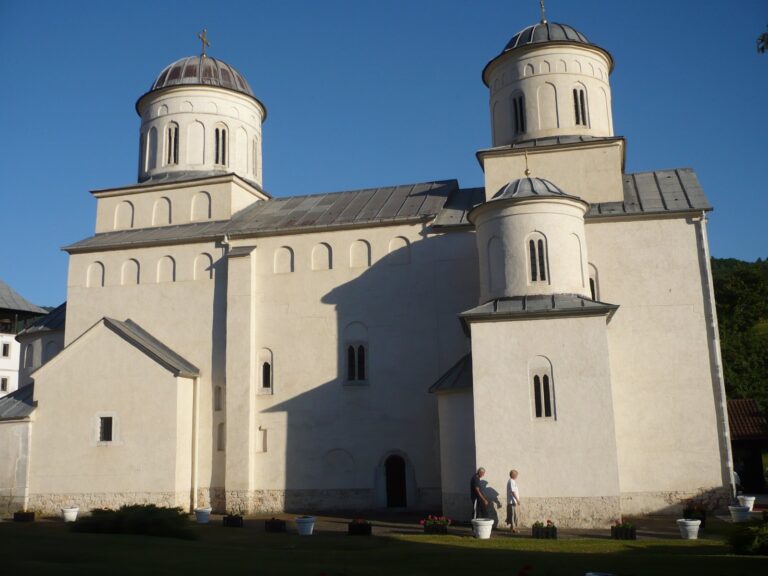
The church was built over the foundations of a sixth-century basilica, a long-plan church from the Byzantine Empire, the eastern continuation of the Roman Empire. The earlier building’s foundations and the surrounding necropolis have been identified through excavation. Davidovica’s church measures 17 metres in length, including its entrance hall, and its walls are between 80 centimetres and 1 metre thick. An apse, the rounded sanctuary end, completes the single nave beneath the dome. Domed chapels on the north and south sides take the place of projecting arms in the church plan.
During the period of ruin, the church lost its roof structure and lead covering. Most of the building has since been reconstructed, while the entrance hall was not rebuilt. Lead sheeting marks the boundary between original fabric and reconstructed sections.
Frescoes, inscriptions, and burials
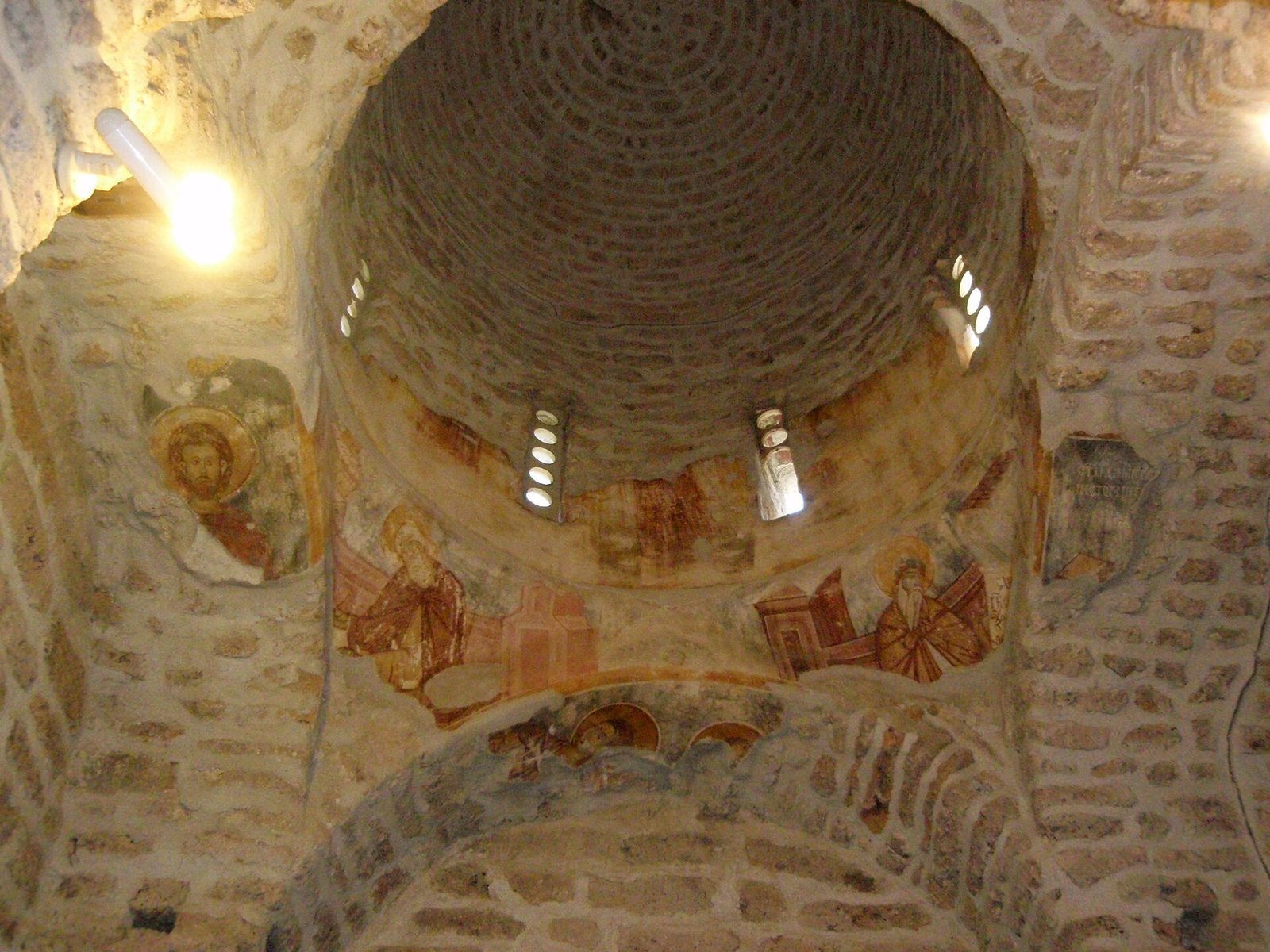
Small fragments of the original frescoes survive. Faint scenes in the northern part depict the life of Saint Demetrius of Thessaloniki, an early Christian martyr. A fragment in the northwest appears to show an earlier form of the church without its side chapels. The fresco remains were conserved in 2011. A grave slab associated with Vratko bears a carved coat of arms and an inscription that names him as God’s servant and begins to record his death in May.
Excavations in the monastery precinct uncovered numerous skeletons and five skulls. Local tradition associates the skulls with Jug Bogdan and his nine sons, the Jugovići, legendary figures of Serbian oral epic tradition; this identification belongs to legend rather than established history.