Creake Abbey: An Augustinian Monastic and Hospital Foundation in England


Site at a Glance
- Rating
- 4.4
- Popularity
- Low
- Country
- United Kingdom
- Primary era
- Medieval
- External website
- Open
- Eras represented
- Medieval
- Civilizations
- English
- Site type
- Religious
- Remains
- Monastery
On this page7 sections
History
Creake Abbey is a medieval Augustinian religious house in the United Kingdom, near Fakenham in Norfolk. The Augustinians, members of communities following the Rule of Saint Augustine, established it as a priory during the twelfth century on the site of an almshouse for poor or needy people. Voluntary gifts from the Nerford and Creake families and local worshippers appear to have provided the resources for its development from hospital to priory and then to abbey in 1231.
Growth and religious life
Henry III supported Creake during its early history through several grants. The abbey received parish churches including Hapton and Wreningham, Gateley, and St Martin at Quarles. In 1365, St Andrew at Great Ringstead was added to these possessions. Such gifts helped sustain the institution and its religious and charitable functions.
Creake reached its height during the fourteenth century. Although the community contained only six canons, its organization included an abbot, prior, cellarer, cantor, sacrist and kitchener, refectorian, infirmarian, almoner, master of novices, and guest master. Junior canons and novices were present at times, while servants, agricultural workers, craft and laundry workers, and hospital residents also formed part of the wider community. Unlike some other regional abbeys, Creake continued to operate its hospital as late as 1397.
Fire, rebuilding, and dissolution
A fire in 1483 damaged the church and several other buildings. The convent could not restore them from its own resources, so the abbot appealed to Richard III, king of England from 1483 to 1485. The king granted £46 13s. 4d. towards rebuilding from the revenues of the lordship of Fakenham.
Robert Walsingham became abbot in 1491 and began extensive rebuilding of the quire, the part of the church reserved for clergy and choir, and the presbytery, the area around the high altar. Sir William Calthorpe left £74 for the work. By 1503 it was well advanced, and land given by Walter Aslake helped complete the quire’s north side. Giles Sherington was abbot by that time.
In 1506, an outbreak of sweating sickness, a severe epidemic disease recorded in England during the late medieval and early modern periods, killed the entire monastic community. The abbot died last. In 1507, the abbey site and estate were granted to Lady Margaret Beaufort, a prominent late-medieval noblewoman and the mother of Henry VII. The property later passed to Christ’s College, Cambridge.
Later preservation
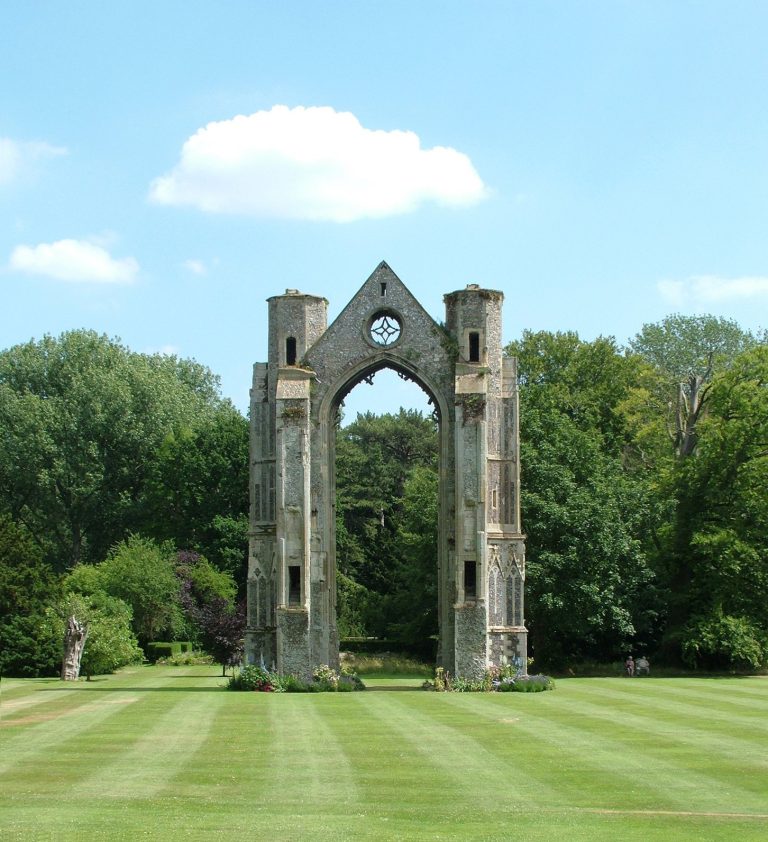
The church was dedicated to Saint Mary. Restoration took place in 1864 under R. M. Phipson, Chief Architect of the Diocese of Norwich. The ruins are in the care of English Heritage and are Grade I listed, England’s highest category of statutory protection for buildings of exceptional architectural or historic interest. They form part of a wider Scheduled Monument, an archaeological or historic monument protected under national law.
Remains
Abbey church
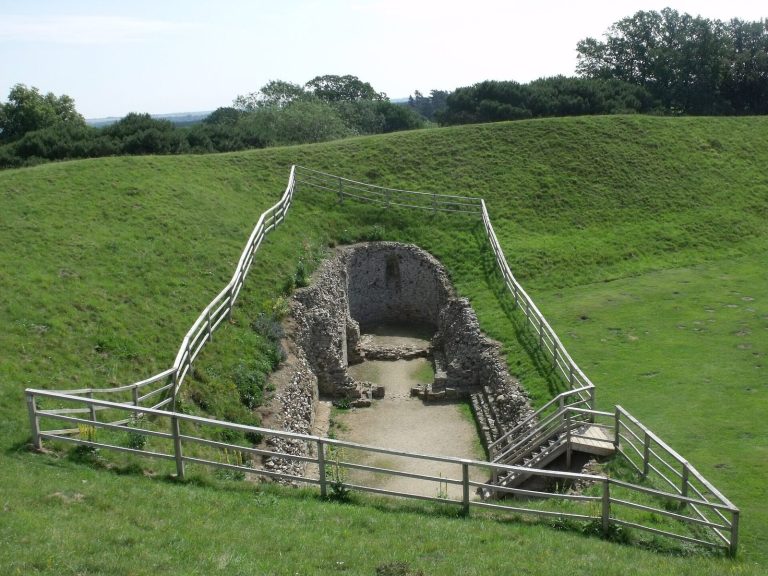
The ruins stand beside the River Burn, approximately one mile north of North Creake. The abbey church is the principal surviving element. Its standing remains include a few sections of wall built in traditional Norfolk flintwork, a masonry technique using locally abundant flint as a principal material. Carved details remain in some window arches and doorways, while foundations make up much of the wider archaeological remains. Four bays of the church’s six-bay chancel, the eastern part containing the altar and clergy seating, survive to roof height.
Farmhouse and garden walls
The wider heritage site also includes Creake Abbey Farmhouse, a building combining medieval and nineteenth-century work. Garden walls stand between the farmhouse and the abbey ruins, adding to the surviving physical layout of the former monastic complex.