Iwabatake Kofun: A Late Kofun-Period Burial Mound in Japan
Site at a Glance
- Popularity
- Very Low
- Country
- Japan
- Primary era
- Medieval
- Eras represented
- Medieval
- Civilizations
- Yamato
- Site type
- Burial
- Remains
- Burial Mound
On this page6 sections
History
Iwabatake Kofun is a burial mound in Hofu, Yamaguchi Prefecture, Japan, probably built between the late sixth and first half of the seventh century. It belongs to the Late to Final Kofun period, an era associated with the construction of elite burial mounds.
The tomb’s locally distinctive horizontal stone chamber, an underground burial room reached through a passage, is the largest of its type in the area. Its scale is comparable to chambers associated with the Kinai, the region around Japan’s ancient political centers in central Honshu, and with Kyushu. The Hofu Plain lies at the edge of the distribution areas for both styles, making Iwabatake relevant to the study of political conditions at the time.
Remains
Physical layout
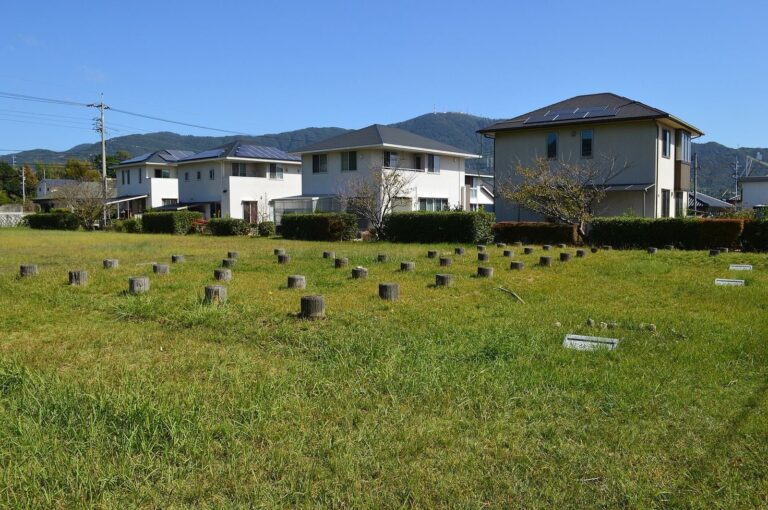
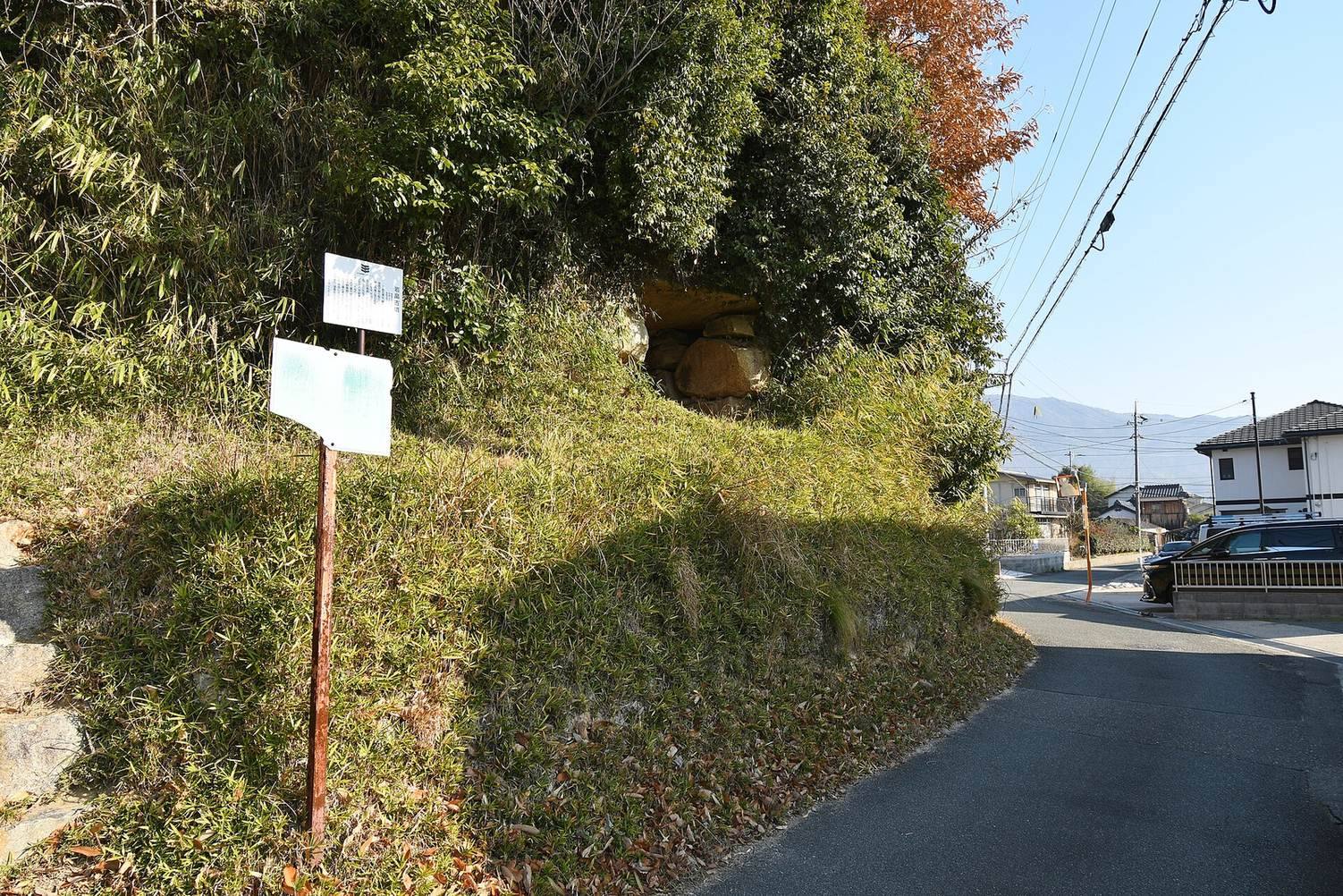
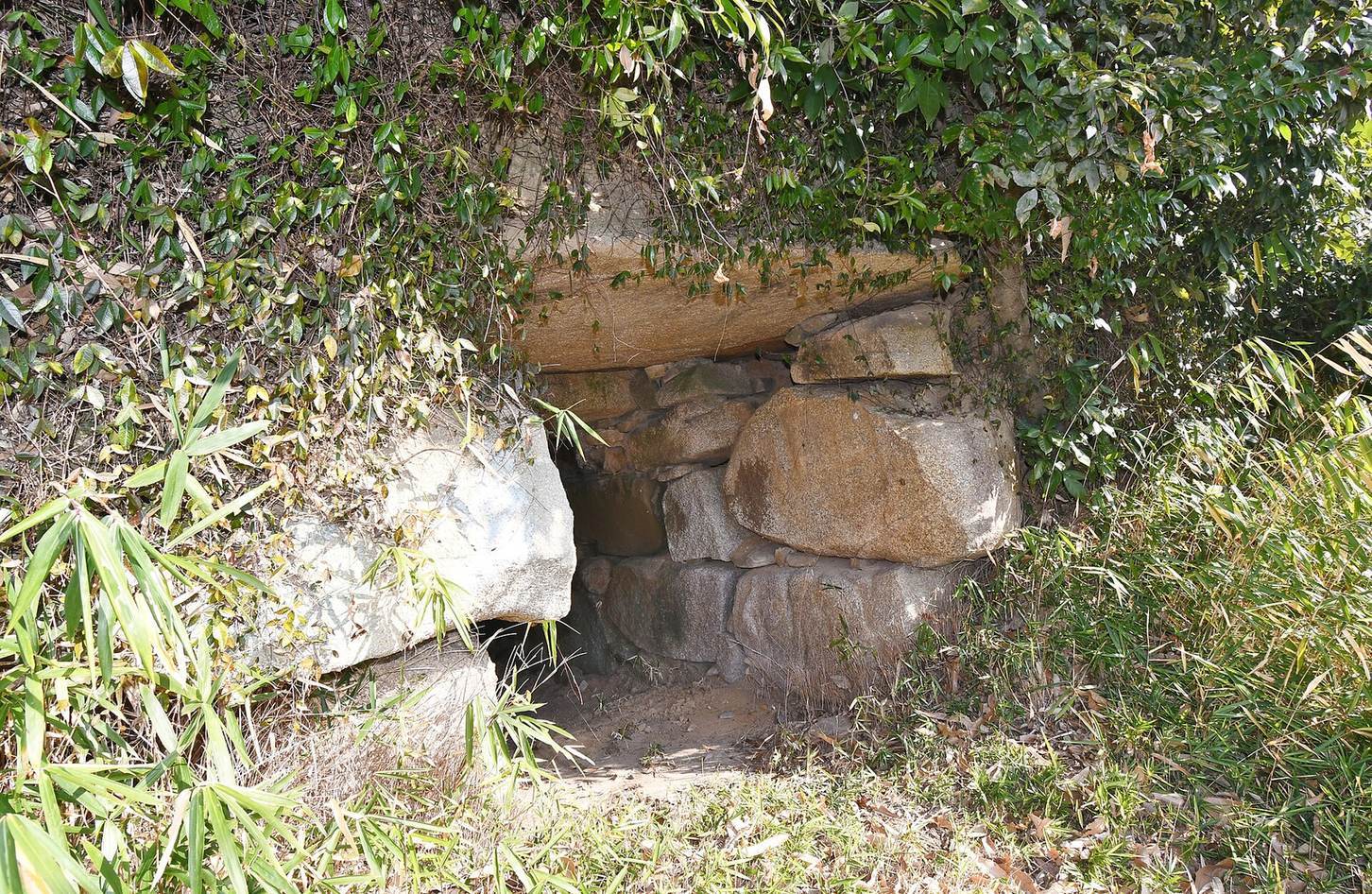
The site lies at the southeastern foot of Mount Tatara, in the eastern part of the Hofu Plain. Its remains include a substantially reduced mound and a south-facing stone chamber, with a separate mound formerly situated to the west.
Mound
The mound is thought to have been circular. Its surviving diameter exceeds 10 metres, while its original diameter is estimated at 20 to 30 metres. A road runs along its southern and eastern sides.
Stone chamber
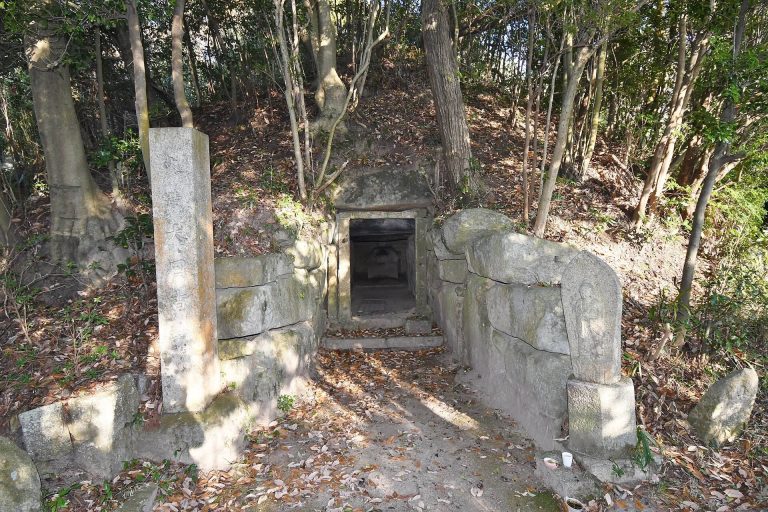
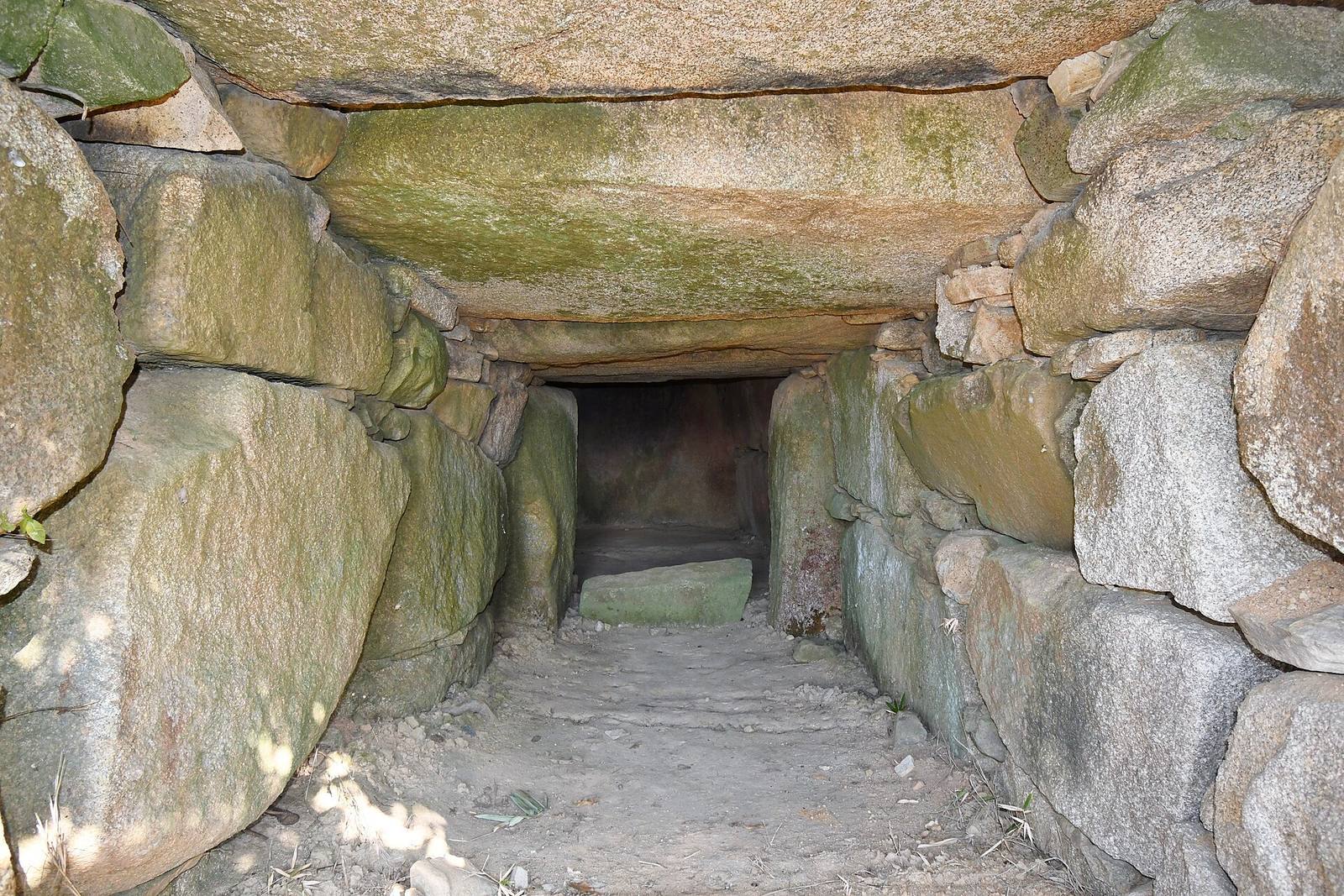
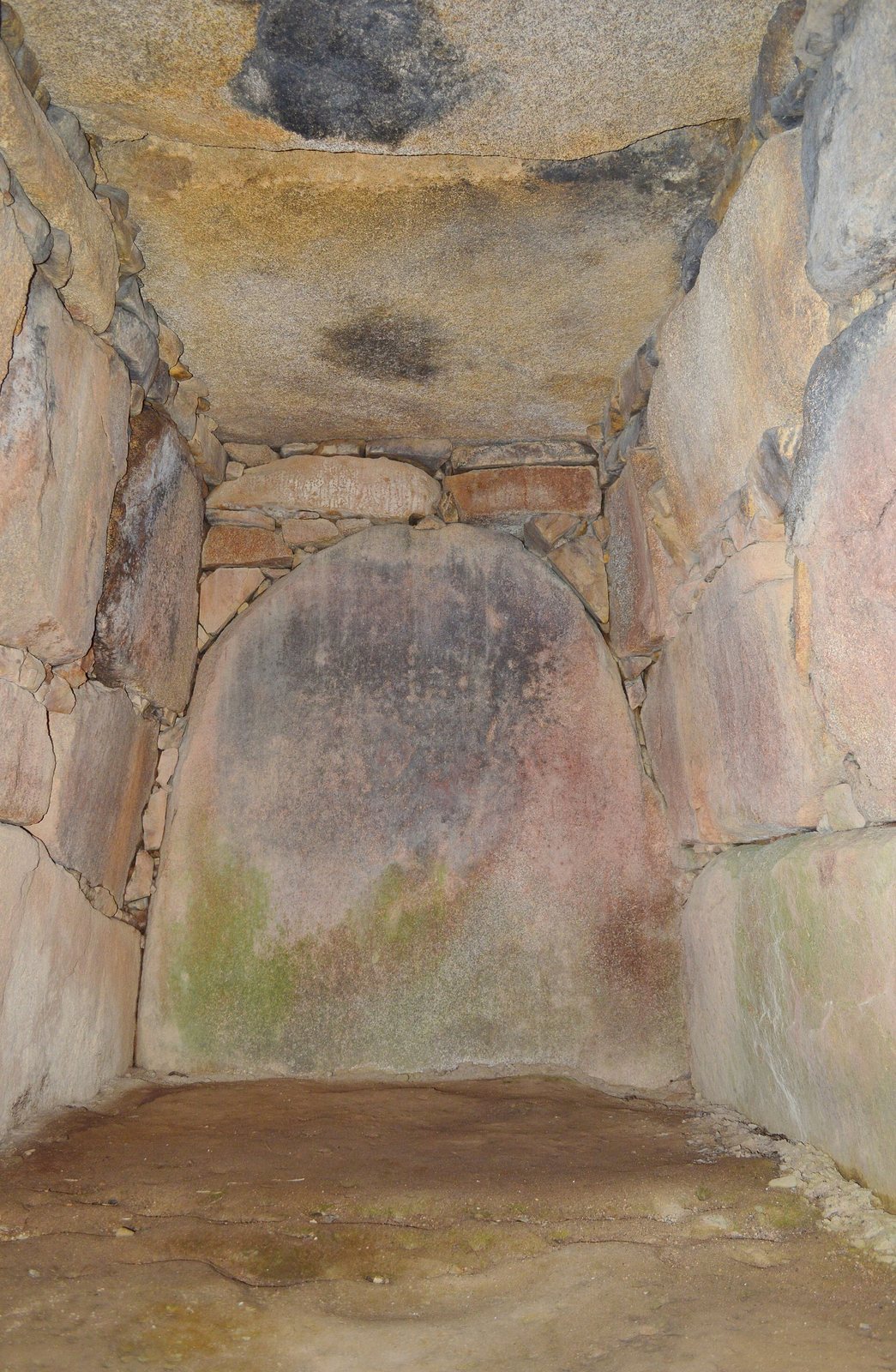
The chamber is built from massive granite blocks and opens to the south. Its passage joins the burial room at projecting shoulders on both sides, and the complete chamber measures 10.1 metres long. The burial room is 4.5 metres long, 2.5 metres wide, and 2.9 metres high; the passage is 4.5 metres long, 1.8 metres wide, and 1.6 metres high.
The rear wall is formed almost entirely by a single stone, while an especially large block occupies the lowest course of the right side wall. Two stones make up the roof. A floor-level stone where the passage meets the burial room may have served as a threshold, although its original position is uncertain. The chamber’s locally developed construction includes inward-sloping side walls and small stones packed between larger blocks.
Mound No. 2
A separate mound known as Mound No. 2 stood west of Iwabatake Kofun. Sue ware, a high-fired stoneware made in ancient Japan, was recovered from it.