History and Archeology Museum of Nola: A Museum of Campanian History


Site at a Glance
- Rating
- 4.5
- Popularity
- Low
- Country
- Italy
- Primary era
- Classical
- External website
- Open
- Eras represented
- Bronze Age, Classical, Medieval, Early Modern, Modern
- Civilizations
- Ancient Greek, Etruscan, Roman, Samnite
- Site type
- Museum
On this page19 sections
History
The History and Archeology Museum of Nola is a museum in Italy that presents the history of Nola and its surrounding area from prehistory to the modern age. Nola developed on the Campanian plain, where the land narrows between Vesuvius and the first Apennine peaks. The city was built, destroyed, and rebuilt before Rome was established, and later maintained a complex relationship with Rome shaped by both rivalry and friendship.
Prehistoric Nola and the volcanic landscape
The museum’s chronological narrative begins with prehistoric communities and the volcanic events that transformed their settlements. At Croce del Papa near Nola, huts were buried by the Avellino pumice eruption, a Bronze Age eruption of Somma-Vesuvius. The collections also present evidence of the Pollena eruption in late antiquity. At Starza della Regina in Somma Vesuviana, a monumental villa was buried by this eruption in the late fifth or early sixth century AD.
From early settlements to Oscan culture
Nola’s development from the eighth century BC onward is presented through material reflecting Greek and Etruscan influence, followed by the arrival and spread of Oscan culture. Oscan was an ancient Italic language spoken in parts of southern Italy, including areas associated with Samnite communities. The earliest tombs associated with Nola date from the eighth or seventh centuries BC. One especially rich female tomb from the late eighth century BC contained ornaments linked to long-distance exchange, including gold-covered silver pendants decorated with set amber discs and three blue-paste scarabs from Egypt.
The section devoted to Nola’s origins covers the eighth to sixth centuries BC. The later Oscan period extends from the Roman conquest of Nola in the early third century BC to the Social War of 90–88 BC, a conflict in which Rome’s Italian allies sought Roman citizenship and political rights. The museum also addresses Samnite culture, the Oscan language, and aspects of Oscan anthropology.
Roman rule and the end of antiquity
After the Roman conquest, Nola retained its wealth and prestige and was presented as the most important civitas south of Rome. A civitas was a Roman civic community with its own political and legal identity. Roman-period material includes evidence from the city’s amphitheatre, funerary contexts, and inscriptions. The displays continue through the end of antiquity, including evidence from the Pollena eruption and from the villa at Starza della Regina.
Medieval, Renaissance, and modern Nola
The museum’s medieval and Renaissance narrative incorporates material from the Early Christian basilicas of Cimitile, the Early Christian Basilica of Tufino, Orsini Palace, and the church of Santa Maria la Nova. Its modern section presents Nola’s cultural traditions, including the Festival of the Lilies, a major religious and civic celebration centered on large decorated, obelisk-like structures carried through the city.
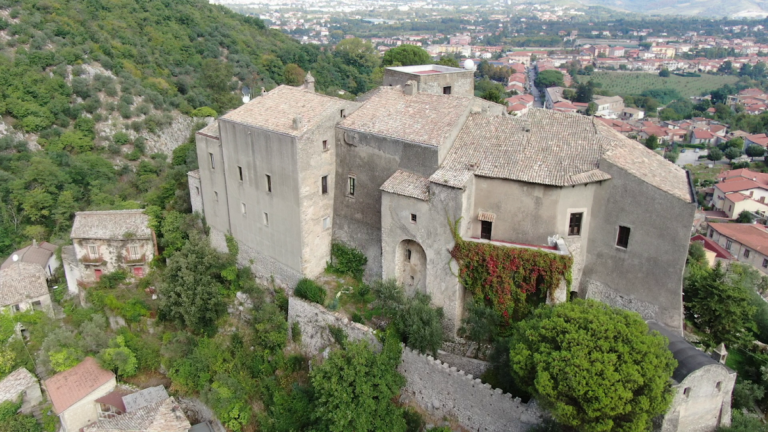
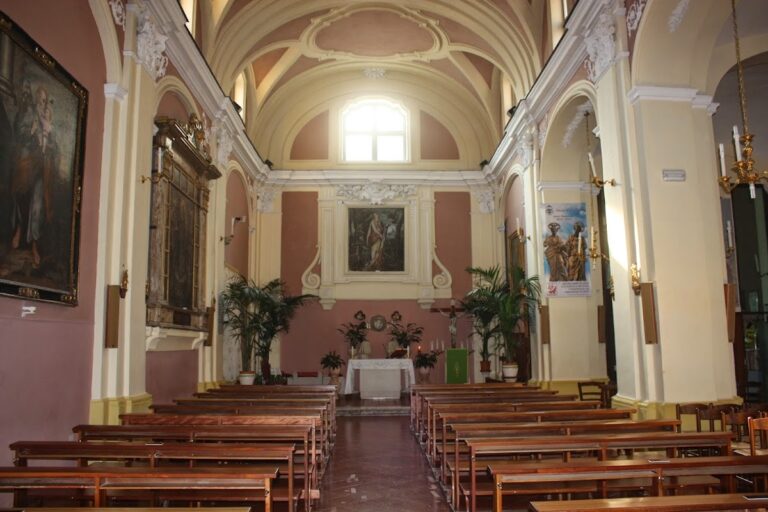
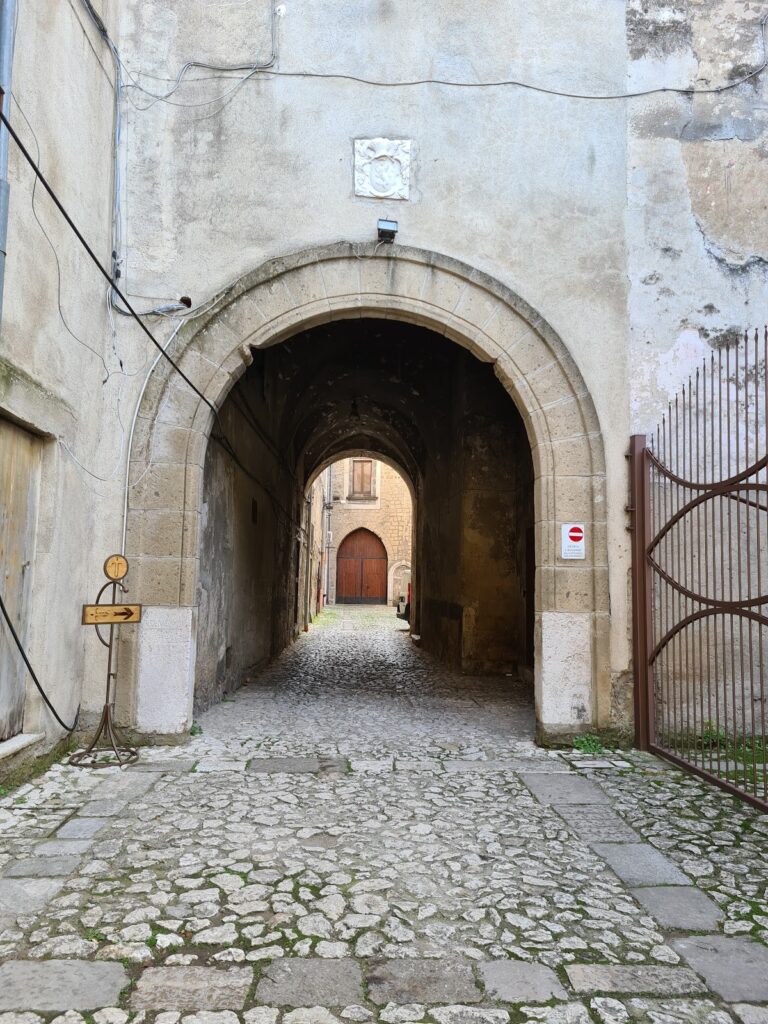
The museum occupies the convent complex of Santa Maria la Nova, which had housed the Canossian Sisters since 1521. The Canossian Sisters are a Catholic congregation founded by Magdalene of Canossa in the nineteenth century and dedicated especially to education and charitable work. The museum has occupied the complex since 2000 and was inaugurated in 2009. Its collections combine archaeological finds and reconstructions from the Nola area with works donated by private individuals and public bodies in the region. They extend from prehistoric material to medieval and modern collections. Since December 2014, the museum has been managed through the Campania Museum Network, an arrangement transferred in December 2019 to the Regional Museums Directorate.
Remains
Arranged across three floors of the former Santa Maria la Nova convent complex, the museum combines archaeological finds, reconstructions, artworks, and material from local excavations. The complex also includes a conference room and a library. Its displays connect prehistoric settlements, funerary evidence, Roman public and private life, medieval and Renaissance excavations, and Nola’s continuing artistic traditions.
Prehistoric settlements and evidence
Croce del Papa huts
The prehistoric section includes finds from archaeological sites near Palma Campania and from Croce del Papa. A reconstructed hut, based on excavated remains, is furnished with recovered objects and artefacts, including more than 200 vessels from the Croce del Papa huts. Some vessels are decorated, while others retain their original contents. The reconstruction also incorporates the impression of the woven framework that formed the outer covering of three huts.
Agricultural and human evidence
Volcanic ash preserved impressions and remains connected with agricultural life at Croce del Papa. These include impressions of barley (Hordeum vulgare) and emmer, an almond, other food species, and leaves from fruit trees and oak. The prehistoric displays also include reconstructions of the physiognomic features of three individuals recovered from burials. A roughly hand-modelled clay female statuette, found with miniature vessels, is presented as evidence of a cult.
Funerary archaeology
Early and pre-Roman tombs
The funerary displays contain pottery from Cumae and Daunia, bucchero ware, Etruscan-Corinthian objects, and vessels attributed to local ceramic painters known as the Painter of Alchimacus and the Berlin Painter. A red-figure column krater, a large vessel for mixing wine and water with column-shaped handles, is attributed to the Painter of Naples.
Tombs of the Horseman, Togati, and Dancer
The “Tomb of the Horseman” is represented by a slab from a semi-chamber tomb excavated on Via Seminario in Nola in 1977. A semi-chamber tomb is a burial structure with a chamber entered through, or connected to, a smaller forepart. The slab bears a portrait of a horseman wearing a horned helmet. The museum also reconstructs the Tomb of the Togati and the Tomb of the Dancer, alongside painted chest tombs and semi-chamber tombs from Nola’s sixth- to fourth-century BC funerary contexts.
Roman and imperial-period material
Urban and funerary collections
Roman-period displays include statues that decorated tombs, burial goods, and other grave relics from the city’s amphitheatre. A series of inscriptions accompanies this material. The imperial-period section adds statues, busts of emperors, reliefs, amphorae, sculptures, and other archaeological objects.
Villa at Starza della Regina
A separate section is devoted to the monumental Roman villa at Starza della Regina in Somma Vesuviana. Its marble sculptures include a female figure dressed in the Greek style. This Campanian Imperial-period work was based on a Greek model dating from the late fifth century BC. Other archaeological material comes from Cangio in Nola, Starza della Regina, Cicciano, Cimitile, and San Paolo Belsito.
Medieval and Renaissance collections
The medieval collection includes funerary goods from excavations at the Early Christian Basilica of Tufino. Renaissance material comes from excavations at Orsini Palace and Santa Maria la Nova. The museum displays an Annunciation panel by Giovanni Angelo D’Amato, a sixteenth-century Immaculate Conception generally attributed to Giovanni Andrea Taurella, and an eighteenth-century Annunciation by Domenico Antonio Vaccaro, made for the church of Santa Maria del Plesco at Casamarciano.
Craft traditions and the Festival of the Lilies
Papier-mache and ceremonial structures
A collection of artistic papier-mache objects explains the connection between Nola’s papier-mache tradition and the Festival of the Lilies. During the celebration, lightweight papier-mache ornaments decorate large ceremonial structures. The related display includes scale reconstructions of the Lily structures and their construction technique.
Festival model and Neapolitan ceramics
The Festival of the Lilies section contains a large illuminated and sound-equipped model of Nola during the celebration. It shows crowds, Lily obelisk structures, and garlands. A separate display of Neapolitan tiles and ceramics contains more than 300 objects dating from the sixteenth century onward, drawn from the Diodato Colonnese collection.