Castello di Cicala: A Hilltop Castle in Italy


Site at a Glance
- Rating
- 4.2
- Popularity
- Very Low
- Country
- Italy
- Primary era
- Medieval
- External website
- Open
- Eras represented
- Medieval
- Civilizations
- Norman
- Site type
- Military
- Remains
- Castle
On this page6 sections
History
Castello di Cicala is a hilltop castle in Castelcicala, Italy, whose origins are uncertain and may lie either in the fifth century or the early Middle Ages. One tradition places its construction around 460, after the Vandals, a Germanic people led by King Geiseric, devastated Nola below. Another attributes the foundation to the Lombards, who ruled much of Italy in the early Middle Ages, particularly the princes of Benevento. The name is said to come from the Greek gea calos, meaning “beautiful land.”
Early records and Norman rebuilding
A document preserved by the Territorial Abbey of Montevergine, a religious institution in Campania with territorial jurisdiction, described the castle as partly destroyed in 934. The Normans, a Scandinavian-descended ruling elite who established states in southern Italy, restored it during the eleventh and twelfth centuries. Roger II, the Norman king who united these territories into the Kingdom of Sicily, may have been involved in this work. The castle was enclosed by a circuit of walls and served from 1130 to 1140 as one of the bases used during the siege of Naples.
Noble ownership
In 1269, King Charles I, an Angevin ruler of Sicily, granted the County of Nola, including Castello di Cicala, to Guy de Montfort, a French nobleman. The castle then entered a period of decline. The Orsini family, one of Italy’s prominent noble houses, later held it for about two centuries, until 1532. Although the family made little use of the property, it appointed a castellan, an official responsible for administering and defending a castle.
In 1534, Emperor Charles V granted the castle to Francesca Monbel, but it returned to the Orsini family in 1546 under Raimondo Orsini. The Albertini family owned it during the second half of the sixteenth century. In the seventeenth century, the property passed among several lords, including Ladislaus IV Vasa, King of Poland, who acquired it in 1640.
Later history
The Ruffo family took possession in 1660 and lived at the castle until the unification of Italy, the nineteenth-century process that brought the Italian states together into one kingdom. The property later passed to the Counts Sallier de la Tour, who donated it to the Capuchins, a reform branch of the Franciscan order. The halls were subsequently restored and now serve as spaces for events.
Remains
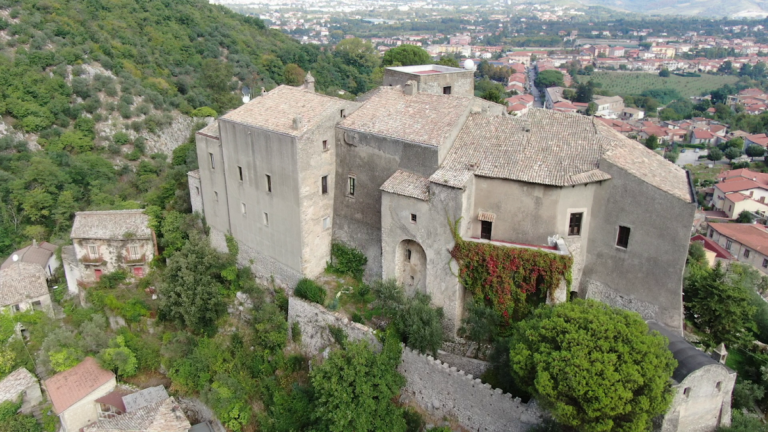
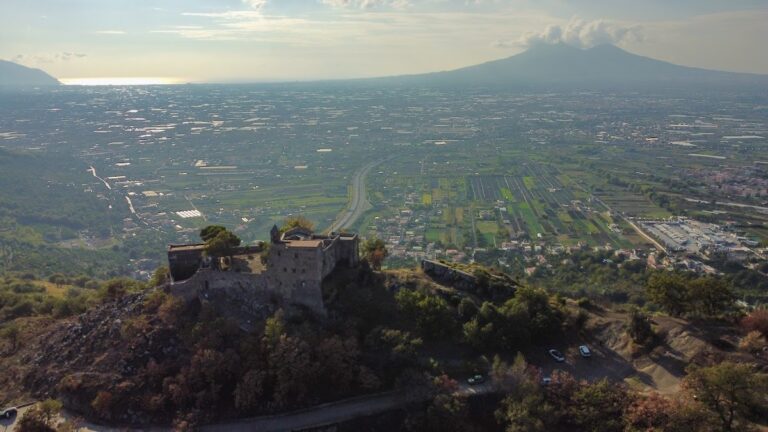
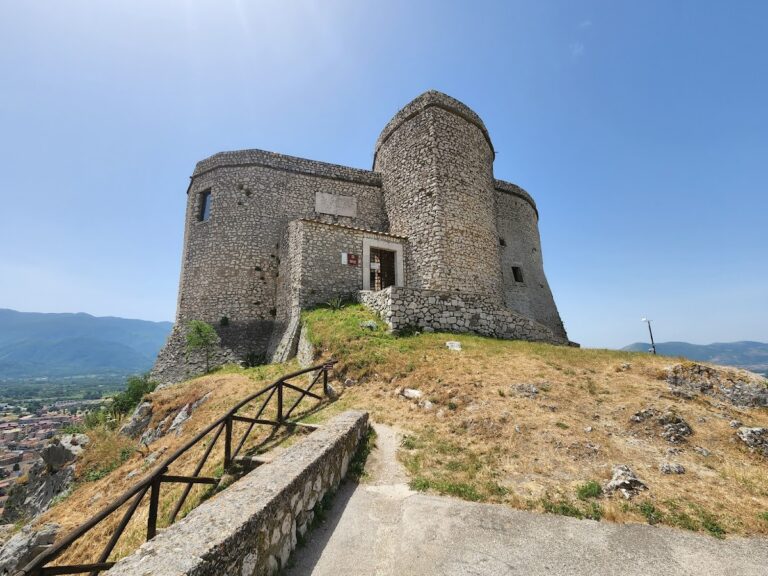
Hilltop enclosure
Castello di Cicala stands on the summit of its namesake hill at an elevation of 217 metres. Built of rubble stone, the surviving complex retains the enclosing walls that defined the fortified site. Several stone stairways provide access to these walls, while a courtyard remains within the circuit. The restored halls form part of the surviving structure and are used for events.