Hisar Kapia: The Medieval Gate of Plovdiv
Site at a Glance
- Popularity
- Medium
- Country
- Bulgaria
- Primary era
- Medieval
- Eras represented
- Classical, Medieval
- Civilizations
- Byzantine, Roman, Second Bulgarian Empire
- Site type
- Military
- Remains
- Gate
On this page8 sections
History
Roman and Byzantine fortifications
Hisar Kapia is a medieval gate in Plovdiv, Bulgaria, at a site where a gate formed part of the Roman fortifications by the 2nd century AD. It was one of three known entrances to the acropolis, the fortified upper part of ancient Philippopolis, the earlier name of Plovdiv. A first gate here may have existed as early as the 3rd century BC.
In the 6th century, the Byzantine emperor Justinian I, who ruled from 527 to 565, strengthened the city’s defenses, including the fortifications at the gate.
Medieval and Ottoman periods
The gate acquired its surviving medieval form during the Middle Ages, though its precise date is uncertain. After Ottoman forces conquered Plovdiv in the 14th century, the gate became less important for defense. During Ottoman rule, houses were built into the old defensive walls. Merchant houses appeared nearby especially in the 17th and 18th centuries, and construction in the area continued into the early 20th century.
In the early 20th century, the gate was reinforced to preserve it.
Remains
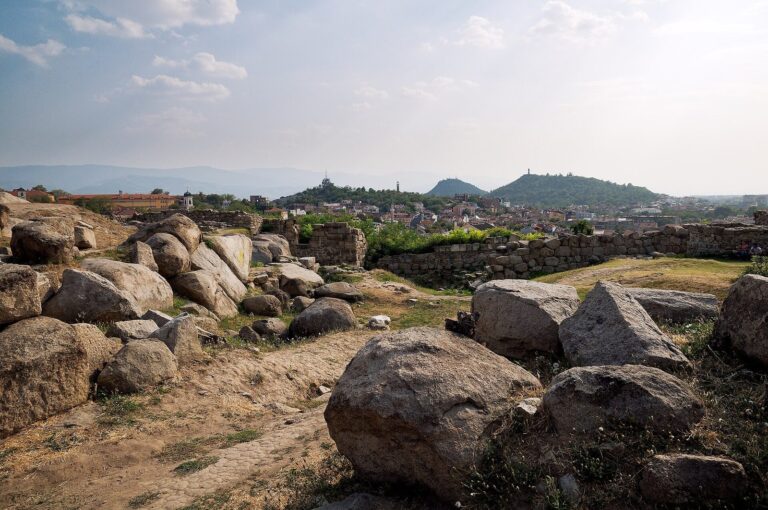
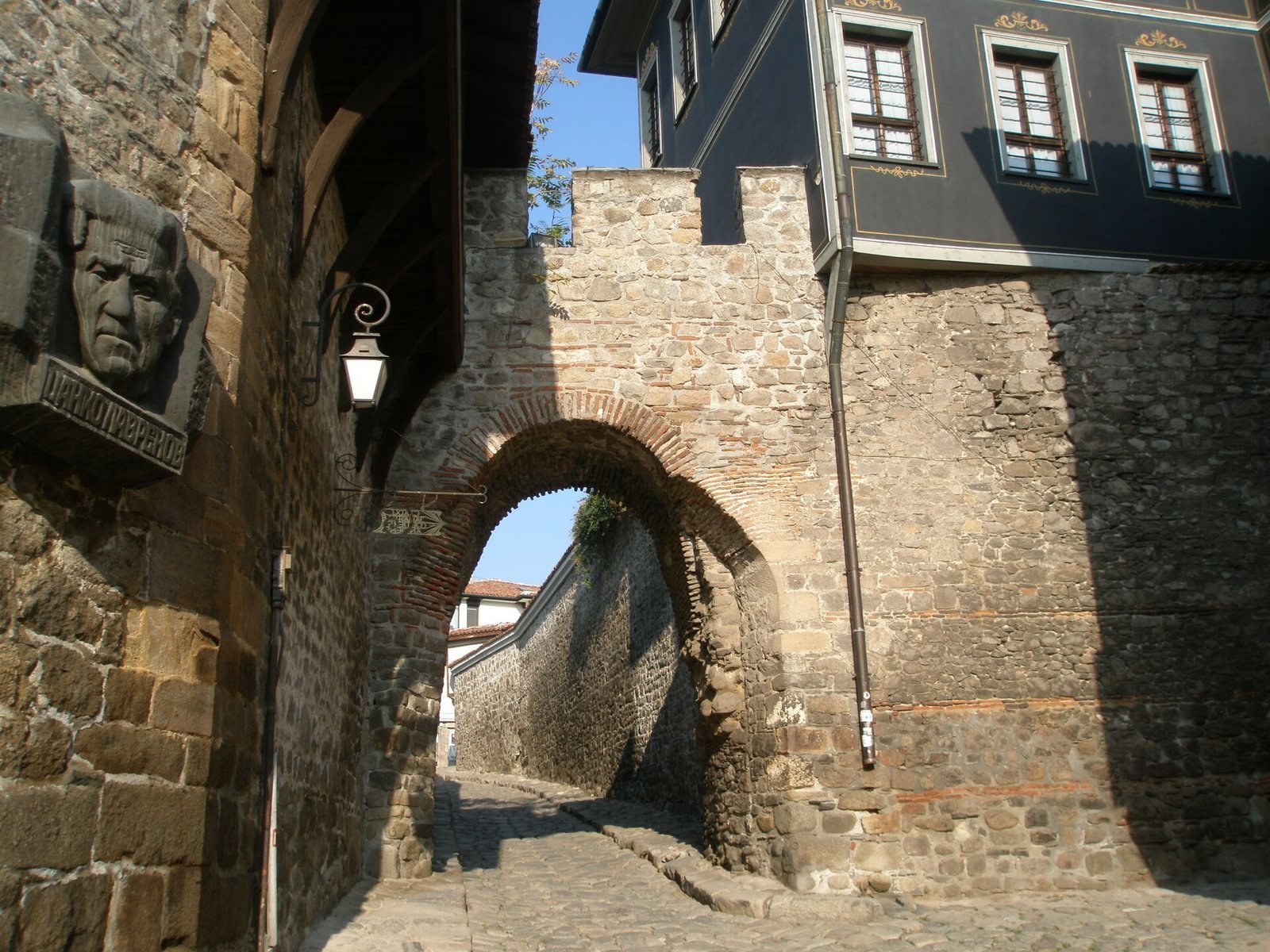
Hisar Kapia stands on Tsanko Lavrenov Street in the Old Plovdiv architectural reserve, about 150 metres east of the Eastern Gate of ancient Philippopolis. The restored medieval gate occupies a setting shaped by surviving fortification masonry incorporated into nearby buildings.
The gate and its foundations
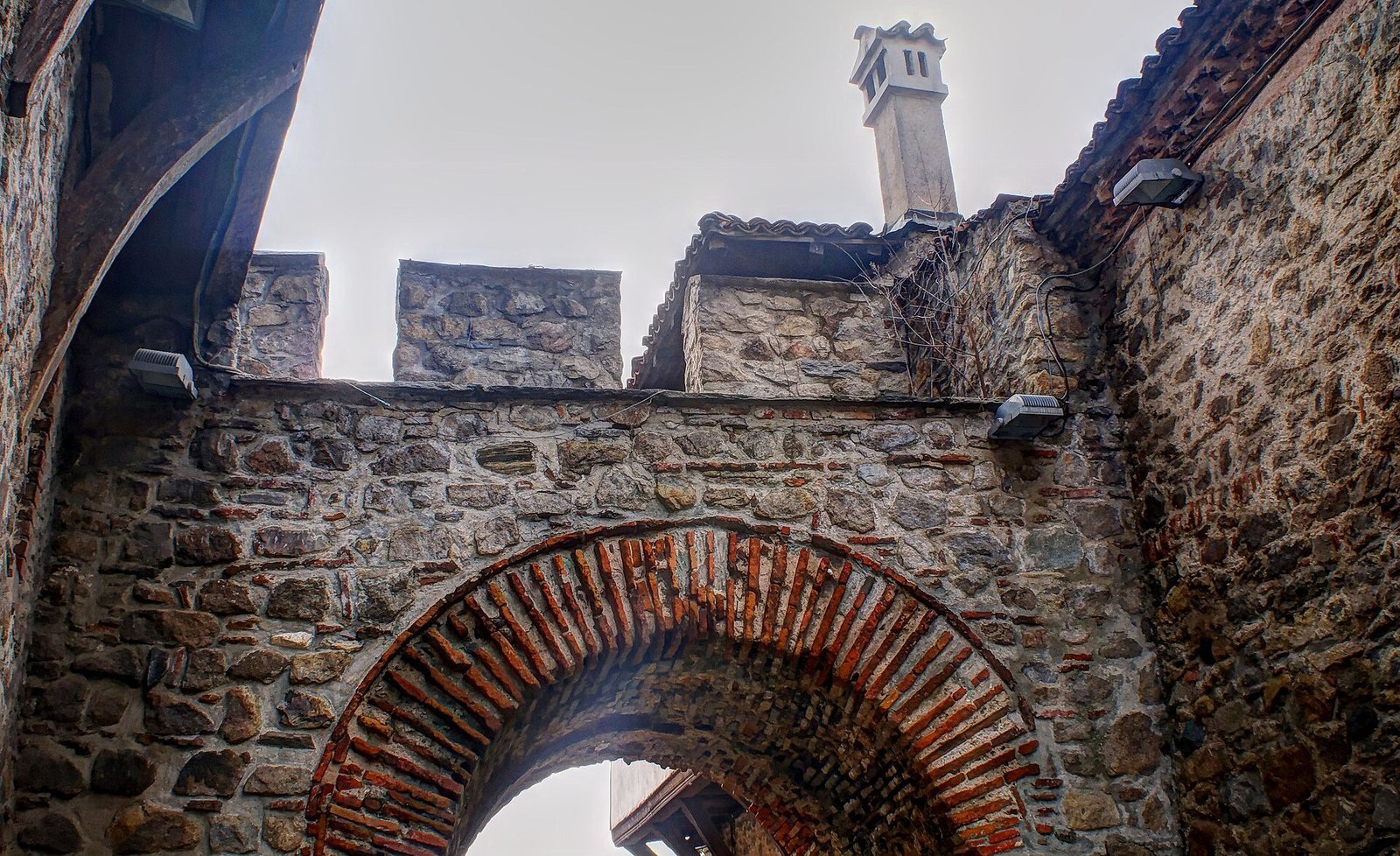
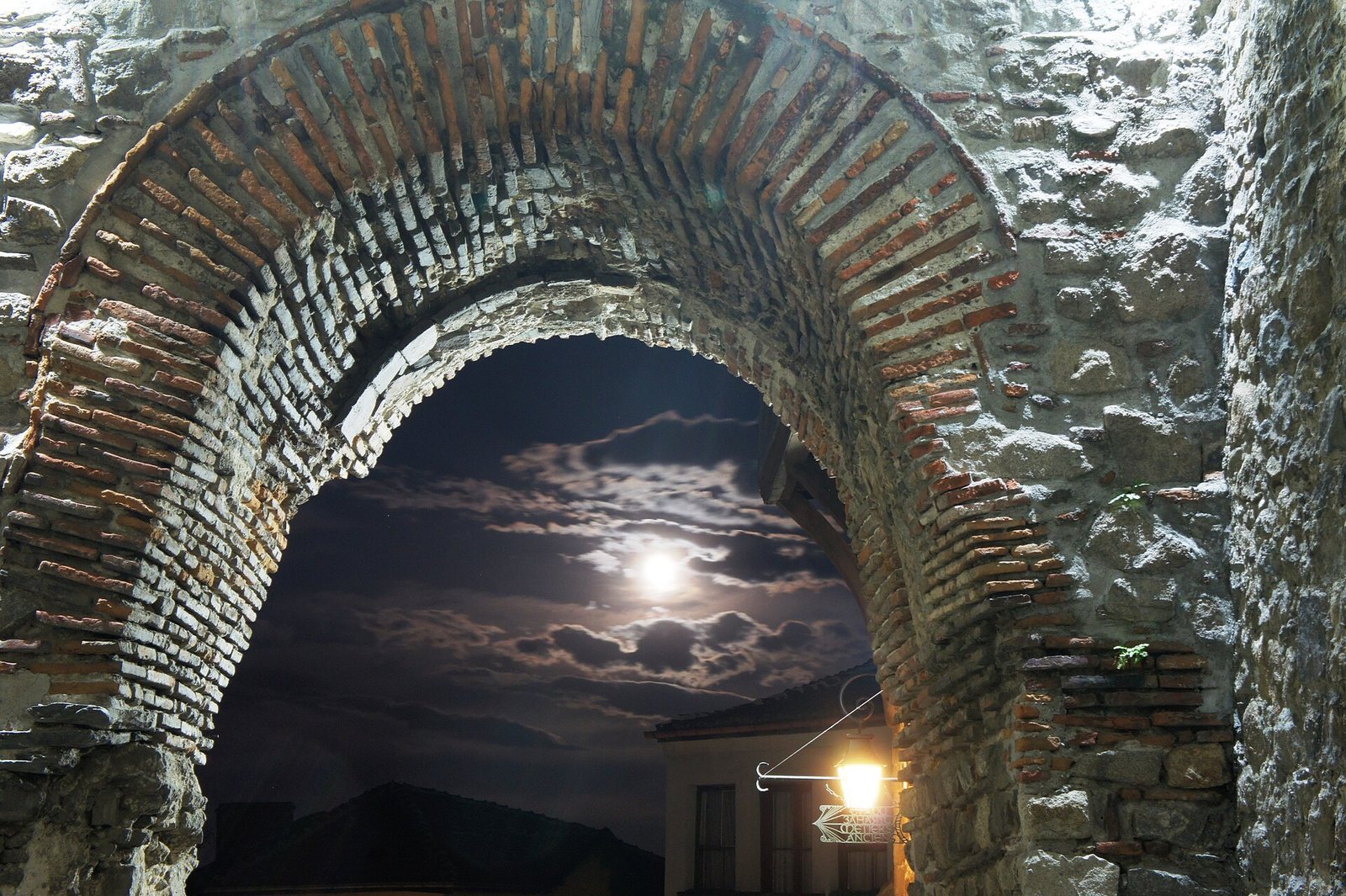
The medieval structure stands over the foundations of its Roman-period predecessor, of which the foundations are believed to survive. Above the arch, stones are framed with red brick and joined using white mortar. This building technique is associated with the Second Bulgarian Empire, a medieval Bulgarian state conventionally dated from the late 12th to the late 14th century.
Nearby buildings and fortification remains
Houses and reused walls
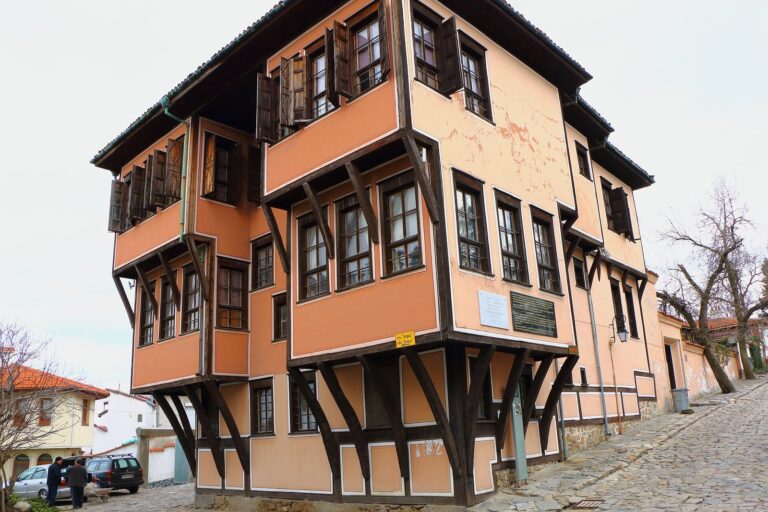
The lower levels of surrounding Bulgarian Revival houses, dwellings associated with a cultural movement that developed under Ottoman rule, incorporate masonry from the former city walls. The Kuyumdjiev House is situated above the gate, while the nearby Georgiadi House is closely associated with it.
Church complex and tower
A building above the gate, within the complex of the Church of Saints Constantine and Helena, also incorporates part of the city’s fortifications. The church is named for the Christian saints Constantine, a Roman emperor, and his mother Helena. Beneath its altar are remains of a fortification tower dating to the 5th century.