Hilsenstein Castle Ruin: A Medieval Hilltop Fortress in Switzerland


Site at a Glance
- Rating
- 3.5
- Popularity
- Very Low
- Country
- Switzerland
- Primary era
- Medieval
- Eras represented
- Medieval
- Civilizations
- Holy Roman Empire
- Site type
- Military
- Remains
- Castle
On this page7 sections
History
Hilsenstein Castle ruin is a medieval hilltop fortress near Dornach in Switzerland, built around 1250 on the western slope of the Gempen Plateau. Its brief period of intensive occupation belonged to the third quarter of the thirteenth century, and use of the castle had ended by about 1300.
Medieval occupation
No surviving documentary record names the castle or a local noble family associated with it. Archaeological finds held at the Schwarzbubenland Local History Museum in Dornach nevertheless show that the small fortress was occupied intensively for a short time during the later thirteenth century. The evidence places its abandonment by about 1300.
Ownership therefore remains uncertain. One possibility is that Hilsenstein belonged to a branch of the Münch knightly family, which was also known as the Gempener during the second half of the thirteenth century. This proposed connection cannot be confirmed.
Remains
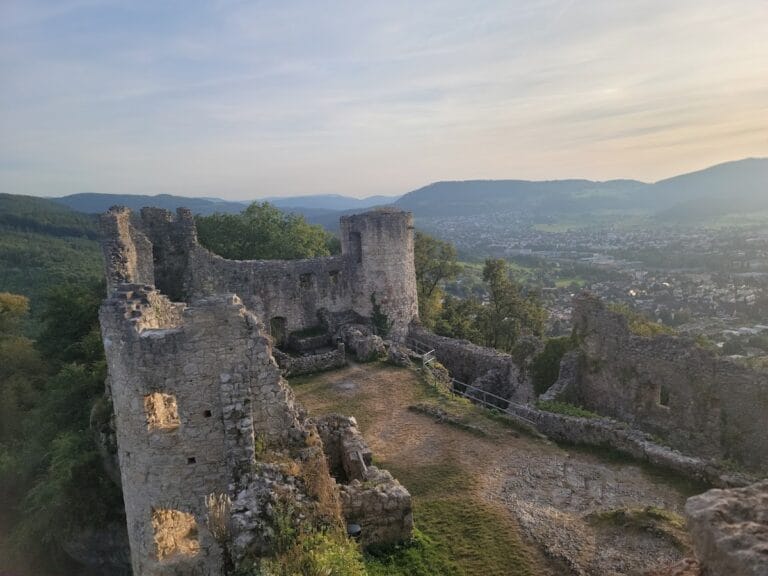
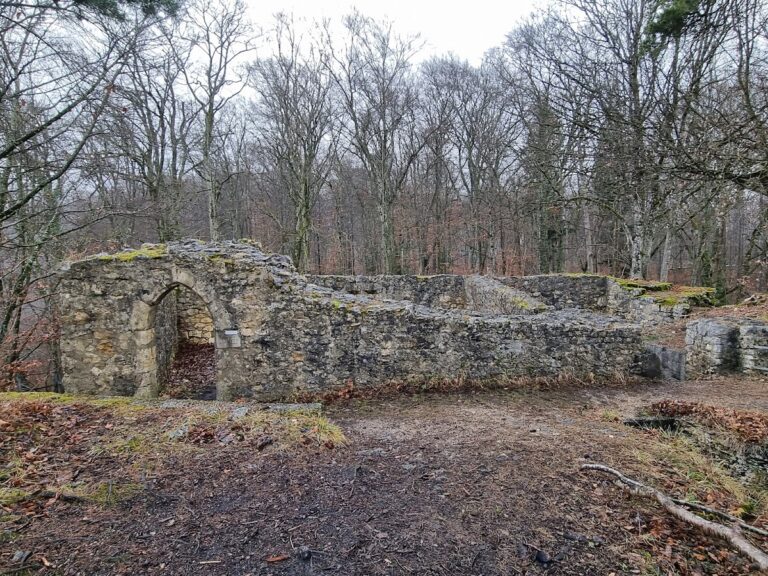
The ruin stands about 2 kilometres southeast of Dornach at an elevation of 615 metres, on a rocky spur of the Gempen Plateau. The small castle occupied several surfaces on a difficult-to-access rocky summit. Only a few wall remains survive, while terraces extended around the summit wherever the steep ground allowed construction.
Buildings on the rocky summit
Residential tower
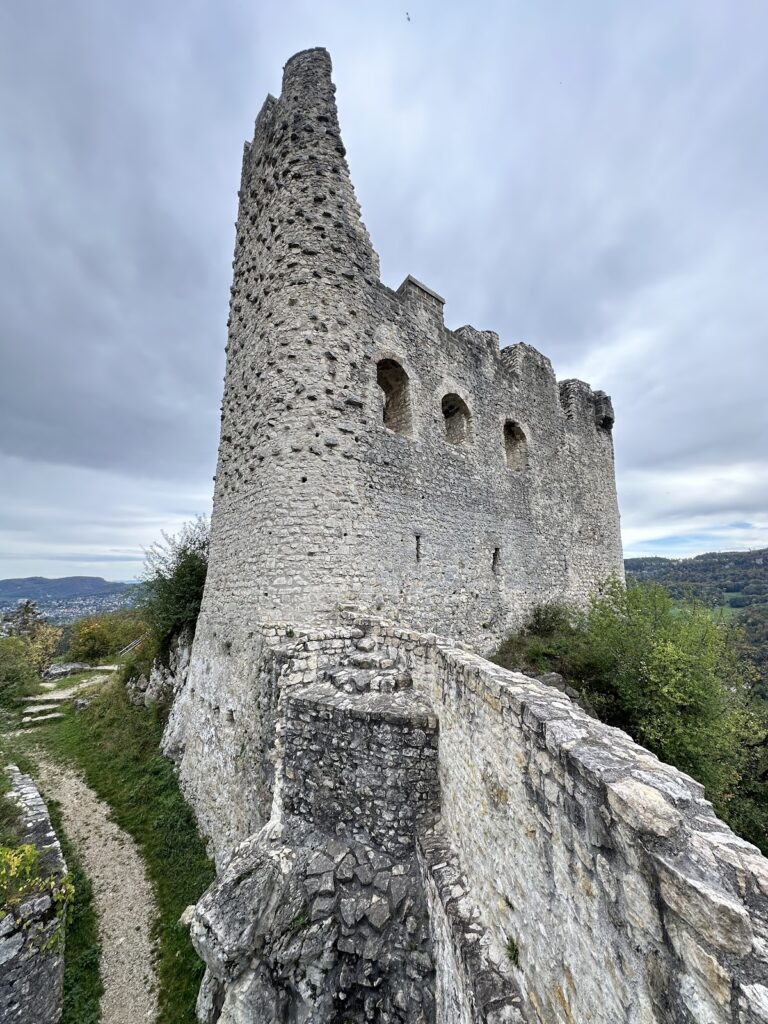
The highest rock surface supported the residential tower. Its surviving wall sections contain narrow window openings, grooves for doors, and sockets cut into the rock for beams. A natural ridge of rock was incorporated into the wall, linking the construction closely to the shape of the summit.
Ancillary building
A probable secondary building occupied the surface west of the residential tower. It used natural rock chambers and fissures within the summit. The approach to this part of the castle is uncertain, although it probably came from the south, rising from the slope of the Gempen Plateau.
Terraces and later artistic work
Terraces were built around the summit in places where the terrain permitted. They probably supported buildings used for economic or service activities, extending the usable area beyond the rocky central surfaces.
On the eastern rock face, the artist Theodor Ganz created a sgraffito in 1940. Sgraffito is a decorative technique made by scratching through one surface layer to expose a contrasting layer beneath. Ganz’s work depicts a maiden walking at midnight with a stag bearing golden antlers around the “Hilzenstein little castle,” together with several old Swiss soldiers, reflecting a local legend associated with the ruin.
Nearby sites