Heiligen-Geist-Kirche: A Medieval Hospital Church in Wismar, Germany

Site at a Glance
- Rating
- 4.7
- Popularity
- Low
- Country
- Germany
- Primary era
- Medieval
- External website
- Open
- Eras represented
- Medieval, Early Modern, Modern
- Civilizations
- Holy Roman Empire
- Site type
- Religious
- Remains
- Church
On this page18 sections
History
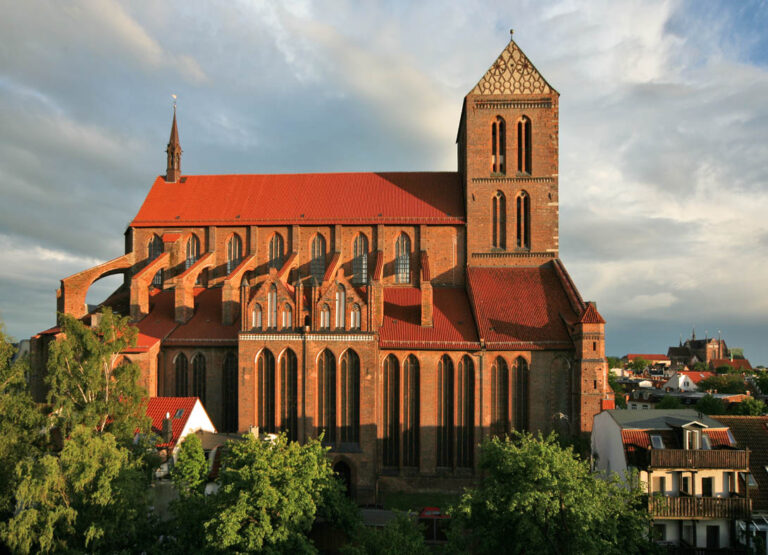
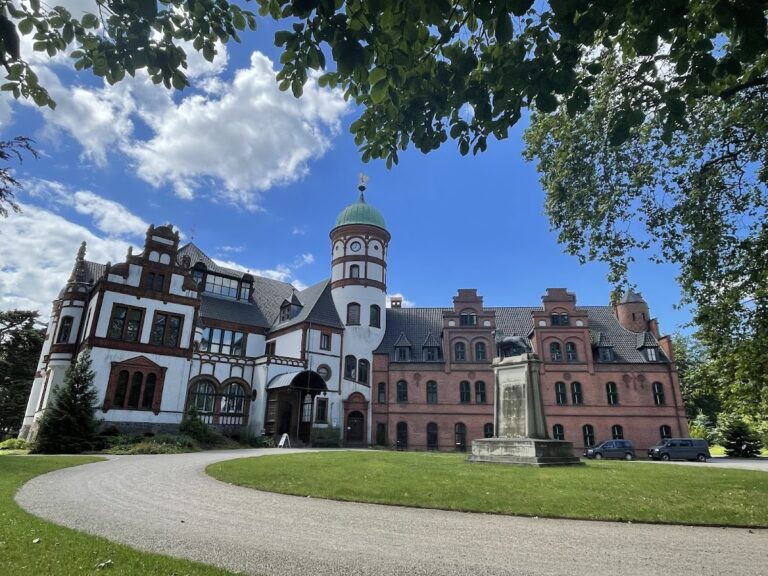
Heiligen-Geist-Kirche is a fourteenth-century hospital church in Wismar, Germany, built principally in the first third of the fourteenth century in the Brick Gothic tradition. It belonged to the Heiligen-Geist-Hospital, an institution founded in Wismar’s old town in the mid-thirteenth century. Permission to hold its own services and establish a churchyard was granted in 1255, while papal protection and renewed privileges followed in 1323.
Foundation and medieval hospital life
Construction of the present church began after 1320, and its main altar was consecrated in 1326 by Marquard, Bishop of Ratzeburg. Masonry and part of a decorative frieze survive from a predecessor building associated with 1255. The church originally combined several functions. It served as a place of worship, a clinic, a hostel, and a refuge for sick and needy people, the homeless, travelers, pilgrims, and the poor. Beds stood along the long walls, and food was supplied largely from the hospital’s agricultural estates.
The Lange Haus, or Long House, was added on the church’s northwestern side in 1411 to house sick people. Until the Reformation, it remained open toward the church, allowing patients to take part in services. Three chapels were also added on the north side. A large two-storey chapel beside the choir was built in 1371 and first served as an ossuary chapel, while two smaller chapels were constructed beneath the nave roof during the first third of the fifteenth century.
Reformation and later changes
From the second half of the sixteenth century, the church was no longer used as residential space. Care for the sick and poor moved to buildings of the former Dominican monastery, which became available after the Reformation. The church interior was then adapted for exclusively religious use, with a pulpit and pews, while small apartments for elderly people were established in the Lange Haus.
An explosion at the nearby Powder Tower in 1699 damaged the church’s barrel vaults. During the rebuilding, the interior received a flat wooden ceiling decorated with twenty-six painted panels. Other changes to the building’s upper parts and entrance side also took place during the seventeenth century, including the addition of massive buttresses, dormer windows, and a roof turret.
War damage, preservation, and present use
After 1945, undamaged works of art from Wismar’s war-damaged St. George’s and St. Mary’s churches were transferred to Heiligen-Geist-Kirche. The church consequently became a treasury for works from the city’s larger churches. The former triumphal cross was later transferred to St. Nicholas Church in Grevesmühlen.
The church and hospital complex is regarded as one of the few medieval hospital-and-church ensembles of its type in northern Germany. It forms part of Wismar’s Old Town, inscribed on the UNESCO World Heritage List in 2002. Heiligen-Geist-Kirche continues to serve the local Lutheran congregation as a parish church and is also used as a museum and concert venue. The courtyard was redesigned by 2020 while retaining its medieval well and the running fountain installed in 1908.
Remains
The surviving complex is centered on a simple, single-nave brick church with a gabled roof, a northwestern hospital wing, chapels along the north side, and the former hospital courtyard. Fired brick, pointed openings, timber construction, painted surfaces, stained glass, sculpture, and historic furnishings preserve successive phases from the thirteenth century through the modern period.
Church exterior and hospital buildings
Brick church and earlier masonry
The exterior is articulated by pointed, recessed portals and six pointed-arch windows. The north portal contains inserted rounded shafts and glazed bricks. Beneath the cornice, a fragment of a round-arch frieze belongs to the predecessor building associated with 1255, and parts of the eastern enclosure walls also derive from that earlier structure. Massive buttresses added during the second half of the seventeenth century changed the appearance of the entrance side.
The gabled roof gained dormer windows and a roof turret during the second half of the seventeenth century. Tree-ring analysis dates the gable to about 1665 and the roof structure to about 1690. The small bell in the modern roof turret dates from 1473. A band around its shoulder carries a tiny inscription giving that year and a founder’s mark.
Lange Haus and courtyard
The passage in the north wall leads to the Lange Haus, the former accommodation wing for sick and needy people. The hospital courtyard, known as the Heiligen-Geist-Hof, was once surrounded by half-timbered buildings. A vaulted cellar beneath the western side of the church was used to store food. The courtyard retains its medieval well and the 1908 running fountain following its redesign by 2020.
Chapels and painted interior
Choir chapel
The large chapel beside the choir occupies two storeys and was built in 1371 as an ossuary chapel. It has stepped buttresses, a segmental-arch portal on the upper floor, and a terracotta frieze showing fantastic creatures and oak leaves. Its two gabled roofs, with blind gables, were added during the 1908 renovation. Two former arcades that connected the upper floor with the choir have since been bricked up.
North chapels
Two additional shallow chapels were built beneath the nave roof during the first third of the fifteenth century. Wall niches connected them with the church interior. One north chapel now contains a carved altar showing Saint Anne with the Virgin and Child, flanked by Saints Martin and George.
Ceiling and wall paintings
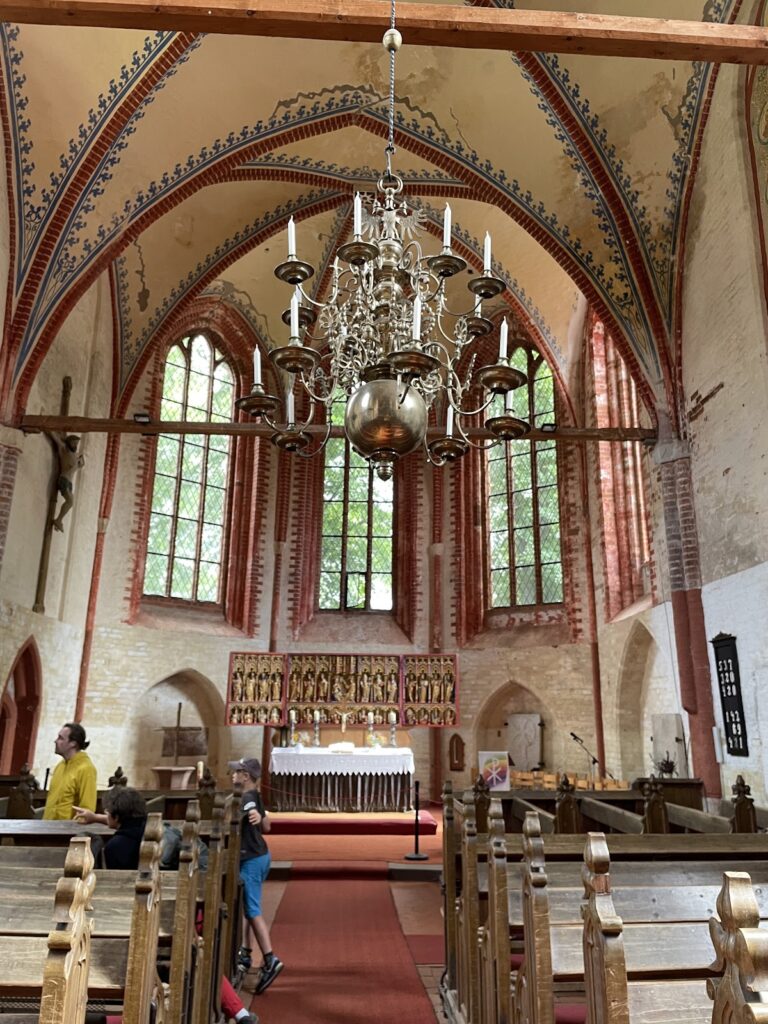
The bright interior is covered by an elaborately painted wooden-beam ceiling from the seventeenth century. It measures approximately 40 metres in length and 14 metres in width. Its red, yellow, and white color sequence is repeated nine times across twenty-six panels. The paintings present scenes from biblical history, including the creation of light, the creation and emergence of life, Paradise, the expulsion from Paradise, Cain’s murder of Abel, the Flood and Noah’s rescue, the Tower of Babel, and stories of the patriarchs. More than 100 playful putti appear among the surrounding acanthus foliage.
The ceiling compositions draw on illustrations made by Matthaus Merian for a picture Bible. In Heiligen-Geist-Kirche, however, God is shown in bodily form rather than through Merian’s customary triangular eye. Pointed-arch wall panels on the east and west walls, together with painted medieval tie beams, preserve evidence of the earlier conversion to a timber barrel vault in 1371.
A fresco uncovered in 1968 dates from the early fourteenth century and bears the phrase Deo Gracias. The phrase can be read in a field of 99 letters by 504 different routes, a feature described as unique in Germany. Fragments of allegorical paintings on the north wall date from about 1400. They include scenes from the legend of the Three Living and the Three Dead, a medieval warning about the inevitability of death. The paintings were uncovered during renovation work between 1964 and 1978. A painted cross-flower frieze dates from about 1600.
The inner face of the door closing the sacrament niche on the east side shows Christ enthroned between two musician angels. The door came from the Romanesque predecessor building, and its painting is described as the second-oldest surviving example in Mecklenburg. Two door leaves between the church and the western residential wing carry Rococo paintings of cranes, uncovered in 1978 beneath several older layers of paint. Following Pliny, the crane was traditionally regarded as a night watchman that held a stone to avoid falling asleep.
Stained glass, altars, and furnishings
Stained-glass cycle
A window in the northern wall of the eastern part of the double chapel contains 26 stained-glass panels originally made for St. Mary’s Church. Created in the late fourteenth century in the Soft Style, a late Gothic manner known for elegant curved figures, flowing drapery, and delicate expression, they are regarded as a major work of the Baltic region. Fifteen panels show scenes from the lives of Jesus and Mary, seven depict saints, and the remainder contain architectural details.
The cycle includes Mary in the spinning room, the Flight into Egypt, the twelve-year-old Jesus in the Temple, the martyrdom of John the Evangelist, the Baptism of Jesus in the Jordan, the Temptation of Christ, the healing of a possessed man, the raising of a young man, the healing of a man with gout, the calling of Matthew from the tax office, the Wedding at Cana, and Christ’s Ascension. Saints represented include Ursula, Catherine, Dorothy, Barbara, and Thomas Becket. The panels were restored in Erfurt in 1970, after which their present sequence was established.
High altar and pulpit
The Gothic high altar was remodeled in Baroque form during the second half of the seventeenth century. Its central shrine and side wings frame a biblical composition whose central image copies Rembrandt’s Descent from the Cross. Other scenes show the Adoration of the Magi, the Adoration of the Shepherds and Women, the Baptism of Jesus, the Last Supper, the Circumcision, the Crucifixion, and the Resurrection. The Adoration of the Shepherds includes a chicken and dog beside the ox and donkey, while musician angels surround the opened heavens.
The Renaissance pulpit was installed on 13 July 1585. Its decoration represents Moses, Aaron, Old Testament prophets, and the four Evangelists, creating a progression from the Old Testament to the New Testament. It is regarded as one of the highest-quality pulpits in Mecklenburg.
Pews and processional standards
The oak pew ends were made between 1571 and 1589. Following more recent investigations, the seating is regarded as the oldest surviving Protestant church seating in Germany. Its imagery identifies groups including bath attendants, anchor smiths, the executioner, and the skippers’ company. Two late Gothic processional light standards mark the carriers’ benches. The more valuable standard bears two images of the Virgin and Child and is topped by a candle symbolizing eternal light. The seating was rearranged according to a new plan during restoration completed by 1978.
Transferred sculpture and painting
A painting on the north side of the altar area shows a large warship against a panorama of Wismar. Made about 1600, it depicts a flag-decorated vessel returning to harbor and represents the city’s economic prosperity. The background includes Wismar’s helmet-roofed church towers, which also served as navigational markers. The shipowners’ company restored the painting in 1836, and it underwent a second restoration in 1938.
An almost life-sized wooden group of the Three Magi, made during the first half of the fifteenth century, originally belonged to St. George’s Church and was transferred here in 1945. The four figures are carved mainly from oak. The third king’s vessel is made of limewood, and the kneeling king’s right arm is made of walnut. The Virgin sits on a bench with the Christ Child on her lap. Balthasar originally held a lost gold-filled box, while Melchior and Caspar carry vessels containing frankincense and myrrh and wear crowns. The Baroque paint layer was uncovered in 1997, revealing sections of medieval painting and remnants of gilding.
A late Gothic altarpiece in the north chapel, also transferred from St. George’s Church, showed the Apocalyptic Madonna, a representation of the Virgin associated with the Book of Revelation, flanked by Saints Martin and George. The Virgin stood on a crescent moon beneath a starry mantle and held the Christ Child, who carried a globe and gave a blessing. Saint George fought the dragon, Saint Martin gave alms to a needy person, and the wings showed scenes from Mary’s life. This altarpiece is no longer in the church.
Other surviving objects
The City History Museum preserves a gilded Madonna and a shallow bronze basin from Heiligen-Geist-Kirche. The basin carries a Low German inscription dated 1461. It states that Hinrik Brulvesse had the vessel cast and donated it for God’s sake, warns that it should not be removed, and asks for prayer.
The church received its organ in 1968 from Rudolf Böhm of Gotha. It has fully mechanical tracker action, slider chests, and the couplers II/I, I/P, and II/P, operated by foot pistons.
Nearby sites