Hasaike Kofun: A Sixth-Century Burial Mound in Japan
Site at a Glance
- Rating
- 4.6
- Popularity
- Very Low
- Country
- Japan
- Primary era
- Medieval
- External website
- Open
- Eras represented
- Medieval
- Civilizations
- Yamato
- Site type
- Burial
- Remains
- Burial Mound
On this page9 sections
History
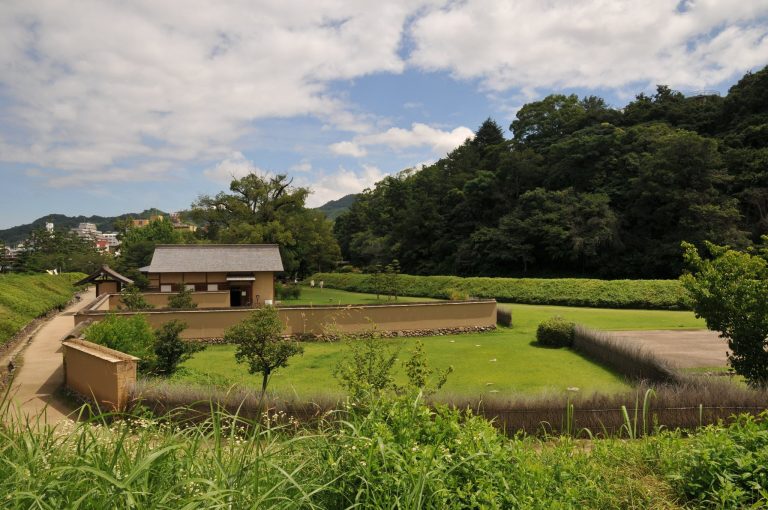
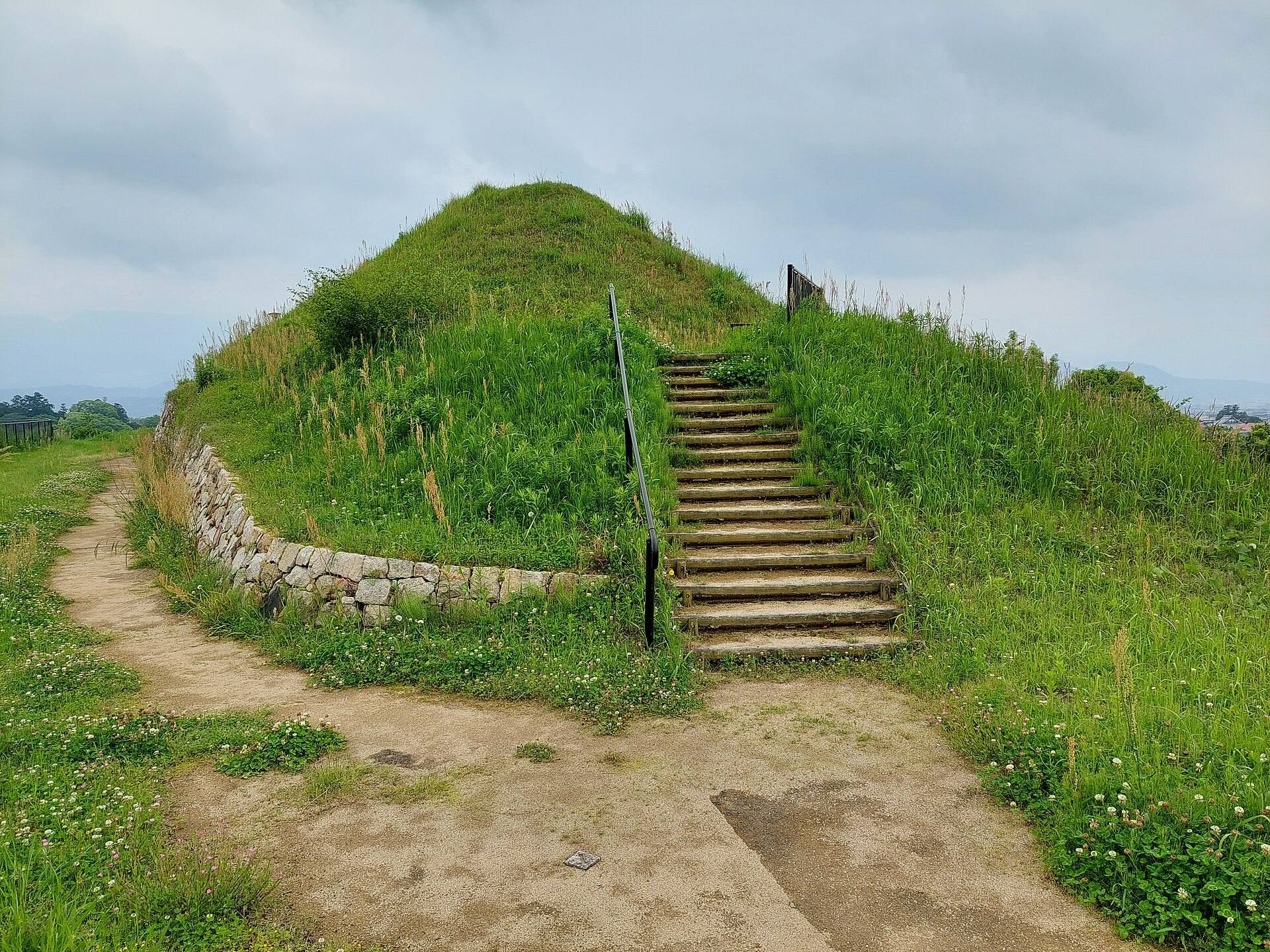
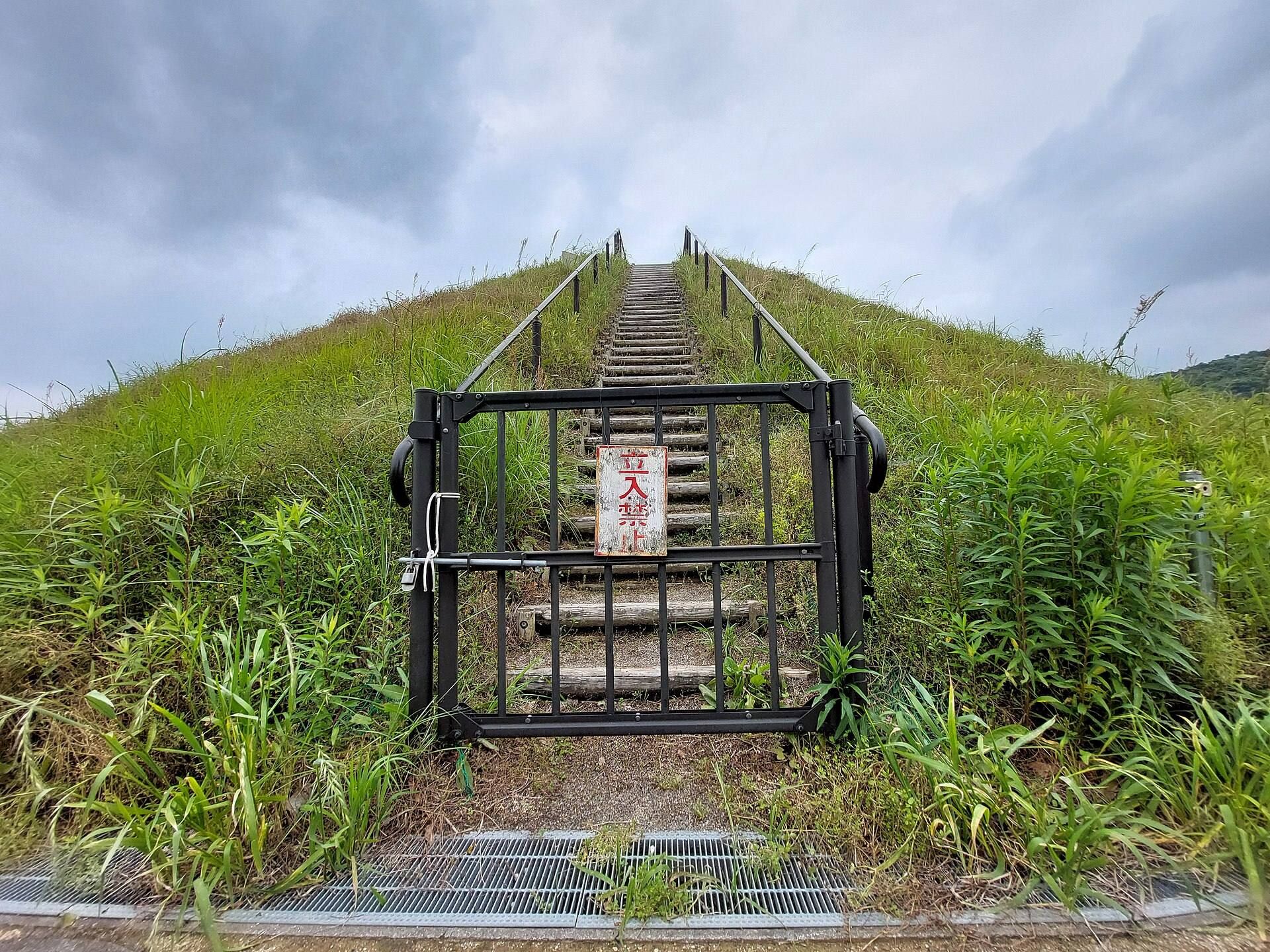
Hasaike Kofun is a Kofun-period burial mound in Matsuyama, Japan, built in the middle of the sixth century during an era known for large earthen tombs. It stands on Koyama, a hill on the left bank of the Ono River, and received additional burials by the beginning of the seventh century.
Construction and Later Burials
The mound was used over more than one funerary phase. Three repairs to the earthwork around Burial Chamber No. 1 indicate that the mound was reopened or reshaped as further burials took place. Both Chamber No. 1 and Chamber No. 2 show evidence of entry after their first burials, although neither chamber was entered after its final closure.
Chamber No. 2 preserves evidence of deliberate disturbance before that final closure. Some pottery was broken, while wooden remains, human bones, horse harnesses, and iron objects were scattered through the chamber. The reason for this destruction and rearrangement is unknown. The chamber contained remains judged to represent three individuals, while Chamber No. 1 held one individual in each of two coffins and another at the rear of the chamber.
Discovery and Protection
Burial Chamber No. 1 was found by accident in 1992, when heavy machinery was used to clear the hill. A ceiling stone was displaced, but the interior of the chamber was not damaged. Matsuyama City acquired the site as public property and began archaeological research in 1993. Five investigations carried out between 1993 and 2008 identified five burial chambers.
Hasaike Kofun was designated a National Historic Site of Japan on 7 February 2011. Matsuyama City remains the owner of the site.
Mortuary Practice
Fly-pupa shells attached to the remains in Coffin B suggest that the body may have been kept in a place exposed to light for about one week to ten-odd days after death. This provides archaeological evidence for mogari, a mortuary practice in which a body was temporarily kept while preparations for permanent burial took place.
Remains
Hasaike Kofun is an elongated or elliptical mound measuring 41 metres along its major axis and up to 23 metres across. Its long axis runs approximately north to south, and its area is about 4,786.76 square metres. It has also been interpreted as keyhole-shaped, based partly on the positions of Burial Chambers No. 1 and No. 2, so descriptions of its outline are not entirely consistent.
Stone Burial Facilities
Burial Chamber No. 1
Burial Chamber No. 1 lies slightly south of the mound’s centre and opens westward through a side passage. It is a double-sleeved stone chamber, meaning that its entrance passage has two stepped sections, and measures 4 metres overall. The burial chamber itself is 2.8 metres long, 1.4 metres wide, and 1.8 metres high. Its closure arrangement survived when the chamber was opened in 1992.
The chamber contained Sue pottery, a high-fired wheel-made ceramic used in sixth-century burial and ritual contexts. The offerings included a pedestal cup with attached cups, short-necked jars, and flasks. An iron axe and iron arrowheads were also found. The pottery dates from the middle to the latter half of the sixth century.
Two wooden coffins were identified. Coffin A was box-shaped, with boards at its ends and sides, and the distance between its end boards was about 190 centimetres. Coffin B consisted of one thick board measuring approximately 190 centimetres long, 45 centimetres wide, and 4 centimetres thick. The chamber contained three individuals, together with the fly-pupa shells associated with Coffin B.
Burial Chamber No. 2
Burial Chamber No. 2 lies north of Chamber No. 1 and also opens westward through a double-sleeved side entrance. It measures 7.1 metres overall. Its burial chamber is 3.6 metres long, 2.3 metres wide, and 2.4 metres high.
Its contents included fragments thought to come from a wooden coffin, eight iron nails, Sue pottery, horse harnesses, and other iron objects. Some vessels remained intact, but most pottery had been broken and scattered. Wooden pieces, harness fittings, iron objects, pottery, and human bones were distributed throughout the chamber. The positions of the wood and nails do not establish the coffin’s original form, and it is uncertain whether all the wooden fragments belonged to it. The scattered bones and other remains do not appear to result from the natural collapse of an intact coffin.
Chambers Nos. 3, 4, and 5
Chamber No. 4 adjoins the southern side of Chamber No. 1 and opens eastward. All of its stones except the floor stones were removed before the facility was filled. Chamber No. 3 lies north of Chamber No. 2, while Chamber No. 5 occupies the space between Chambers Nos. 1 and 2. Both Nos. 3 and 5 are small pit-type stone chambers, constructed in pits rather than as substantial side-entry chambers.