Marishitenzuka-kofun: A Keyhole-Shaped Burial Mound in Japan
Site at a Glance
- Rating
- 4.1
- Popularity
- Very Low
- Country
- Japan
- Primary era
- Classical
- External website
- Open
- Eras represented
- Classical
- Civilizations
- Yamato
- Site type
- Burial
- Remains
- Burial Mound
On this page5 sections
History
Marishitenzuka-kofun is a keyhole-shaped burial mound in Oyama, Tochigi Prefecture, Japan, built in the late fifth century during the middle Kofun period. The Kofun period, generally dated from about the third to the sixth centuries, was an era when large burial mounds expressed the status of individuals or local ruling groups. Based on its form and excavated cylindrical haniwa, Marishitenzuka-kofun is regarded, together with nearby Biwazuka Kofun, as one of the chief tombs of local leaders in the Shimotsuke region.
The middle Kofun period
After Marishitenzuka-kofun and Biwazuka Kofun were built, other distinctive keyhole-shaped mounds known as Shimotsuke-type kofun continued to be constructed on the plateau between the Omoi and Sugata rivers. The mound stands in the central part of ancient Shimotsuke Province, an administrative region broadly corresponding to present-day Tochigi Prefecture. The provincial capital and a provincial temple were later established in this wider area.
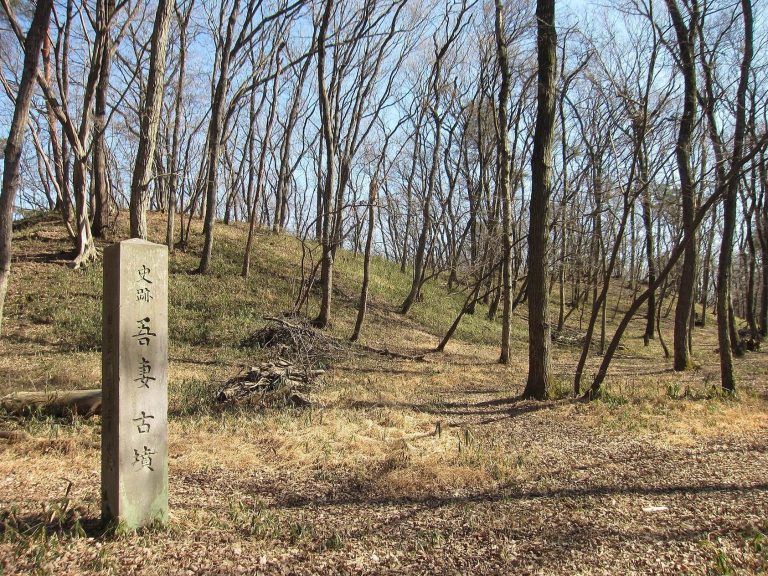
Marishitenzuka-kofun is the third-largest kofun in Tochigi Prefecture, although its burial facility and the identity of the person buried within it remain unknown. Japan designated the mound a National Historic Site on July 21, 1978. The designation was expanded on September 20, 2002, to include additional remains of the surrounding moats. Recovered artifacts are preserved and displayed at the Marishitenzuka-Biwazuka Kofun Museum in Oyama.
Remains
Layout and construction
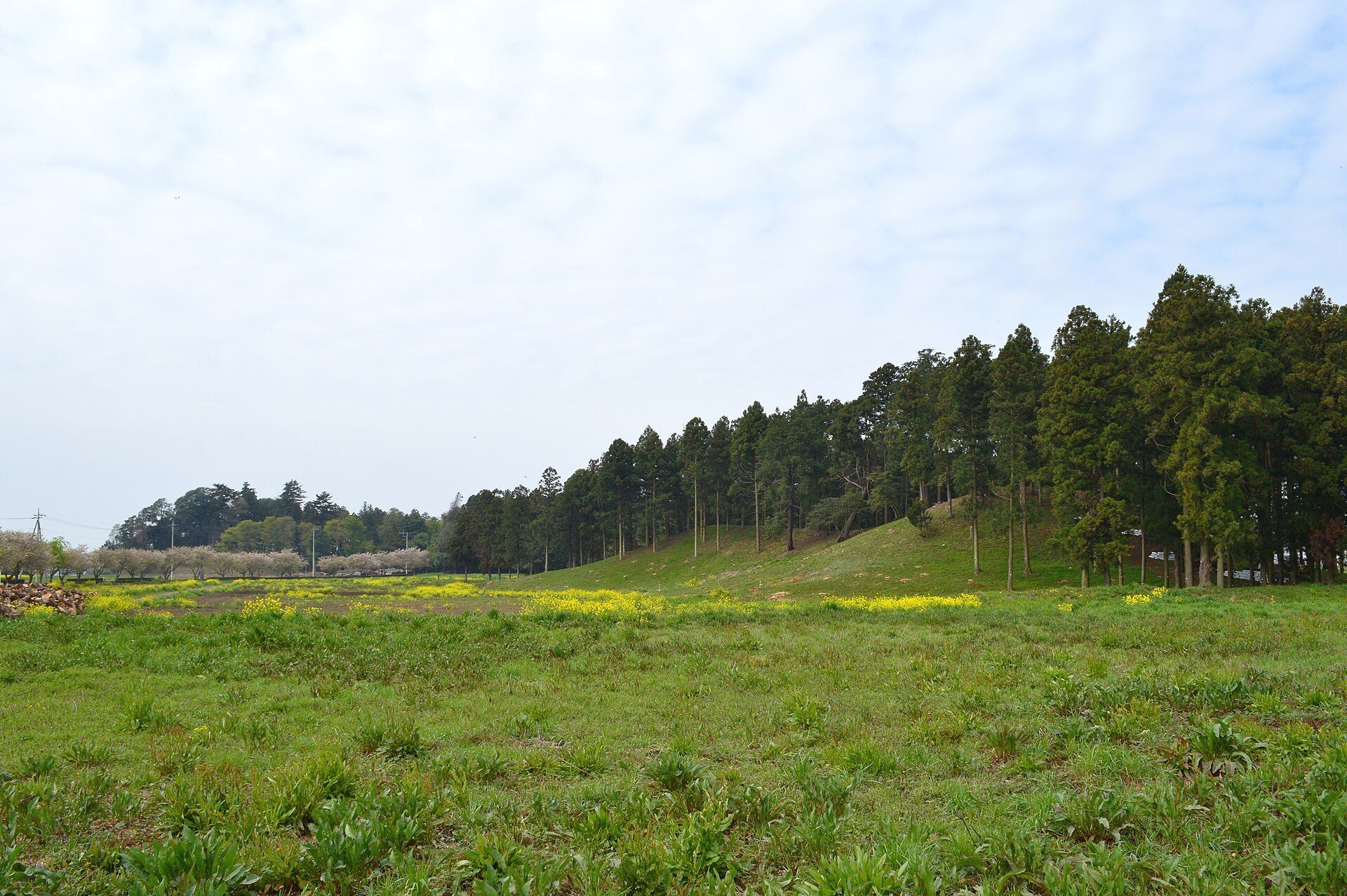
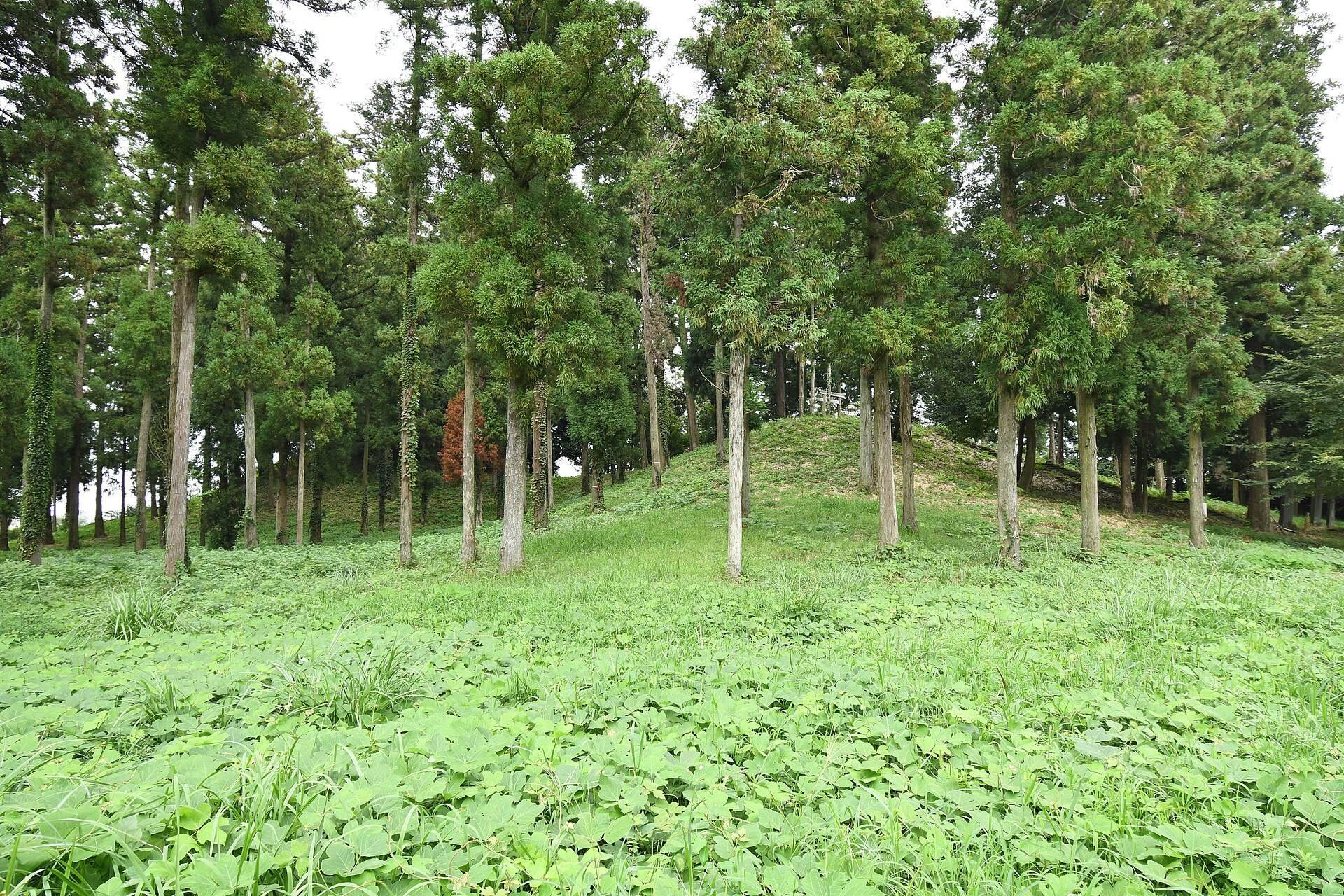
Marishitenzuka-kofun has the form of a zenpō-kōen-fun, a keyhole-shaped mound formed by a circular rear section joined to a squarer front section. The front points southwest, and the mound measures approximately 117 meters in length. It was built in two tiers, partly using a natural rise in the ground. The rear section is about 70 meters across and 10 meters high, while the front section is approximately 75 meters wide and 7 meters high. Its pointed center gives the front a sword-diamond-shaped outline.
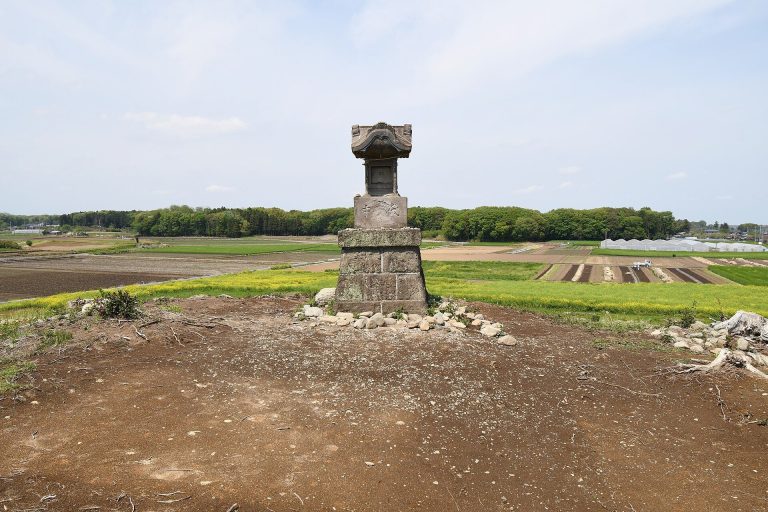
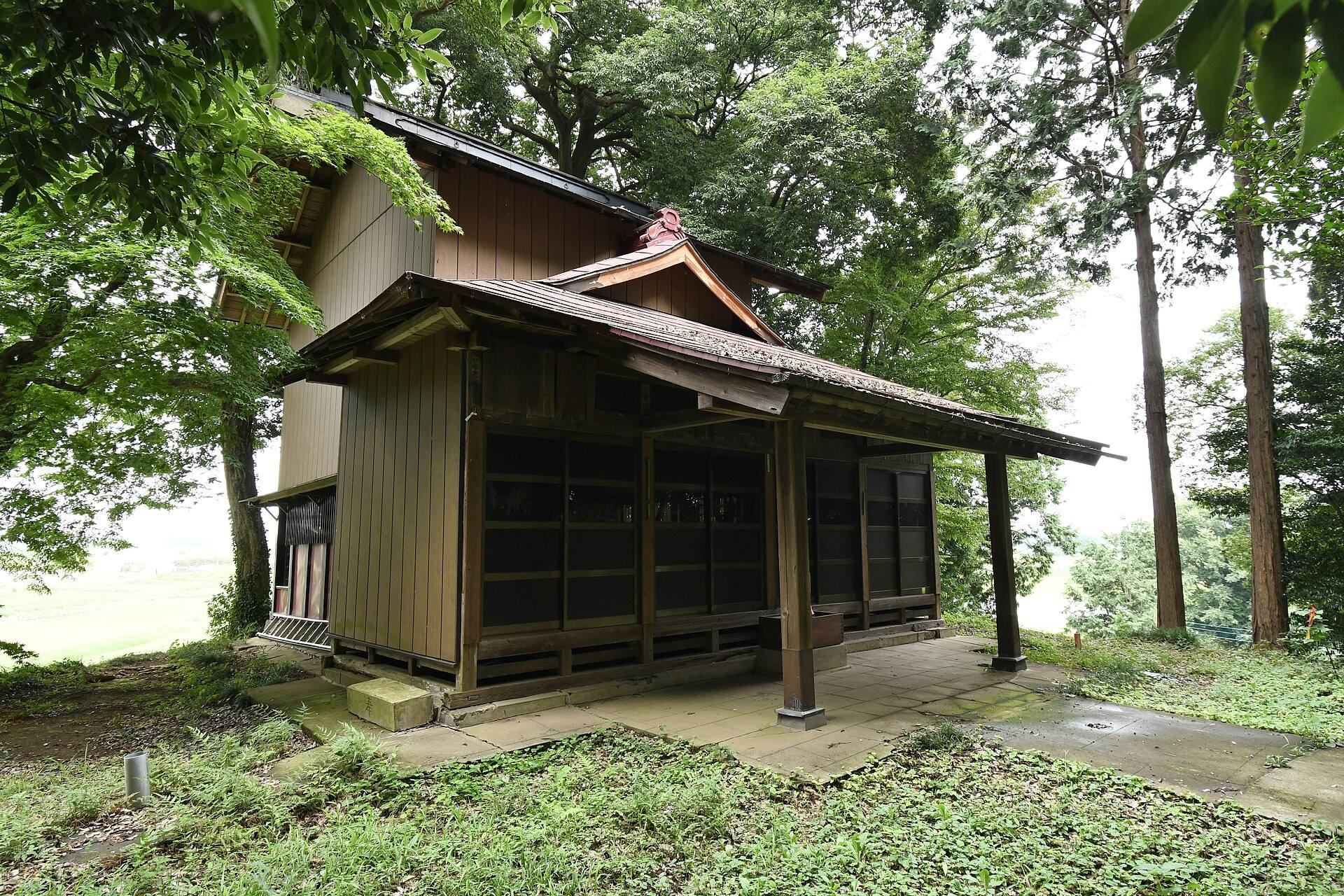
A moat approximately 20 meters wide surrounds the mound, with double sections in some places. These surrounding remains form part of the expanded historic-site designation. A small chapel dedicated to Marishi-ten stands on the summit. Marishi-ten is a Buddhist deity associated with light and protection, with a particular connection to warrior devotion in Japan.
Haniwa and neighboring mound
Fragments of cylindrical haniwa have been recovered from Marishitenzuka-kofun, and cylindrical examples remain arranged in rows on the mound. Haniwa are clay objects placed on and around Kofun-period burial mounds, where cylindrical forms commonly marked rows or boundaries. The burial facility itself has not been identified.
Biwazuka Kofun lies approximately 100 meters north of Marishitenzuka-kofun. It has almost the same size and orientation, placing the two mounds close together in both their physical arrangement and their relationship to the local burial landscape.