Harmantepe Castle: A Byzantine Frontier Fortress in Türkiye


Site at a Glance
- Rating
- 3.8
- Popularity
- Very Low
- Country
- Turkey
- Primary era
- Medieval
- Eras represented
- Medieval
- Civilizations
- Byzantine
- Site type
- Military
- Remains
- Castle
On this page5 sections
History
Harmantepe Castle is a Byzantine fortress near Söğütlü in Türkiye, built in the twelfth or thirteenth century to defend the eastern frontier of the Byzantine Empire, the medieval Roman state centered on Constantinople. Its construction belongs to a period when forts protected Byzantine territories in Anatolia from increasing Turkish raids.
A Byzantine Frontier Fortress
The castle’s date has been debated. A possible connection has been proposed with the sixth-century Ancient Canal project associated with Justinian’s Bridge, but archaeological finds place Harmantepe among a line of fortresses built west of the Sakarya River. Its construction style matches that of Seyifler Castle, another Byzantine fortress in the broader region.
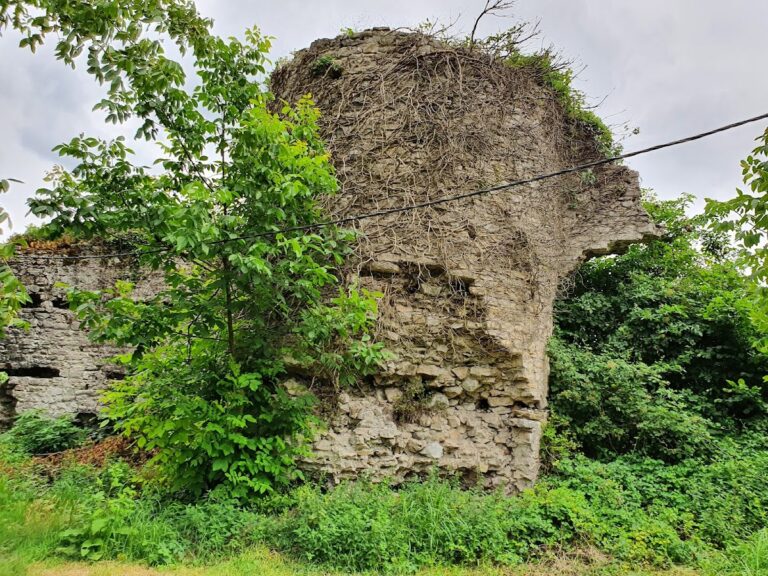
Harmantepe is currently unoccupied. Long-term neglect has damaged its walls, gates, and towers, while vegetation has spread across much of the site. It has been regarded as the best-preserved Byzantine castle in Sakarya Province, and a decision was made to restore the remains and bring the site into use for tourism.
Remains
Setting and Defensive Layout
The castle occupies a small hill beside a stream flowing from Taşkısığı Lake, within the broad Adapazarı Plain. Its exposed position made it relatively vulnerable. Indistinct traces of a ditch around the castle suggest an additional defensive measure, although the feature is difficult to identify clearly today.
Walls, Towers, and Entrances
Rubble-stone walls, built from irregular local stones set in lime mortar, rise approximately 8 to 10 metres and are about 2 metres thick. Six square towers, each measuring roughly 5 by 5 metres, are incorporated into the walls. Five entrances lead into the castle, with the principal entrance positioned on the south side. No brick was used in the construction. The walls, gates, and towers are substantially ruined, and vegetation covers much of the neglected masonry.