Orhan Mosque: A Fourteenth-Century Ottoman Mosque in İzmit
Site at a Glance
- Rating
- 4.9
- Popularity
- Low
- Country
- Turkey
- Primary era
- Medieval
- External website
- Open
- Eras represented
- Medieval
- Civilizations
- Byzantine, Ottoman
- Site type
- Religious
- Remains
- Mosque
On this page6 sections
History
Orhan Mosque is a fourteenth-century Ottoman mosque in İzmit, Türkiye, the city formerly known as Nicomedia. After İzmit came under Ottoman rule in 1332, it became the first mosque built in the area to survive into the present. The mosque was commissioned for Sultan Orhan Gazi by his son Süleyman Paşa, who served as the city’s first sanjak bey, the governor of an Ottoman administrative district.
The Süleyman Paşa complex
The mosque formed part of a külliye, a complex organized around a major religious institution. Known as the Süleyman Paşa complex, it included the mosque, a medrese for Islamic religious and scholarly education, and a bath. The medrese remained in active use, as indicated by sixteenth- and nineteenth-century sources. It was later used as informal housing until the 2000s, when it was demolished during road widening.
The associated bath provided income for the mosque and medrese. After the Ottoman era, it remained ruined for a long period. The 1999 Gölcük earthquake caused major damage, and Kocaeli Metropolitan Municipality repaired the building and returned it to use in 2013.
Repairs and the sword sermon
Abdülmecid ordered repairs to the mosque in 1843. Further repairs followed the 1999 Gölcük earthquake, preserving the building after the disaster.
İzmit entered Turkish rule through an agreement reached during a siege rather than through conquest. As a result, the mosque did not originally follow the practice of delivering the Friday sermon with a sword. The custom began during the period of the Committee of Union and Progress, the political organization that controlled the Ottoman government in the late imperial era, as a response to separatist pressures. It continued during the Republican period.
The sermon, or hutbe, is the formal address delivered by an imam during Friday and religious holiday prayers. At Orhan Mosque, the imam ascends to the sermon carrying a sword and descends with it afterward. The practice symbolizes the conquest or defense of the community and remains maintained at the mosque on Fridays and during religious holiday prayers.
Remains
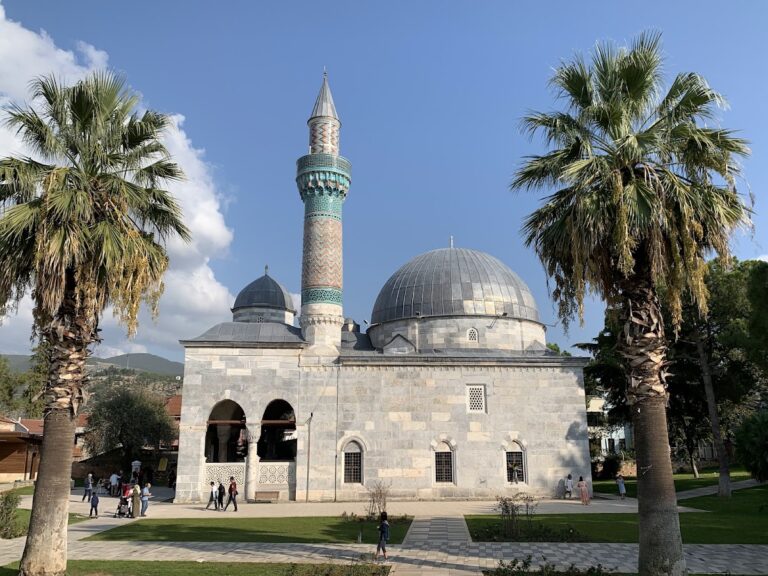
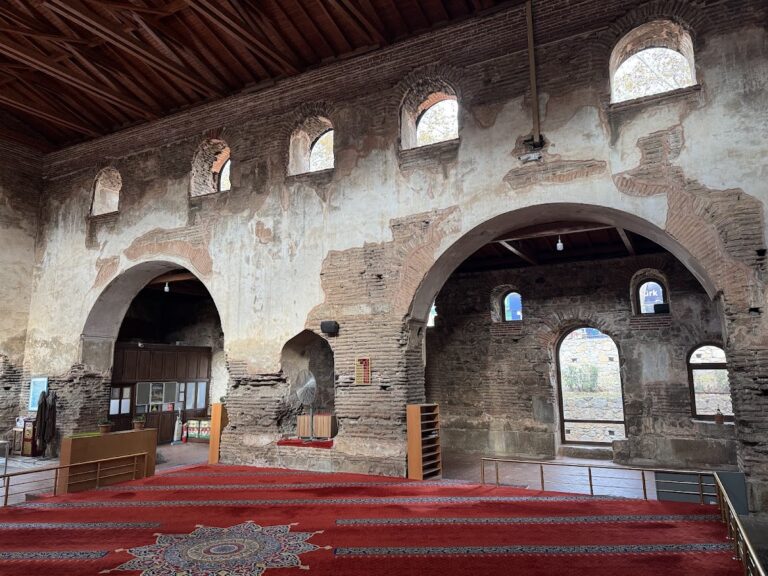
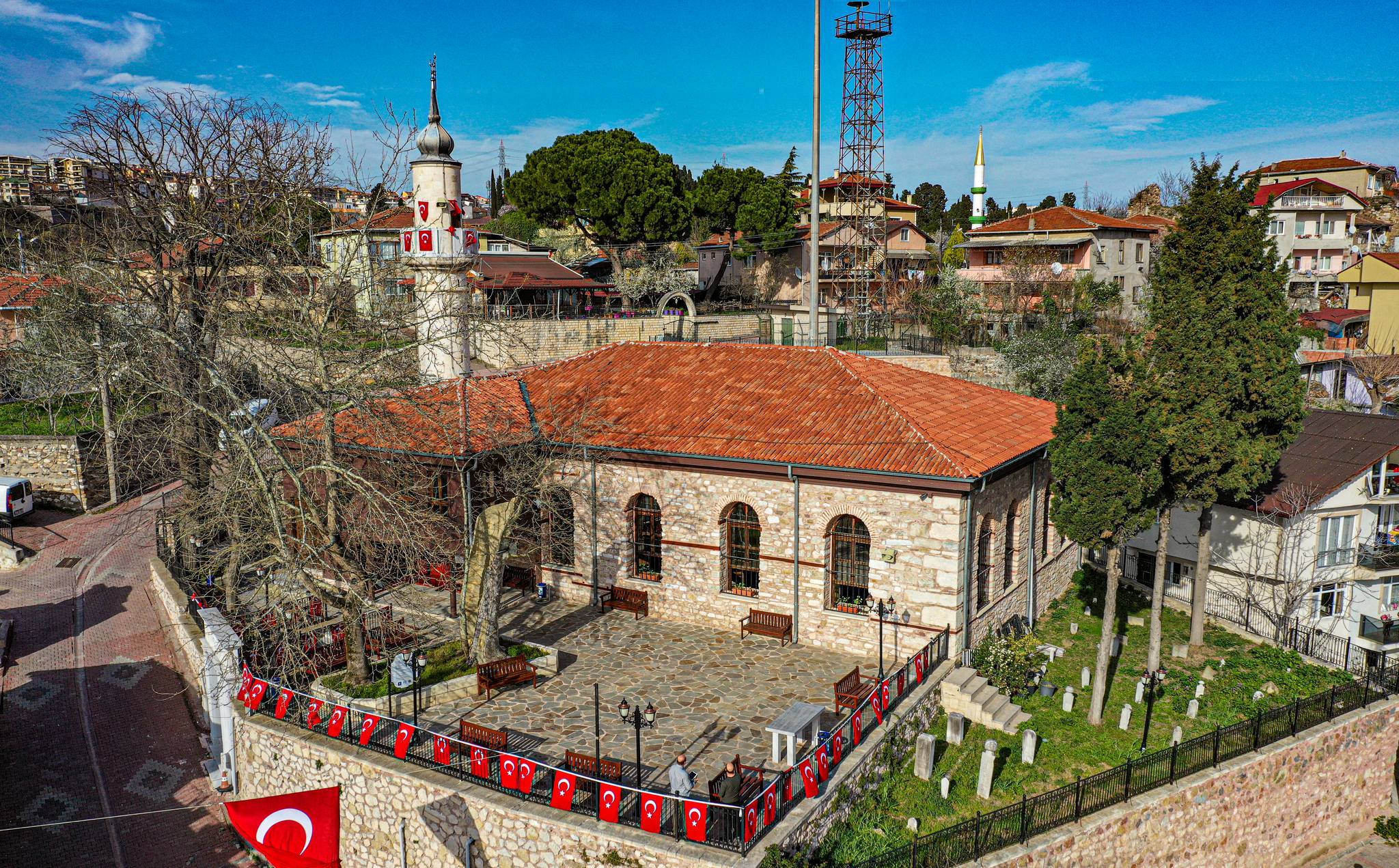
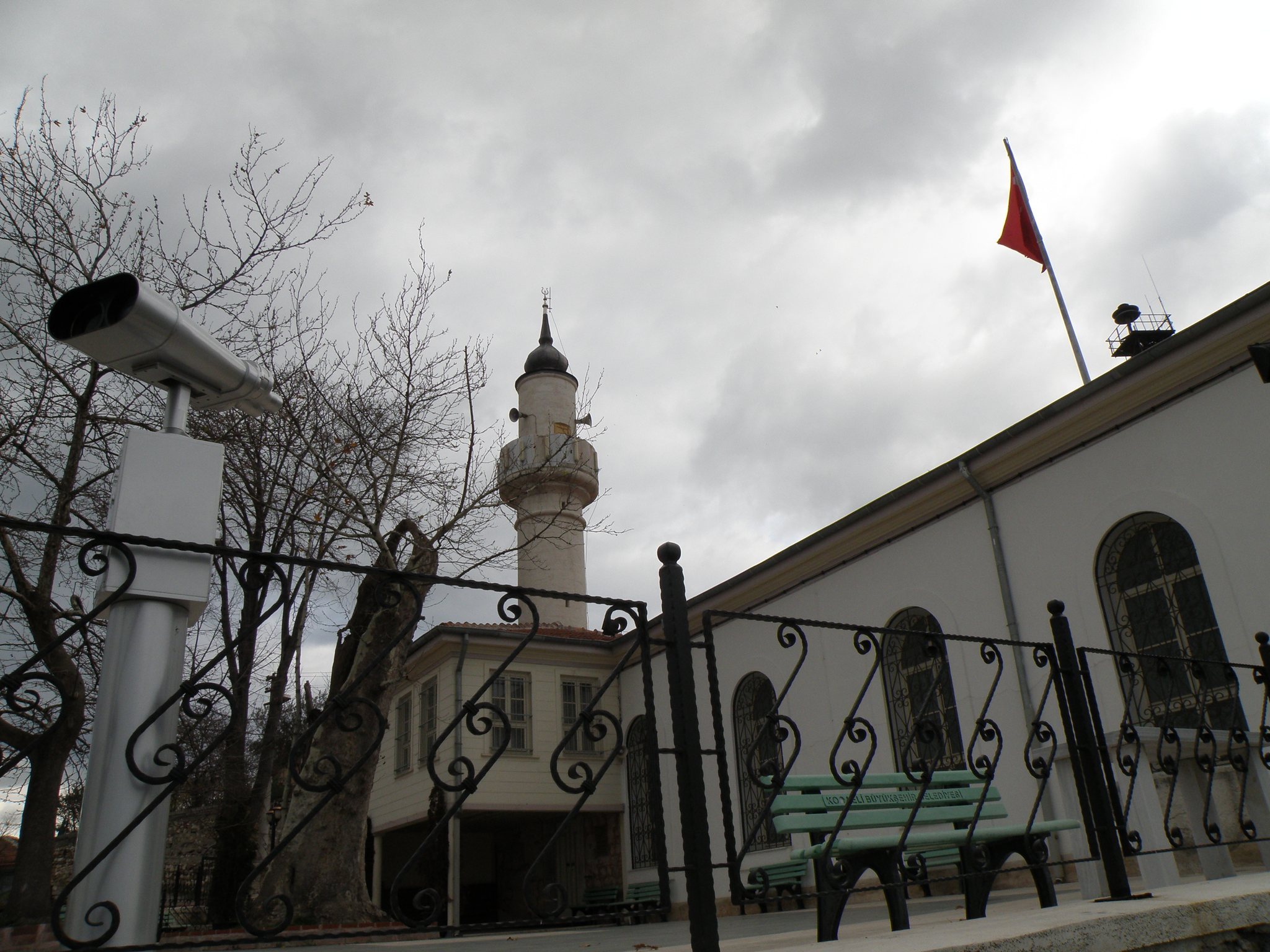
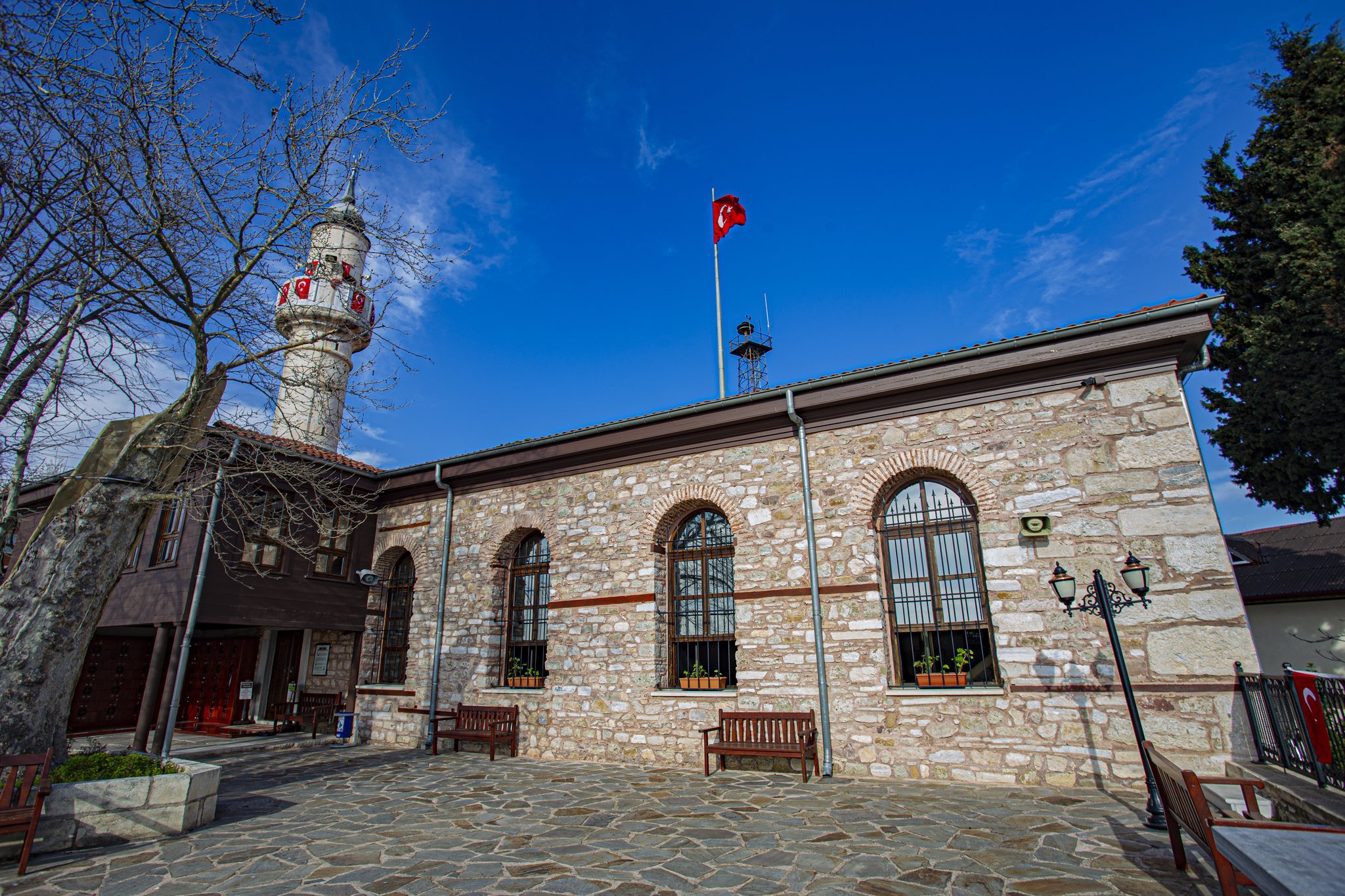
The surviving complex is centered on the mosque at the junction of Medrese Street and Camialtı Street in Orhan District, İzmit. Its rectangular building has stone-and-brick walls, an exterior wooden roof, and an interior suspended dome. A single minaret completes the surviving mosque structure.
Orhan Mosque and burial ground
The mosque’s inscription has not survived. Southeast of the building, a burial ground contains the graves of mosque imams and their relatives, former medrese instructors, and several sheikhs.
Medrese and bath
The medrese extended eastward and northward from the mosque. The associated double bath stood below the mosque on Çukurçeşme Street in Akçakoca District. Its origins may lie in the Byzantine period, or it may have been built during the reign of Orhan Gazi. After restoration, the bath was put back into use in 2013.