Hardtburg: A Medieval Moated Castle in Germany
Site at a Glance
- Popularity
- Medium
- Country
- Germany
- Primary era
- Medieval
- Eras represented
- Medieval, Early Modern, Modern
- Civilizations
- Electorate of Cologne, Holy Roman Empire
- Site type
- Military
- Remains
- Castle
On this page11 sections
History
Origins and conflict
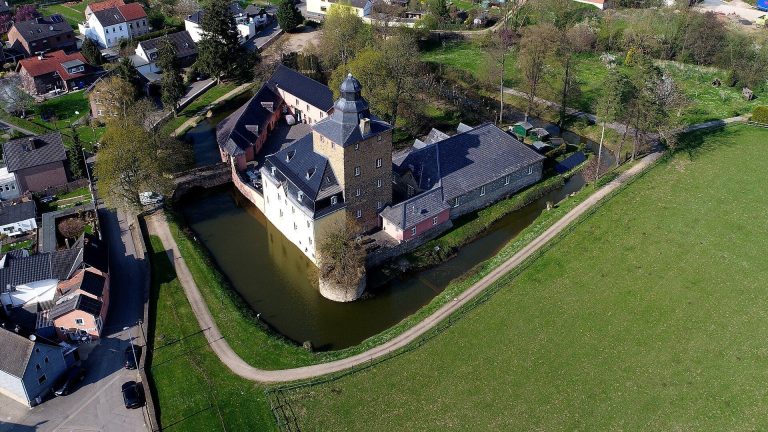
Hardtburg is a medieval moated castle south of Stotzheim in Euskirchen, Germany. It was probably built in the 11th or 12th century by a lord of Har(d)t, whose presence is recorded from 1105. The castle itself first appears in written records in 1166. In 1205, Archbishop Bruno of Sayn captured it and partly destroyed it.
Cologne rule and expansion
Count Friedrich of Hochstaden bequeathed Hardtburg to the archbishopric of Cologne in 1246. It then belonged to Electoral Cologne, the territorial principality ruled by the archbishops of Cologne, who also served as electors in the Holy Roman Empire. Hardtburg became the seat of the Hardt administrative district, which covered 12,100 hectares, and retained that role until 1794.
The castle’s initially rudimentary complex was remodeled in the 13th century. In the 14th century, builders added the outer ward and a Zwinger, a fortified space between outer defenses and the inner castle.
Ruins and preservation
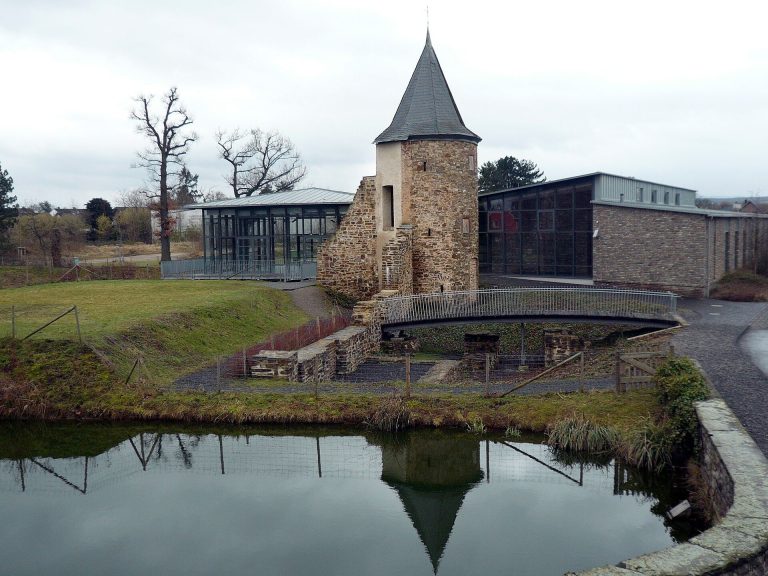
Drawings from 1725 show Hardtburg already in ruins, and its core castle has been ruinous since the 18th century. Maintenance work has been carried out at the site since 1965.
Remains
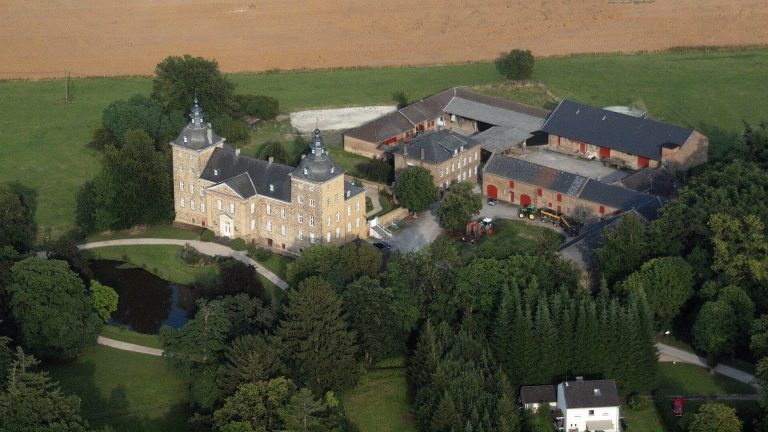
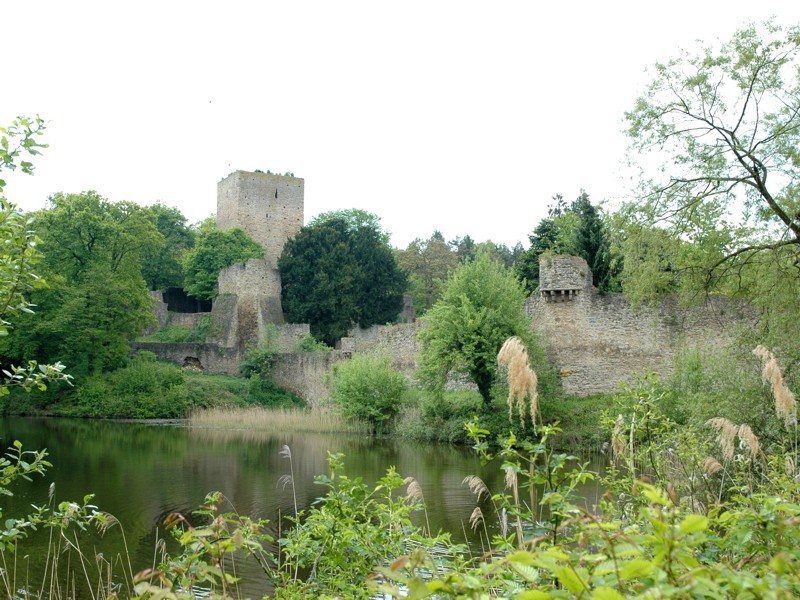
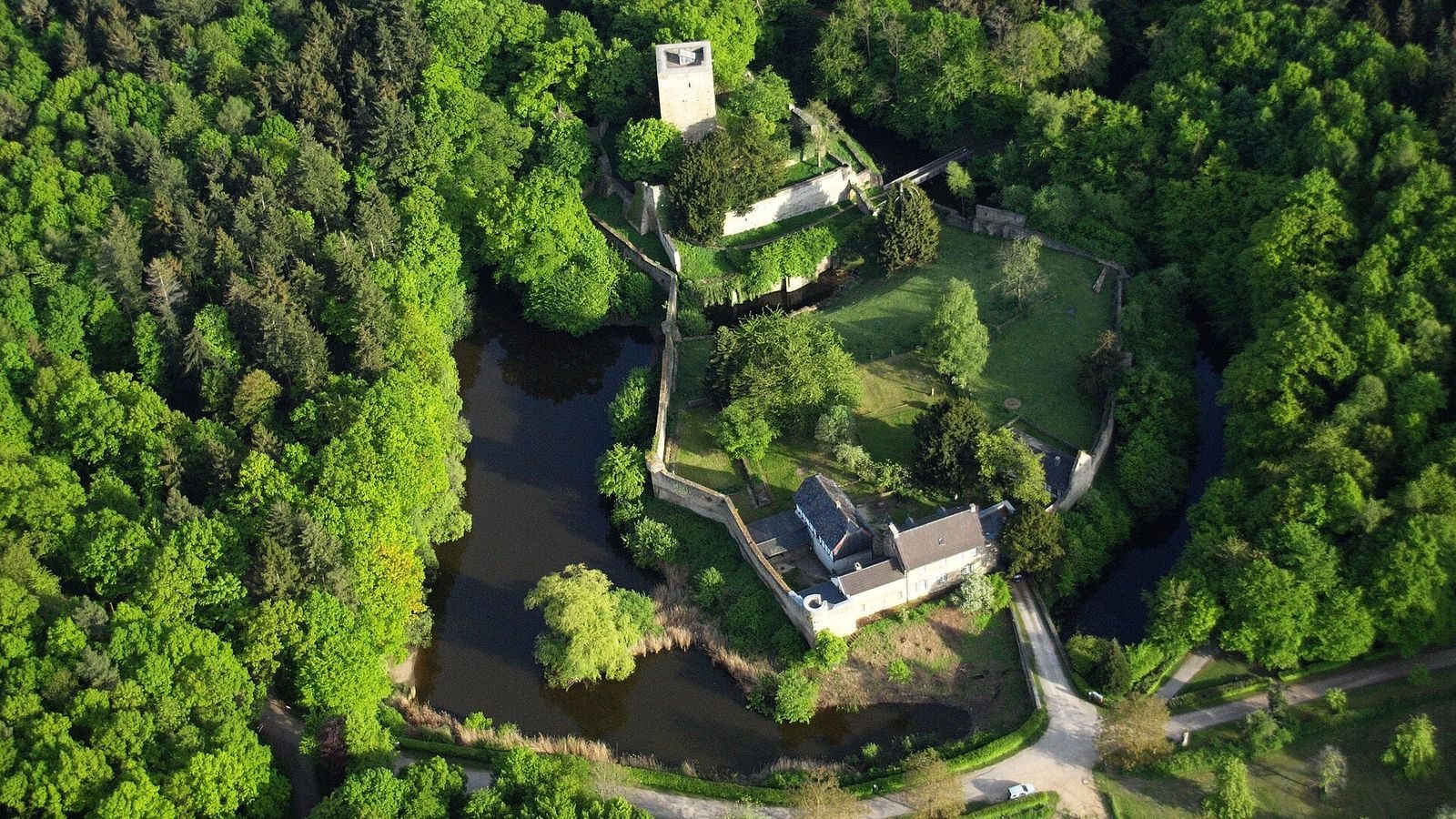
Hardtburg stands on a hill, but its encircling moat makes it a moated castle rather than a hilltop castle. The complex, including the moat, measures 155 by 107 metres. A ring wall around the whole site measures 119 by 66 metres, rises to 7 metres, and is about 60 centimetres thick. The layout comprises an outer ward and a higher core castle, with a ditch separating them.
Outer ward and Zwinger
Outer ward and entrance
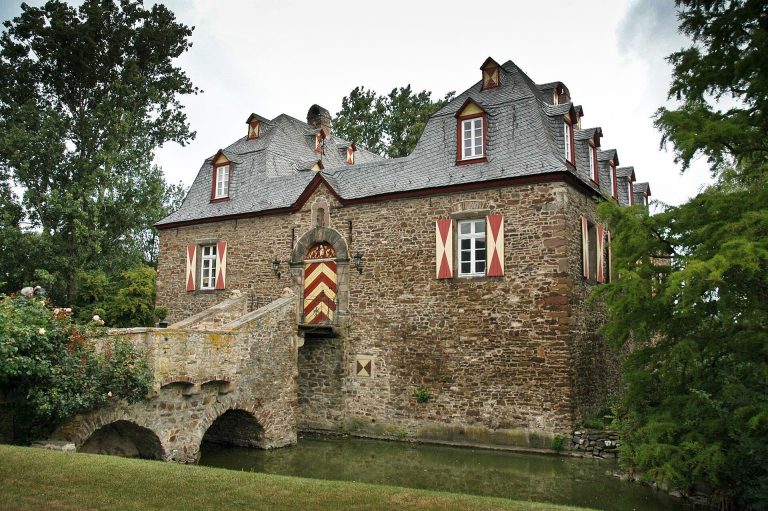
A bridge over the moat leads through a gate tower into the outer ward. The bridge once operated as a drawbridge, while the tower had a portcullis. Several buildings dating from the 18th and 19th centuries stand around the broad courtyard, which also contains a state forestry district office.
Zwinger
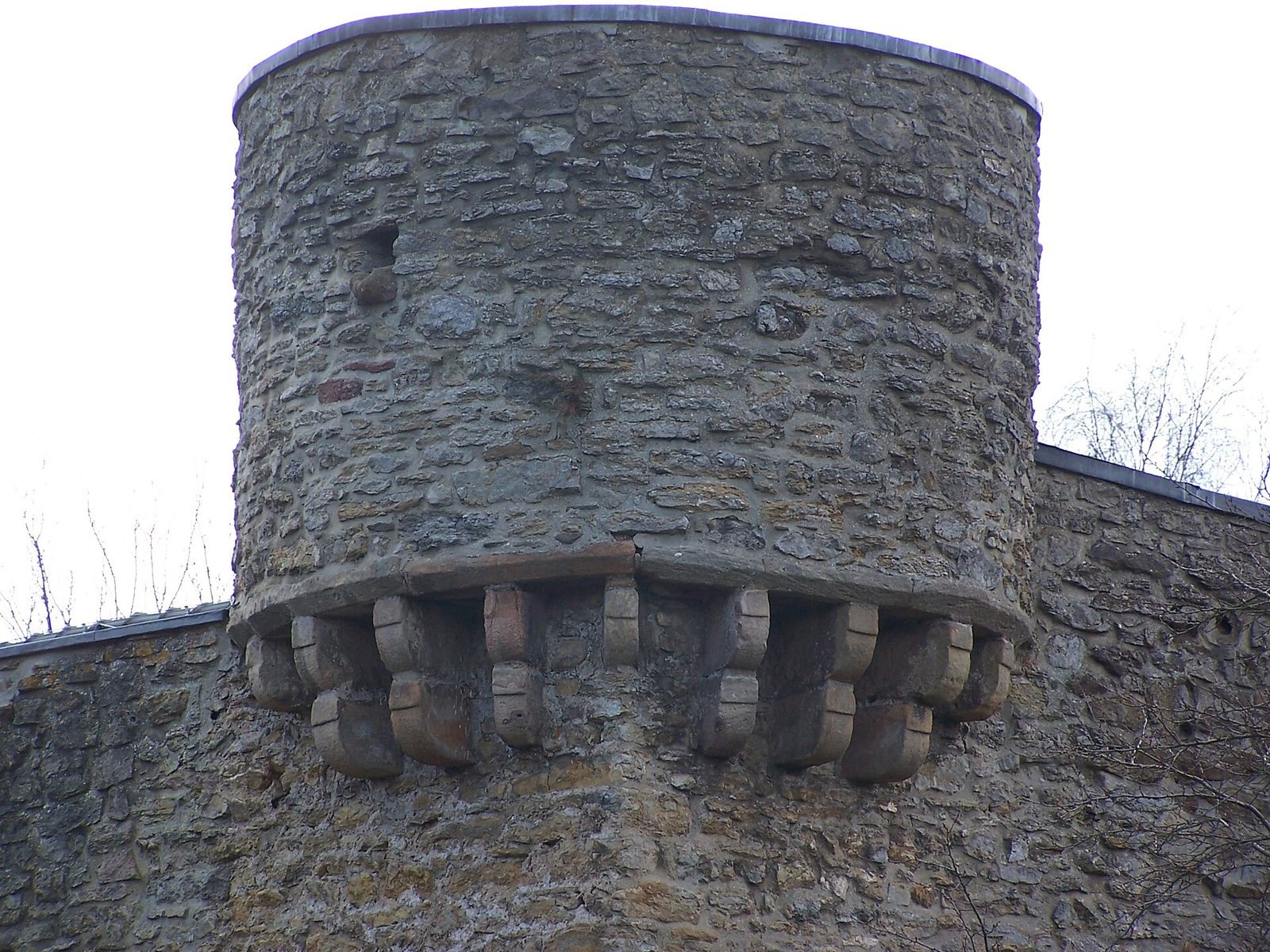
A bridge formerly crossed the ditch from the outer ward into the Zwinger, which surrounds the core castle’s ring wall. The enclosure measures 50 by 40 metres, and its walls are about 60 centimetres thick.
Core castle
Enclosing wall
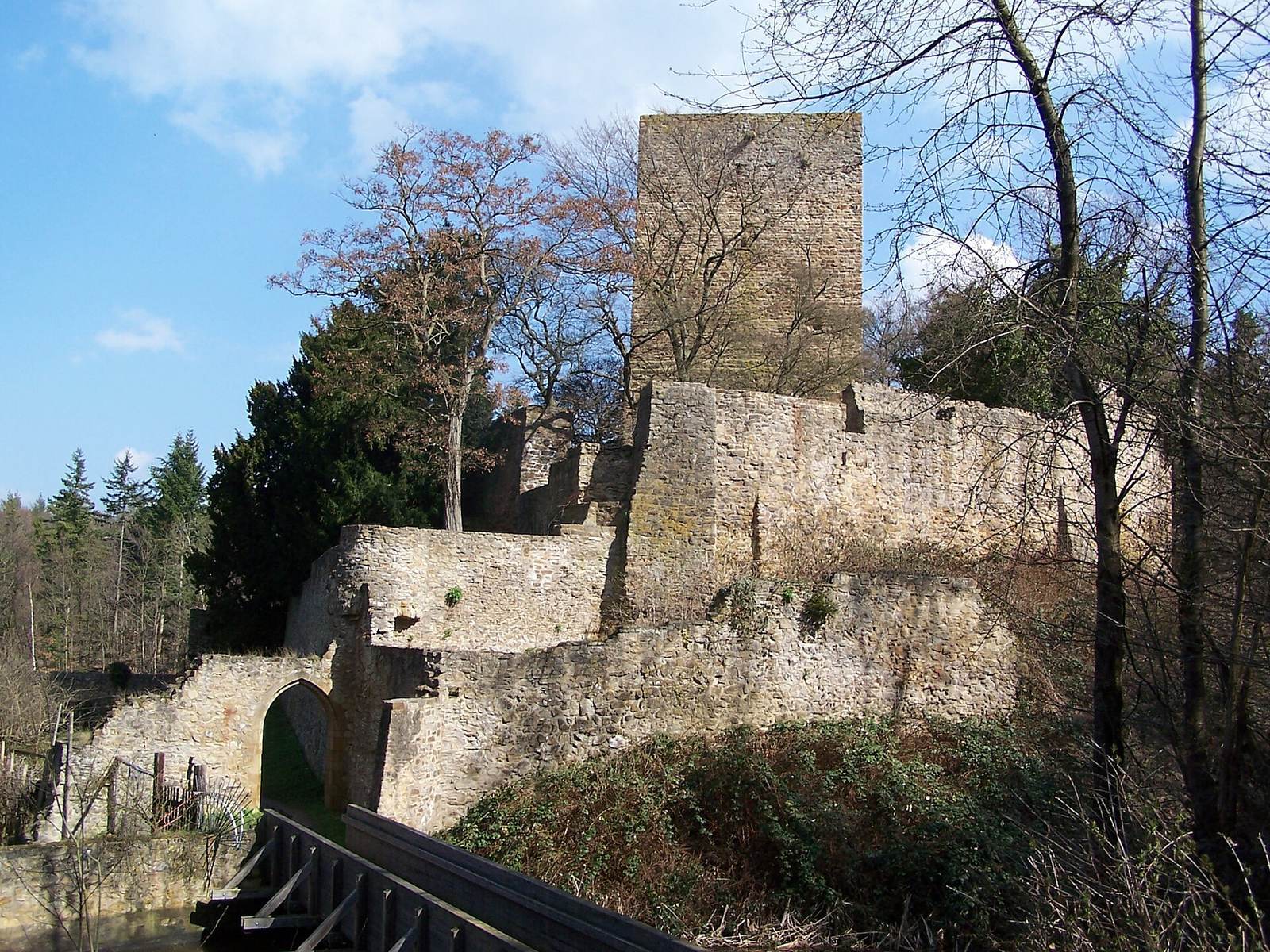
The core castle’s high ring wall encloses an area measuring up to 32 by 29 metres. It is up to 2.7 metres thick on the north side and about 1.6 metres thick on the south. The core castle is in ruins, while major sections of the castle walls and the outer ward remain very well preserved.
Keep
Within the enclosure stands the keep, the castle’s principal fortified tower. Its base measures 9.5 by 9.3 metres, and it rises about 20 metres. The walls are 2.5 metres thick on the lowest floor and become thinner at higher levels.