Gut Vehr: A Former Castle and Moated Estate in Germany

Site at a Glance
- Rating
- 4.3
- Popularity
- Low
- Country
- Germany
- Primary era
- Modern
- External website
- Open
- Eras represented
- Modern
- Civilizations
- German
- Site type
- Domestic
- Remains
- Manor House
On this page9 sections
History
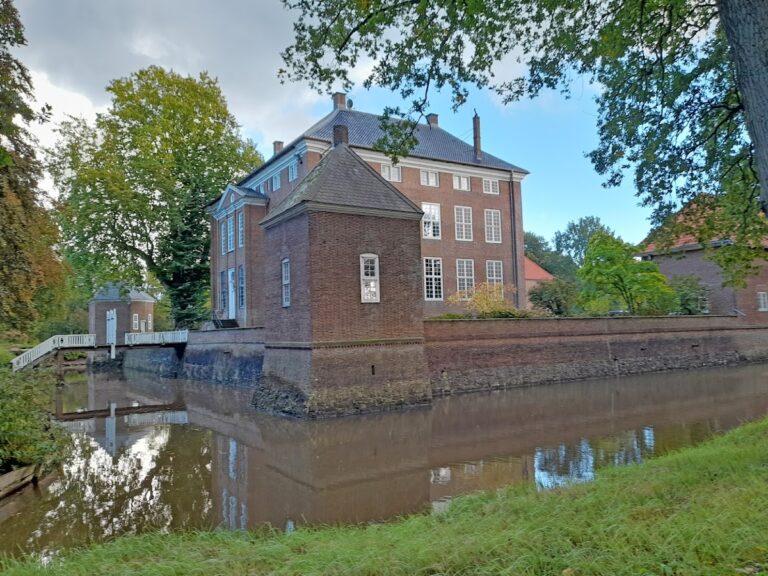
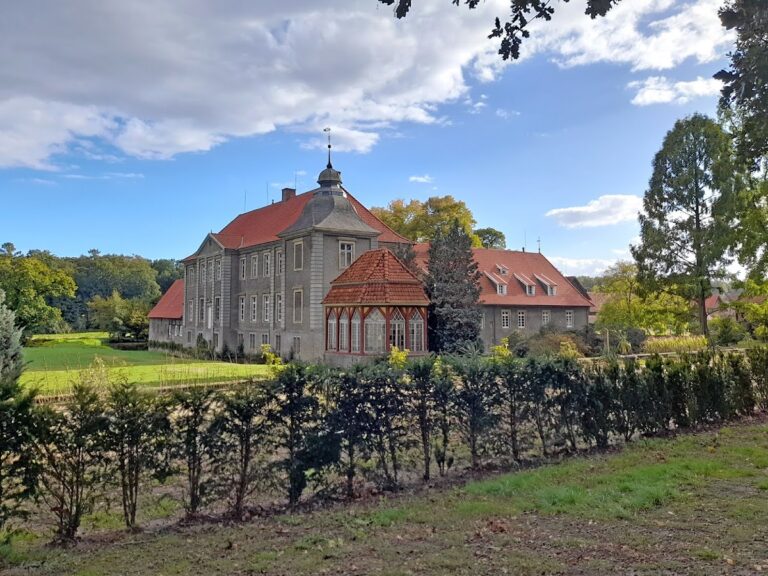
Gut Vehr is a former castle and defensive complex in Germany, located at Quakenbrück and first mentioned in the thirteenth century. It began as a fortification and later became a fortified farm complex surrounded by a moat.
Estate ownership
The von Schmerten family owned Gut Vehr in 1522. Through marriage, the estate passed to the von Grothaus family in 1540. Around 1650, it moved through the von Kobrinck family of Daren and the von Schade family of Ihorst before passing to the noble von Frydag family of Daren. Von Elmendorff purchased the estate in 1783.
From 1876 to 1929, Gut Vehr belonged to the German nobleman Freiherr Burghard von Schorlemer-Alst and his son, Clemens Freiherr von Schorlemer-Lieser. A Freiherr was a German baronial title. On 29 May 1916, Clemens expressed his connection with Quakenbrück by donating the “Iron Castle Guard.” Its nailing followed a wartime fundraising practice in which donors attached nails or similar contributions to a commemorative figure to raise money for wartime expenses.
Rebuilding and municipal history
Johann Wilhelm Welker of Duisburg purchased the estate in 1926. Gut Vehr was completely remodelled between 1929 and 1936, creating the larger farm complex that forms its present appearance. The estate passed by inheritance within the Welker family and remains in its possession. It is combined with the Gut Groß-Arkenstedt estate.
The settlement of Hengelage developed on land belonging to Gut Vehr and became closely identified with the estate. Its woodland and remaining surrounding land also remain part of the property. Today, Gut Vehr and Hengelage lie within the municipal area of Quakenbrück. Before the Lower Saxony municipal territorial reform of 1972, Hengelage belonged to the municipality of Essen (Oldenburg) in the district of Cloppenburg. The estate now forms the northwestern boundary of Quakenbrück’s municipal area.
Remains
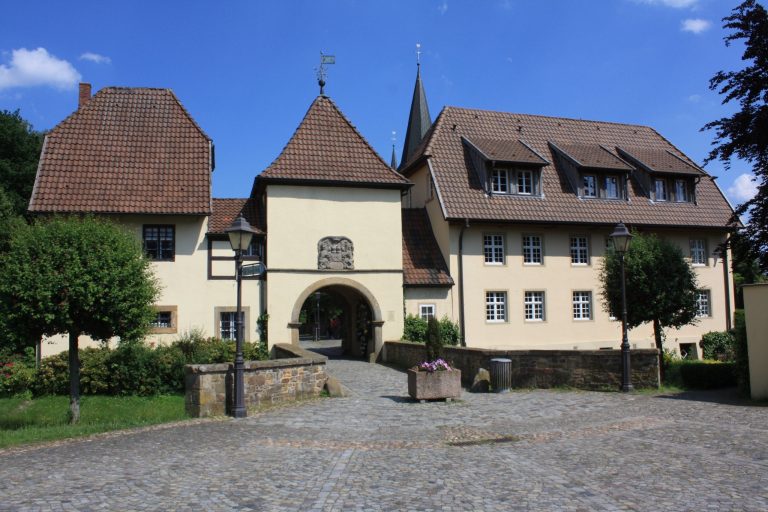
Gut Vehr survives as a large estate composed of a manor house, extensive agricultural buildings, a wooded area, and surrounding grounds. The historic defensive complex developed into a moated farmstead, while the present arrangement largely reflects the rebuilding of 1929 to 1936.
Manor and agricultural buildings
Manor house
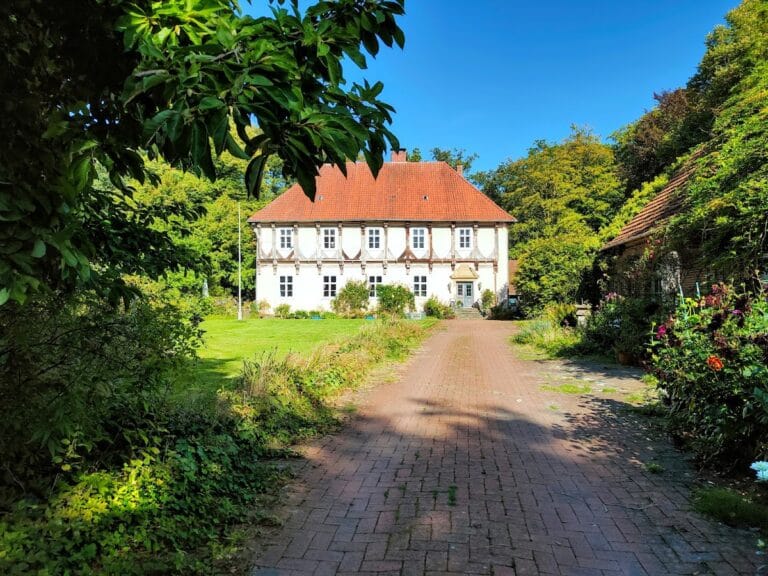
A new manor house was built in 1877 by the father of Burghard von Schorlemer-Alst. It stands somewhat apart from the agricultural buildings in a park-like wooded setting, forming a distinct part of the estate’s built and landscaped composition.
Farmstead and storehouse
The extensive agricultural buildings make up the farm complex in its present form. The storehouse forms part of the east wing. It was first used for grain storage and later for improving seed grain, linking the building to the estate’s agricultural functions.
Bell tower
The estate includes a bell tower fitted with a Westminster chime, a sequence of clock bells based on the chime associated with the Palace of Westminster in London.
Woodland and avenue
The manor house, farm buildings, wooded area, and remaining estate grounds together form the principal physical components of Gut Vehr. An access avenue branching from Federal Highway 68 is part of the “Kunsttour,” a cycle route through the Artland, a historic cultural landscape in northwestern Lower Saxony known for rural settlements, farmsteads, and avenues. Twelve paintings are installed along the route, each reproducing the landscape visible beyond the picture. One of these works stands between two avenue trees near Gut Vehr.