Ziegensteine: A Neolithic Megalithic Tomb in Germany
Site at a Glance
- Popularity
- Very Low
- Country
- Germany
- Primary era
- Stone Age
- Eras represented
- Stone Age
- Civilizations
- Unclassified
- Site type
- Burial
- Remains
- Burial Mound
On this page8 sections
History
The Neolithic tomb group
The Ziegensteine is a megalithic tomb near Lancken-Granitz, Germany, belonging to a group dated to 3500–2800 BCE and associated with the Neolithic Funnel Beaker culture, a northern European culture named for its characteristic funnel-shaped pottery. The group probably comprised eleven large dolmens, burial chambers made from large stones. Two tombs survive, and the Ziegensteine is the best-preserved.
Early records and archaeological investigation
Maps created between 1692 and 1709 during Sweden’s survey of Western Pomerania did not label the tombs, though some locations were marked as small, tree- and shrub-covered patches in fields. In the 1820s, Friedrich von Hagenow made the first scientific description of the Dummertevitz tombs. His map of 1829 marked eleven, while a list Rudolf Baier published in 1904 from Hagenow’s notes names seven.
Ernst Sprockhoff measured the Ziegensteine in 1931 and assigned it catalogue number 500. It later appeared in his Atlas of the Megalithic Tombs of Germany, published in 1967. Ewald Schuldt led excavations at the tomb from October to November 1969.
Remains
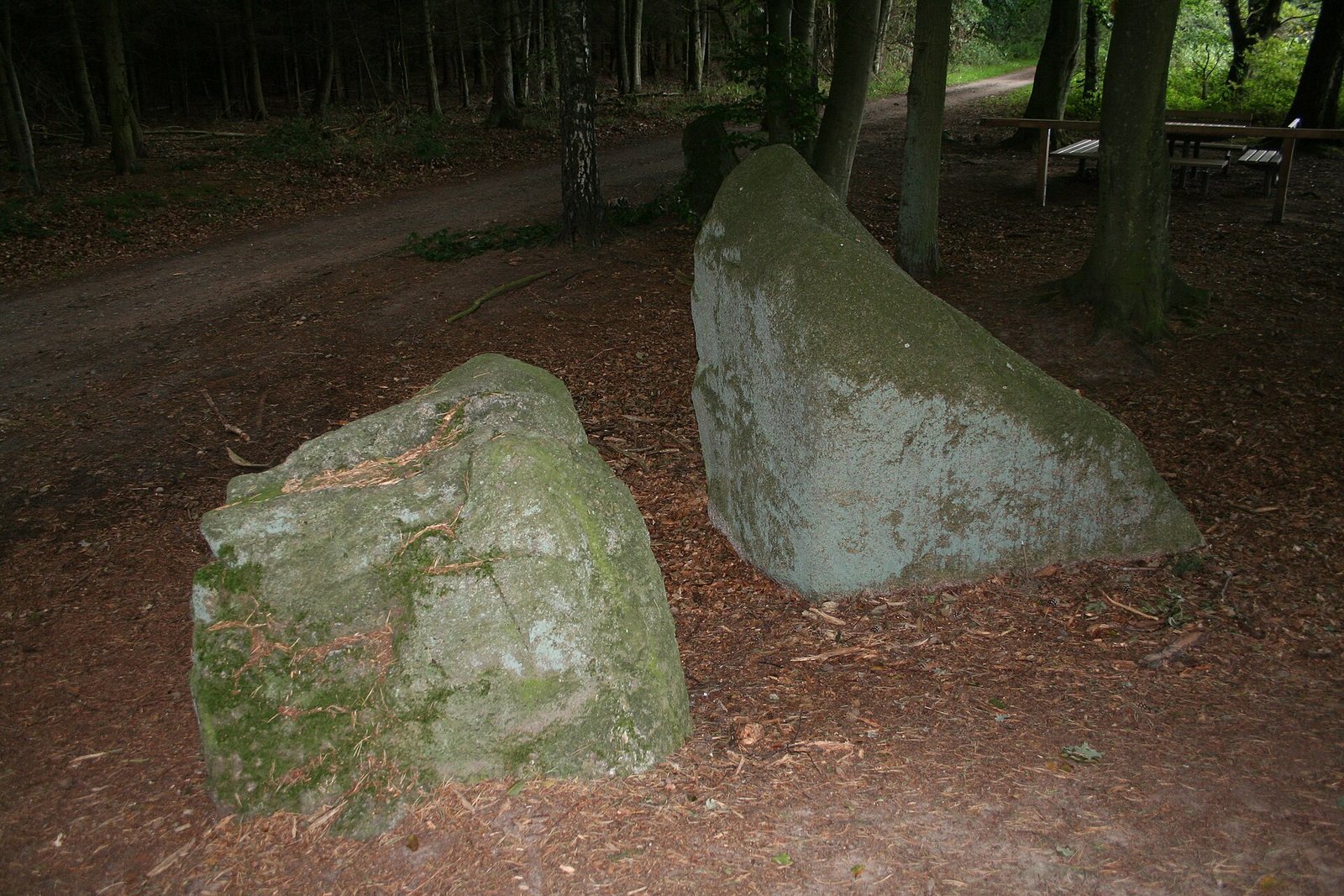
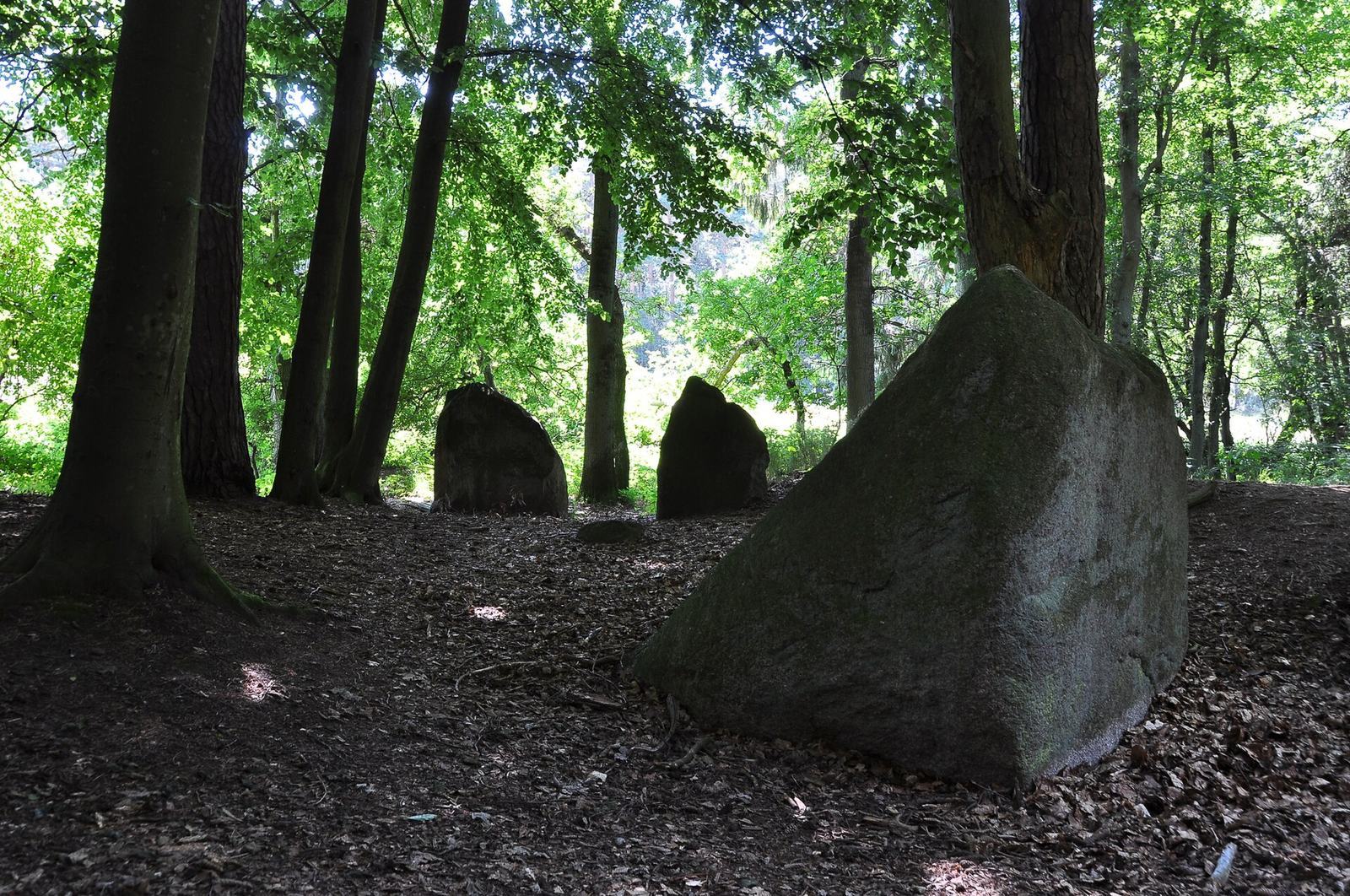
The Ziegensteine
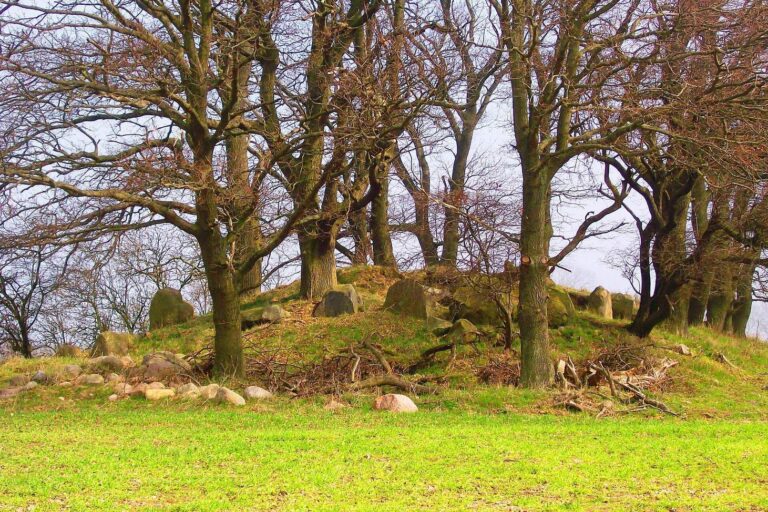
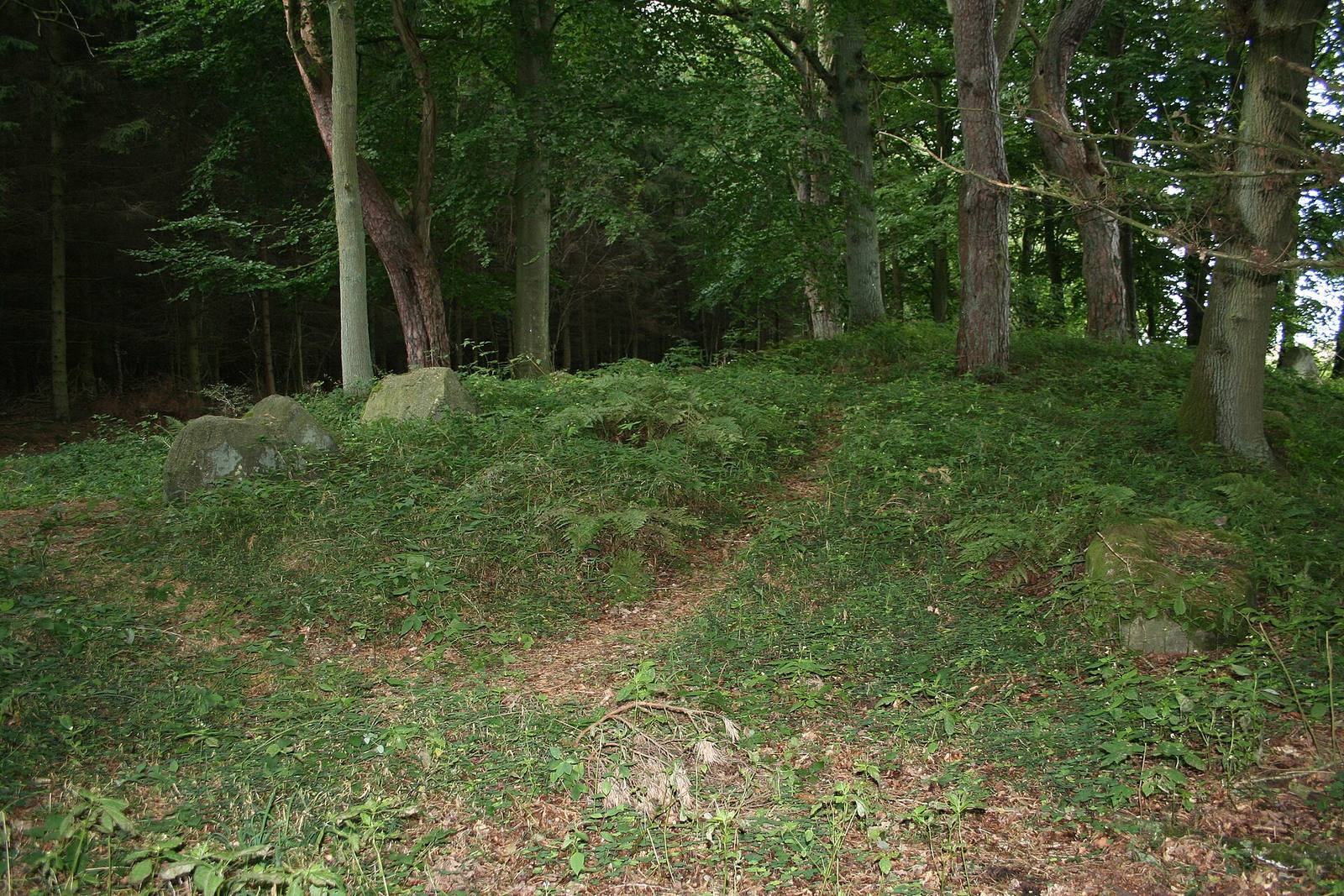
The tomb stands just south of the coastal path between Lancken-Granitz and Groß Stresow, at the southern edge of the Stresower Tannen woodland. Its main structure is an east–west, trapezoid-shaped long barrow, an elongated burial mound, about 30 metres long, with a stone chamber set across it.
Long barrow
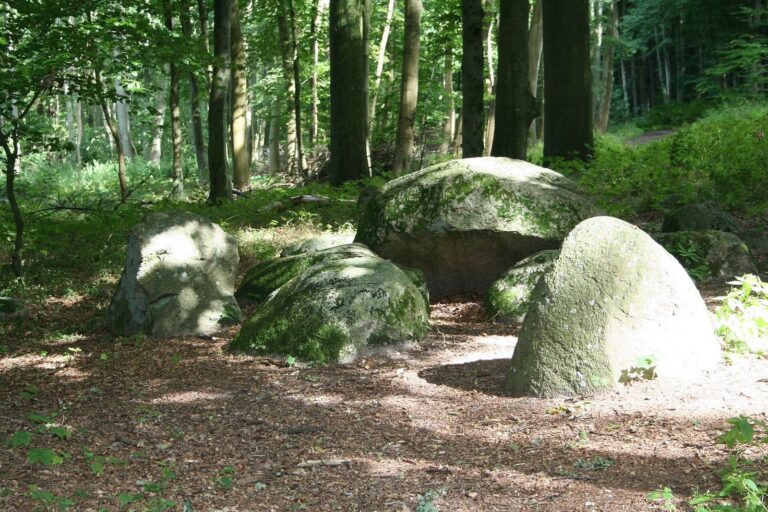
The northern side of the barrow remains relatively clear, while individual stones indicate the line of its southern side. Large guard stones stand at the eastern end. The monument may have begun as a round mound that was later covered by the long barrow.
Burial chamber
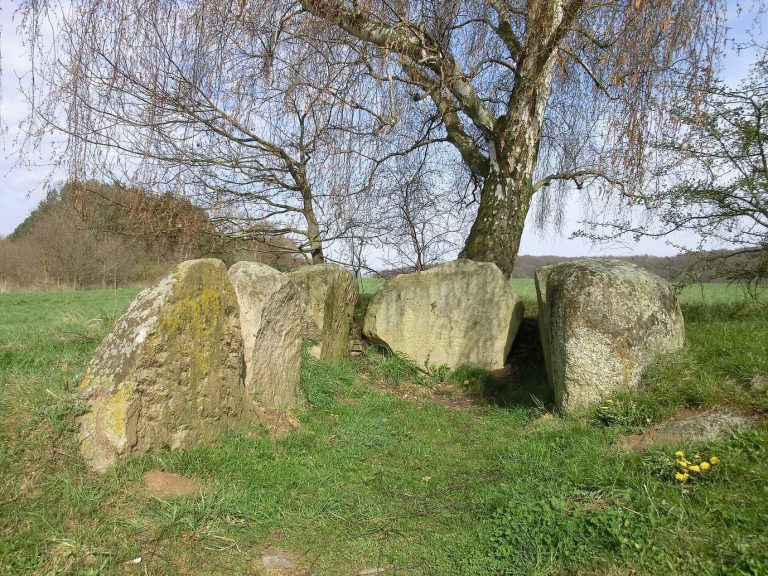
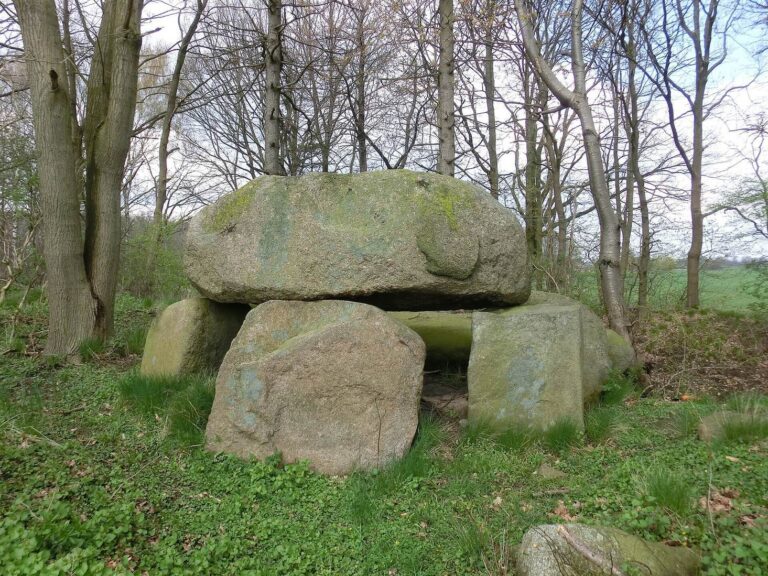
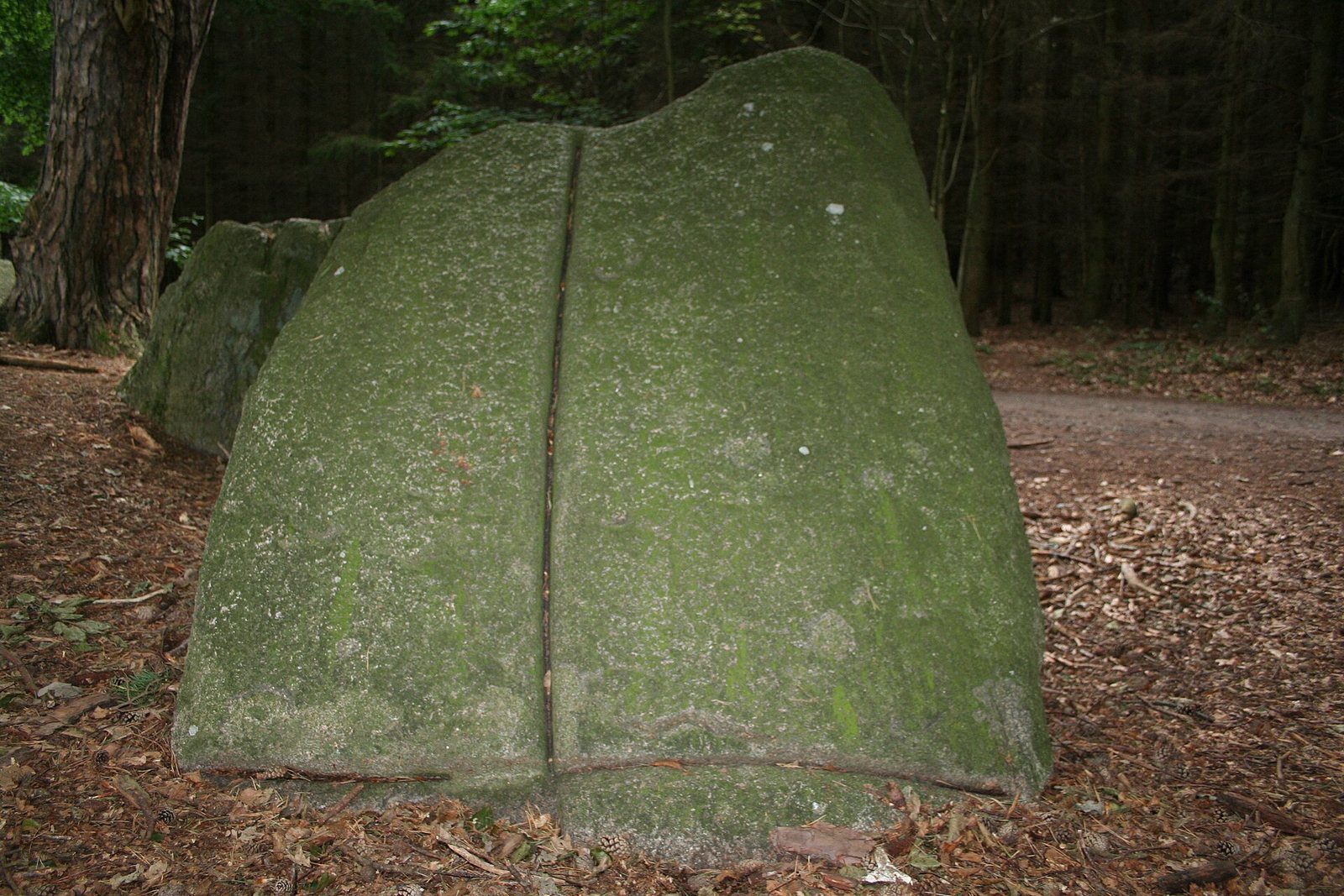
The large dolmen chamber is now exposed. Three supporting stones remain along each of its east and west sides, together with the stone at its northern end. The southern end is disturbed; the entrance, designed to shelter the chamber from wind, was located there. Two capstones, slabs laid over a burial chamber, remain in place.
The surrounding tomb landscape
Two other tombs immediately east of the Ziegensteine have been destroyed. A group of three destroyed tombs lay about 700–800 metres to the northeast, aligned roughly east-southeast to west-northwest. About one kilometre east-southeast was a line of twelve tombs: four in Dummertevitz fields and eight in Burtevitz fields. Around one kilometre northeast of the Ziegensteine are three of the four surviving tombs at Burtevitz and all four at Lancken-Granitz. The remaining Burtevitz tomb lies about 1.5 kilometres east, while the tombs at Nadelitz are about 2.5 kilometres west.