Megalithic Tombs near Lonvitz: Neolithic Great Dolmens in Germany
Site at a Glance
- Popularity
- Very Low
- Country
- Germany
- Primary era
- Stone Age
- Eras represented
- Stone Age
- Civilizations
- Unclassified
- Site type
- Burial
- Remains
- Necropolis
On this page5 sections
History
The Megalithic Tombs near Lonvitz are Neolithic burial monuments in Putbus, Germany, built by the Funnel Beaker culture, a northern and central European culture named for its characteristic pottery. Around 3500–2800 BCE, this community built three dolmens, tombs made from large stones. All three belonged to the great-dolmen class, a northern European category distinct from smaller dolmen forms. One tomb was destroyed during the nineteenth century. It was also a great dolmen, enclosed by a mound of rounded stones.
The tombs appear on detailed cadastral maps made between 1692 and 1709 during Sweden’s land survey of Western Pomerania. In 1829, Friedrich von Hagenow described all three tombs then identifiable at Lonvitz. His research was published by Rudolf Baier in 1904. In 1931, Ernst Sprockhoff measured and recorded the two surviving monuments for his atlas of megalithic tombs.
Legends of Grave 2
Grave 2 is also known as Fleederbarg, meaning “Lilac Hill.” Local tales associated the mound with hidden treasure that people tried unsuccessfully to recover. In one version, a shepherd boy found a purse containing money while pulling up a cabbage plant. Other stories placed a knife, fork, and light beneath the mound, described dwarfs carrying lights that frightened people passing at midnight, or told of a woman dressed in black who appeared there on dark nights.
Remains
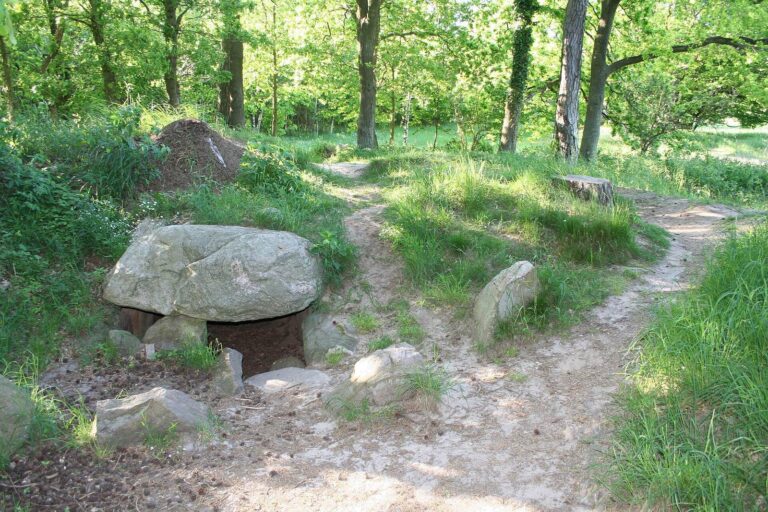
The surviving remains have two different forms: a partly preserved stone chamber at Grave 1 and a chamber set within an elongated, stone-bordered mound at Grave 2. Both chambers retain capstones, the large stones that span a burial chamber. Other nearby megalithic tombs include the Posewald tomb, about 2 km northeast of Grave 2; the Seelvitz tombs, about 2.5 km northeast; and the Nadelitz tombs, about 2.5 km east. Burial mounds also lie near Lauterbach and Putbus.
Grave 1
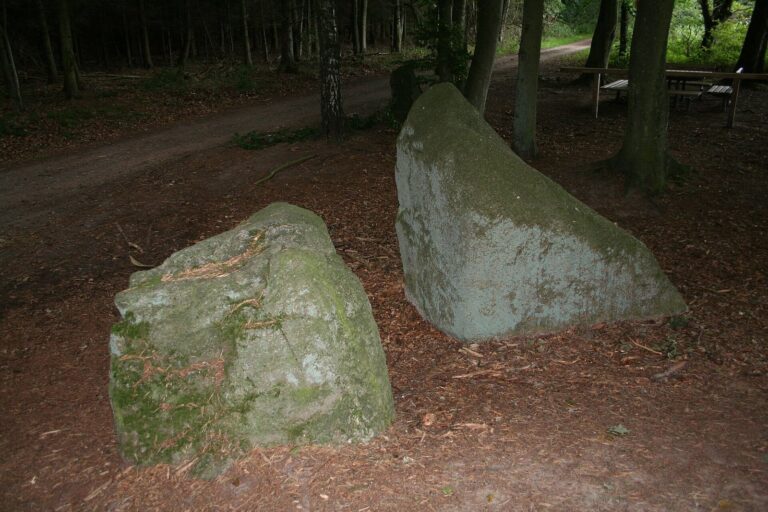
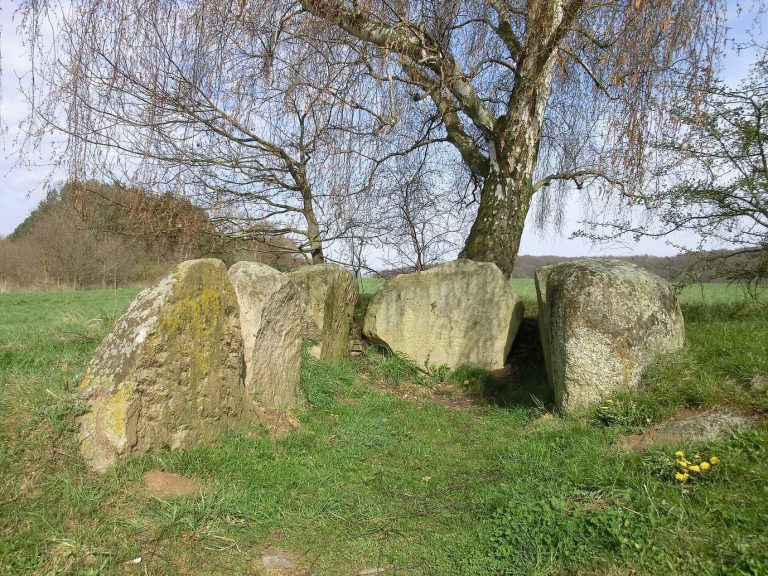
Grave 1 lies about 800 m south-southwest of Lonvitz, beside a bend in the railway between Putbus and Lauterbach. Its chamber runs northeast–southwest, measures 2.20 m across, and stands 0.80 m high. Railway construction destroyed its northeastern end. Four wall stones remain along the northwest side. The northeasternmost leans inward, while the other three retain their original positions. Along the southeast side, the northeastern and middle stones lean outward; the third stone and the southwestern end stone remain in place. Three capstones survive, two fallen into the chamber. The southwesternmost remains in its original position and is the largest, measuring 3.10 m long, 1.80 m wide, and 1.10 m thick. Cup marks, small cup-shaped hollows carved into stone, occur on all three capstones and one wall stone.
Grave 2
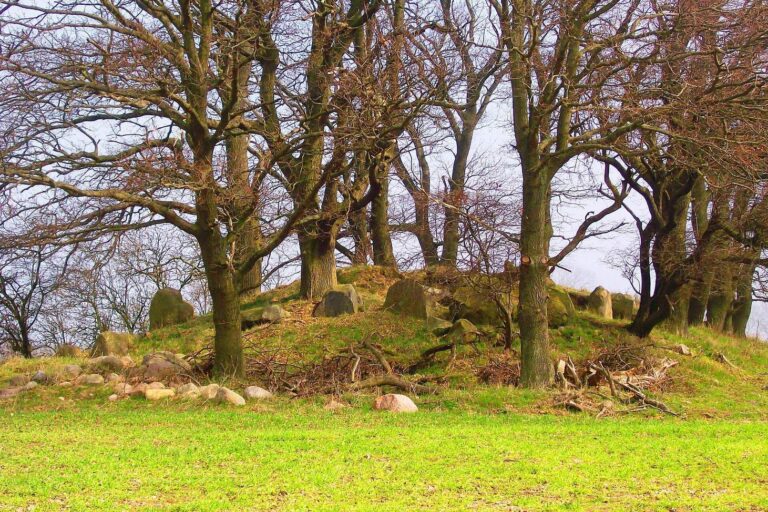
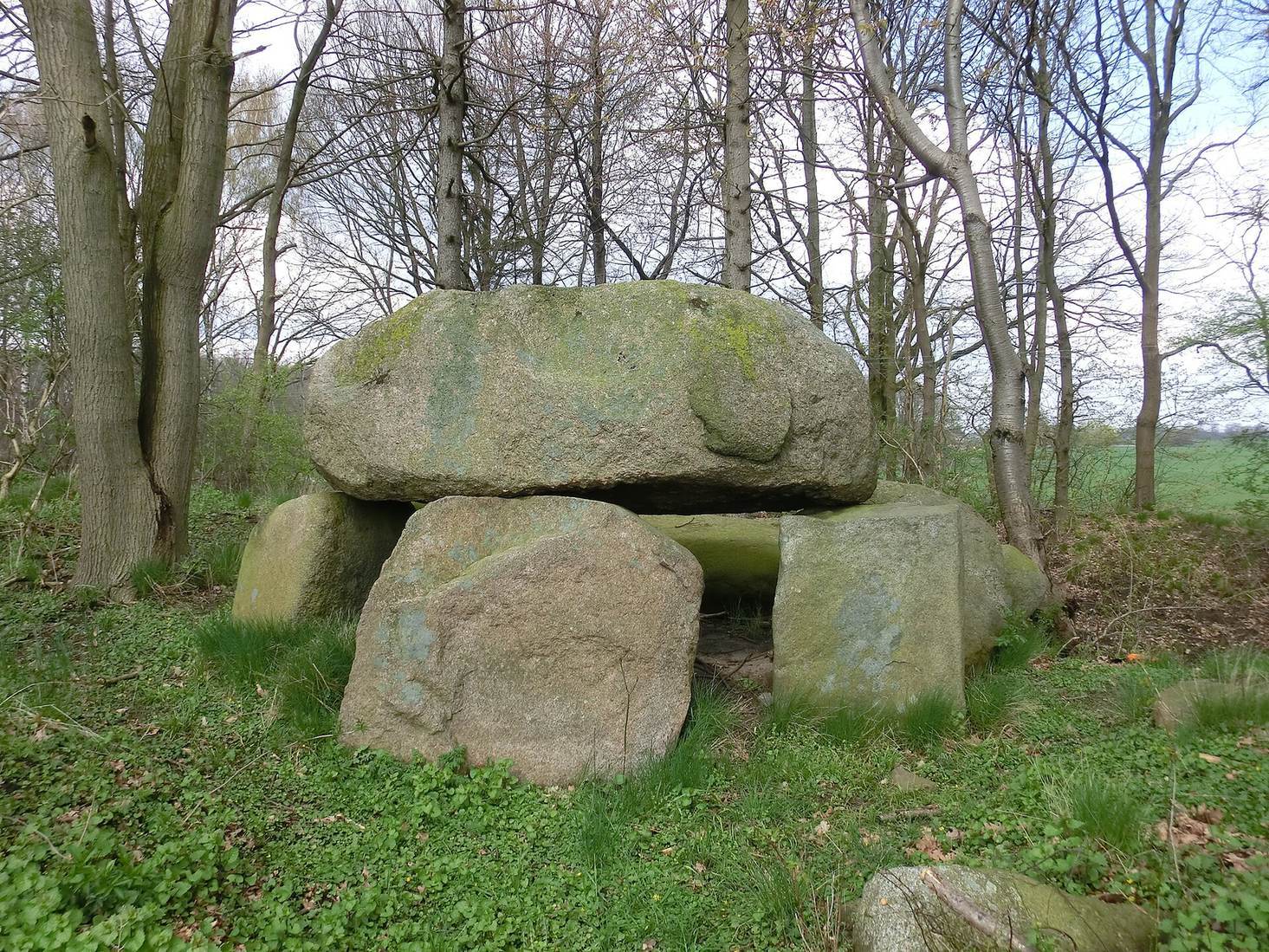
Grave 2 stands about 970 m north-northeast of Grave 1, at the northeastern edge of the village where the roads to Posewald and Vilmnitz divide. Its north–south mound measures about 28 m long, 8 m wide at the southern end, and 6 m at the northern end; it rises about 2 m. Nineteen perimeter stones survive, with 13 on the eastern side, five on the western side, and one at the southern end. The chamber sits at the mound’s southern end, angled northwest–southeast, and measures 3.50 by 1.80 m. Its stones remain deeply embedded in the ground. Three wall stones on the northeast side and two on the southwest side remain in their original positions. The northwest end stone is also in place, while the southeast end stone has toppled inward. The northwest capstone is close to its original position. A second capstone lies displaced southeast of the mound; it measures 3.00 by 2.70 by 1.40 m and bears at least five cup marks on its upper surface. Sprockhoff proposed that a passage into the chamber may have been at its southwestern end.