Great Orme Copper Mines: A Bronze Age Copper-Mining Complex in Wales
Site at a Glance
- Rating
- 4.7
- Popularity
- Medium
- Country
- United Kingdom
- Primary era
- Bronze Age
- External website
- Open
- Eras represented
- Bronze Age, Early Modern, Modern
- Civilizations
- British, English
- Site type
- Economic
- Remains
- Mine
On this page13 sections
History
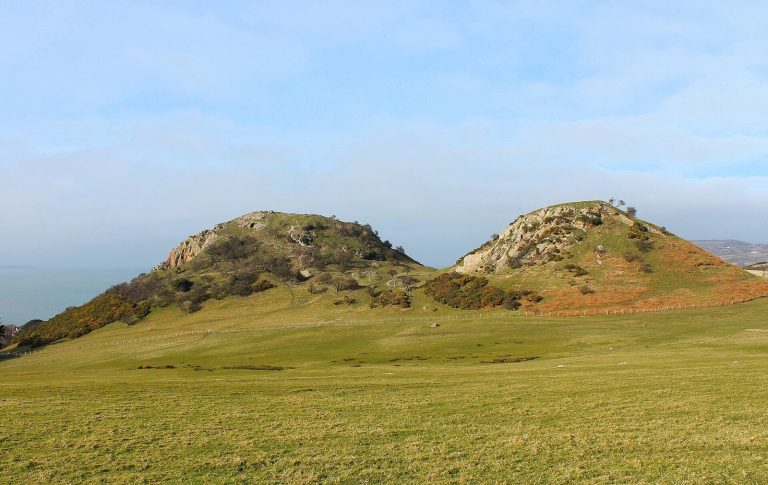
Great Orme Copper Mines are a Bronze Age copper-mining complex at Llandudno in the United Kingdom. Mining began around 2000 BC, when Bronze Age miners developed workings through copper-bearing rock on the Great Orme. With more than five miles of tunnels, the site is described as the largest known mine of its type in the world. Copper production was most intensive during the Bronze Age, although the workings were used again from 1692 until the closure of the Old Mine in 1881.
Bronze Age mining
The mine belongs to the Bronze Age, the prehistoric period when bronze became an important material for tools, weapons, and ornaments. Bronze is a hard alloy generally made by combining copper with tin. At the Great Orme, miners extracted copper from veins that could be reached through the headland’s relatively soft dolomite and exposed copper minerals.
Underground fires weakened the rock before miners removed it with stone and bone tools. Charcoal ash from these fires, along with animal bones associated with the workings, can be dated by radiocarbon dating. This method estimates the age of formerly living material by measuring the radioactive carbon that remains in it.
Later working and closure
The mine was worked again between 1692 and 1881. During this later phase, thousands of tons of waste were taken from the workings and dumped across the site. The deposits concealed the tunnel entrances and the exposed rock surface. The last copper mine on the Great Orme, known as the Old Mine, closed in 1881 after the industry had already declined substantially.
Rediscovery and opening
In 1987, the local council commissioned Ashton Mining to reopen blocked shafts and inspect the tunnels and chambers before landscaping the area and building a car park. The investigation revealed the age and extent of the Bronze Age workings. Tony Hammond, the company’s owner, spent the next two years conducting feasibility studies and arranging a lease for the surrounding land.
In April 1990, Tony and Anne Hammond, together with Andy Lewis and Edric Roberts, founded Great Orme Mines Ltd. to excavate the site and open it to the public. More than 100,000 tons of rubble and waste were cleared during the winter of 1990–91, exposing the upper row of entrances. Large mechanical excavators removed much of the eighteenth- and nineteenth-century waste, while work near the entrances and rock face was carried out by hand. After a year of full-time work, the mine opened to visitors on 23 April 1991.
The headland is now known in Welsh as Gogarth. Earlier and alternative names include Mynydd Llandudno, Y Gogarth Fawr, Pen y Gogarth, Cyngreawdwr, Pen y Gwylfryn, and Yr Orm. These names refer to the same headland associated with the mine. The site is a registered monument protected under the Welsh heritage system by Cadw, the Welsh government body responsible for the historic environment, with the identifier CN216.
Interpretation and modern use
The visitor site opened in April 1991 as an archaeological attraction. An extension to the visitor centre completed in 2014 added displays about Bronze Age life and death, ancient mining, and early metallurgy, together with selected mining tools and a bronze axe. A copper-smelting demonstration took place at the mine on 24 June 2019. Copper from the Great Orme was also used in a crown project for the 2019 National Eisteddfod of Wales. Malachite, a green copper mineral, was roasted and reheated repeatedly to produce purer copper, which was cast in a clay mould, cleaned, polished, and coated with lacquer.
Remains
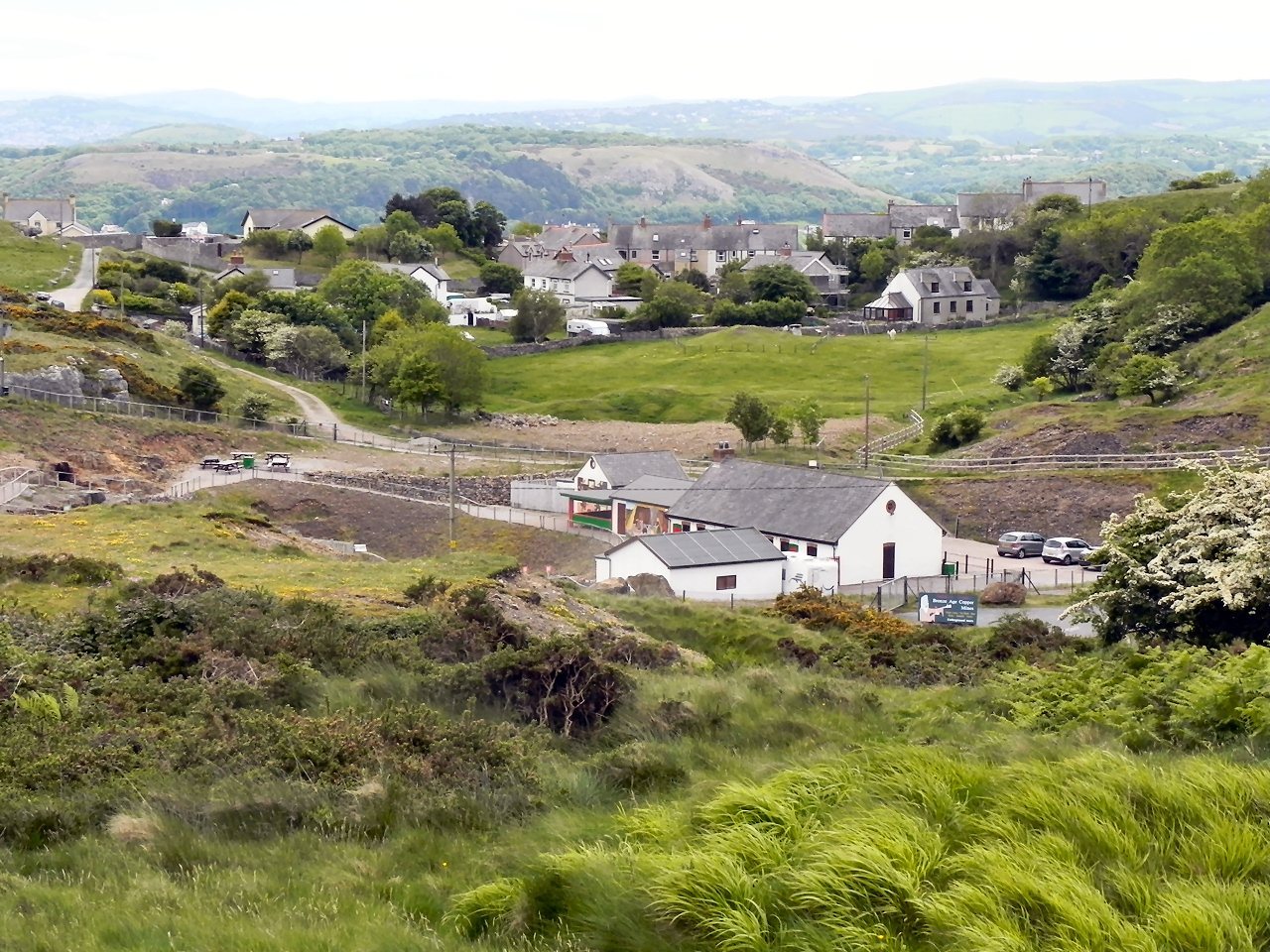
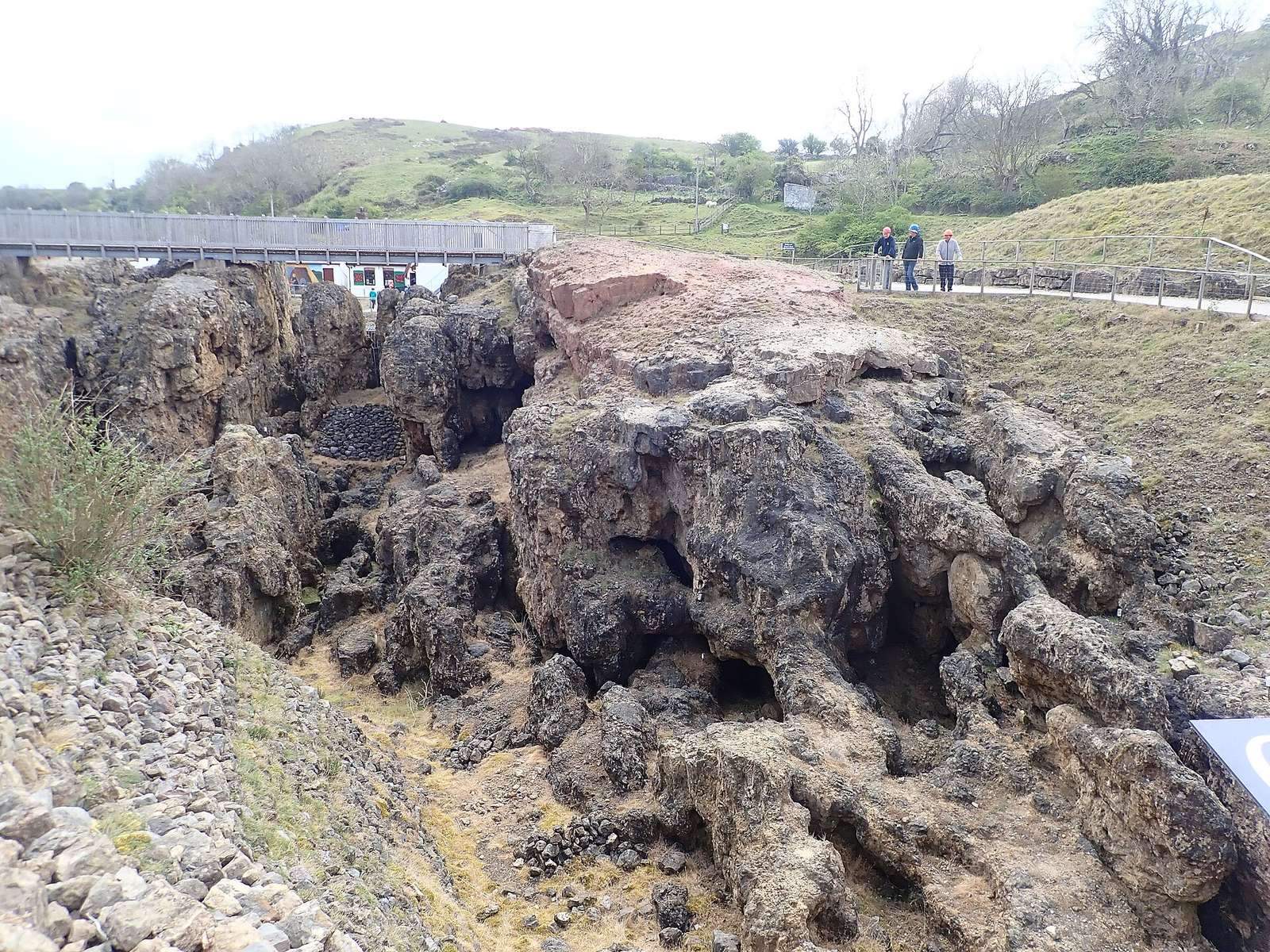
The surviving mine consists of an extensive underground network linked to 35 mineral veins. The visitor route follows four of these veins, many dated to approximately 3,400–3,500 years ago. Surface excavations, paths, viewing platforms, and a bridge over Vivian Shaft, built in 1996, form part of the accessible archaeological site.
Underground workings
Tunnels and mining methods
The accessible tunnels are high enough for visitors to stand in, while nearby workings include passages only about 9 inches wide and 11 inches high. These exceptionally small passages are believed to have been excavated by children as young as five or six. The form of the tunnels helps distinguish different periods of mining. Workings from the last two centuries are generally more angular and preserve marks from blast holes and blasting powder. Bronze Age passages are more irregular, with smooth, rounded walls created as miners removed as little rock as possible using primitive tools.
Bronze Age cavern
The tunnels lead to a large Bronze Age cavern discovered in 1987. It was first thought to belong to the nineteenth century, but five years of investigation established that it is more than 3,500 years old. The cavern is approximately 40 feet high, 70 feet wide, and 45 feet deep. It contained several animal bones and two human shoulder bones. A human jawbone found on the surface is also displayed in the visitor centre.
Tools and archaeological finds
More than 2,500 stone hammers have been found since excavation began in 1987. Their makers selected stones for their size, shape, and type of rock. The largest sandstone hammer weighs 30 kilograms and was probably suspended in a wooden frame because it was too heavy to use by hand.
Stone and bone tools remain mixed with rubble near the rock face. Many appear to have remained undisturbed since the Bronze Age. Newly identified tools were recorded at their exact findspots, and stone axes were photographed in place before each discovery was cleaned, numbered, and entered in the mine’s records. The visitor-centre displays include mining tools, a bronze axe, and material relating to Bronze Age life, death, mining, and ancient metallurgy. The theatre presents the history of the mines and uses seating taken from an old chapel.
Geology and water sources
Copper-bearing rock
The surrounding geology formed during the Carboniferous Period, approximately 340–280 million years ago, when the region lay beneath a shallow tropical sea. Marine shells and plankton skeletons accumulated and hardened into limestone. Between approximately 250 and 200 million years ago, movements in the earth fractured the limestone. Hot, pressurized fluids and gases rose through the cracks, dissolved cavities around them, and deposited copper minerals that cooled into copper-ore veins.
Chemical alteration replaced some of the lime in the surrounding limestone with magnesium, producing dolomite. This carbonate rock was slightly softer than the limestone around it, while copper minerals appeared at the surface. Together, these conditions made the deposits accessible to early miners.
Springs associated with the mine
Numerous springs are associated with the mine, and the locations of 13 are shown on the site map. Ffynnon Galchog was particularly important for washing copper, and nearby remains provide evidence of that use. Other associated springs include Ffynnon Gogarth, Ffynnon Odyn, and Ffynnon Ty’n Pwll, which is at the present site of Seilo Church.