Gwrych Castle: A Gothic Revival Country House in Wales
Site at a Glance
- Rating
- 4.5
- Popularity
- Medium
- Country
- United Kingdom
- Primary era
- Modern
- External website
- Open
- Eras represented
- Modern
- Civilizations
- British
- Site type
- Domestic
- Remains
- Castle
On this page9 sections
History
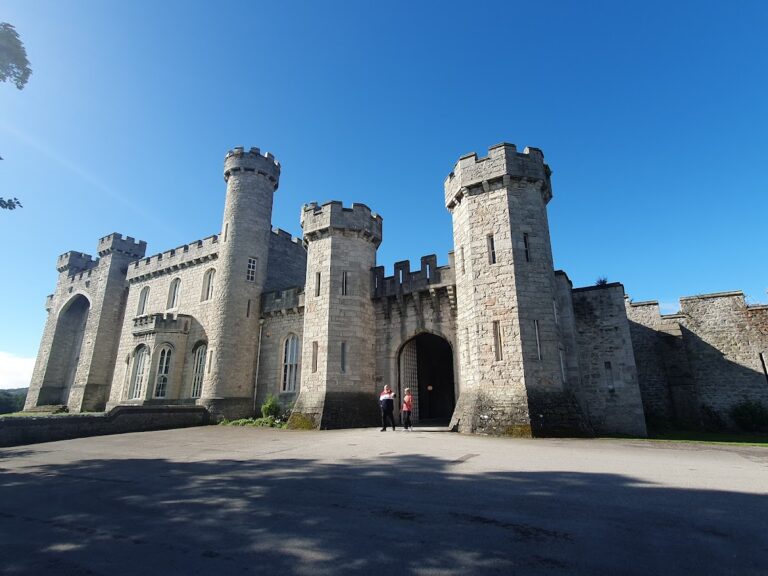
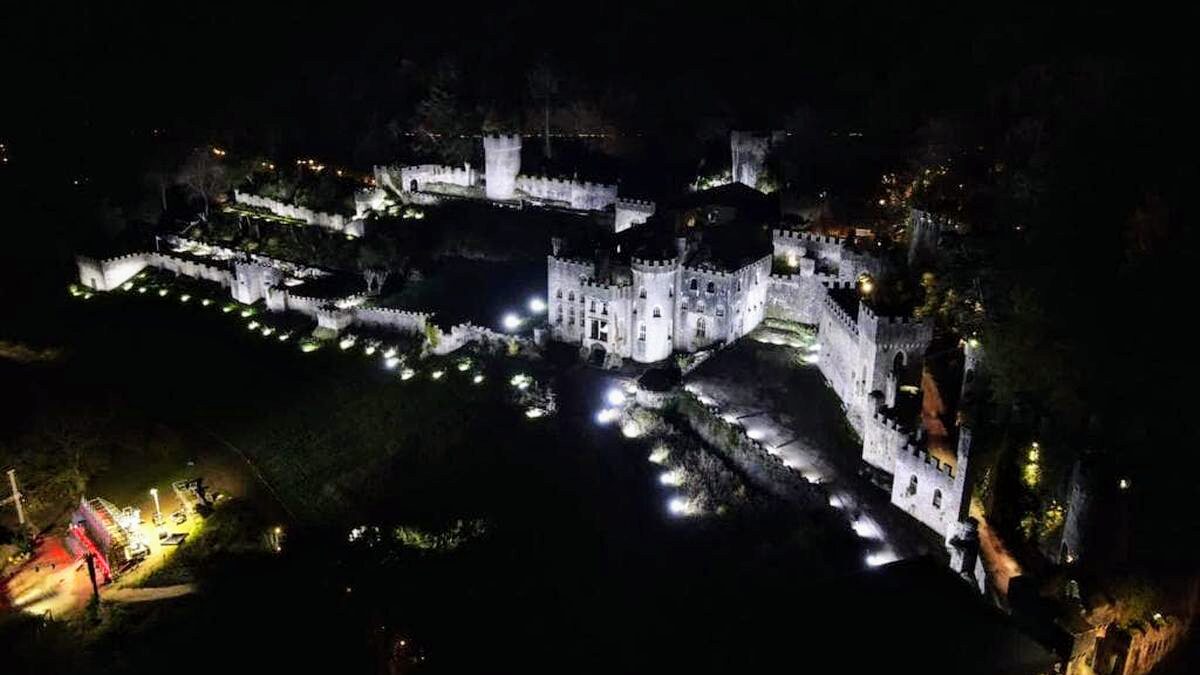
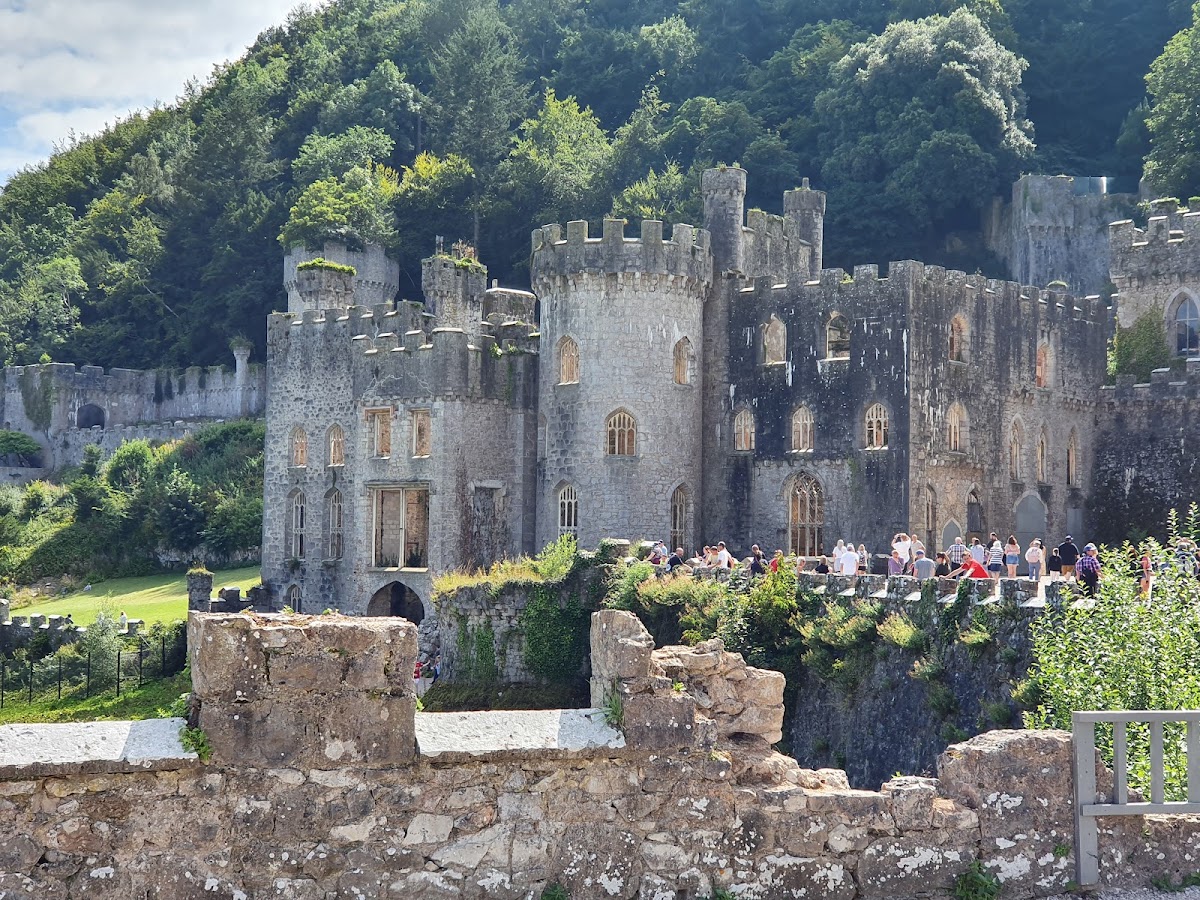
Gwrych Castle is a large Gothic Revival country house near Abergele in Wales, United Kingdom, built between 1810 and 1825 by Lloyd Hesketh Bamford-Hesketh as a memorial to his mother, Frances Lloyd, and her ancestors. Its Romantic castellated design expanded far beyond an ordinary Regency residence, and successive building campaigns created the immense complex visible today.
The Lloyd estate and the new castle
Gwrych stands within an ancient landscape near Abergele. The surrounding estate contains two Iron Age hillforts, which were fortified settlements or defended enclosures on elevated ground, as well as a Roman shrine, lead and silver mines, and sites associated with medieval battles. Stone tablets at the principal entrance record those battle sites. The land was associated with the Lloyds of Plas yn y Gwrych from at least the sixteenth century, although the family traced its ancestry to the medieval period. An early sixteenth-century deed names a place called “y gwrych,” originally written “Y Gwrŷch,” a name meaning “the hedge.”
The present castle replaced an earlier house called Y Fron, which had been associated with the Lloyd family since the late medieval period and had fallen into disrepair after 1810. Charles Busby prepared the first designs, which were exhibited at the Royal Academy in London in 1815. Bamford-Hesketh later dismissed Busby and appointed Thomas Rickman as the plans grew from a Regency country house into a much larger Gothic Revival castle. The foundation stone was laid in 1819.
Nineteenth-century expansion
Bamford-Hesketh’s heirs continued to enlarge the building through the nineteenth and early twentieth centuries. Henry Kennedy worked on the castle in the 1840s, George Edmund Street contributed in the 1870s, Detmar Blow worked there in 1914, and C. E. Elcock was also involved. Through these successive campaigns, the building reached its final extensive form.
After Bamford-Hesketh died, the estate passed to his son Robert Bamford-Hesketh and Robert’s wife, Ellen Jones-Bateman. Robert expanded the property, which covered 3,424 acres by 1873 and included several coal mines in North Wales. In 1894 the castle was inherited by Winifred Bamford-Hesketh, Lloyd’s granddaughter and sole heir. She had married Douglas Cochrane in 1878, and became Countess of Dundonald when he succeeded to the earldom in 1885. Gwrych remained her personal property, and the Dundonald family lived there from 1894 until Winifred’s death in 1924. Their daughter, Lady Jean Cochrane, spent much of her youth at the castle.
Ownership, war, and public use
Winifred bequeathed Gwrych to King George V, hoping it would become the official Welsh residence of the Prince of Wales. The gift was declined, and the property passed to the Venerable Order of Saint John, a charitable order associated with the historical Order of St John and the St John Ambulance tradition. In 1928 Douglas Cochrane, the 12th Earl of Dundonald, bought the castle back for £78,000 and sold its contents to pay for the purchase.
From 1939 to 1941, during the Second World War, the British Government used Gwrych to house 200 Jewish refugee children brought to Britain through the Kindertransport, a wartime rescue programme for children threatened by Nazi persecution. Bnei Akiva, a Jewish religious-Zionist youth movement, operated the home. The first residents arrived from Kent on 31 August 1939.
After the war, the Dundonalds sold the estate. Robert Rennie purchased it in 1946 and opened it as a visitor attraction called “The Showpiece of Wales.” For roughly four decades the castle also served as a hospitality and entertainment venue. It was used as a training venue by world middleweight boxing champion Randolph Turpin in the early 1950s, hosted the Dragon Rally occasionally in the early 1960s, and became a centre for medieval re-enactments during the 1970s.
Decline and preservation
The castle closed to the public in 1987. Nick Tavaglione, an American businessman, bought it in 1989 for £750,000 and proposed renovating it as an opera centre, but the plans were not completed. The property was subsequently looted and vandalised. During the 1990s, New Age travellers occupied the site and removed fireplaces, stained glass, roof slates, and lead. Battlements were later toppled from the towers, while arsonists destroyed power lines by setting fire to an old caravan in 1994.
Historian Mark Baker began campaigning for the castle’s preservation when he was twelve and helped establish the Gwrych Castle Preservation Trust. The trust monitored the property and lobbied Conwy County Borough Council to acquire it compulsorily, contributing to Tavaglione putting the castle up for sale in March 2006. Clayton Hotels, through City Services Ltd., bought it in 2007 for £850,000 after it failed to reach a £1.5 million reserve at auction. A proposed hotel conversion involved preliminary clearance and work, but the company later entered administration. Another hotel proposal gained planning permission in 2012 without progressing.
In 2018 the Gwrych Castle Preservation Trust acquired the castle and estate with assistance from a National Heritage Memorial Fund grant. Part of the estate was leased to Natural Resources Wales for 999 years. The trust has since concentrated on stabilising and restoring the buildings, relying substantially on volunteers and philanthropic support. The castle is a Grade I listed building, a designation for structures of exceptional architectural or historic interest in the United Kingdom. The estate is listed at Grade II* on the Cadw and ICOMOS Register of Parks and Gardens of Special Historic Interest in Wales. In 2024, Cadw, the Welsh Government’s historic-environment service, placed the castle in the highest category of risk on its Buildings at Risk register.
Gwrych gained renewed public attention when it was used to film the twentieth series of I’m a Celebrity…Get Me Out of Here! in late 2020. The COVID-19 pandemic prevented production in Australia, so the programme moved to the castle. Its use brought publicity and funding to the restoration effort, and the programme returned for a twenty-first series in 2021. Storm Arwen damaged production facilities at the nearby Manorafon Farm Park that year, while the hill of Cefn yr Ogof helped shield the castle from north-westerly winds coming from the Irish Sea.
Remains
The main castle
Gwrych Castle is an extensive Gothic Revival, or Romantic castellated, country house built chiefly from grey and white limestone with cast iron. Gothic Revival drew on medieval forms such as towers, battlements, and historical masonry while adapting them for modern country houses. The composition is Picturesque, meaning that its irregular forms and contrasts were shaped in relation to the surrounding landscape. The building developed through successive campaigns rather than from a single completed design, incorporating work associated with Charles Busby, Thomas Rickman, Henry Kennedy, George Edmund Street, Detmar Blow, and C. E. Elcock.
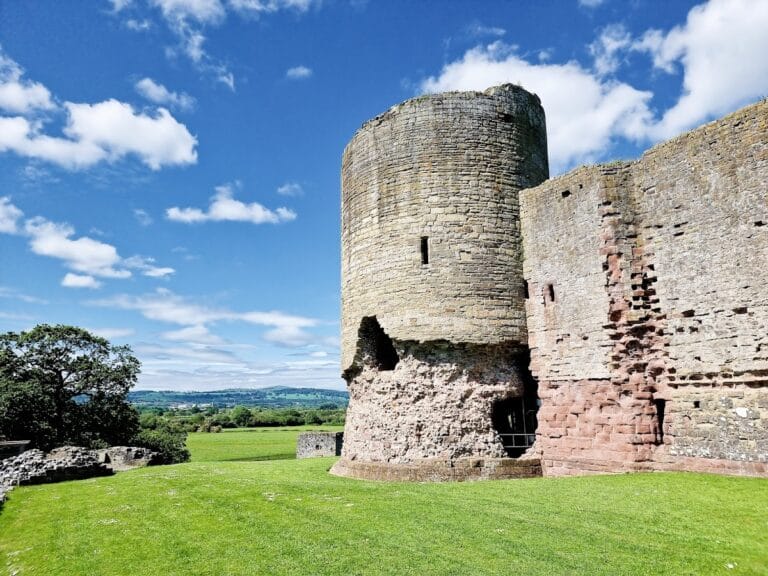
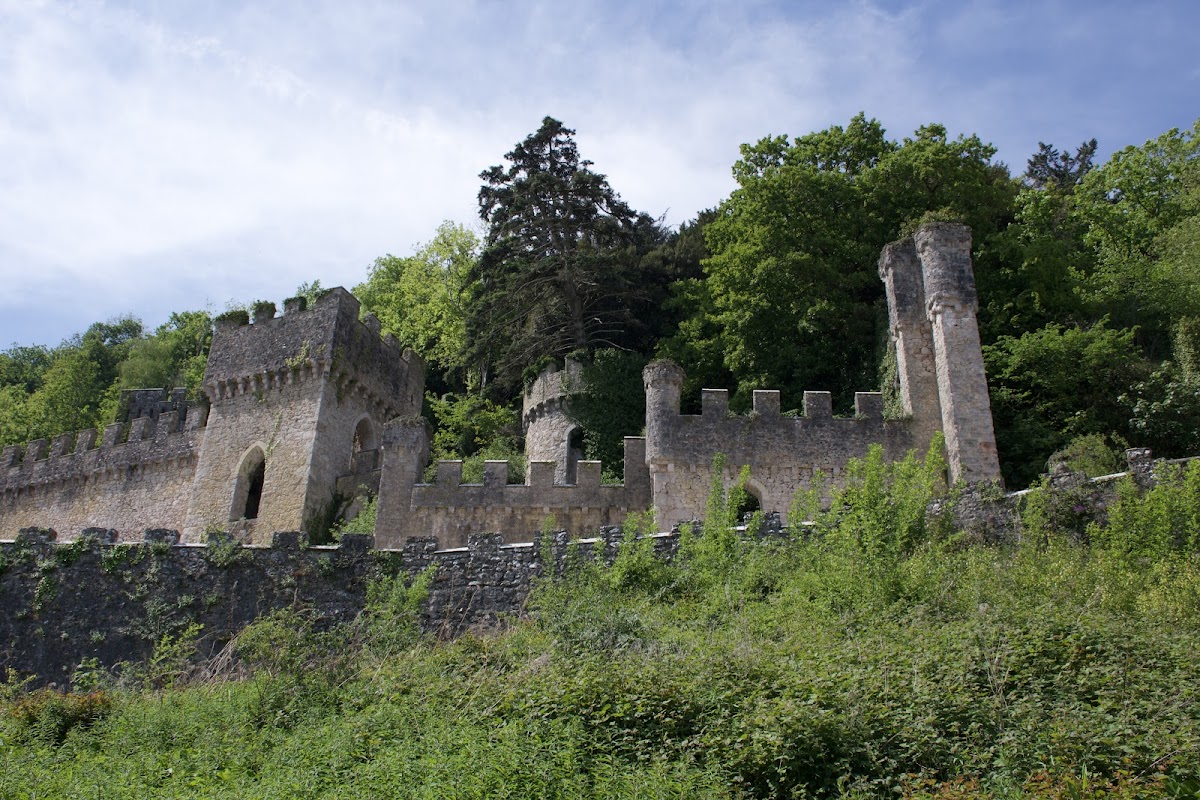
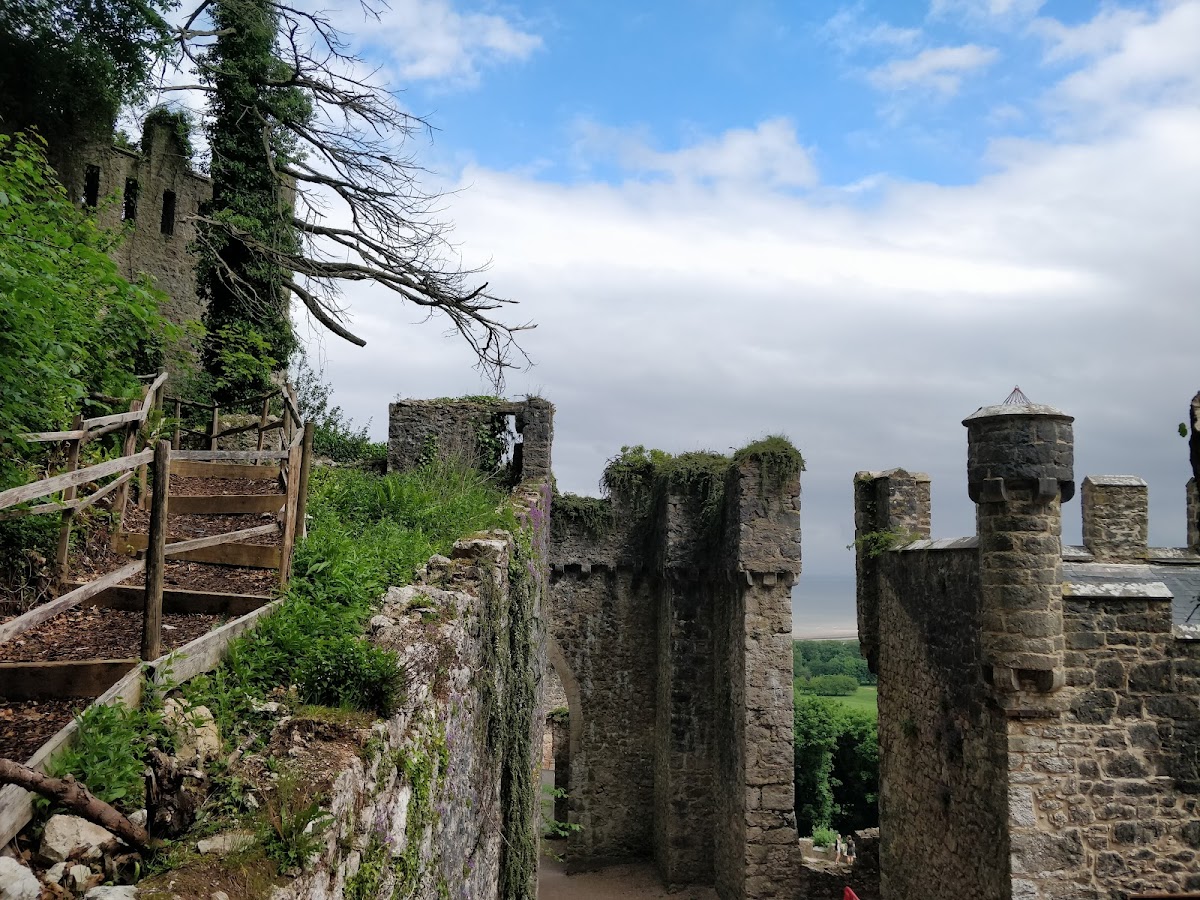
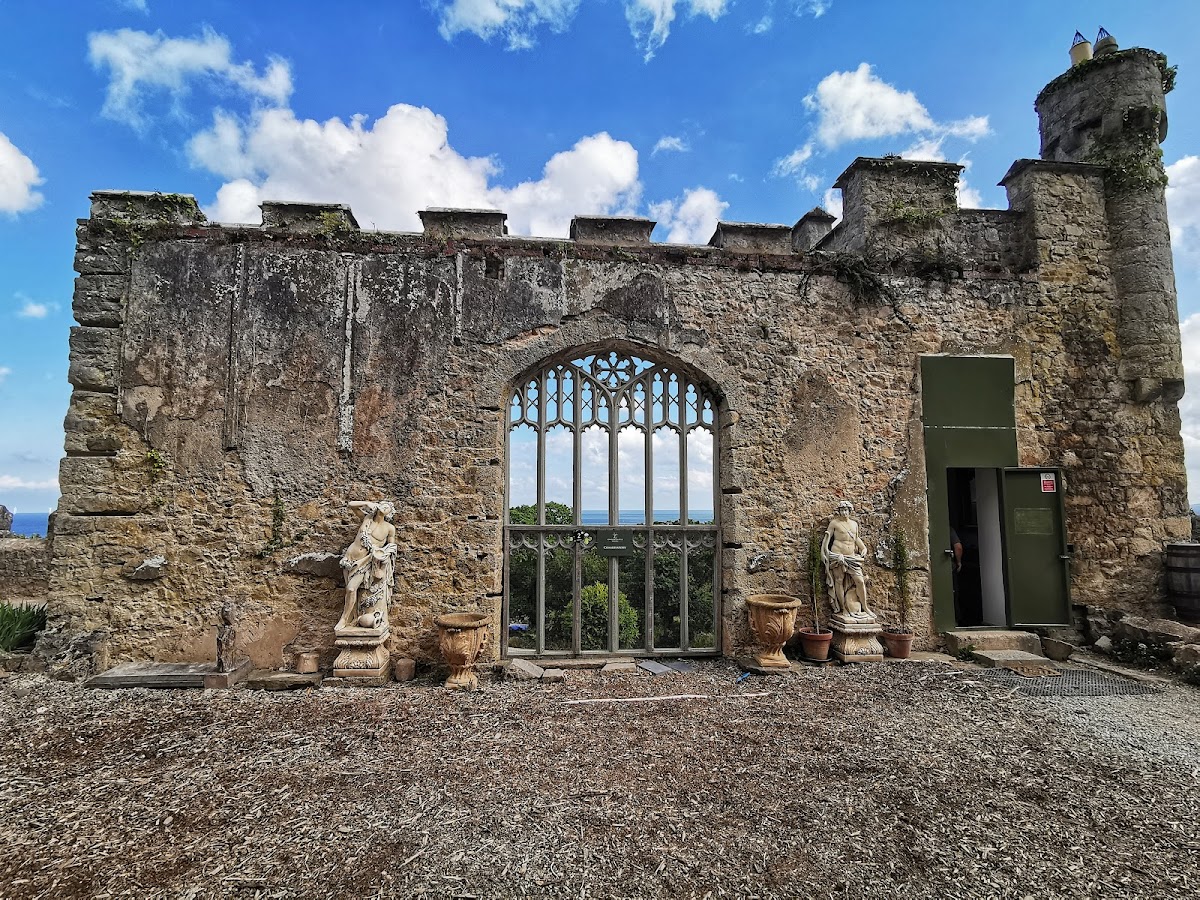
By the beginning of the twenty-first century, the castle had become a ruined shell. The loss of lead roofing, slates, fireplaces, stained glass, furnishings, and parts of the battlements greatly altered its surviving fabric. The main building remains ruinous, while restoration work seeks to stabilise the structure and recover parts of its architectural character. The castle’s archive, held by the Gwrych Castle Trust and the National Library of Wales, includes original plans and designs for the stained-glass windows.
Estate buildings and landscape
The wider estate covers approximately 236 acres and includes a belvedere, Lady Eleanor’s Tower, enclosing estate walls, agricultural buildings, a home farm, and six lodges. A belvedere is a structure designed to provide an elevated viewpoint, while a lodge is a subsidiary building commonly placed near an estate entrance or boundary. The complex also retains a much-reduced fragment of the earlier house. These buildings and landscape structures form part of the physical setting created around the principal castle.
Archaeological features
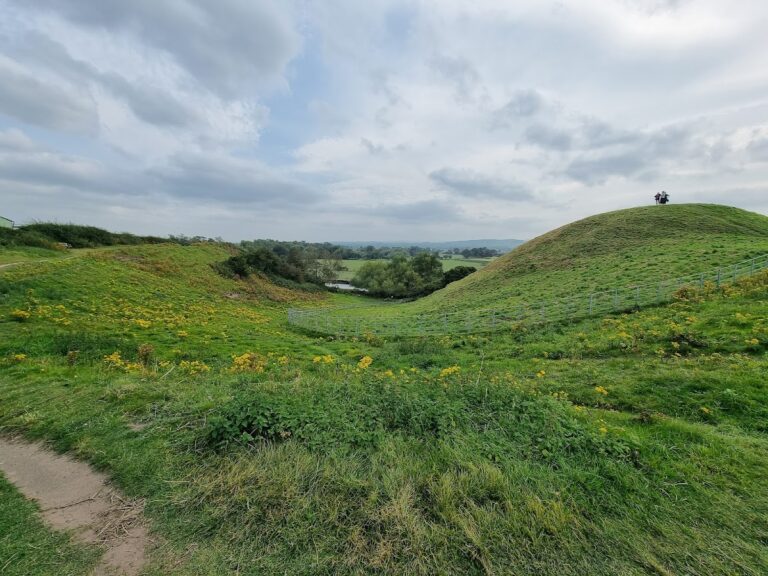
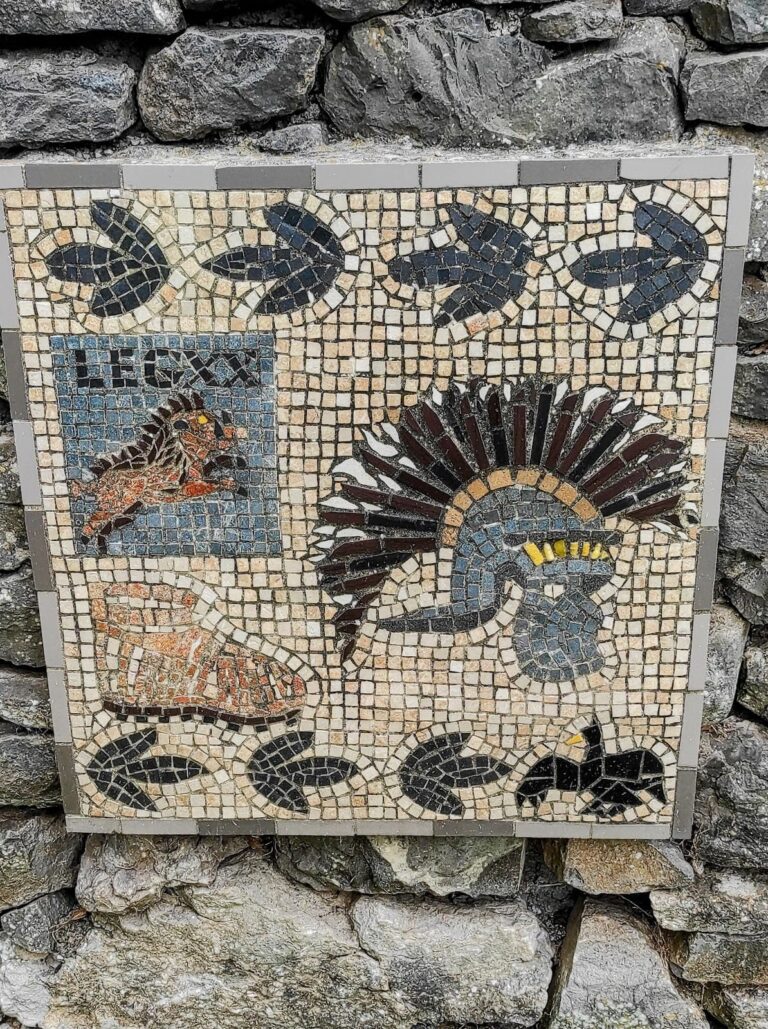
The estate’s earlier landscape includes two Iron Age hillforts, a Roman shrine, and the remains or sites of lead and silver mines. The hillforts represent defended settlements or enclosures built on high ground, while the shrine was a small place of worship associated with Roman religious practice. At the principal entrance, stone tablets preserve references to medieval battle sites, linking the surviving estate landscape with earlier activity around Gwrych.