Göss Abbey: A Benedictine Convent and Former Imperial Abbey in Austria
Site at a Glance
- Rating
- 4.7
- Popularity
- Medium
- Country
- Austria
- Primary era
- Medieval
- Eras represented
- Medieval
- Civilizations
- Duchy of Styria, Habsburg, Holy Roman Empire
- Site type
- Religious
- Remains
- Monastery
On this page12 sections
History
Foundation and imperial status
Göss Abbey is a former Benedictine convent in Austria, founded in 1004 by Adula of Leoben and her son Aribo on their family’s ancestral lands. Benedictine nuns from Nonnberg Abbey in Salzburg settled there, and Kunigunde, Aribo’s sister, became the first abbess. Aribo later served as Archbishop of Mainz. Adula continued to be called Blessed, although she was never formally beatified.
In 1020, Emperor Henry II made Göss an imperial abbey, a religious house under imperial authority. It was the sole imperial abbey in the later Habsburg lands and remained the last there until its dissolution. The Benedictine Rule, which governs the religious life and discipline of Benedictine communities, was introduced in the 12th century.
Education, dissolution, and church administration
For centuries, Göss served the Styrian nobility by educating and providing for their daughters. Admission was limited to women of noble birth. The abbey closed in 1782 during the reforms of Holy Roman Emperor Joseph II, which reorganized religious and civic institutions and included the suppression of monasteries.
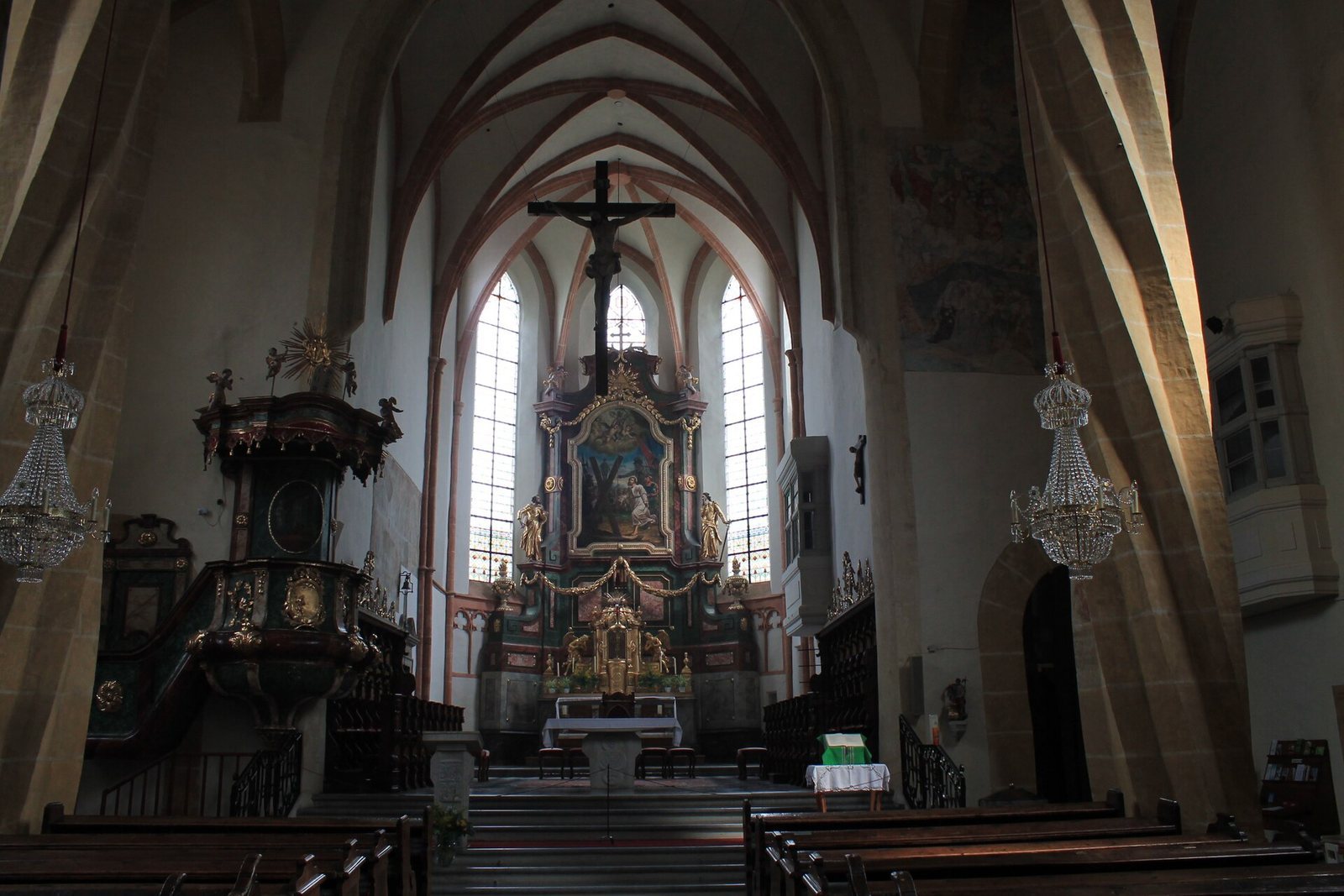
In the 1780s, the former abbey church briefly became the cathedral and seat of the newly established Bishopric of Leoben, a church district led by a bishop. Its first and only bishop, Count Alexander Engel von Wagrein, died in 1800. From 1808 the diocese was administered by the bishops of Seckau, and it was formally abolished in 1859. During Joseph II’s reign, the old parish church of St Andrew was demolished, and its high-altar painting was transferred to the abbey church.
From abbey estate to brewery
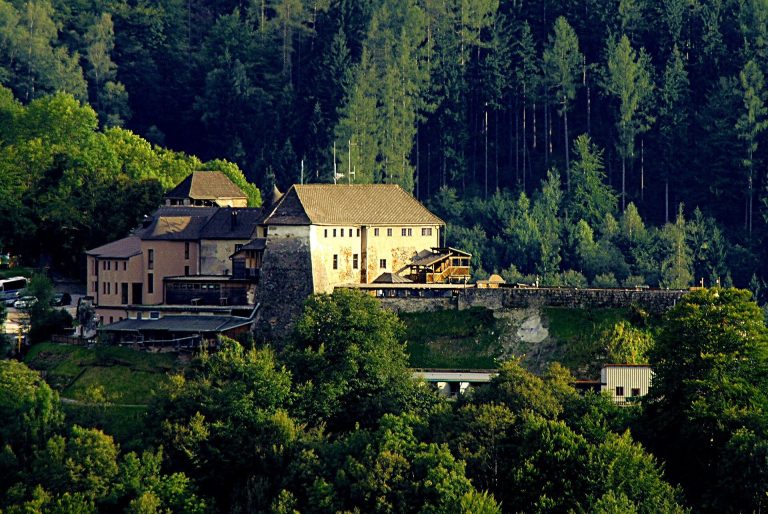
An abbey brewer is recorded as early as 1459. In 1827, the former abbey estate was auctioned and bought by the Vordernberg ironmasters’ association, a collective of ironworks operators chiefly interested in its forests. Graz brewer Max Kober acquired the buildings in 1860, and the site has since been used as the Göss Brewery. The brewery owns the former abbey buildings apart from the church, the bell and clock tower, and the rectory.
Remains
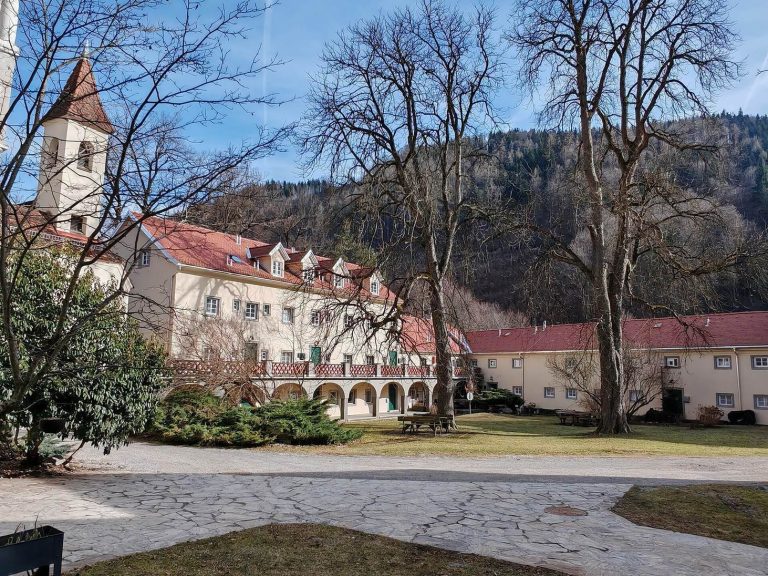
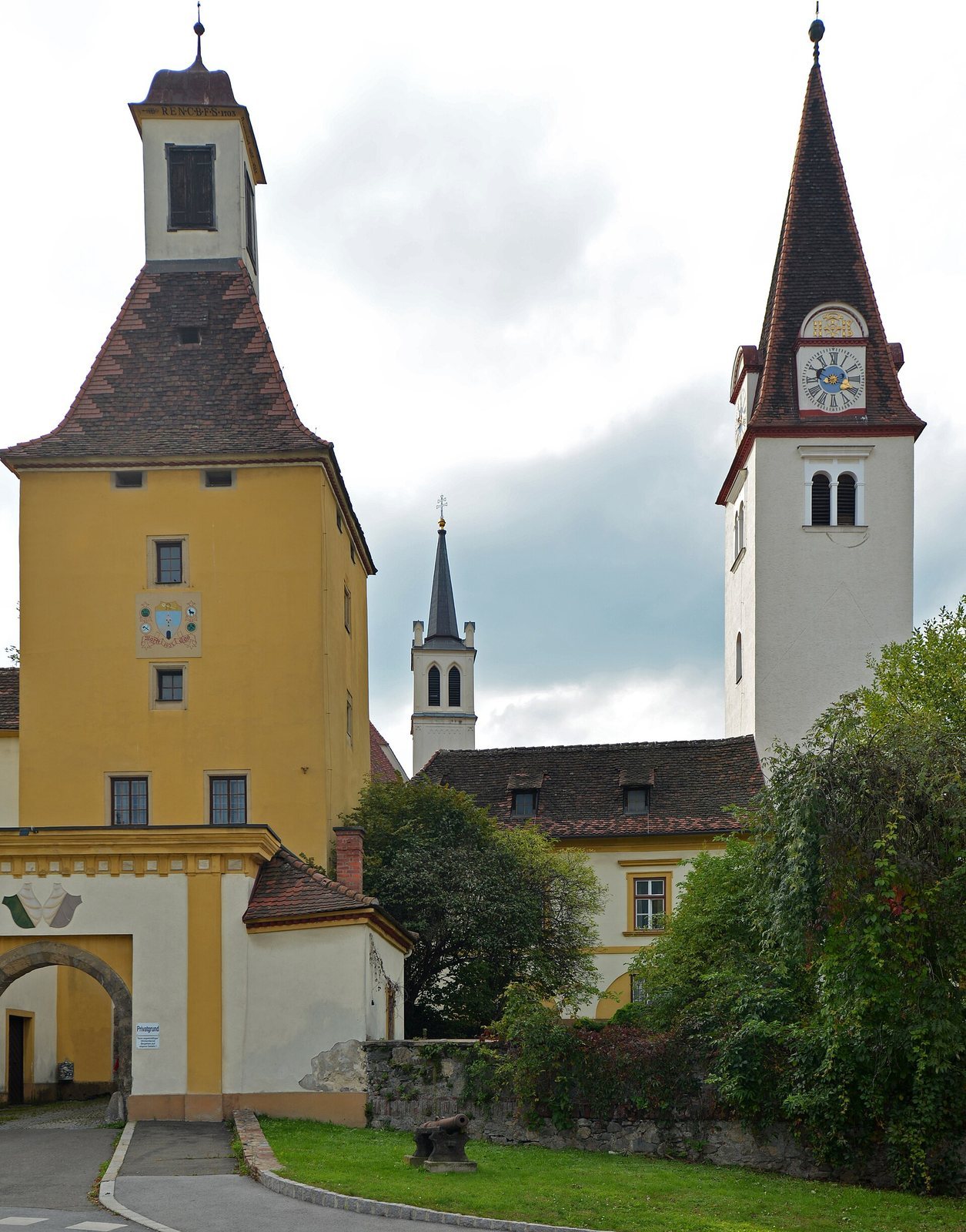
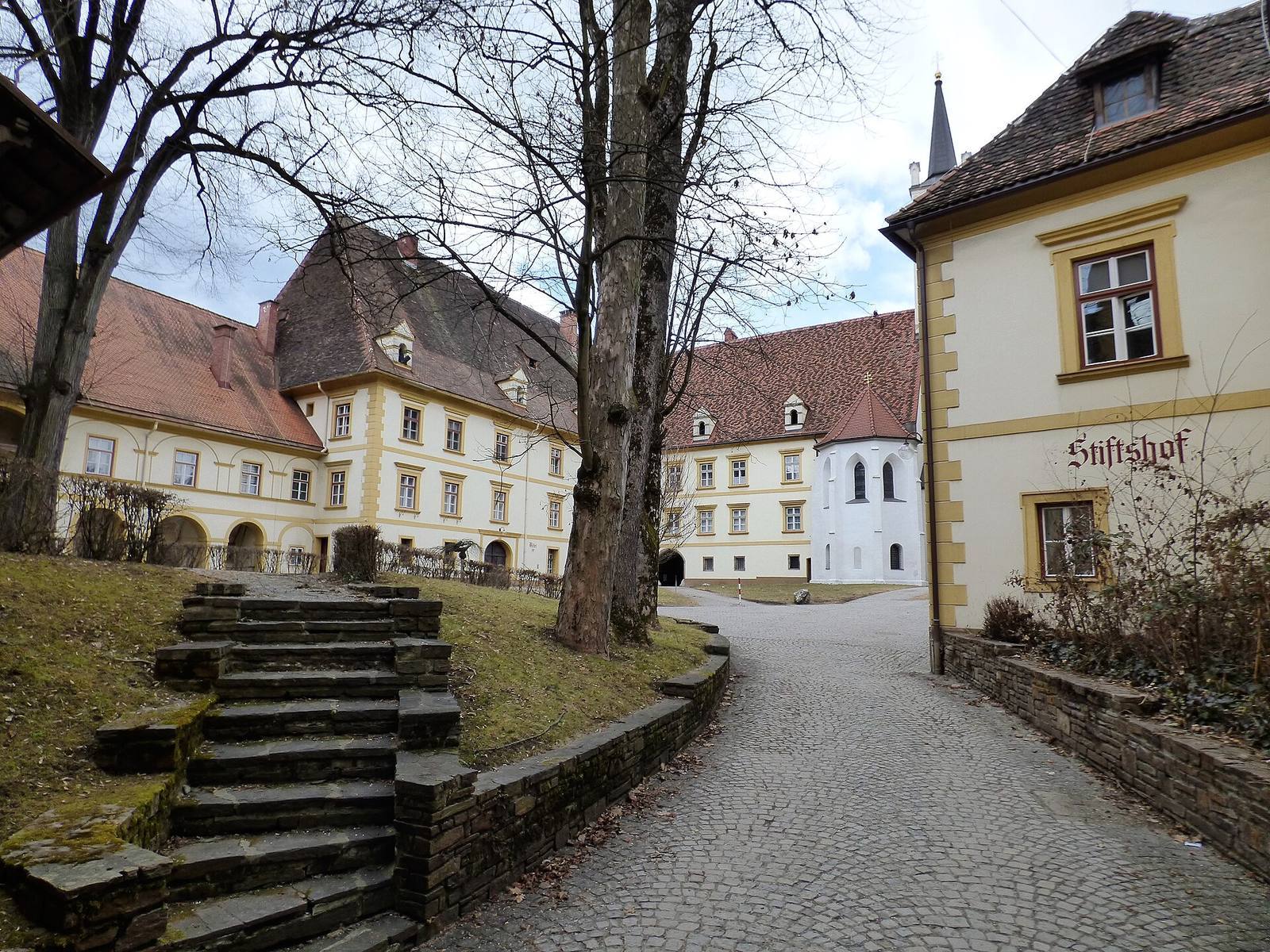
The surviving complex includes a large late Gothic abbey church, Romanesque structures, a fountain courtyard, and a bell and clock tower. The church has an early Romanesque crypt beneath its choir, while the Chapel of Saint Michael preserves early Gothic wall paintings.
Church and chapel
Abbey church and crypt
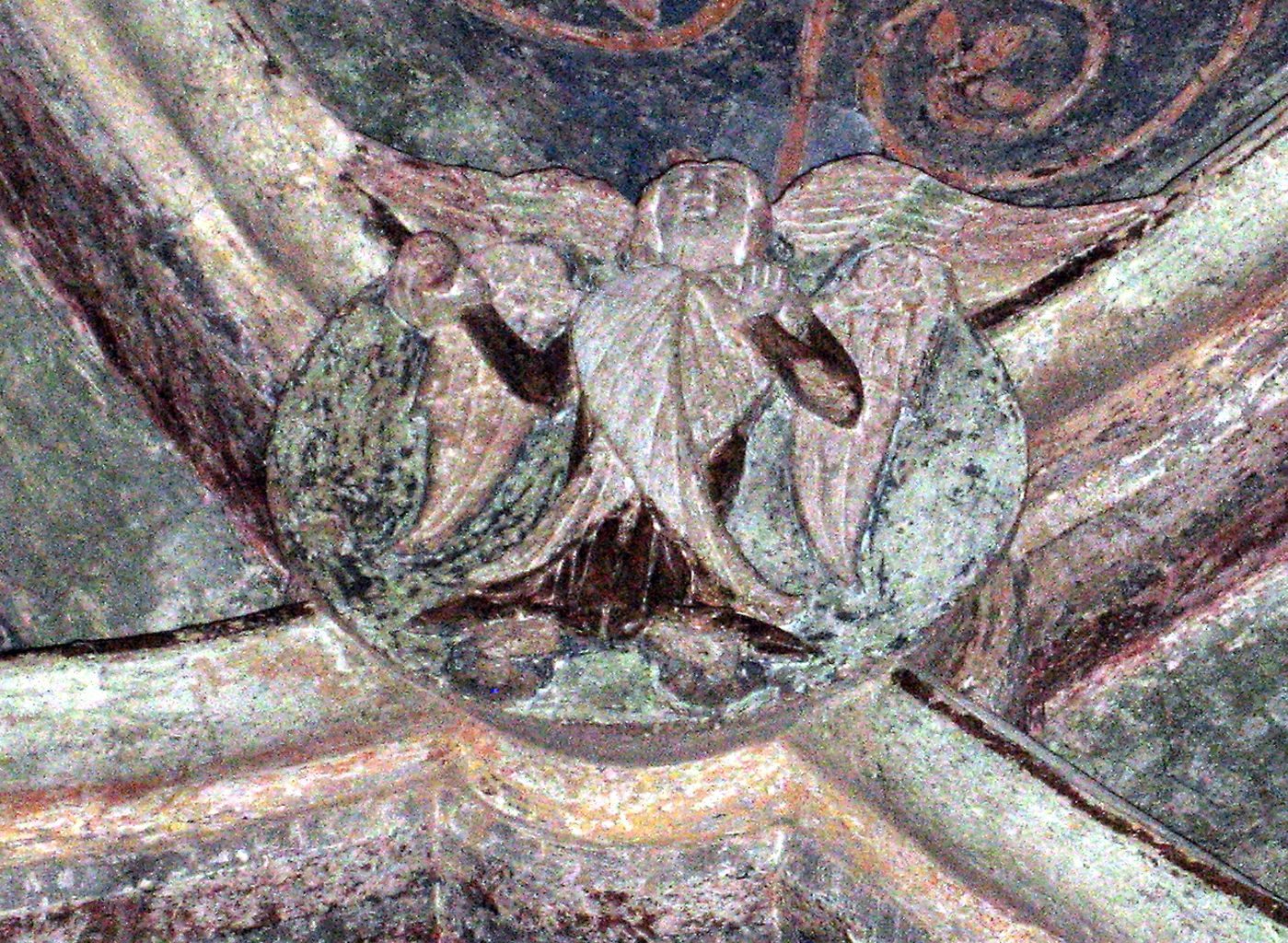
The former abbey church remains in use as a parish church and is dedicated to Saint Mary and Saint Andrew. Beneath its choir, an early Romanesque crypt contains a single large stone. The church also has an imposing roof structure, a keystone depicting a seraph, a ceiling painting, and a front support post.
Chapel of Saint Michael
This Romanesque chapel was once the private chapel of Alexander Engel von Wagrein, the only bishop of Leoben. Its early Gothic wall paintings use a zigzag style and depict the Song of Solomon.
Courtyard and bell tower
The Brunnhöfl, or fountain courtyard, is still largely intact. The surviving bell and clock tower is associated with five bells at the abbey. The oldest dates from the 15th century; before the abbey closed, the bell count was estimated at about 17.
Objects associated with the abbey
Göss vestment ensemble
Made around 1260 by Abbess Kunigunde II and the nuns, and donated by Kunigunde II, this ensemble is now held at the Museum of Applied Arts in Vienna. It comprises a chasuble, cope, dalmatic, and tunic, all types of church vestment, together with an altar frontal, a hanging that covers the front of an altar. Silk embroidery covers a simple linen ground. The pieces share techniques, colors, and style, indicating that they belong together. Alterations over the centuries and free-form ornament give the ensemble its colorful appearance. It is among the most important surviving Romanesque vestment ensembles and the only one of its early date to survive.
Reusable coffin
A reusable coffin made in 1784 is displayed in the abbey’s exhibition room. Its opening base allowed a linen-wrapped body to be lowered into a grave while the coffin was used again. The measure aimed to conserve wood and reduce local authorities’ costs for pauper funerals, but it was deeply unpopular, and the coffins were withdrawn after a few months.