Gosławice Castle: Historic Defensive Residence and Museum in Poland


Site at a Glance
- Rating
- 4.7
- Popularity
- Low
- Country
- Poland
- Primary era
- Medieval
- External website
- Open
- Eras represented
- Medieval, Modern
- Civilizations
- Kingdom of Poland, Polish–Lithuanian Commonwealth, Russian
- Site type
- Military
- Remains
- Castle
On this page10 sections
History
Gosławice Castle is a Gothic castle in Poland, now within Konin in the Greater Poland Voivodeship. It was built between 1418 and 1426 together with a Gothic church on the initiative of Andrzej Łaskarz, the medieval Roman Catholic Bishop of Poznań who acted as the project’s ecclesiastical patron.
Destruction and rebuilding
Archaeological research indicates that the castle was destroyed in the mid-seventeenth century during the Swedish Deluge, the Swedish invasion and occupation of much of the Polish-Lithuanian Commonwealth. Later owners rebuilt the complex during the seventeenth and eighteenth centuries. In 1772, ownership passed to Jadwiga Łącka and subsequently to the Kwilecki family.
Construction of a granary between the church and castle began in 1838. The castle was later partly adapted for use as either a brewery or a distillery, although its precise function in this period remains uncertain. Gosławice continued as a separate village until 1976, when it became part of Konin’s administrative boundaries.
Restoration and museum use
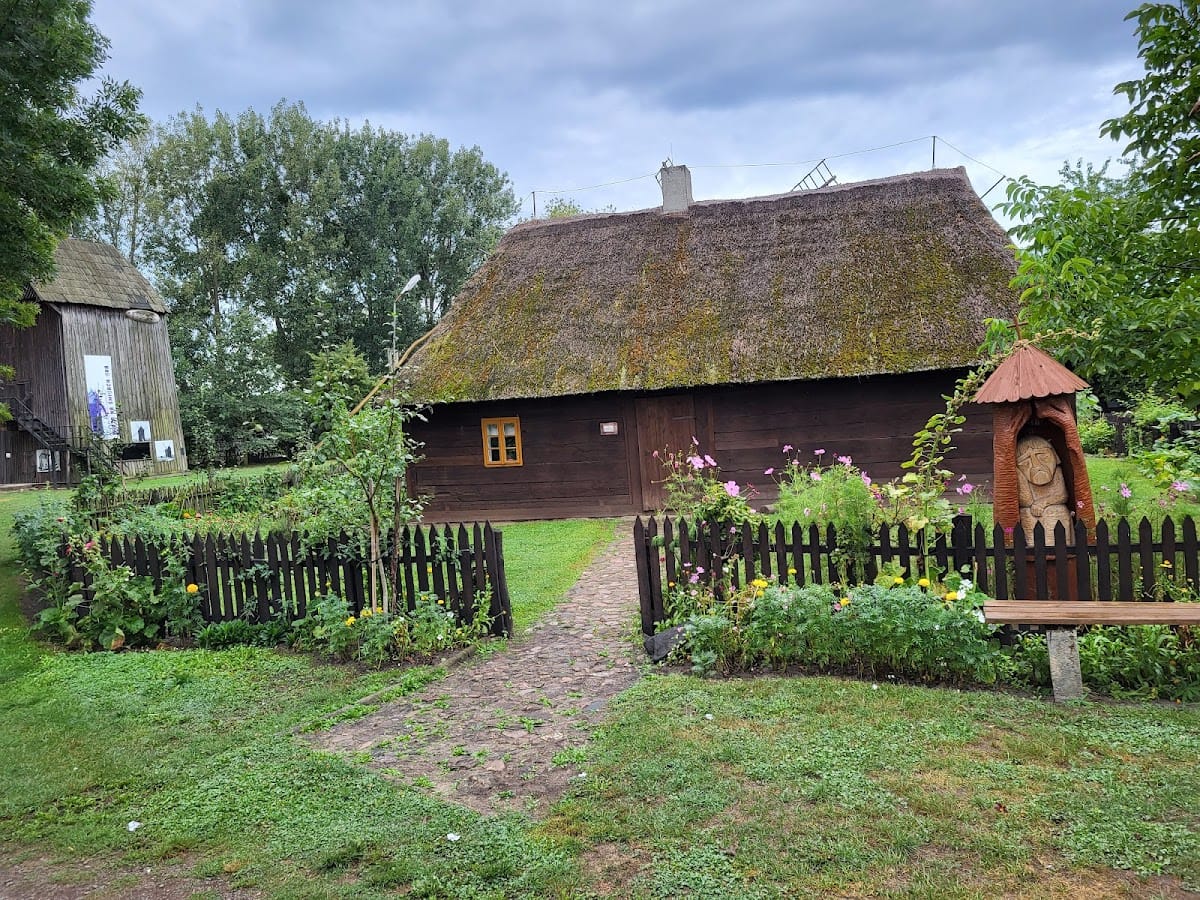
Neglect left the castle in a ruinous condition during the interwar period. Renovation took place between 1978 and 1986, and in November 1986 the restored complex opened as the seat of the District Museum in Konin. A small open-air museum was also established nearby.
Legend of Mikołaj Gardzina Lubrański
A local legend says that the former owner Mikołaj Gardzina Lubrański, who served as voivode, a high-ranking provincial governor, of Kalisz and Poznań, haunts the castle and its surroundings. In the story, he appears as a flaming man, while his inhuman cries represent punishment for alleged cruelty and sins.
Remains
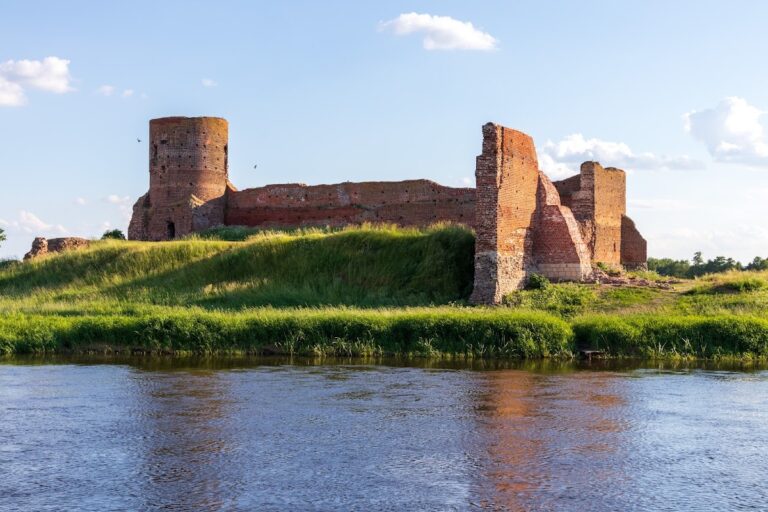
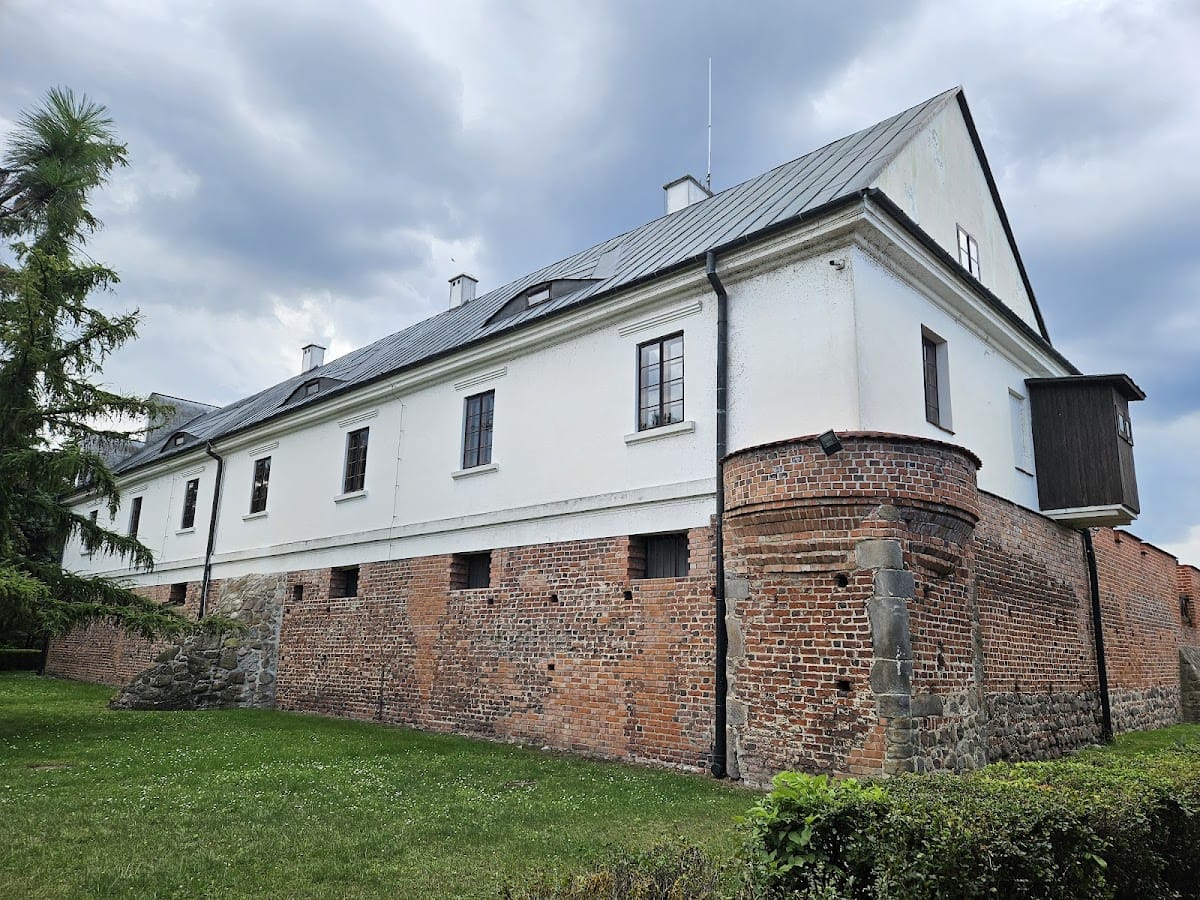
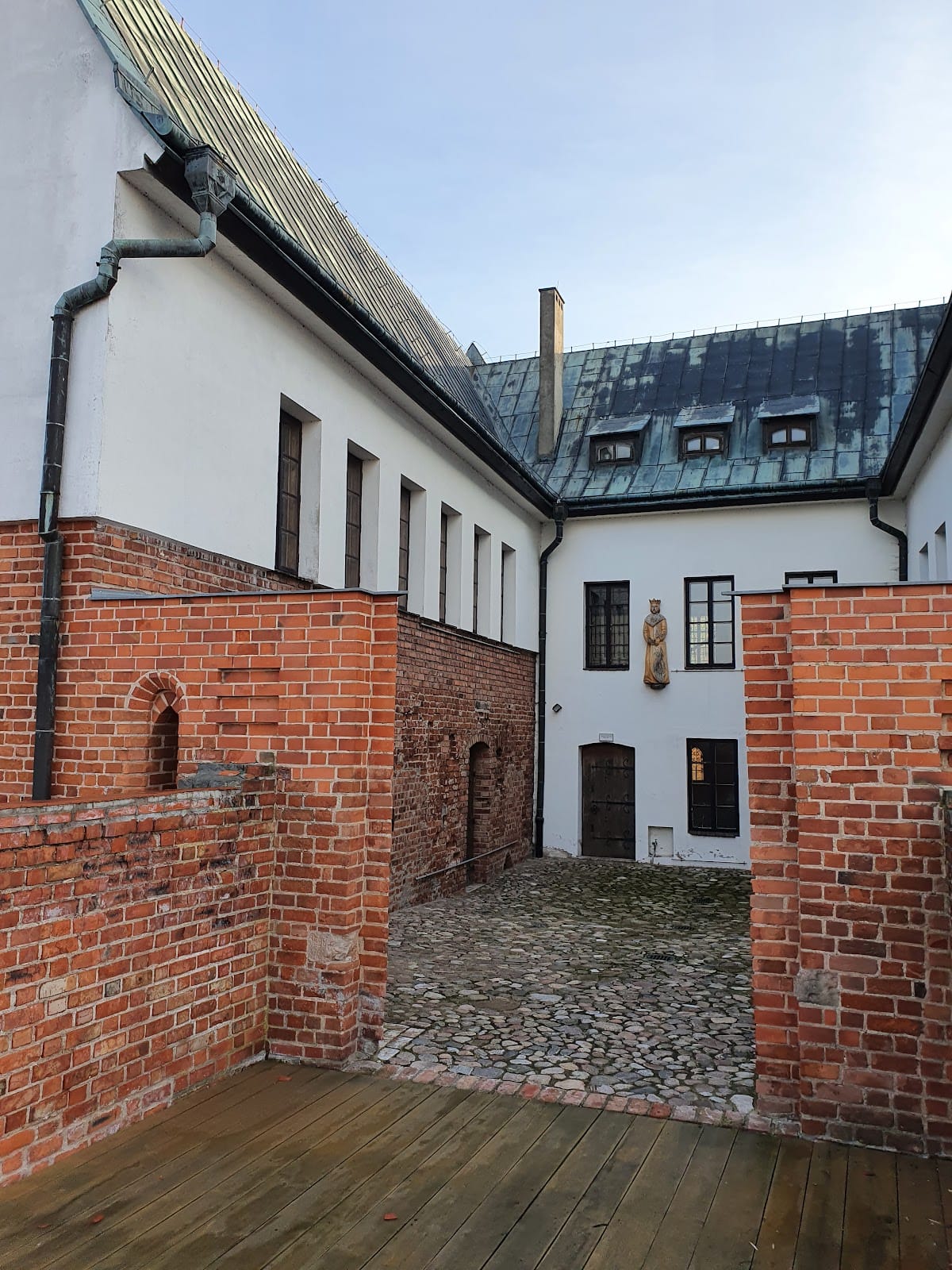
The castle stands beside Lake Gosławskie and consists of two parallel residential buildings enclosed by a defensive wall. Corner turrets contain firing positions and loopholes, while a moat provided an additional line of protection. The surviving arrangement combines residential accommodation with features associated with the castle’s defensive function.
Buildings beside the castle
Gothic church
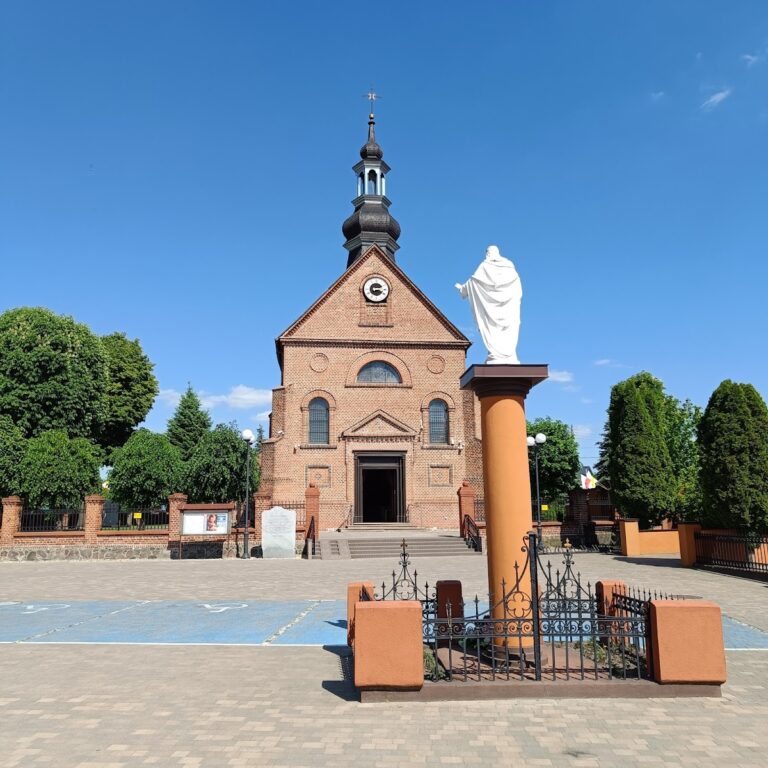
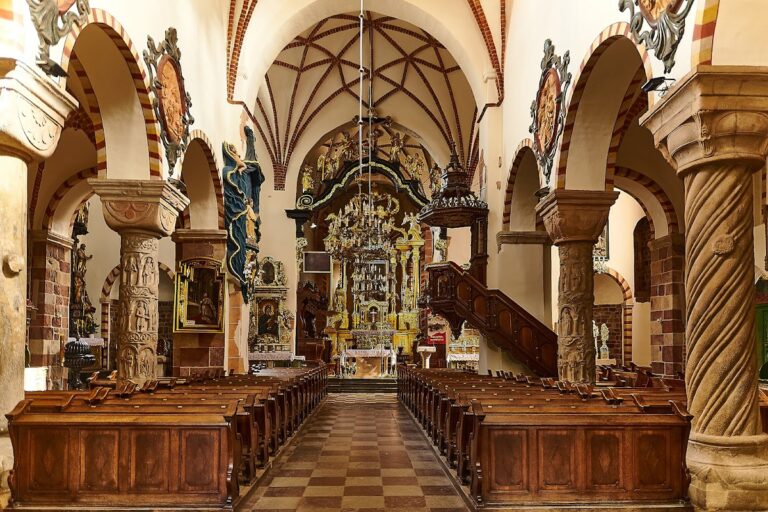
The Gothic church was built alongside the castle between 1418 and 1426 as part of the foundation initiated by Andrzej Łaskarz. It remains a defining element of the historic complex and stands immediately beside the castle buildings.
Granary
A granary constructed from 1838 occupies the space between the castle and the church. Its position preserves the physical connection between these principal buildings and reflects a later phase in the development of the complex.
Open-air museum
Post mills
The nearby open-air museum includes post mills, windmills mounted on a central supporting post. These exhibits form part of the site’s broader museum landscape around Gosławice Castle.