All Saints Church in Wąsosze: A Roman Catholic Parish Church
Site at a Glance
- Popularity
- Very Low
- Country
- Poland
- Primary era
- Modern
- Eras represented
- Medieval, Early Modern, Modern
- Civilizations
- German, Kingdom of Poland, Kingdom of Prussia, Polish–Lithuanian Commonwealth
- Site type
- Religious
- Remains
- Church
On this page13 sections
History
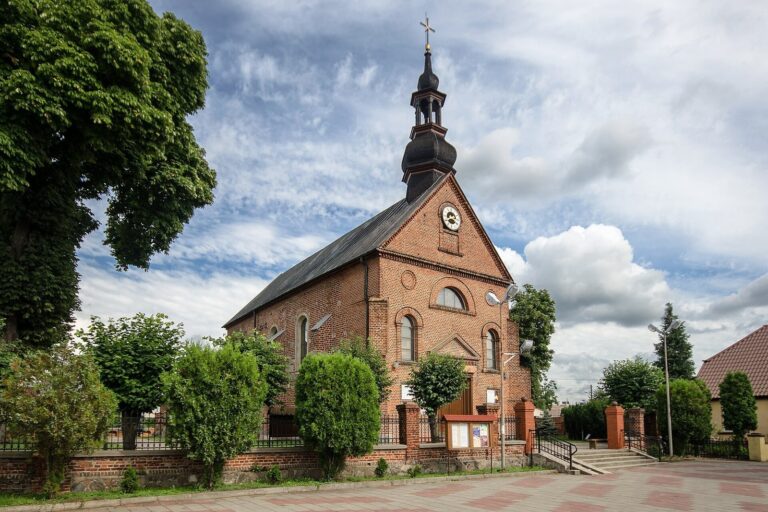
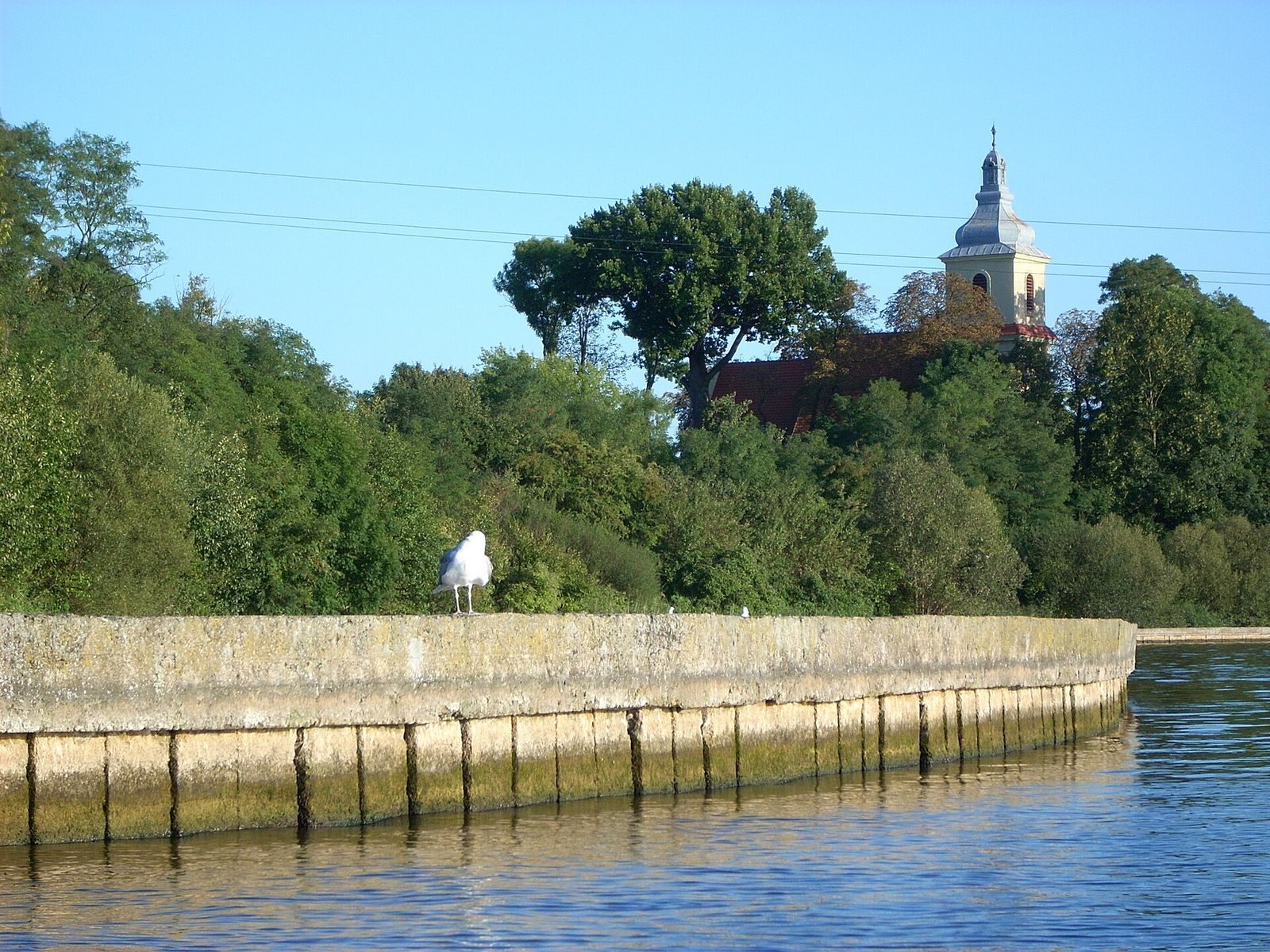
All Saints Church in Wąsosze is a Roman Catholic parish church in Wąsosze, Poland, beside Lake Wąsosko-Mikorzyńskie. The church and parish were founded together in the first half of the fourteenth century, and the church has served as a parish church since the middle of that century. Its first building was wooden and served the community for nearly two hundred years; fifteenth-century records already described the parish as long established. A masonry successor was completed in 1602 and consecrated for worship on 6 December by Jan Gniazdowski, Bishop of Gniezno. Dedicated to All Saints, the parish belongs to the Diocese of Włocławek, a bishop’s territorial jurisdiction, and observes All Saints’ Day on 1 November.
Nineteenth-century rebuilding
A fire in 1849 destroyed the church apart from its presbytery, the area around the main altar. Reconstruction proceeded over several decades: the nave, or central section, was rebuilt in 1863 and extended by one bay between 1865 and 1868. A sacristy, a room for worship furnishings and clergy, was added in 1865. Construction of a church tower took place between 1867 and 1917, and the Mierzyński family of Piotrkowice financed the Chapel of Our Lady in 1873.
The Mierzyński family owned the Wąsosze estate from the mid-eighteenth century until 1945, when it passed to the state. Henryk Mierzyński commanded insurgent forces during the Polish January Uprising, an 1863–64 revolt against Russian rule. He was killed fighting Cossacks at Kleczew in 1863 and buried in the Chapel of the Holy Cross in the Wąsosze cemetery.
War and later changes
During the Second World War, the church sustained relatively little damage, and most of its worship vessels and garments survived. German occupiers took two of the parish bells, leaving one to call worshippers to Mass. A metal bell tower was erected beside the street in 1974; the former medieval belfry was adapted as the church’s main gate. In 1997, the parish acquired a new bell and restored the older one. The parish also holds a solemn feast each June in honor of Saint Benno of Meissen, an eleventh-century bishop traditionally regarded as a patron of cattle breeders and fishermen.
Conservation and renewal
Later conservation and improvement work was led in large part by parish priest Wiktor Hołtyn. Metal doors were conserved and a grille purchased in 1990, and roofs on the church, sacristy, and chapel were repaired in 1994. A new interior painted scheme was begun in July 1992 for the 390th anniversary of the consecration and completed in 1993. A major renovation began on 29 August 2002, the church’s 400th anniversary year. Further work in 2016 included a marble altar and extensive renewal of the presbytery and church furnishings.
Remains
Building and exterior
The masonry church has three naves, meaning three lengthwise sections, three altars, and a single church tower. Its organ has eight stops, controls for its sounds, two manuals, or hand-played keyboards, and a pedalboard played with the feet. The exterior has a bright yellow finish and red roof tiles. A raised cross design on the presbytery wall is accompanied by inscriptions that read Hail, Holy Cross
and Hope of our salvation
; beneath them is the wording Praise the Lord, for he is merciful.
Gate, bell tower, and doors
The former medieval belfry now functions as the main gate, while the later metal bell tower stands beside the street. The church’s front doors date to 1913 and carry stylized floral patterns and Marian emblems. Carved heads of Jesus and Mary appear between the door leaves, and an inscription says the doors were given by children of the parish.
Exterior memorials
Two commemorative plaques are fixed to the exterior wall near the sacristy entrance. One records the anniversary Mass celebrated by Bishop Roman Andrzejewski on 14 September 2002; the other names parish priests who served during the twentieth century. Epitaphs for deceased members of the Mierzyński family are mounted on the main nave’s outer wall, beside a statue of Pope John Paul II, the first Polish pope.
Interior
Presbytery and main altar
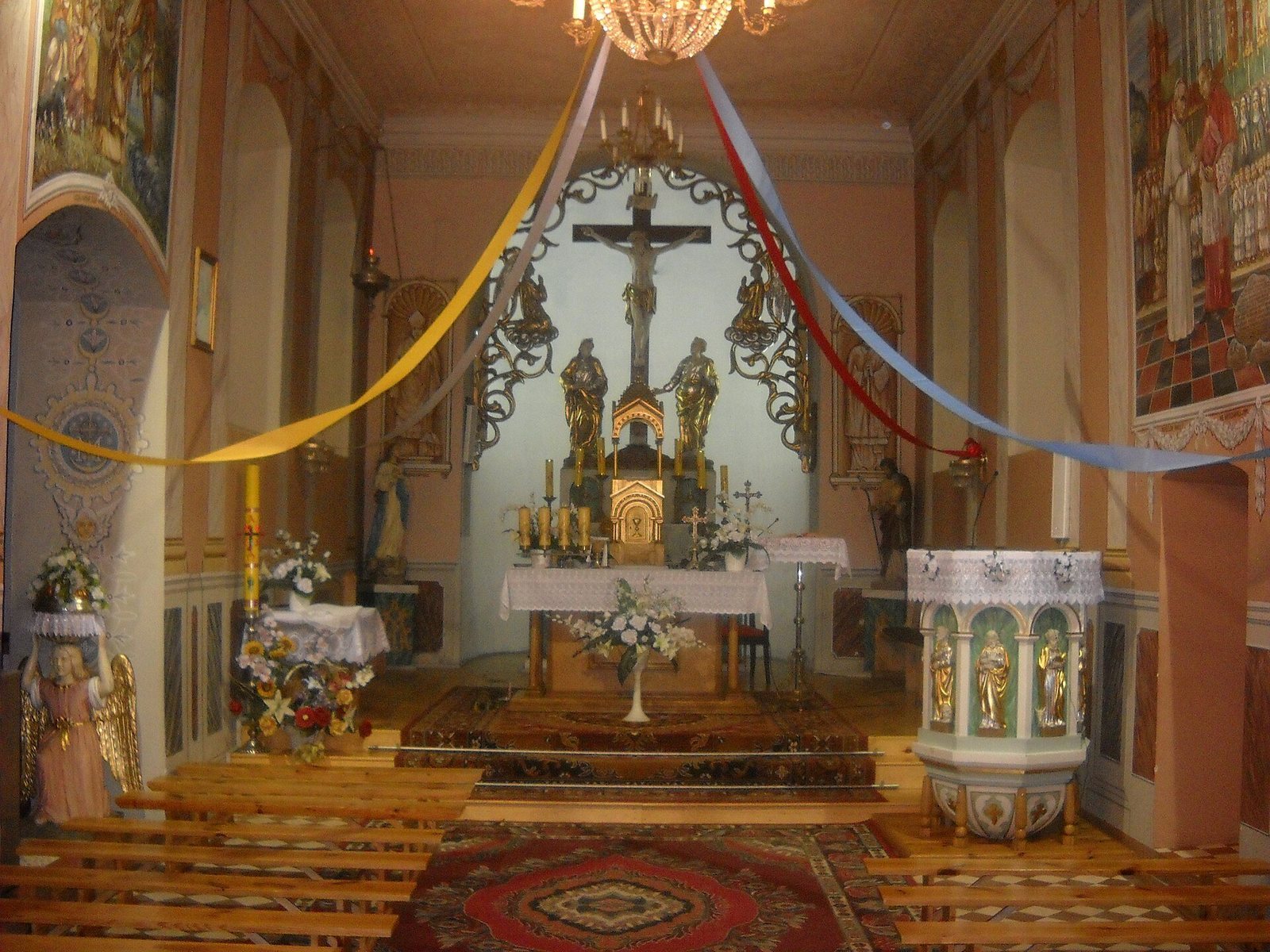
The presbytery, the part of the church around the main altar, contains a nineteenth-century altar in the Baroque style. Its semicircular form is framed by gold-colored plant ornament. A figure of the crucified Christ stands at the center, with a crown of thorns and a gold-colored loincloth falling to the left; the fingers of his hands form a victory sign. Mary, wearing a silver dress and gold hooded mantle, and the Apostle John, dressed in a tunic and gold mantle, flank the cross. On the altar table, a tabernacle, a cabinet for the consecrated communion bread, has a canopy held by four small columns.
Paintings of Blessed Bogumił, a medieval Polish archbishop associated with Gniezno, and Blessed Michał Kozal, a Polish bishop martyred at Dachau and a patron of Włocławek, hang on the presbytery walls to either side of the main altar. A statue of the Virgin Mary stands in the left corner and one of Saint Joseph in the right. A marble altar was built in the presbytery in 2016. An image of Christ the Good Shepherd hangs on its left side, and a historic cross hangs on the right. Found during church repairs in 1992, the cross was probably part of the original main altar.
Side altars and Chapel of Our Lady
The two matching side altars have chest-shaped altar tables supporting three-part tabernacles. Each has an altarpiece with a semicircular top, an oil painting, paired side columns, and a cross at the summit. The altar on the left is dedicated to Saint Benno and the one on the right to Saint Barbara.
The Chapel of Our Lady has an altar with a tabernacle on its table. Single columns frame the altarpiece, whose center holds a rectangular image of the Immaculate Conception, the Catholic belief that Mary was conceived without original sin. An image of Saint John Paul II is painted on the wall beside the chapel. Opposite it, the sacristy forms the other side aisle and holds worship furnishings, vestments, surplices, and books.
Painted decoration and furnishings
The interior includes restored Stations of the Cross, a sequence of devotional scenes recalling Christ’s suffering and death, and wall paintings by Henryk Kot. These depict Saint Maximilian Kolbe, a Polish Franciscan friar and Catholic martyr; Maria Teresa Ledóchowska, a Catholic religious sister known for missionary work; the healing of a blind man from Wąsosze; and John Paul II’s visit to Włocławek. Jan and Bogdan Dobosiewicz of Gniezno and Kot of Poznań executed the church’s painted scheme. A ceiling painting shows the Assumption of the Virgin Mary, the belief that Mary was taken into heaven. The historic pulpit was moved to the wall on the sacristy side, and the nineteenth-century baptismal font was restored.
Church grounds
The grounds include a grotto dedicated to the Virgin Mary and a four-metre cross commemorating the parish’s Holy Missions, held in September 2007. In 2011, parishioners funded a statue of John Paul II in connection with his beatification.