Geunjeongjeon: The Main Ceremonial Hall of Gyeongbokgung Palace
Site at a Glance
- Rating
- 4.7
- Popularity
- Low
- Country
- South Korea
- Primary era
- Medieval
- External website
- Open
- Eras represented
- Medieval
- Civilizations
- Joseon
- Site type
- Civic
- Remains
- Palace
On this page9 sections
History
Joseon royal hall
Geunjeongjeon is the main hall of Gyeongbokgung Palace in Seoul, South Korea, built by the Joseon dynasty in 1395. Joseon ruled Korea from 1392 to 1897, and Gyeongbokgung served as its principal palace. Geunjeongjeon hosted major ceremonies and the issuing of royal edicts, making it a central setting for court government.
Five Joseon kings were crowned in the hall: Jeongjong in 1398, Sejong in 1418, Danjong in 1455, Jungjong in 1506, and Seonjo in 1567. The building was renovated in 1426 and survived the 1553 fire that destroyed much of Gyeongbokgung.
Destruction and reconstruction
Geunjeongjeon was destroyed in 1592 during the Imjin War, the Japanese invasion of Korea that caused extensive destruction across the country. The hall was rebuilt from the ninth month of 1866 through 1867. Its reconstruction may have drawn on the design of Injeongjeon, the main hall of Changdeokgung, and the building has retained broadly the same form since that work.
Colonial-era uses
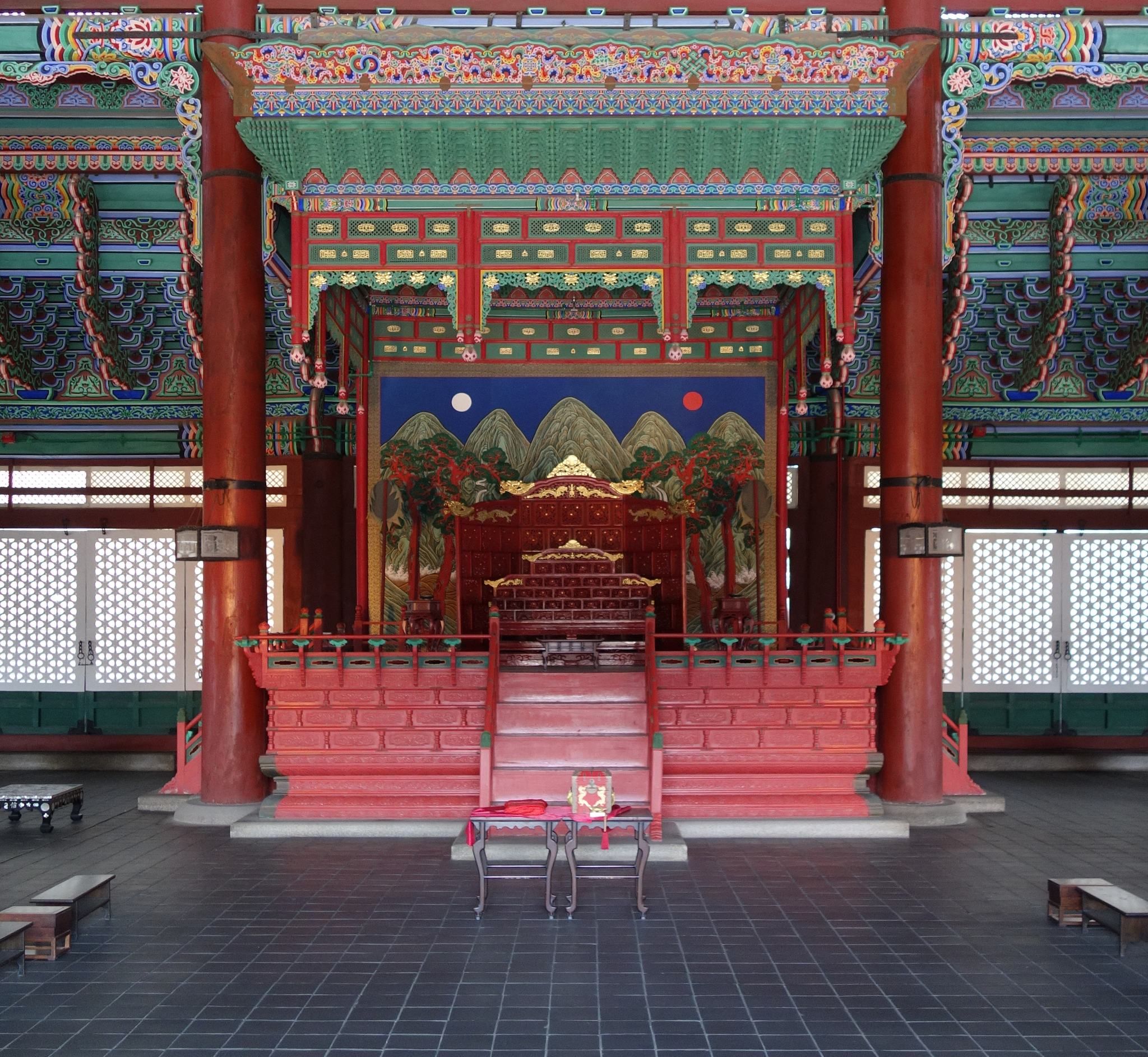
In 1915, Geunjeongjeon hosted the opening and closing ceremonies of the Chōsen Industrial Exhibition. Japanese Prince Kan’in Kotohito attended the opening and sat on the former Korean throne. The hall later served as an exhibition venue for the 1923 Chōsen Agricultural Exhibition and the 1929 Chōsen Exhibition.
Beginning in 1926, an annual Shinto ceremony honoring Japanese police officers killed while suppressing the Korean independence movement took place in the hall. Shinto is Japan’s indigenous religious tradition. The Seoul Historiography Institute described this ceremony as an intentional transformation of the former seat of Joseon power into the “Yasukuni Shrine of Chōsen,” referring to the Japanese shrine associated with commemorating those who died in service of Japan. During the colonial period, the Governors-General of Chōsen, the senior officials administering Korea under Japanese rule, symbolically sat on the Korean throne during ceremonies.
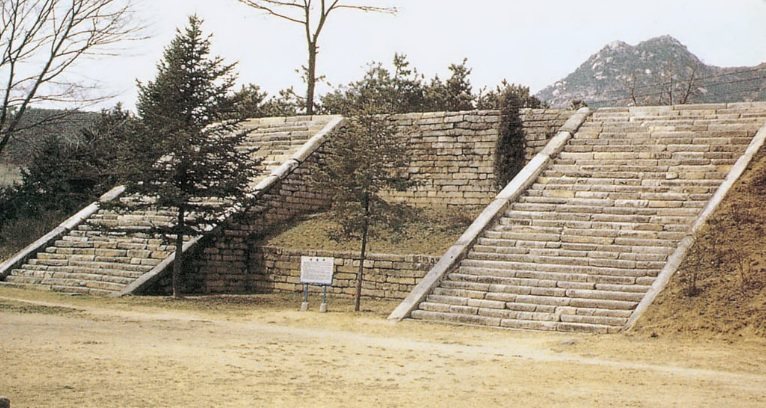
The hall’s frontal view was obscured after the massive Government-General of Chōsen Building was completed in front of it.
Restoration and heritage status
After Korea’s liberation from Japanese colonial rule in 1945, Geunjeongjeon was poorly maintained for several years and became overgrown with weeds. Restoration took place from January 2000 to October 2003. Geunjeongjeon Hall has been designated a National Treasure of South Korea since 1985, a high-level heritage category for structures judged to possess exceptional historical, artistic, or architectural importance.
Remains
Ceremonial architecture
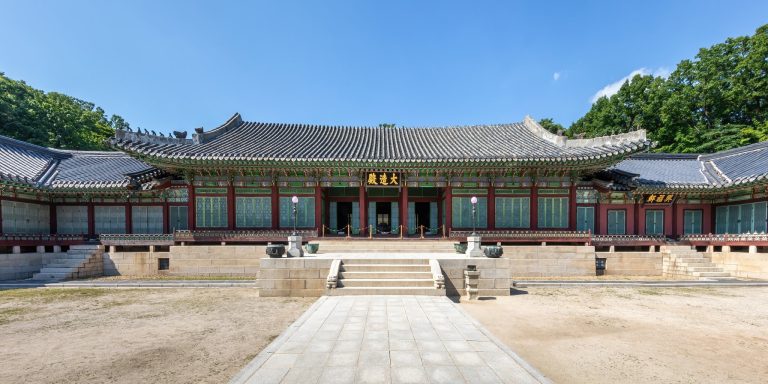
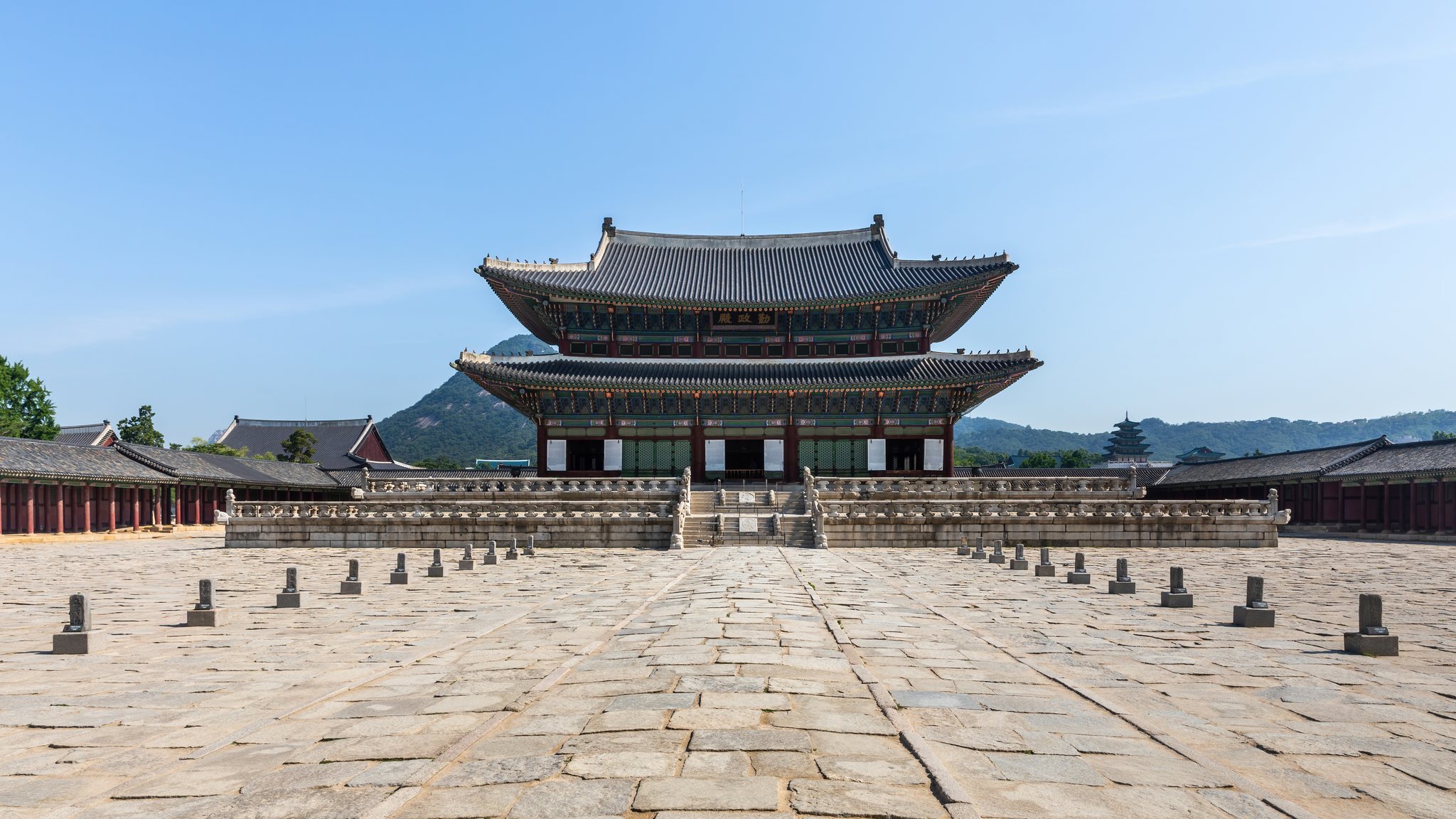
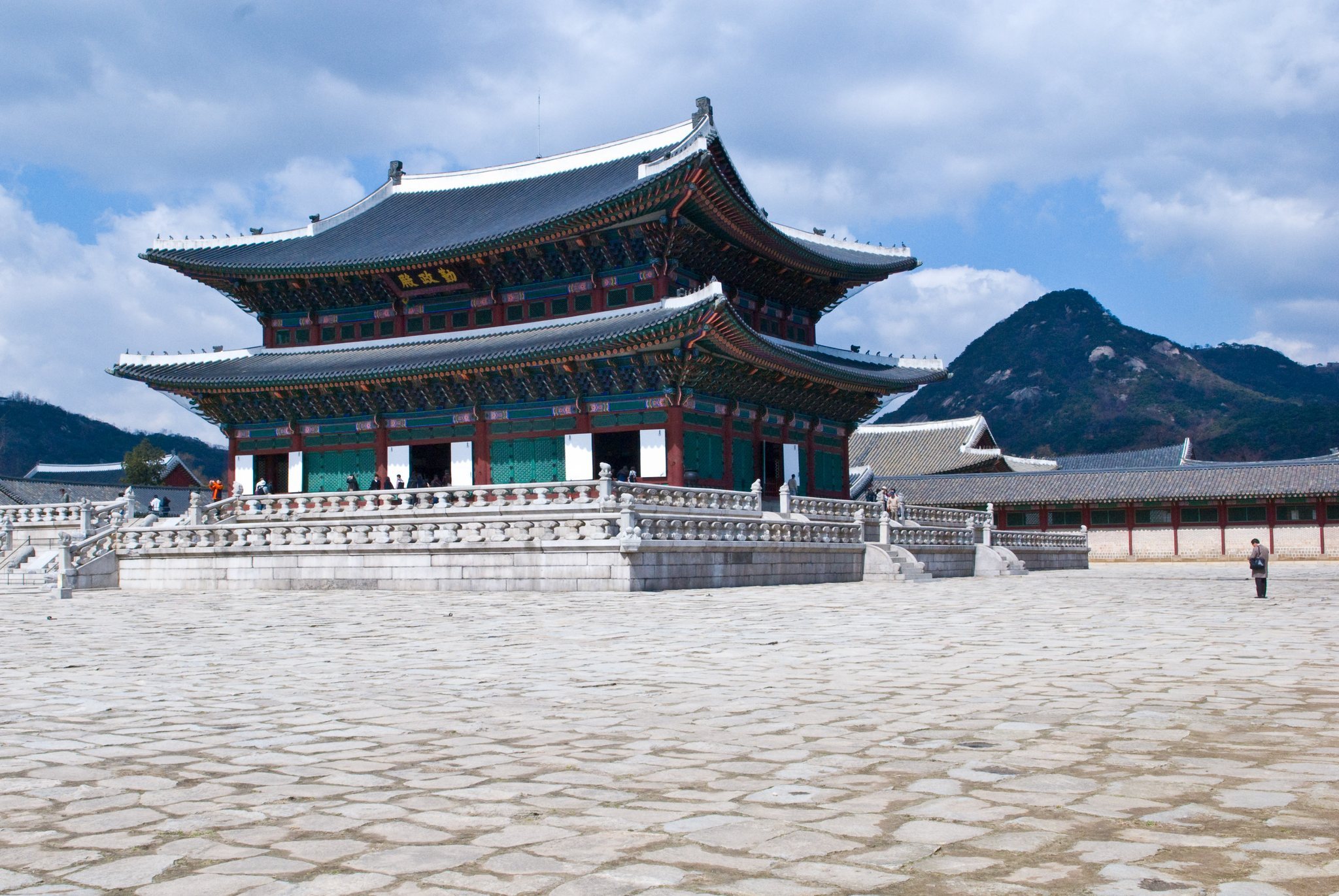
Geunjeongjeon is the largest main hall among the Joseon palaces and is regarded as an exemplary work of late-Joseon architecture. Its surviving arrangement expresses the hall’s ceremonial function through the raised platform in front and the organized connections to the surrounding palace buildings.
Raised ceremonial platform
A wŏltae, or raised ceremonial platform, extends before the hall. Rank stones on the platform marked the positions where officials stood according to their official status during formal court ceremonies.
Side gates and annexes
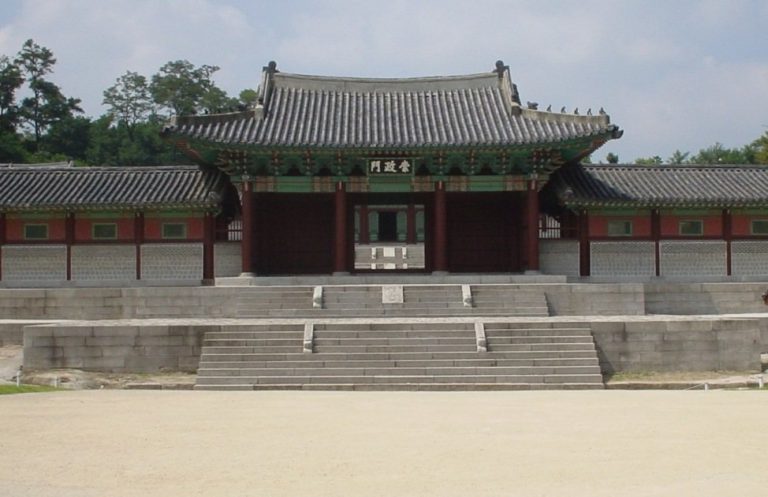
Gates on the east and west sides lead from the hall to its various annex buildings, linking the principal ceremonial space with the wider palace arrangement.