Krishnagiri Fort: A Vijayanagara Hill Fort in India
Site at a Glance
- Rating
- 4.3
- Popularity
- Medium
- Country
- India
- Primary era
- Early Modern
- Eras represented
- Early Modern
- Civilizations
- Unclassified
- Site type
- Military
- Remains
- Fort
On this page12 sections
History
Krishnagiri Fort is a sixteenth-century hill fort in Tamil Nadu, India, established by Jagadevarayar I, a military officer of the Vijayanagara Empire. It formed part of a wider defensive system created to strengthen the empire’s position in southern India.
Vijayanagara origins
Jagadevarayar earned distinction by defending the Vijayanagara Empire against an invasion by the Bijapur Sultanate. In recognition of his service, Ranga Raya II granted him and his family extensive territories in Tamil Nadu. These lands included twelve stone hills, which Jagadevarayar fortified. Krishnagiri was one of the resulting strongholds, and the group later became known as the Bara Mahal Forts.
Maratha and Mysore control
Shivaji captured the fort in 1670 during his campaign to conquer territories in southern India. The Maratha Empire was a powerful Indian state that expanded into the south during the seventeenth and eighteenth centuries.
In the mid-eighteenth century, Hyder Ali, the ruler and military leader of the Kingdom of Mysore, invaded Maratha territories and took Krishnagiri Fort along with extensive surrounding lands. British forces recaptured it in 1768 during the First Anglo-Mysore War, one of the conflicts between Mysore and the British East India Company and its allies. Hyder Ali regained the fort under the Treaty of Madras, which ended that war.
British administration and abandonment
After Tipu Sultan, Hyder Ali’s successor and the later ruler of Mysore, was defeated in the Third Anglo-Mysore War, the Treaty of Seringapatam returned Krishnagiri Fort to British control in 1792. The fort was transferred to the British East India Company, which appointed Captain Alexander Reed to administer the surrounding area. Under company rule, it became a storage depot for ammunition and weapons.
Following the Indian Rebellion of 1857, authority passed from the British East India Company to the British Empire. The fort was then transferred to the British Indian Army, which gradually reduced its use. It was abandoned around 1900.
Protection after independence
After Indian independence in 1947 and the end of British rule in India, Krishnagiri Fort came under the authority of the Government of India. It was designated a historic site and placed under the care of the Archaeological Survey of India, the government body responsible for protecting and maintaining nationally important monuments. Many of its surviving buildings endured successive conquests because they continued to serve as places of religious worship and pilgrimage.
Remains
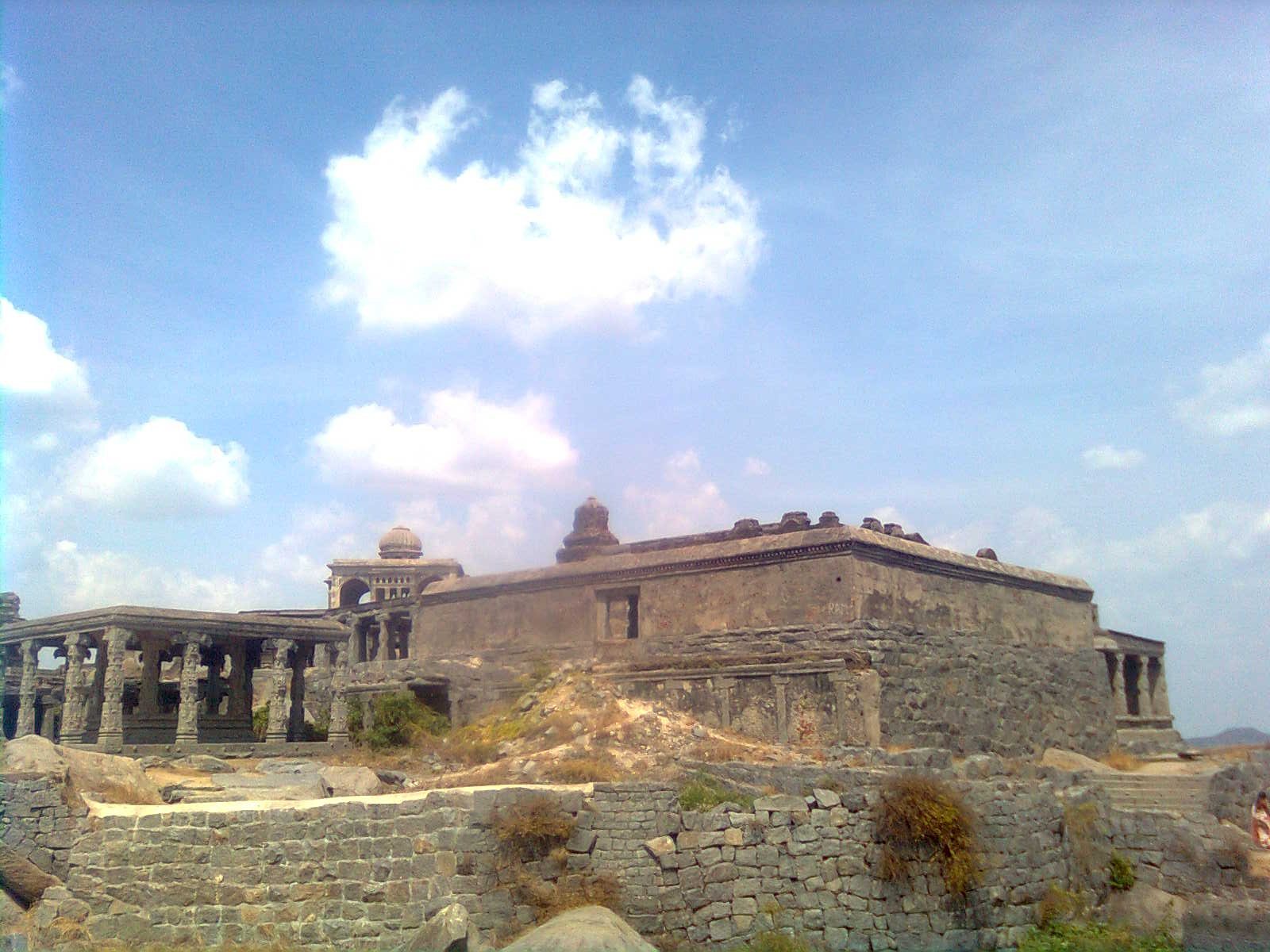
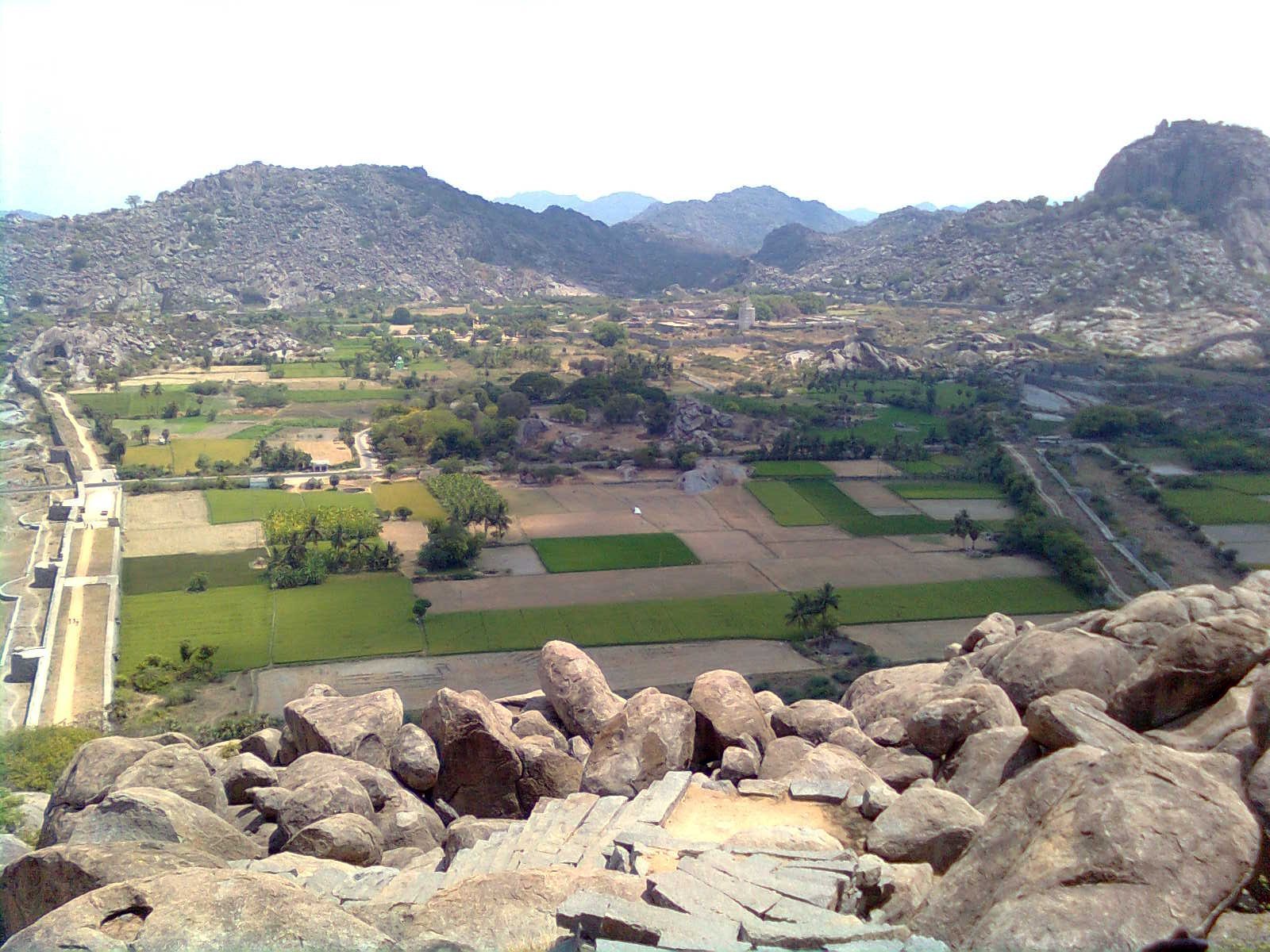
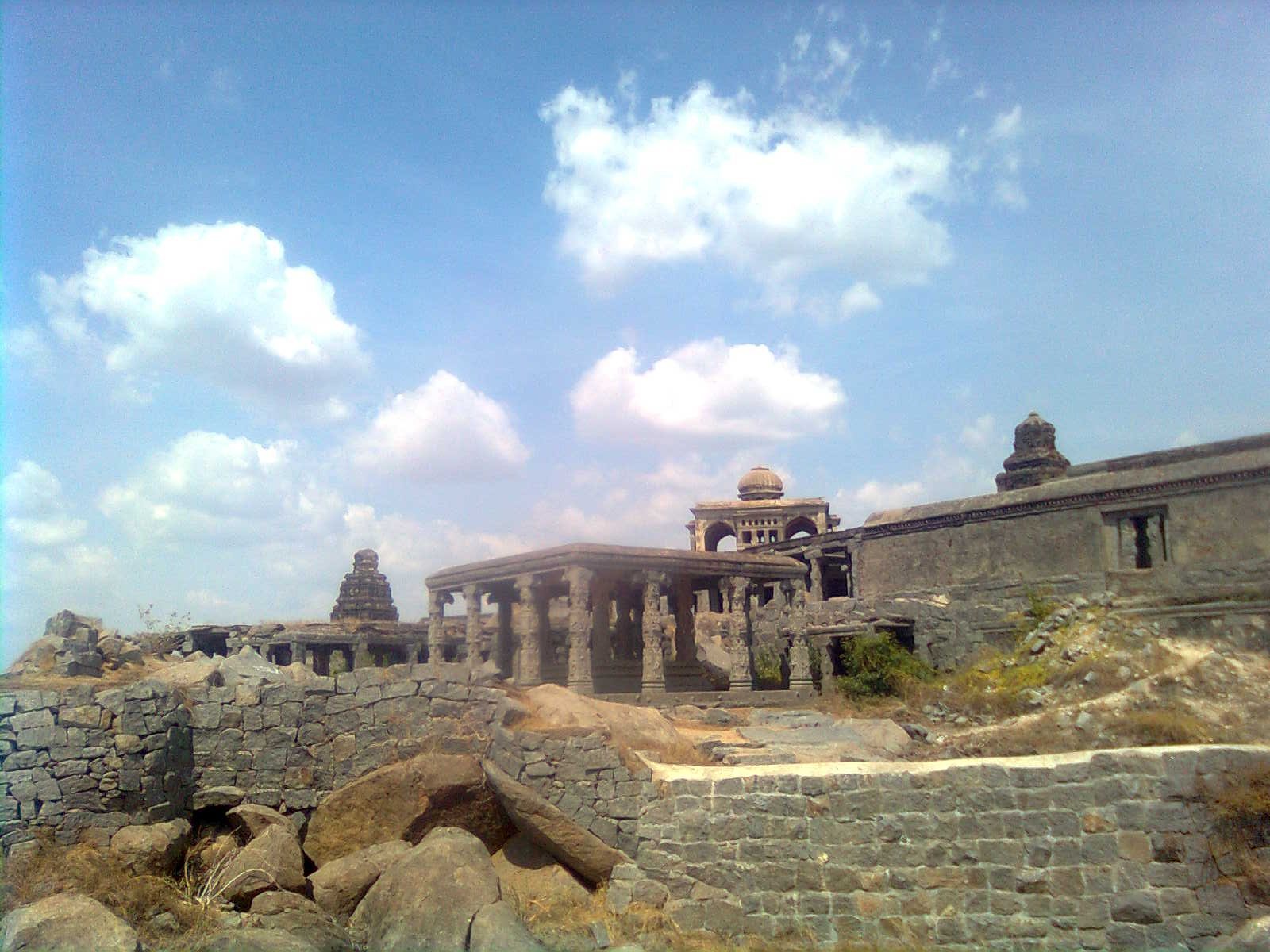
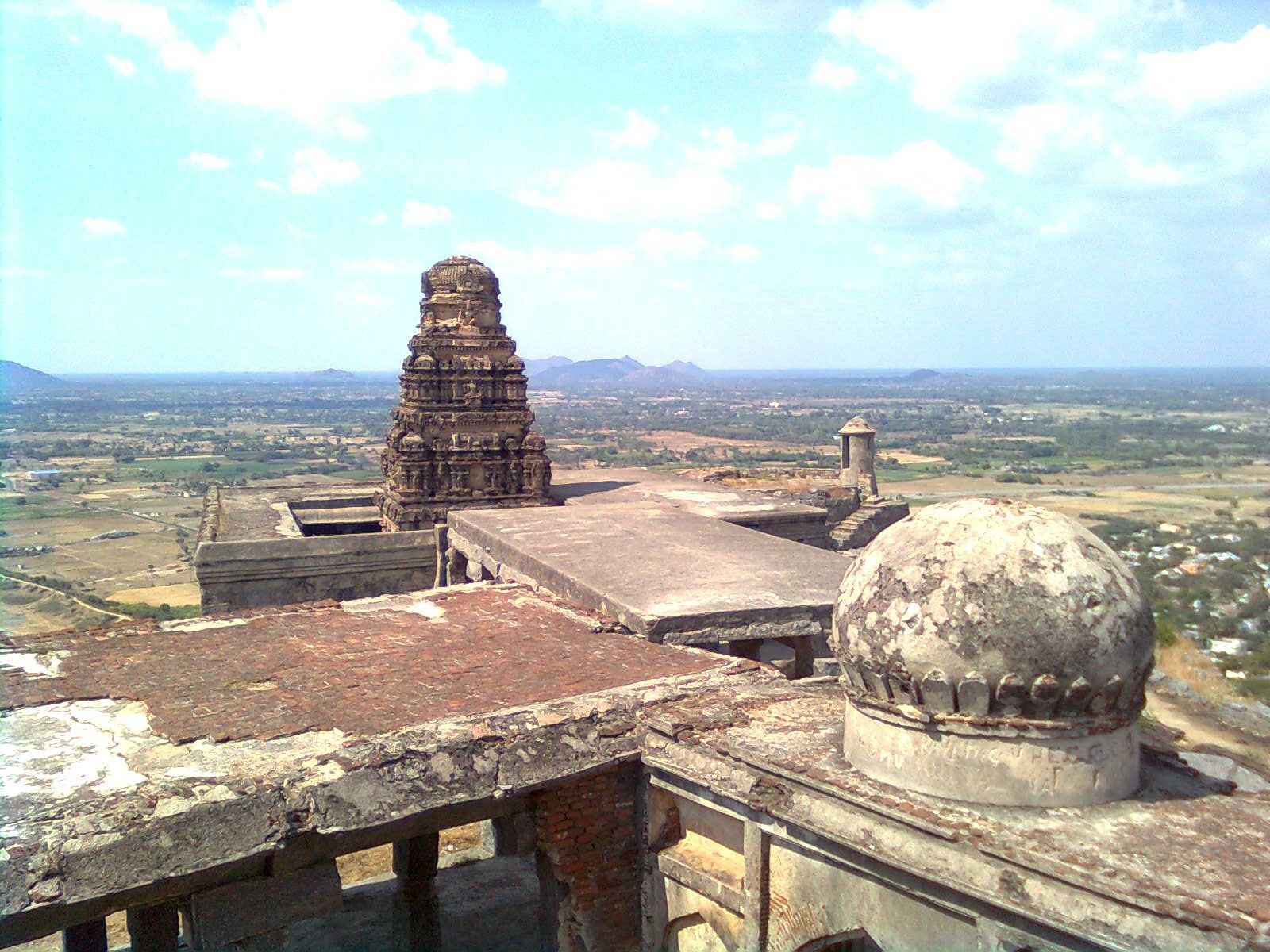
Krishnagiri Fort occupies a hill overlooking the city of Krishnagiri in Krishnagiri District. The hill is one of twelve fortified hills in the surrounding area. The fort is approximately 120 metres long, 80 metres wide, and 100 metres high, with an area of about 10,000 square metres. Its surviving layout combines a stone defensive boundary, a protected entrance route, central buildings, religious structures, and features at the summit.
Fortifications and approach
Perimeter wall and towers
A perimeter wall built from locally available stone encloses the hilltop position. Watchtowers and other defensive projections are incorporated into the wall, while surviving sections and towers preserve parts of the fort’s defensive system.
Stairway and gateway
Access rises from the foot of the hill by a staircase of approximately 400 steps. The staircase ends at a protected gateway built into the fortification wall, linking the approach to the enclosed summit area.
Central buildings and summit features
Historic buildings and granary
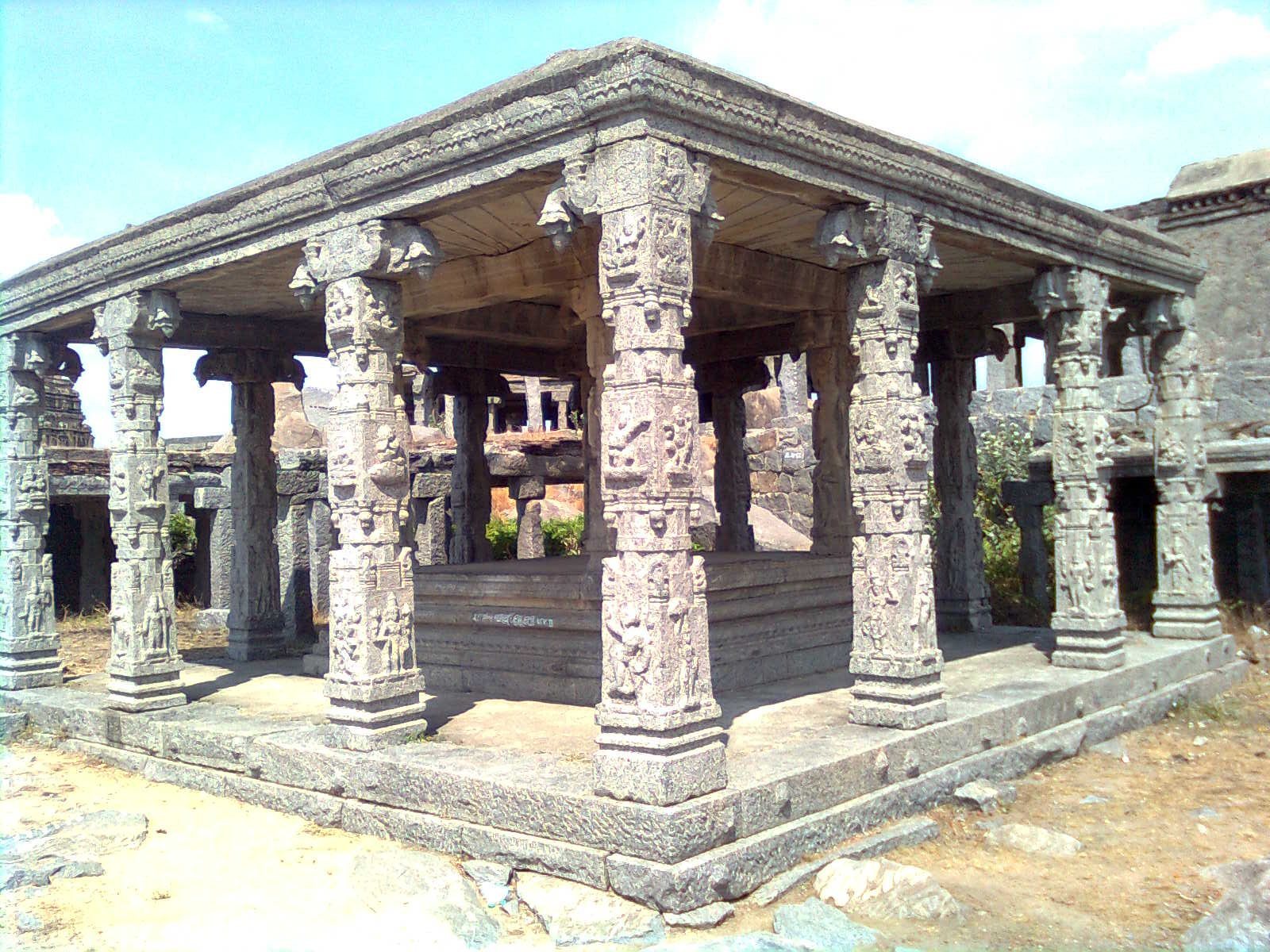
Several historic buildings stand at the centre of the fort. Different rulers who controlled Krishnagiri Fort over time constructed these buildings. A granary and additional religious and historic structures also survive among the documented remains.
Religious structures and burial monuments
The hill contains temples dedicated to Ganesha and Narasimha, Hindu deities associated respectively with beginnings, wisdom, and the removal of obstacles, and with a man-lion manifestation of Vishnu. A mosque and burial monuments at the summit are also among the surviving features.