Garmo Stave Church: A Medieval Timber Church Reconstructed at Maihaugen
Site at a Glance
- Popularity
- Medium
- Country
- Norway
- Primary era
- Medieval
- Eras represented
- Medieval, Early Modern
- Civilizations
- Denmark–Norway, Norwegian
- Site type
- Religious
- Remains
- Church
On this page10 sections
History
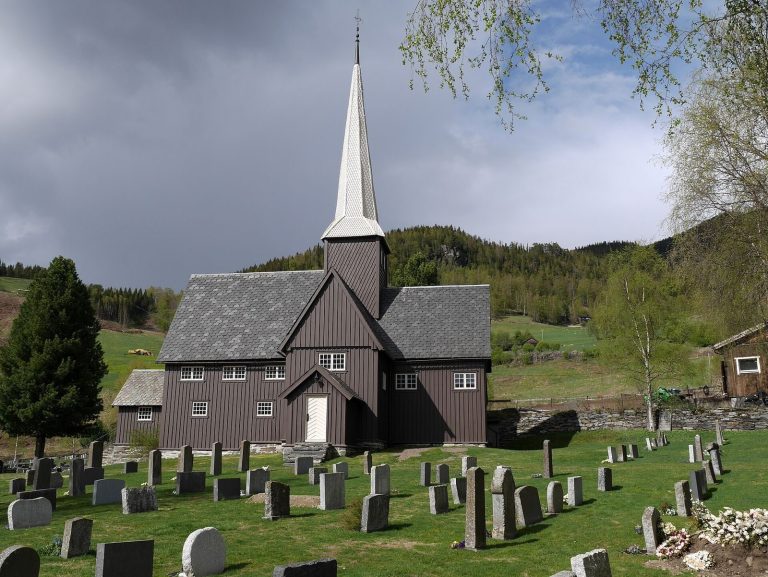
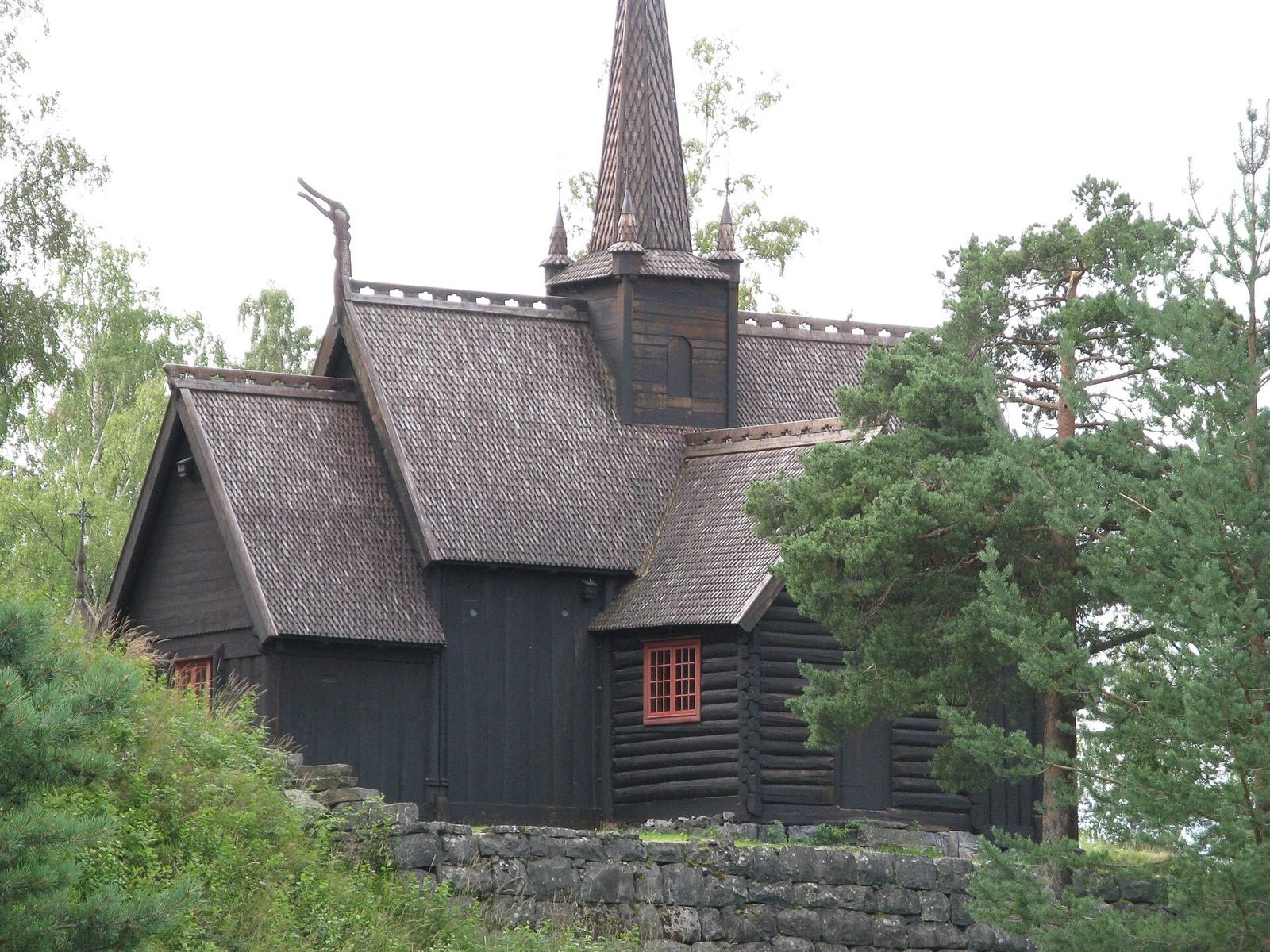
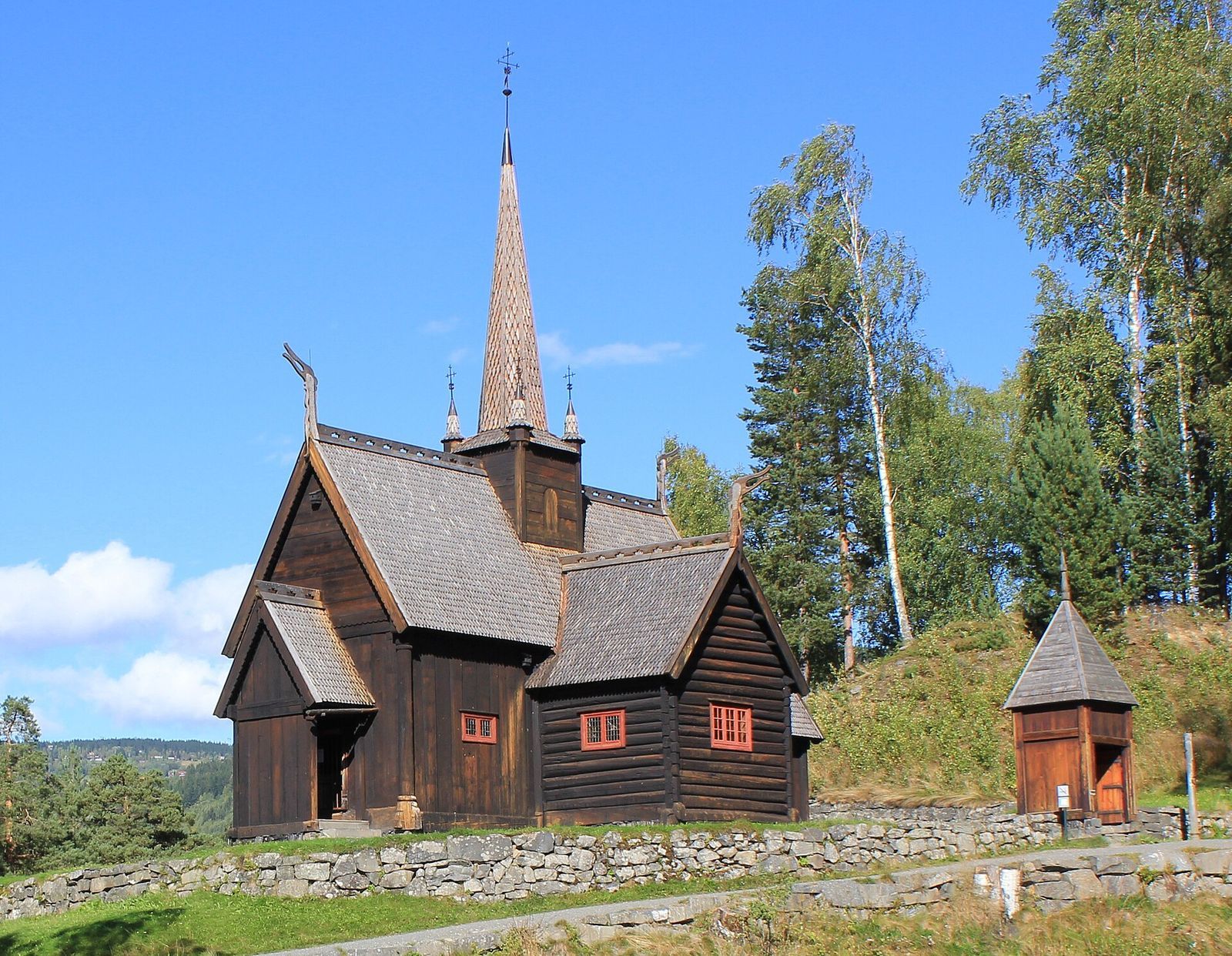
Garmo Stave Church is a reconstructed medieval timber church at Maihaugen in Lillehammer, Norway. Originally built in Garmo, it probably dates to the second half of the 12th century. It is a stave church, a type of medieval timber building supported by upright posts called staves.
Origins and medieval records
Tradition connects the church’s beginnings with Olaf II Haraldsson, a Norwegian king later venerated as a Christian saint. During a journey through Gudbrandsdal around 1021, Olaf is said to have settled a dispute by granting Torgeir Gamle fishing rights in Lake Tesse. Torgeir then converted to Christianity and built a church on his farm. A church with posts set directly into the ground may have preceded the stave church; weather damage may have led to its replacement around 1150–1200.
Two local inscriptions, made in 1730 and 1785, give 1130 as the church’s construction date, although the tradition behind that date is uncertain. Garmo is mentioned in writing around 1210. A testimony Bishop Ivar Skjalg of Hamar took on 11 August 1333 concerned Torgeir’s fishing rights and transcribed an earlier document dated broadly to 1202–1220.
Alterations, dismantling, and reconstruction
A new tower was added in 1690. In 1730 the church was enlarged with crosswise sections, giving it a cross-shaped plan; these additions used horizontally joined logs rather than the medieval stave construction. The parish later considered the building too small, and a new Garmo parish church was completed in 1879.
The old church was taken apart in 1882, and its materials were sold at auction. It was among the last stave churches to be demolished, at a time when Norwegian nationalist movements regarded such buildings as important artistic and historical heritage. Trond Eklestuen bought and preserved most of the timber framework. From 1909, collector Anders Sandvig sought other auctioned pieces, and together they gathered enough material to rebuild the church at Maihaugen. The reconstruction took place in 1920–1921. Sandvig acknowledged that it was not an exact restoration. The church remains associated with the Diocese of Hamar, and occasional religious services are held there.
Remains
The reconstructed church combines a medieval timber core with later additions. Its present layout includes a nave, the main space for worship, a west vestibule, or entrance space, a narrower chancel, the area around the altar, and crosswise sections added in 1730. The building retains substantial original timber alongside replacement pieces.
Plan and exterior
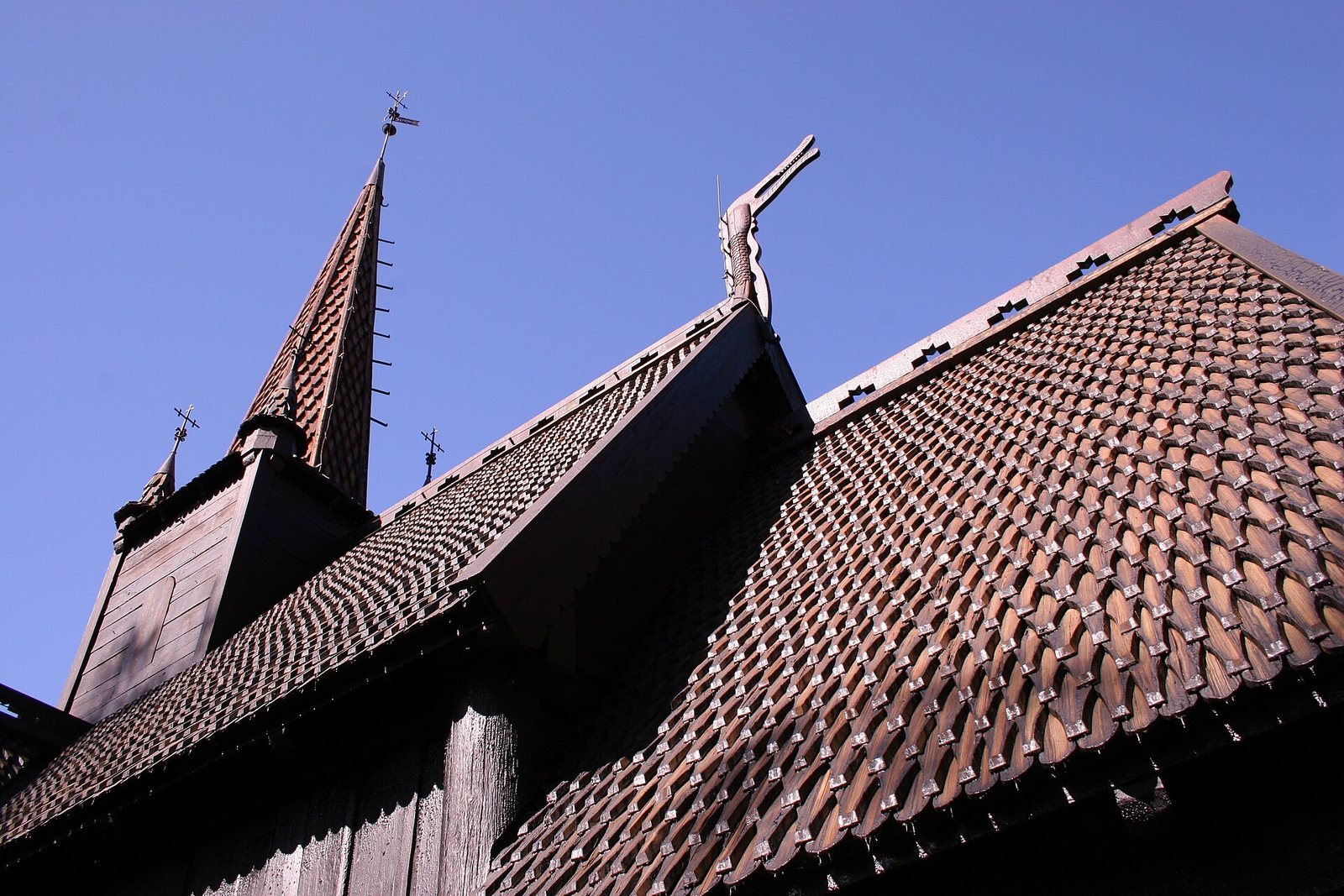
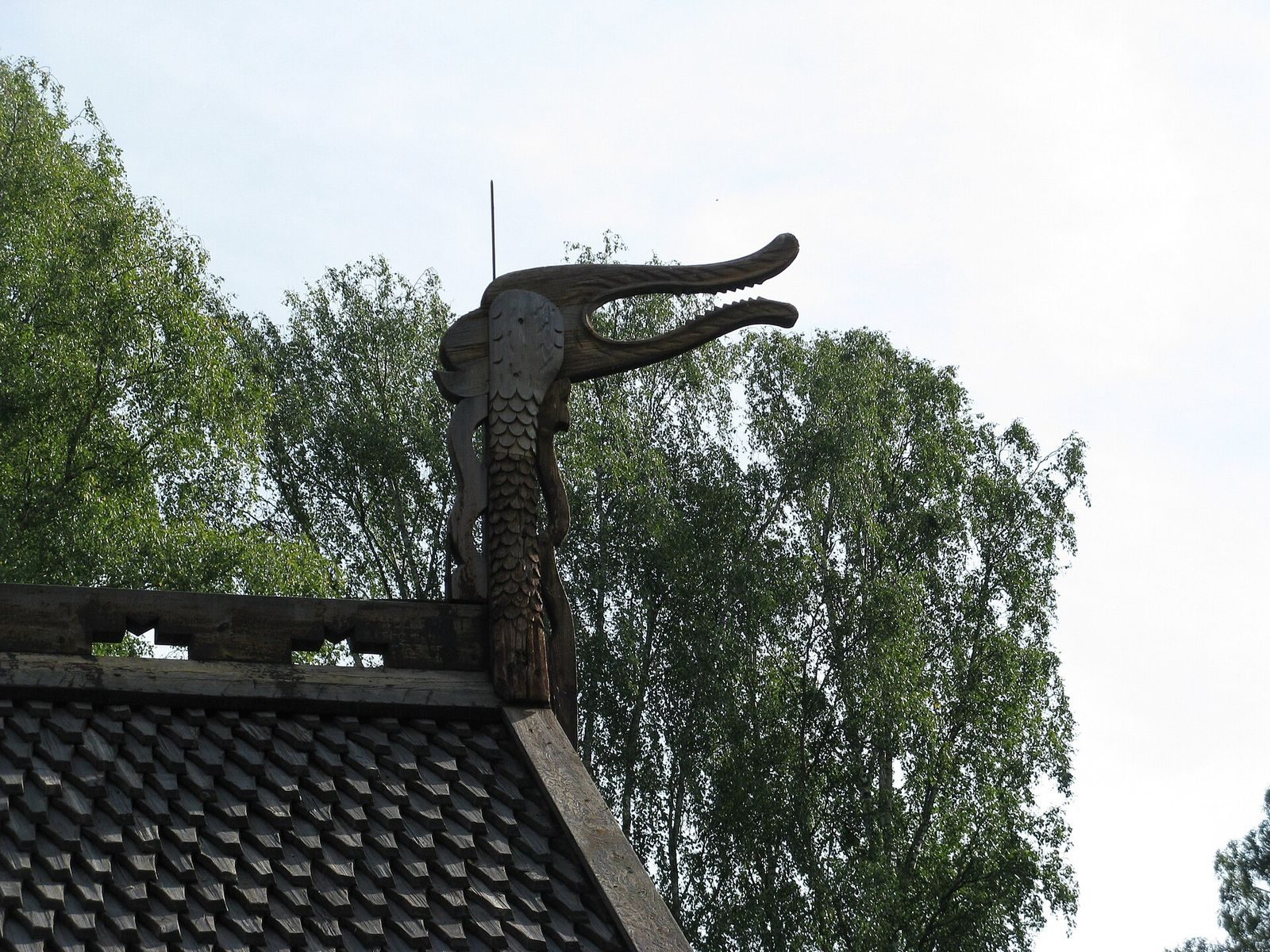
The church has a gabled roof and a tower above the crossing, where the main worship space and crosswise sections meet. The tower is topped by a pointed spire and small pointed ornaments. Dragon decoration runs along the roof ridge, recalling features of the larger Lom Stave Church. A sacristy, a room for items used in services, is attached to the eastern side of the chancel. The current building holds 75 people. The earlier layout may have had a rectangular nave, a smaller chancel, and an outer corridor.
Timber structure
The rebuilt church incorporates original sill beams, the beams at the base of the structure, as well as corner and intermediate staves, some wall planks, and wall plates, the horizontal beams at the tops of walls that support the roof. The nave and chancel contain ten staves of different forms and several types of wall plank. Replacement pieces were marked to distinguish them from original timber, though the marks are now less visible. The proportion of original material is uncertain, and some pieces may have come from other medieval buildings. The crosswise additions use a different timber-building technique, with logs laid horizontally.
Movable furnishings and fittings
Baptismal font
A soapstone baptismal font made in North Gudbrandsdal stands in the reconstructed church. Generally dated to 1150–1200, it is Romanesque in style, part of a medieval European artistic tradition. Its medieval wooden lid retains traces of a locking device. Before the Protestant Reformation of the 16th century, baptismal water was changed only once a year. The lid protected it, while the lock was intended to prevent theft of consecrated water, which was also sought for magical use. After the church was dismantled, the font was sent to the University Antiquities Collection in Kristiania, the historical name for Oslo, before returning to the reconstructed church.
Paintings and dragon heads
One painting from the church’s original furnishings is now at Maihaugen. Other paintings are held by Glomdal Museum in Elverum or privately in Lom. The original dragon heads were also sent to the University Antiquities Collection after the dismantling and are now part of that collection.
Other church fittings
The chancel arch is now in the new Garmo church. The pulpit, carved around 1730 by Peder Knudsen Kjørsvik, came from Hustad church in Romsdal and was among items donated to Maihaugen by the Nordic Museum in Stockholm in 1937. A 1695 altarpiece painted by Sigvard Guttormsen came from Lillehammer Stave Church, not Garmo; it is now privately owned in Lom. Its scenes include the Last Supper, Crucifixion, Resurrection, Christ as judge, Christ and John, and the four Evangelists. An altarpiece is an artwork or decorated structure placed behind an altar.