Follebu Church: A Medieval Parish Church in Norway

Site at a Glance
- Rating
- 4.5
- Popularity
- Very Low
- Country
- Norway
- Primary era
- Medieval
- Eras represented
- Medieval, Early Modern, Modern
- Civilizations
- Denmark–Norway, Norwegian
- Site type
- Religious
- Remains
- Church
On this page6 sections
History
Medieval foundation
Follebu Church is a medieval Gothic stone parish church in Norway, consecrated in 1260. Its construction is also described as extending from 1260 to 1300. The church was originally Catholic and is now Evangelical Lutheran, reflecting the religious transformation associated with the Church of Norway, Norway’s national Lutheran church. By 1341, the earliest surviving historical record that mentions the building, it was already an established church.
Alterations and continuing use
The building was modified over time to meet the needs of its congregation. A small sacristy, a room adjoining the church where clergy prepare for services and keep liturgical furnishings, was added beside the choir in 1686. It was demolished and replaced with a larger sacristy in 1868. A church porch was built as the main entrance in 1872.
Follebu Church remains an active parish church within Follebu Parish, the Sør-Gudbrandsdal Deanery, and the Diocese of Hamar. It also has automatic protection as a Norwegian cultural heritage site.
Remains
Building and setting
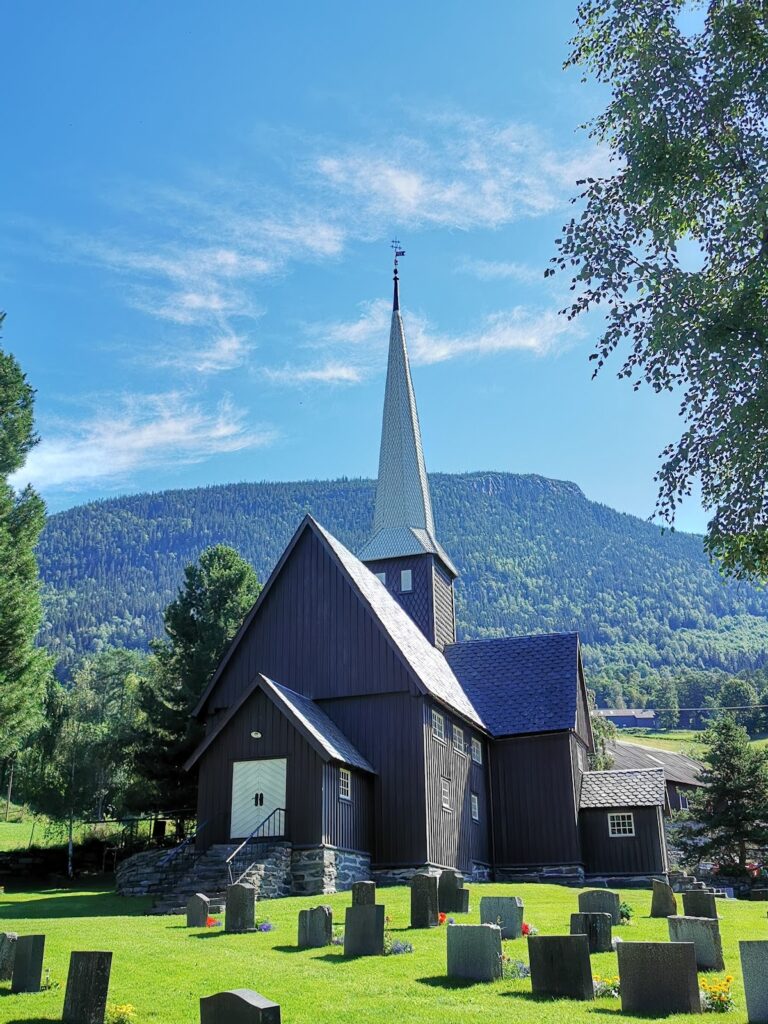
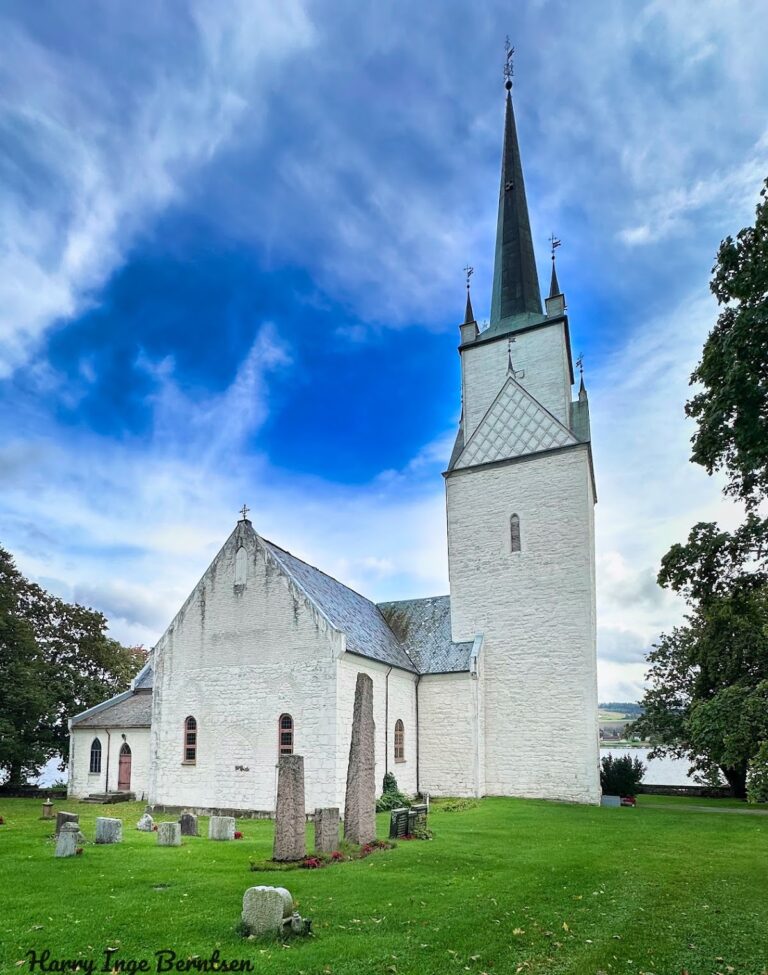
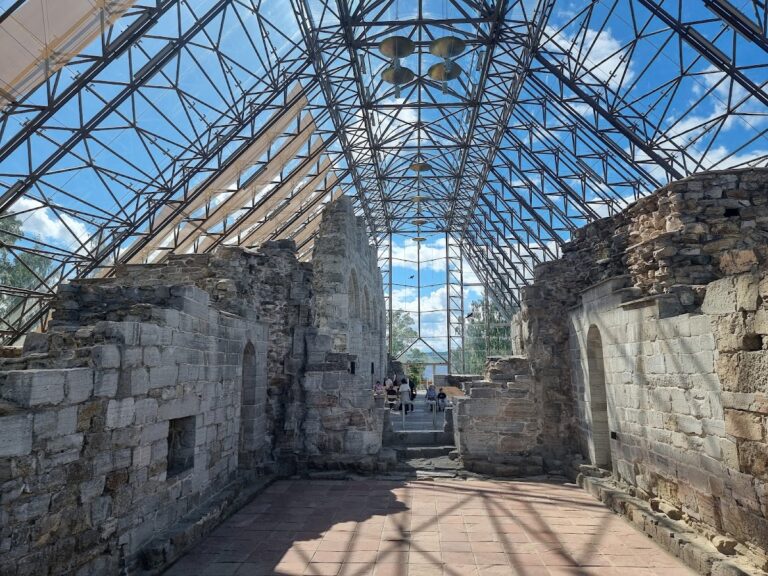
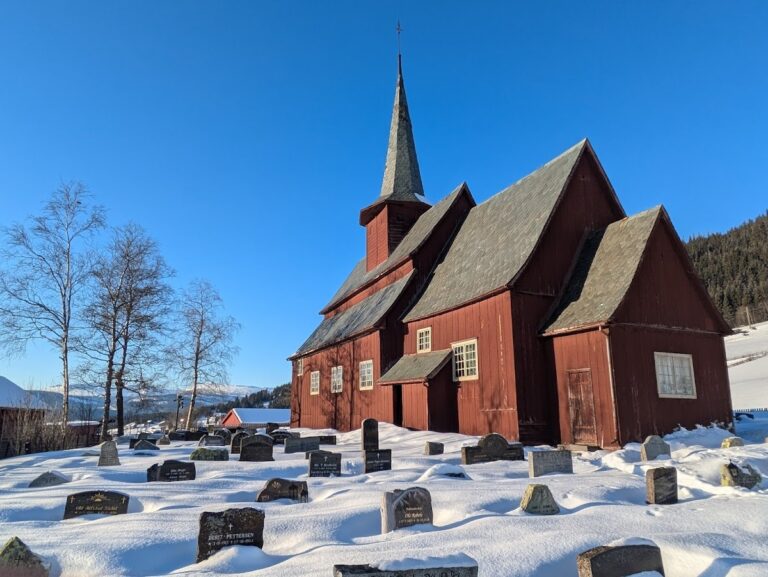
Follebu Church is a white, rectangular building in a long-church plan, an elongated layout organized along a lengthwise axis. Its Gothic masonry gives the church a strongly substantial structure. The west wall is about 1.75 metres thick, while the other walls measure approximately 1.55 metres. Inside, the church measures about 14 by 7.65 metres, with internal walls rising to roughly 6.4 metres. A cemetery surrounds the church.
The choir has an attached sacristy, while the porch added in 1872 forms the principal entrance. Together, these additions remain part of the building’s present arrangement. The church has an estimated seating capacity of about 140 people.
Interior furnishings
The altar and pulpit are richly decorated with acanthus ornamentation, a carved motif based on stylized plant leaves. The work is attributed to Eistein Kjørn, a Norwegian woodcarver and sculptor known for ecclesiastical decoration. These furnishings contribute to the surviving interior character of the medieval church and its later religious use.