Fåvang stave church: a rebuilt parish church in Norway
Site at a Glance
- Rating
- 4.6
- Popularity
- Very Low
- Country
- Norway
- Primary era
- Early Modern
- Eras represented
- Early Modern
- Civilizations
- Denmark–Norway, Norwegian
- Site type
- Religious
- Remains
- Church
On this page7 sections
History
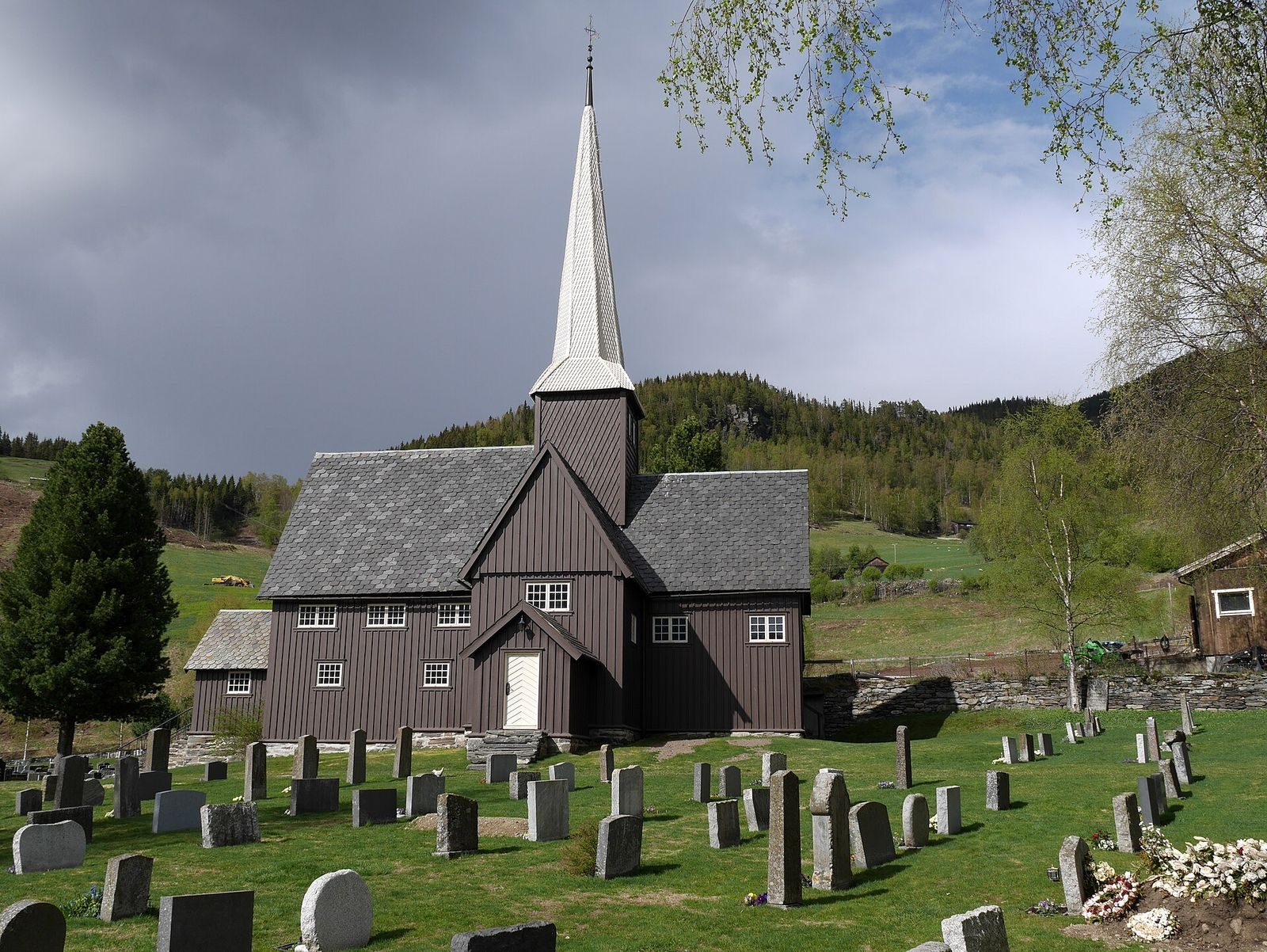
Fåvang stave church is a wooden church in Norway, first built on its present site in the late thirteenth century as a stave-built long church. Its present form dates principally from a major rebuilding between 1627 and 1630, when the medieval structure was replaced by an enlarged timber-framed church with a cruciform plan.
Medieval foundation
Fåvang’s first church was constructed in the late thirteenth century. It was a wooden long church built according to the stave tradition, which used vertical load-bearing posts rather than relying mainly on a timber frame. The possibility that this early church originally stood elsewhere has not been conclusively resolved.
Seventeenth-century rebuilding
After the Reformation, the church was almost completely rebuilt and enlarged between 1627 and 1630. The Reformation was the sixteenth-century religious transformation that ended papal Catholic authority in Norway and established Lutheran church organization. During the rebuilding, the original stave structure was removed and replaced with a timber-framed building arranged on an expanded Greek-cross plan.
The new church incorporated material from the earlier Fåvang church and from other demolished stave churches in the Gudbrandsdal valley. This included timber from a nearby eleventh-century church, while the oldest reused wood dates approximately from 1150 to 1250. The reconstruction is traditionally associated with Werner Olsen Skurdal, a seventeenth-century church builder and architect who was also involved in major work at the stave churches of Vågå, Ringebu, and Lom. Fåvang Church was consecrated in 1630.
Parish church and later alterations
Fåvang Church was formerly Catholic and is now Evangelical Lutheran. It serves as the main church of Fåvang Parish within the Church of Norway, the Sør-Gudbrandsdal Deanery, and the Diocese of Hamar.
Major alterations in 1900 and 1901 gave the building new exterior siding, a rebuilt and enlarged porch, and white-painted surfaces. A further restoration followed from 1949 to 1951 under the direction of architect Jens Gram Dunker. The windows were replaced and many interior furnishings were altered. The church was re-consecrated on 9 September 1951.
Because of its extensive rebuilding and later alterations, Fåvang is popularly called a stave church but is not consistently counted among Norway’s twenty-eight authentic historic stave churches. It remains an active parish church and is automatically protected as a Norwegian cultural-heritage site.
Remains
Fåvang is a wooden, timber-framed building with a cruciform layout, more specifically an expanded Greek-cross arrangement. Its present structure principally reflects the 1627 to 1630 rebuilding, although parts retain the construction tradition associated with stave churches. The original vertical staves were removed during the seventeenth-century reconstruction. Brown wooden exterior walls surround a building that accommodates approximately 170 people.
Exterior and structural fabric
The church’s surviving fabric brings together timber from the earlier Fåvang church and from demolished stave churches in the surrounding Gudbrandsdal valley. The oldest reused material dates approximately from 1150 to 1250. The porch was rebuilt and enlarged in 1900 and 1901, while the present windows derive from the restoration directed by Jens Gram Dunker between 1949 and 1951.
Interior furnishings
The interior contains seventeenth-century Renaissance-style altar and pulpit furnishings. Renaissance architecture revived classical forms and proportions; at Fåvang, the style is represented chiefly by these furnishings. Other historic objects include votive pieces dating from 1684 to 1694 and a painting of the Christ Child dated 1732.