Ringsaker Church: A Medieval Parish Church in Norway
Site at a Glance
- Popularity
- Medium
- Country
- Norway
- Primary era
- Medieval
- Eras represented
- Medieval, Early Modern, Modern
- Civilizations
- Denmark–Norway, Norwegian
- Site type
- Religious
- Remains
- Church
On this page15 sections
History
Medieval foundation and expansion
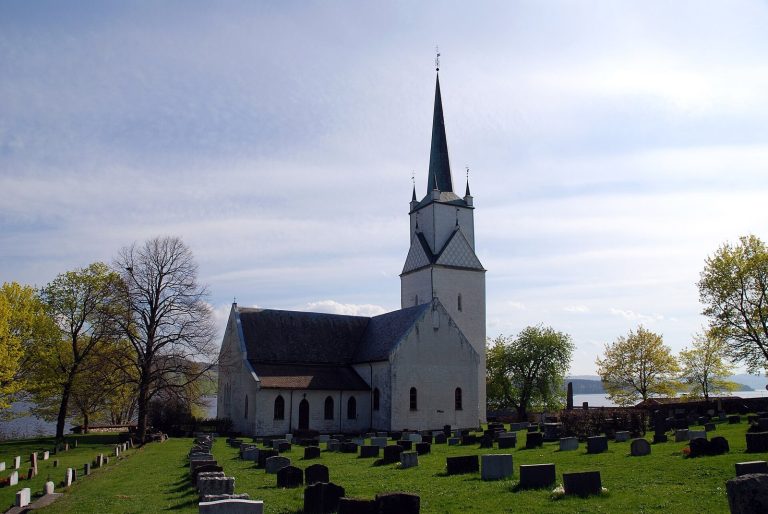
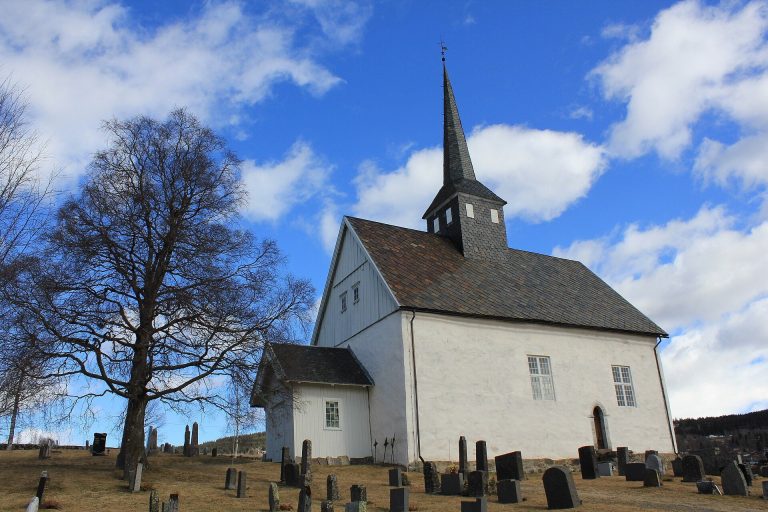
Ringsaker Church is a medieval stone church in Moelv, Norway, built during the 12th century. Dedicated to Saint Olaf, also known as Olaf II, a Norwegian king revered as a saint, it began as a Catholic church with a Romanesque basilica plan. In the late 13th century, builders lengthened the choir eastward and added transepts, the crosswise sections of a church. These changes gave the building a cruciform plan and introduced Gothic features.
Reformation and later changes
The church was an important pilgrimage destination until the Reformation, the 16th-century religious transformation that ended Catholic institutions in Norway and established Lutheran church life. Ansten Jonsson Skonk served at Ringsaker from 1514 to 1547, first as its last Catholic parish priest and then as its first Lutheran one. He gave the church its altarpiece.
A spire erected by Werner Olsen in 1652 fell in a storm in 1669, leaving the church without one for several years. Oluf Iversen Helmen of Gran in Hadeland built a replacement in 1694; it was restored in 1884. In 1814, the church served as a polling place in the election process that led to the Norwegian Constituent Assembly, which drafted Norway’s constitution.
Restoration and continuing use
Restoration work between 1960 and 1964 brought medieval wall paintings to light in several parts of the church. Ringsaker remains the parish church for Ringsaker and the seat of the deanery, an administrative group of parishes, within the Diocese of Hamar. It is automatically protected as a Norwegian cultural heritage site.
Remains
Plan and construction
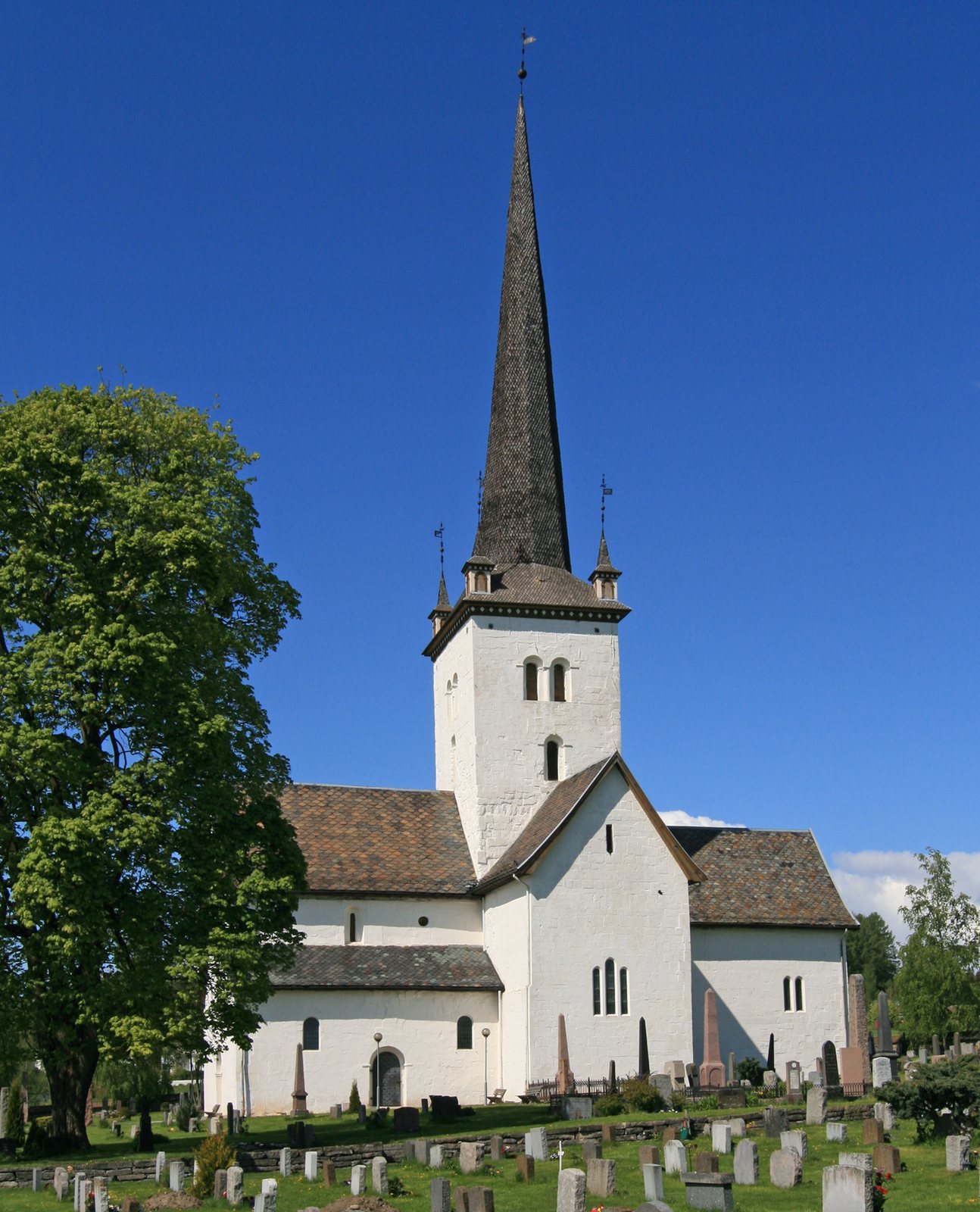
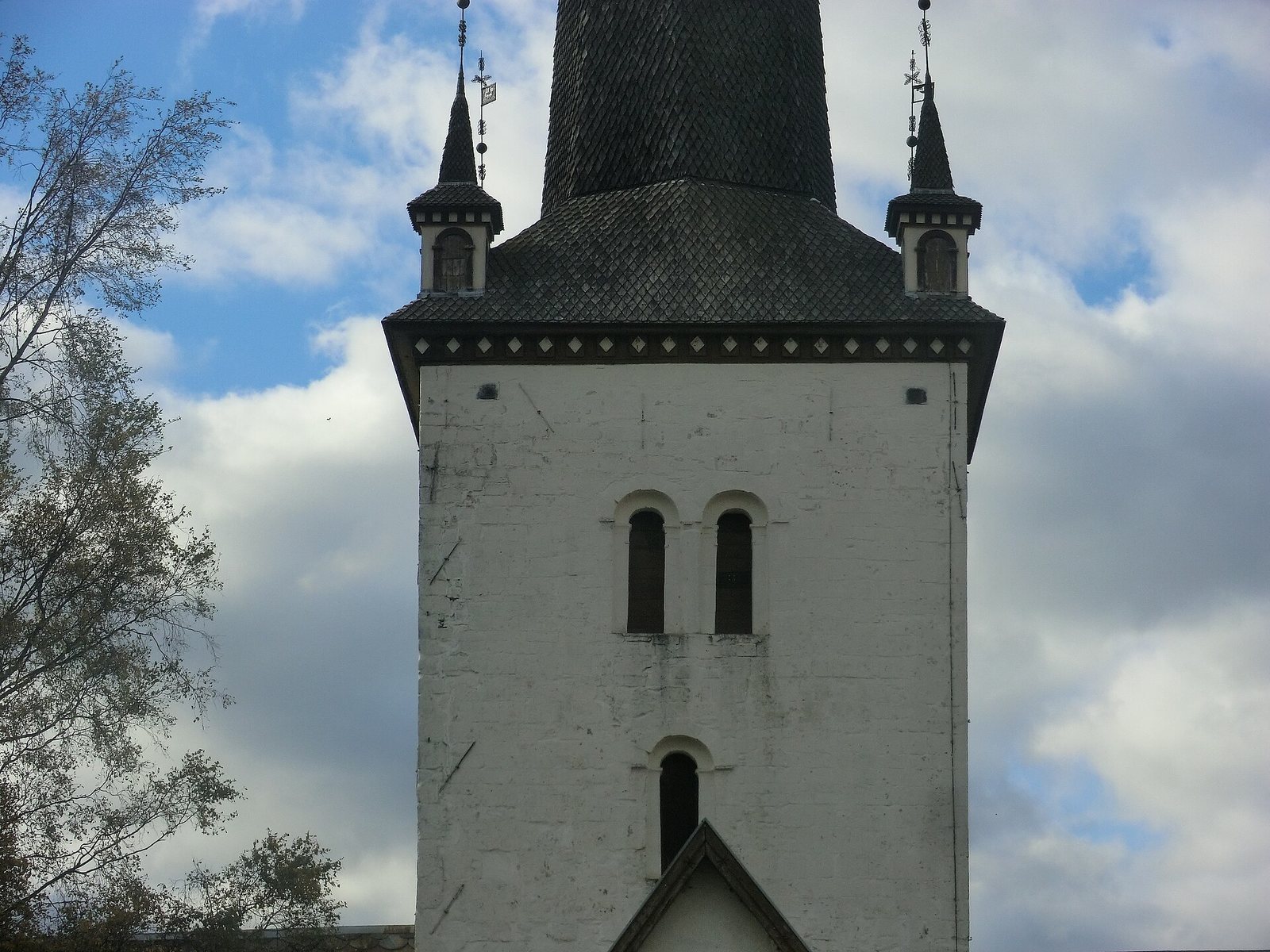
The white limestone church combines its original Romanesque basilica form, a central nave flanked by side aisles, with the later cross-shaped plan. Most of its medieval features remain. The building is 40.3 metres long; the nave is 21.3 metres long, and the transepts span 38.5 metres. The north transept is longer than the south. The choir and the large sacristy, a room for preparing clergy and keeping items used in worship, together measure 14.5 by 15.9 metres. The tower stands over the eastern part of the nave, and its present spire reaches 64 metres.
The original church had three aisles, a small choir and a large tower above the nave. Its nave has a barrel vault, a continuous curved ceiling, while the choir has a cross vault formed by intersecting vaulted sections. Columns with block-shaped capitals frame the west entrance. The church has seating for about 300, with 400 approved places, and is noted for its acoustics. Its design is associated with Gamle Aker Church, Nikolaikirken at Gran, Hoff Church at Toten and the former cathedral at Hamar. Hallvards Cathedral, a medieval cathedral in Oslo, was cited as a stylistic ideal.
Altarpiece and liturgical furnishings
High altar
The high altar holds a carved, gilded altarpiece made in Antwerp around 1520 and attributed to Robert Moreau. Its 127 gilded figures include scenes of martyrdom on the exterior. Inside, the central section depicts Christ’s Passion, death and Ascension, while the side panels show saints with their identifying attributes. The Crucifixion scene resembles one on the younger altarpiece at Roskilde Cathedral.
Other furnishings
Two large altar candlesticks date to 1540 and were gifts from the Brochenhus and Gyldenhorn noble families, who owned large farms in Ringsaker. Lars Jensen Borg made the baroque pulpit, baptismal font and baptismal house in 1704, and Hans Brun painted them. The baptismal house, an enclosure associated with a font, was removed in 1865 and later became part of the Nordiska Museet in Stockholm. Since 1937 it has been deposited in the church department of the Norwegian Folk Museum. A small side altar is also present. In 2009, the north transept was arranged as a Marian chapel, with a Nativity scene on its end wall.
Paintings and stained glass
Medieval wall paintings
Medieval paintings include a figure probably representing Saint Olaf in the choir’s cross vault, a consecration cross on the north side of the west wall, and a cherub beside the chancel arch, the arch separating the nave from the choir. Two ship paintings on the west wall of the north transept are associated with Mogens Handingmann, a nobleman from nearby Skapal farm.
Stained-glass windows
Borgar Hauglid made stained-glass windows for the transepts in 1959. The north window depicts the Virgin Mary, and the south one shows Saint Olaf. Hauglid also made windows for the choir and sacristy; the sacristy window depicts Christ giving a blessing.
Carved works and memorials
Crucifix and medieval door rings
A triumphal crucifix, a crucifix placed above the chancel arch, was carved in 1683, probably by Johannes Skraastad. Medieval door rings survive in the west entrance and on the door between the high choir and sacristy.
Grave memorials and portraits
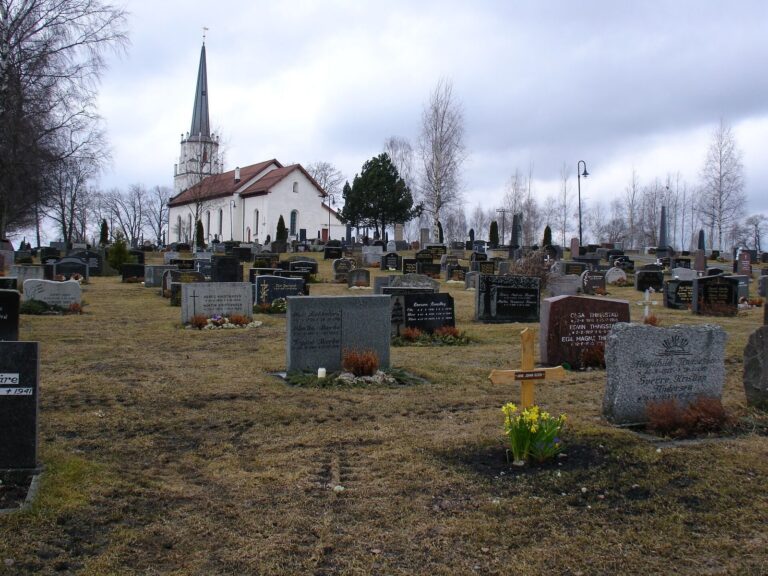
The church has Norway’s third-largest collection of medieval stone grave memorials, most of them inside the building. The south transept contains an epitaph, a memorial inscription, dated 1632, as well as twelve portraits of priests. Among these is Matthias Stoltenberg’s portrait of G. G. G. Bergh, who was considered the model for Pastor Lind in Tryggve Andersen’s 1897 novel I cancelliraadens dage. Ronald Fangen, a writer, and Aase Nordmo Løvberg, an opera singer, are buried beside the church. A parsonage stands immediately beside the building.