Garden of the Heroes: A Memorial Garden in Messolonghi
Site at a Glance
- Popularity
- Medium
- Country
- Greece
- Primary era
- Modern
- Eras represented
- Modern
- Civilizations
- Greek
- Site type
- Civic
- Remains
- Park
On this page12 sections
History
Burial and the Exodus
The Garden of the Heroes is a memorial garden in Messolonghi, Greece, commemorating the city’s defenders and the 1826 Exodus during the Greek War of Independence (1821–1829), the struggle against Ottoman rule that led to the establishment of modern Greece. During the siege, the city cemetery could not be reached, so residents buried their dead in this area. Messolonghi’s defenders also fought and were buried here.
During the Exodus, the 1826 breakout from the besieged city, Christos Kapsalis could not join those leaving. He detonated a powder magazine at the bastion of Markos Botsaris, a projecting part of a defensive fortification. The explosion killed elderly people, women, children, and people with disabilities, as well as many Ottoman attackers. The garden’s annual Exodus festivities include a reenactment of the event.
Creation of the memorial garden
In late October 1829, the fighters’ bones were gathered at the chosen site and placed in a heap as plans were made for a mound. A column in the garden preserves a resolution by Ioannis Kapodistrias, the first governor of independent Greece, dated 14 May 1829. The decision to establish the garden is dated to 1830.
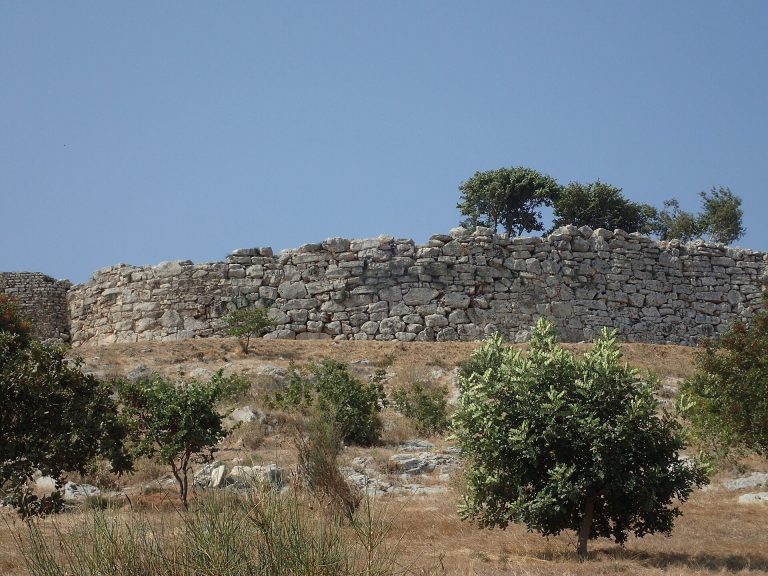
On 18 October 1838, a formal funeral procession attended by King Otto and Queen Amalia accompanied the symbolic transfer and official placement of the remains in the mound. In the same period, the remains of Markos Botsaris, a commander in the independence struggle, were moved from his earlier grave to an elevated monument. Otto also ordered the perimeter wall rebuilt on the remains of Messolonghi’s original wall.
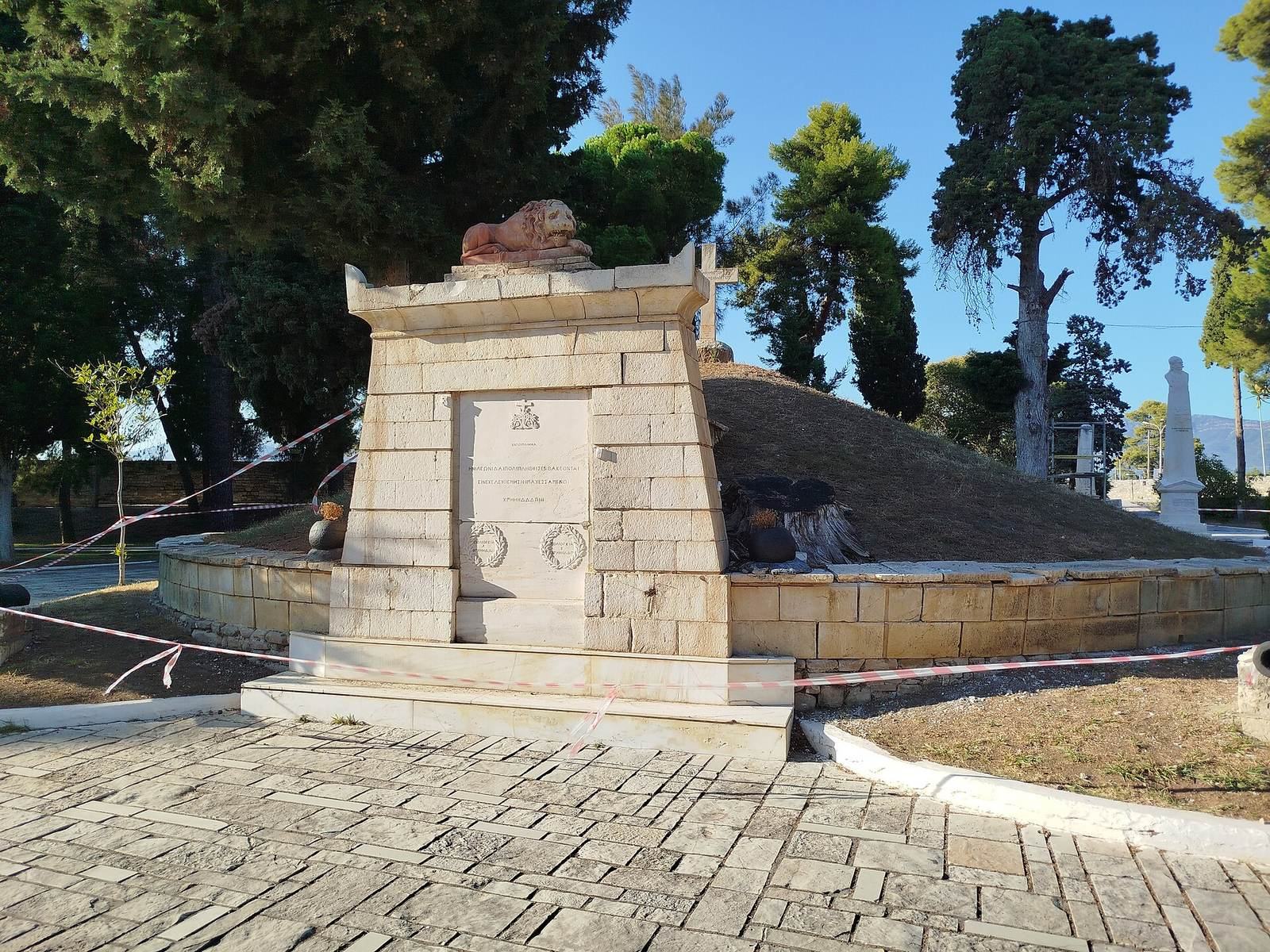
In 1858, Otto and Amalia helped plant trees and lay out the grounds. Amalia sent trees from Athens, and the royal couple donated a marble lion for the mound.
Annual commemorations
Since April 1859, a mourning procession has set out from the Church of St Spyridon on the evening of Lazarus Saturday, the Saturday before Palm Sunday in the Eastern Orthodox calendar, and again on Palm Sunday morning. Both processions end at the memorial to the fallen. Palm Sunday ceremonies commemorate the Exodus, and annual observances also honor foreign fighters who died alongside the people of Messolonghi.
Remains
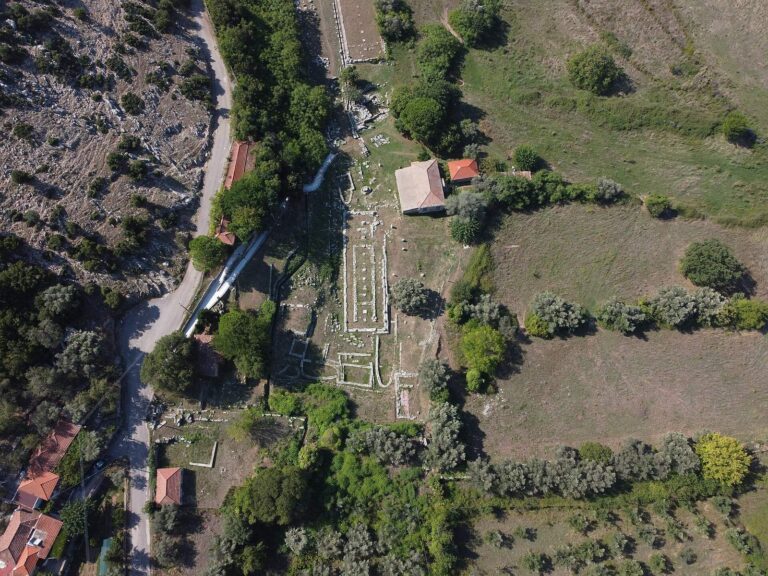
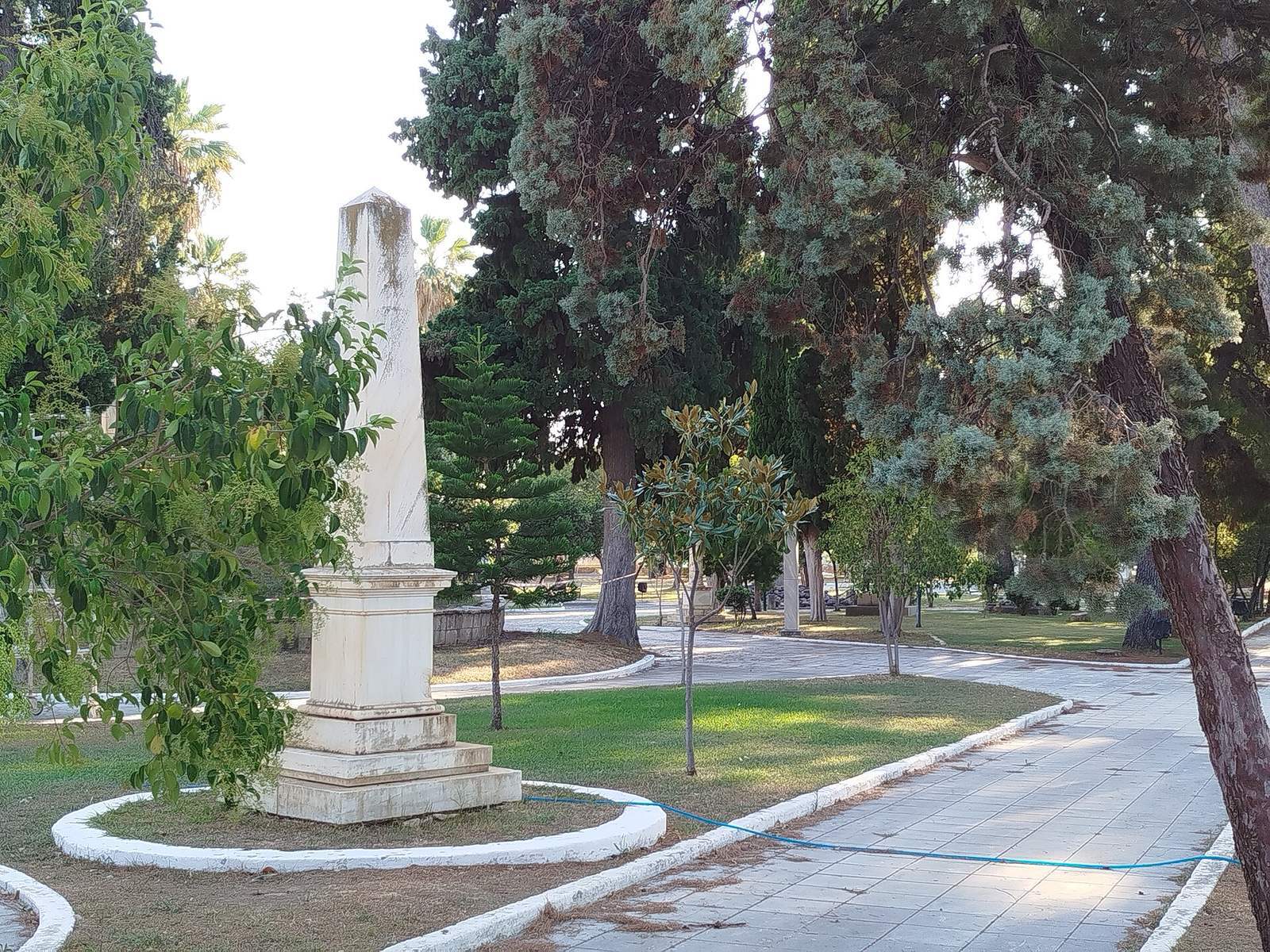
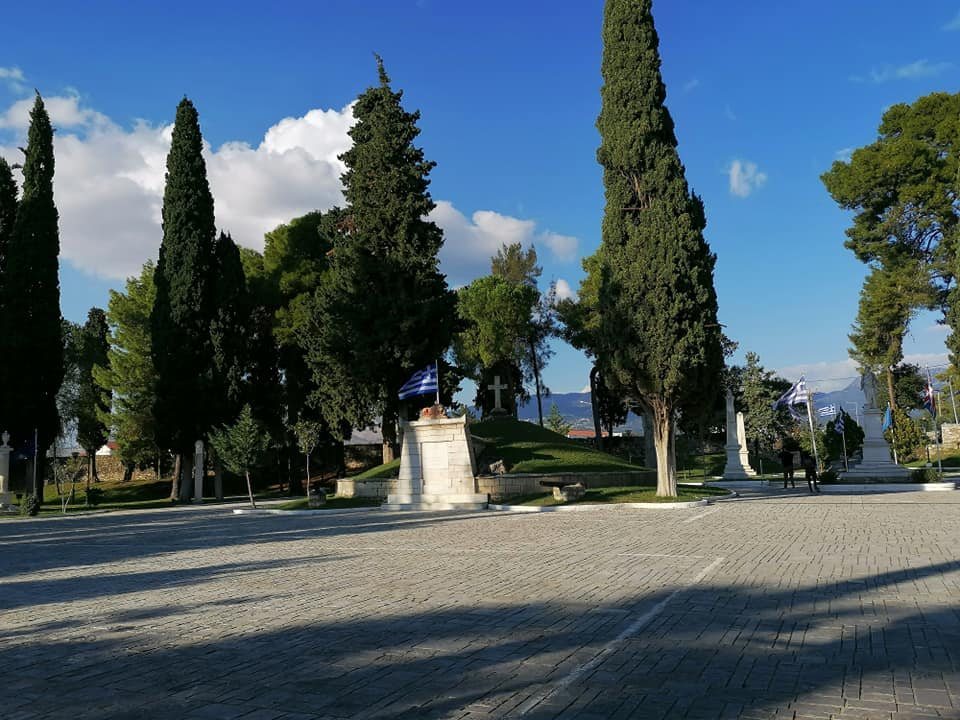
The garden occupies nearly 14,000 square metres on the north side of Messolonghi, beyond the gate at the city entrance. A stone wall encloses the grounds and stands on the remains of the city’s original wall. Tall palms, pines, and eucalyptus grow among mostly lawn-covered areas, with stone-paved paths and wooden benches.
Funerary monuments
The mound of the fallen
The mound stands near the ruins of the Church of St Nicholas. A marble lion crowns it, marking the burial monument at the heart of the garden’s commemoration of those who died in the struggle.
Markos Botsaris’s grave monument
An elevated funerary monument marks Botsaris’s grave. A statue above it is known as The Greek Girl or The Child.
Other monuments and memorials
Columns and collective memorials
The garden contains 69 monuments to Greeks and Philhellenes, foreigners who supported Greek independence, as well as many crosses commemorating people from Messolonghi who fell in the struggle. Columns honor the Gerothanasis brothers, Bishop Joseph of Rogon, fortification engineer Michail P. Kokkinis, Stavros Koutouzis, Ioannis-Iakovos Mayer, Kyriakoulis Mavromichalis, Petros, Andreas, and Kostas Dovas, Gustav Adolf Sass, Dimitrios Sideris, Nikolaos Stournaris, Athanasios Tserpelis, Zinovios Valvis, Theodorakis Grivas, Nikolaos Kasomoulis, Georgios Liolos, Andreas Savvas, Stamos Staikos, and Dimos Tselios. Other memorials commemorate Americans, French, Germans, Italians, Poles, Russians, Philhellenes as a group, and Cypriot fighters.
Busts and statues
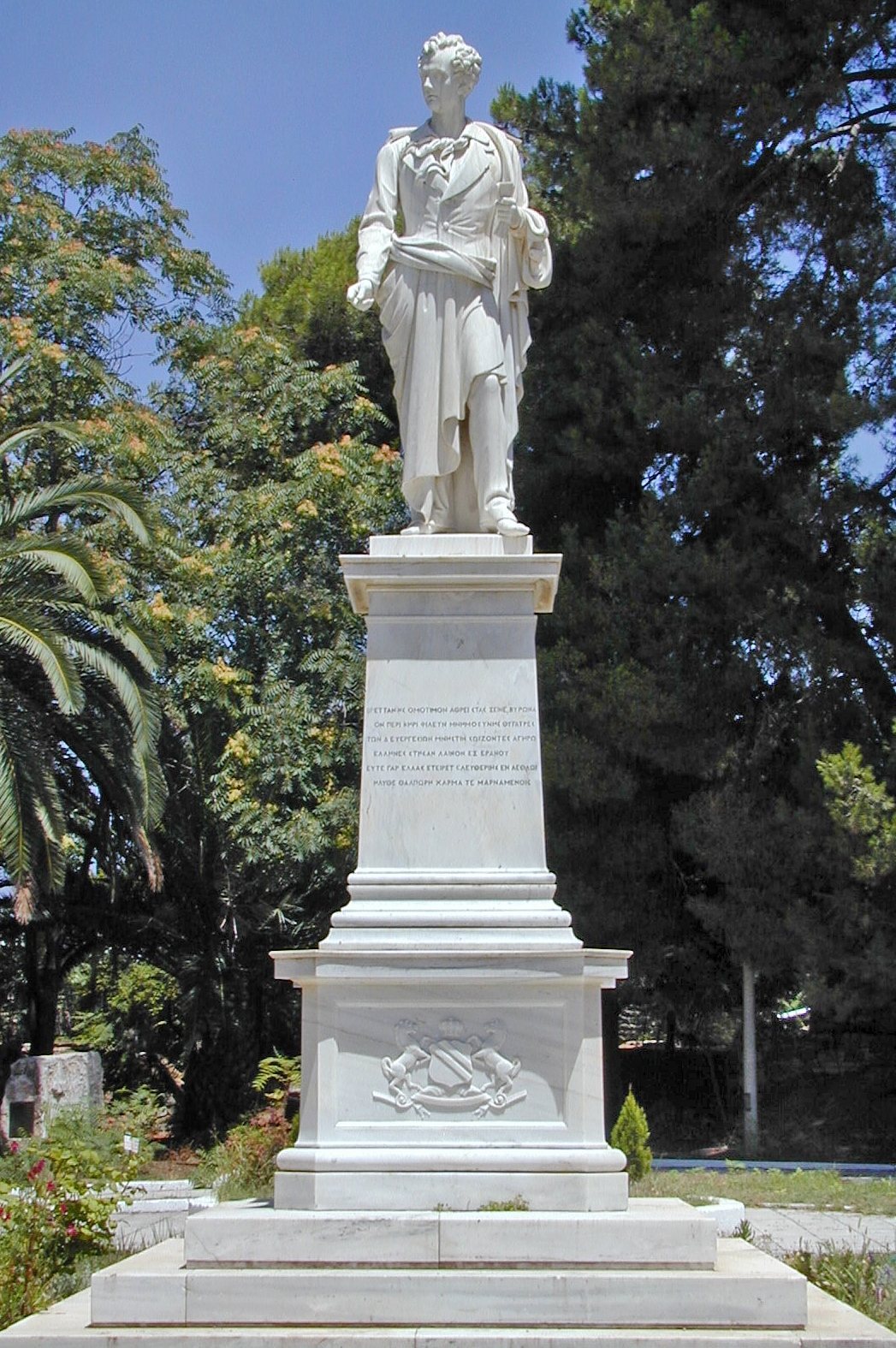
Busts portray Frank Hastings, a British naval officer who supported Greek independence, and Lord Byron, a British Romantic poet and supporter of the Greek cause. Other busts commemorate Dimitrios Themelis, Christos Kapsalis, Spyridon Kontogiannis, Ioannis Papadiamantopoulos, Athanasios Razi-Kotsikas, Dimos Riniasa, Konstantinos Vlahopoulos, Giannis Gounaris, Mitros Deligeorgis, Georgios Kitsos, Mitsos Kontogiannis, Dimitris Makris, Alexandros Mavrokordatos, Notis Botsaris, and Spyros Milios. A separate statue of Byron also stands in the garden.
Crosses and other features
Named crosses commemorate Ioannis Angelis, Dimitrios Korpas, Kostas Pournaras, Andreas Griviorgos, Tousias Zervas, Asimakis Zorbas, A. Kollias, Fotos Bomboris, Georgakis Darbas, Spyros Petaloudis, Plant. Platykas, Spyros Razis, the Italian Razieri, Spyros Skarlatos, Gerasimos Tzornas, Kon. I. Trikoupis, Io. M. Trikoupis, the Italian Pasquale Giacomozzi, and Chrysanthos Moraitis. Other features include Christos Xiromeritis’s funerary chest, the column bearing Kapodistrias’s resolution, a plaque listing the city’s bastions, and a monument incorporating the bastion of Markos Botsaris.