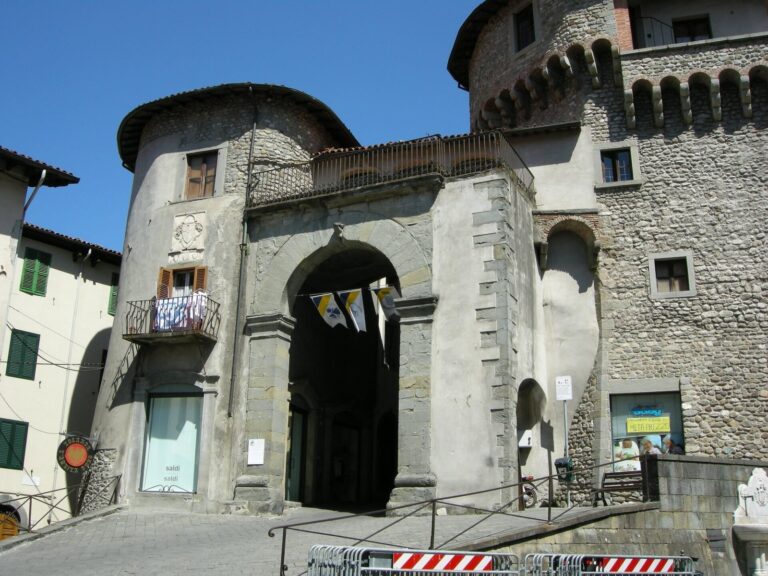
Abbey of Frassinoro: A Benedictine Monastery and Catholic Church
Site at a Glance
- Popularity
- Medium
- Country
- Italy
- Primary era
- Early Modern
- Eras represented
- Medieval, Early Modern
- Civilizations
- Holy Roman Empire
- Site type
- Religious
- Remains
- Church
On this page10 sections
History
The Abbey of Frassinoro is a former Benedictine monastery in Italy, founded on 29 August 1071. Its church remains in Catholic use under the dedications of Santa Maria Assunta, San Claudio, and San Lorenzo.
Early church and hospice
The first church is thought to date to sometime between the seventh and tenth centuries. A small chapel under the authority of the parish of Rubbiano existed by the eighth century and was still present around 930, during the time of Siegfried I. It stood beside the old Via Bibulca, which crossed San Pellegrino Pass toward Lucca on a pilgrimage route to venerate the Volto Santo, a revered image of Christ in Lucca.
Between 1007 and 1052, a hospice for travellers was added, and the church came under the authority of Polirone, a monastery near Mantua.
Foundation and papal authority
On 29 August 1071, Beatrice of Lorraine, also known as Beatrice of Bar, founded the Benedictine abbey. The mother of Matilda of Canossa, a powerful Italian noblewoman, Beatrice established it in memory of her father Godfrey, her husbands Boniface and Godfrey, and her granddaughter Beatrice. The foundation was also intended to protect Matilda, who had lost a daughter on 9 January 1071 and was then in Lorraine with her husband, Godfrey the Hunchback. Beatrice and Matilda endowed the abbey with relics of Saint Claudius the Martyr, meaning remains of the saint or objects associated with him.
In 1077, Beatrice and Matilda transferred the abbey to the pope. It then answered directly to papal authority and held secular jurisdiction over nearby territories called the Lands of the Abbey. In 1107, Pope Paschal II linked Frassinoro to La Chaise-Dieu, a monastery in France. This was probably intended to resolve an internal dispute and reinforce the abbey’s adherence to papal authority and Church reform. Frassinoro’s later history also became connected with that of the nearby Abbey of Montefiorino.
Disputes and decline
From 1210 to 1261, the abbey contested control of territory with the municipality of Modena as the city extended its influence into the Apennines. The abbot eventually gave up the abbey’s secular authority to Modena.
The monastic community ended in 1473, when its last regular abbot, Leonello de’ Nobili, died. Bishops and cardinals thereafter held the abbey as commendatory abbots, receiving its title and revenues while living elsewhere and not leading the community. They divided the abbey’s property and income. A local vicar remained responsible for the buildings and religious services, but the remote complex was neglected and fell into ruin.
Renovation and later administration
In 1575, the church roof was considered close to collapse. Cardinal Alessandro Riario subsequently ordered repairs and reduced the church’s size, establishing its present form. After Riario’s death in 1585, Pope Sixtus V transferred the abbey’s property and revenues to the Maronite College in Rome, an institution associated with the Maronite Christian community.
In 1771, Francesco III d’Este, Duke of Modena, confiscated the abbey’s property and assigned it to the Opera Pia Generale dei Poveri, a charitable institution serving Modena’s poor. The transfer required renovations to the church, bell tower, rectory, and sacristy, and provision for a resident parish priest; the work was carried out. After the charitable institution was suppressed following the establishment of the Kingdom of Italy, its assets passed to Modena’s Congregation of Charity. In 1926, the Congregation sold the church and associated buildings to the parish dedicated to the Assumption of the Virgin Mary, within the Dragone vicariate of the Diocese of Modena-Nonantola.
Remains
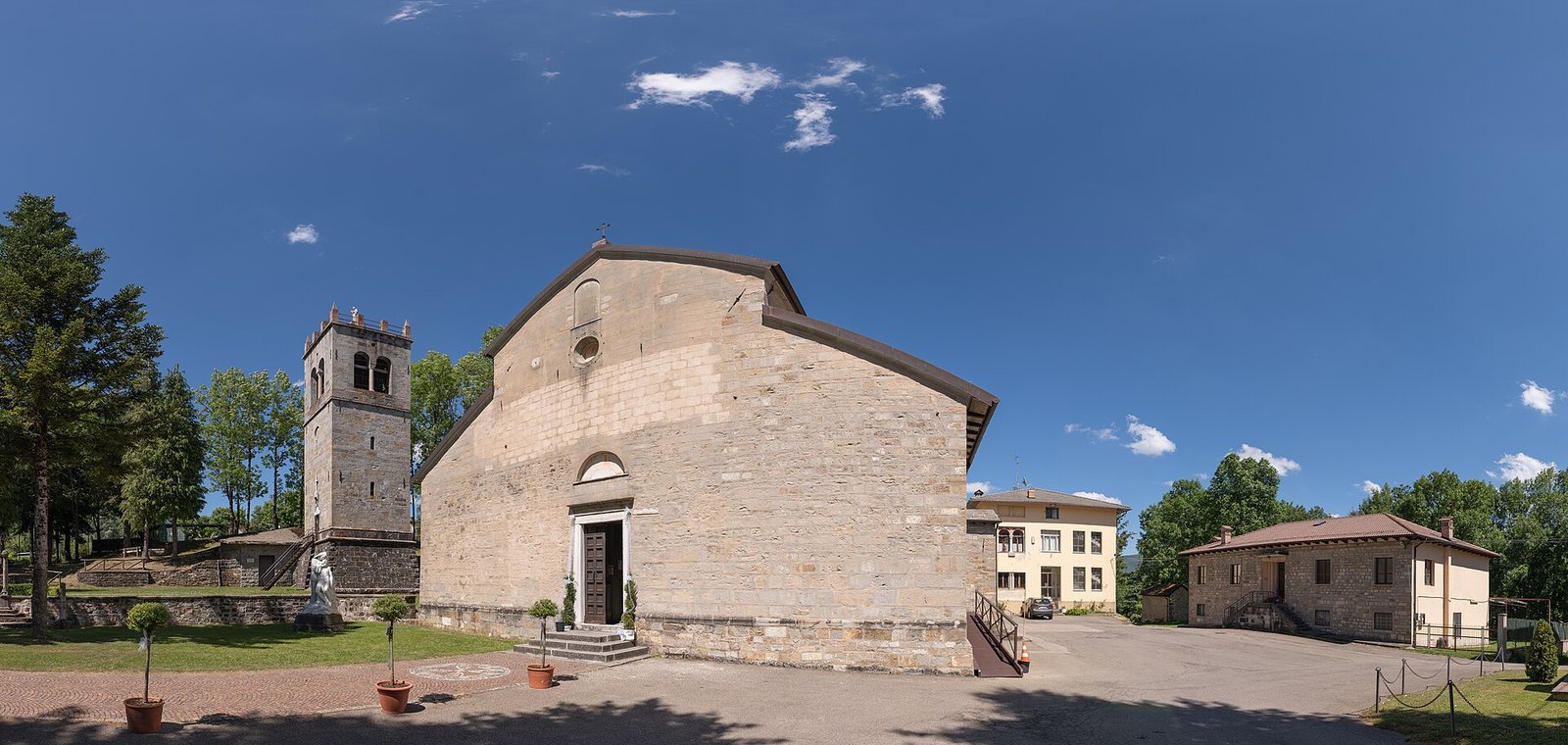
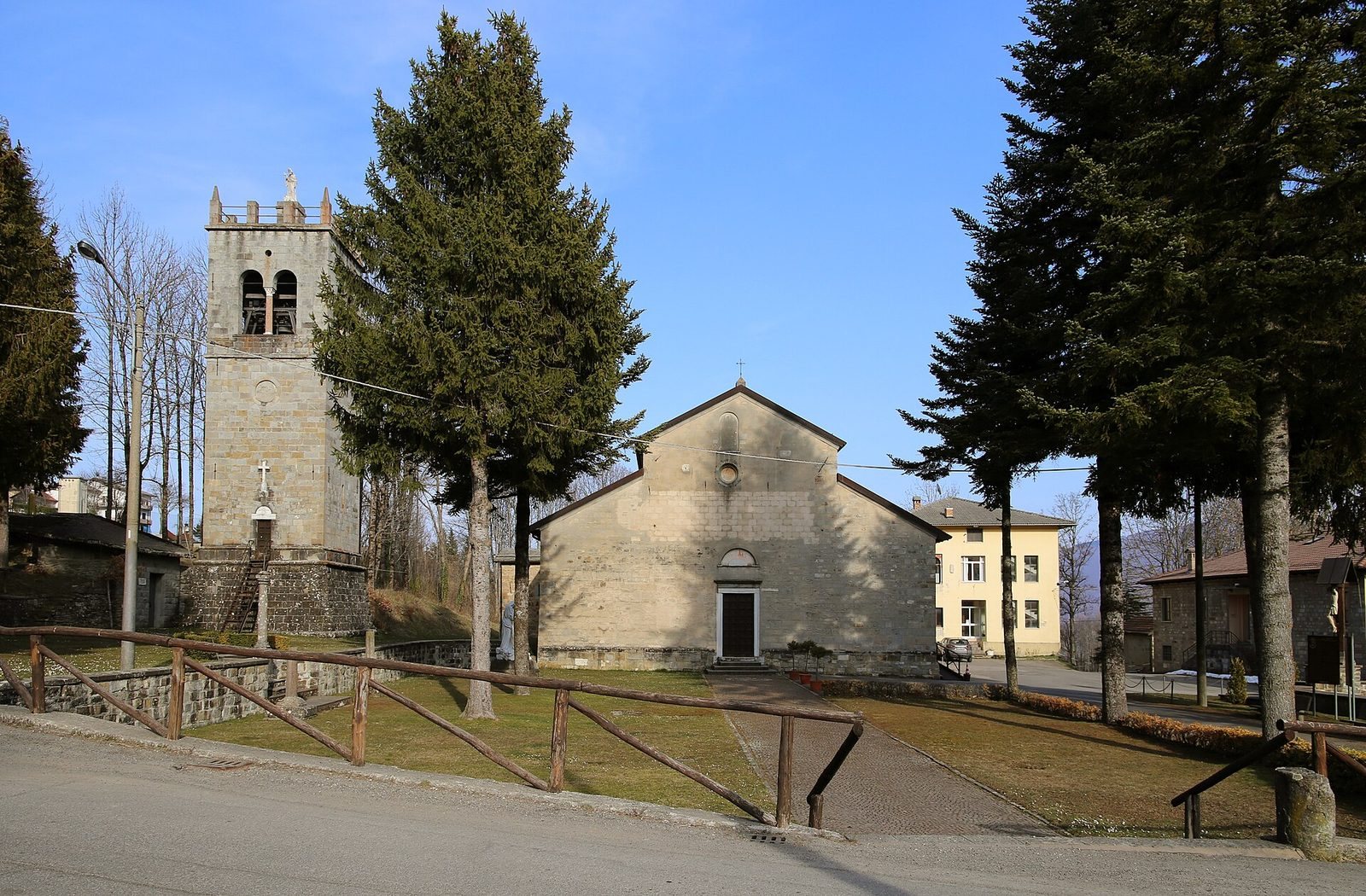
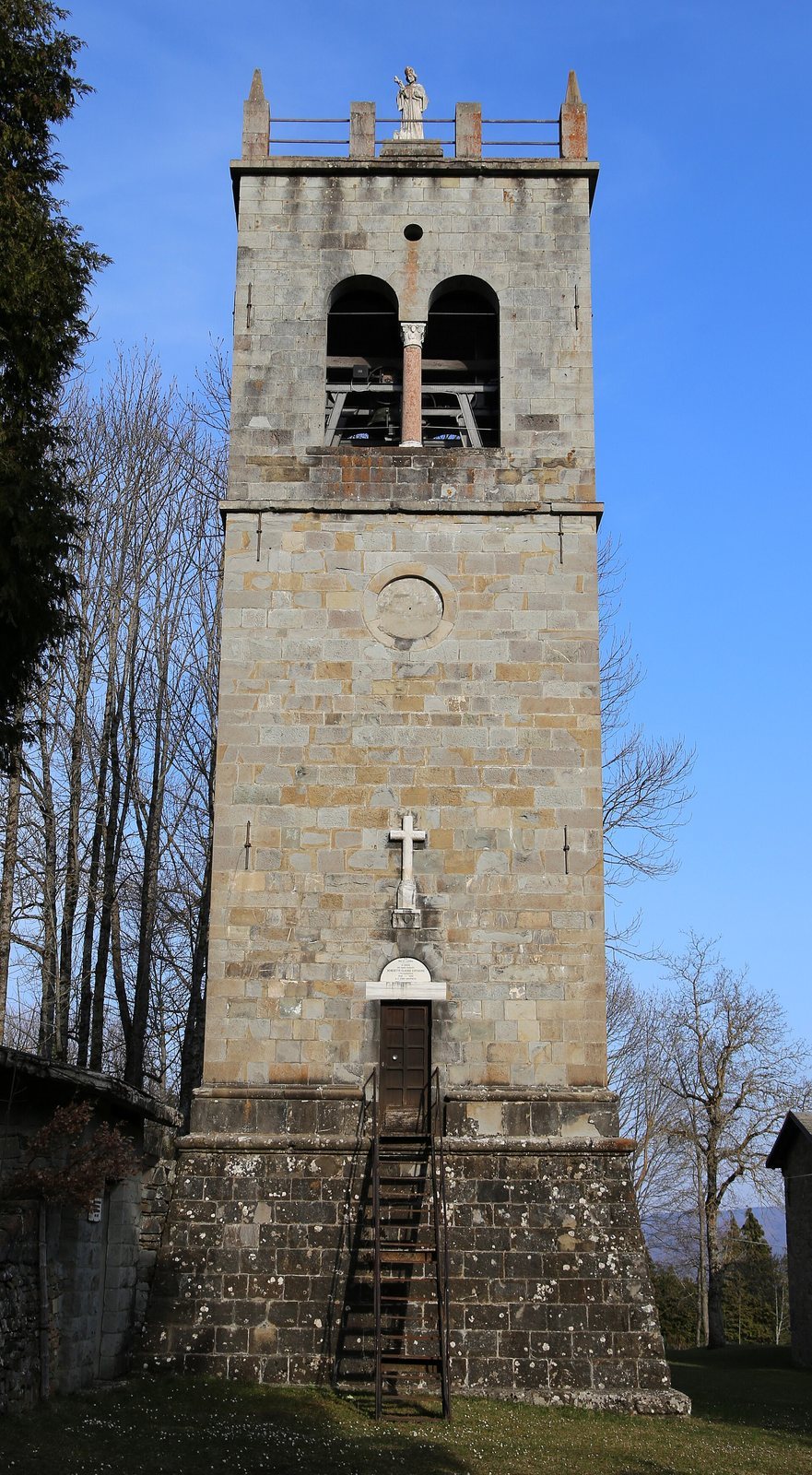
The surviving complex includes a church built over the abbey’s old foundations, a separate bell tower, and a rectory across from the church. The church has a three-aisled basilical plan, with a central nave flanked by side aisles.
Church and associated features
Church structure
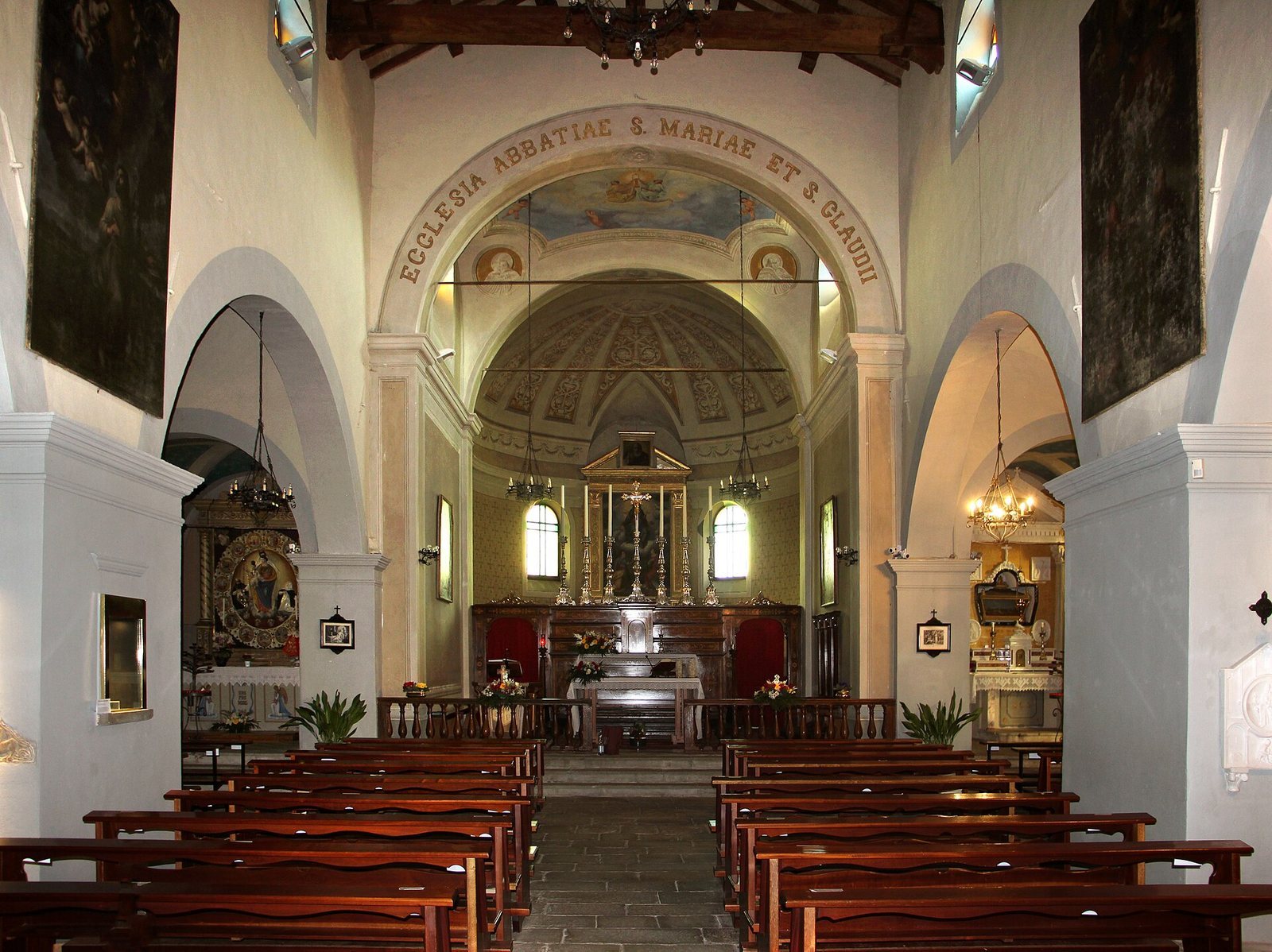
Rectangular piers support broad arcades within the church. The central nave ends in a semicircular space and has a timber roof, while the side aisles have round-arched vaulted ceilings. The rectory façade incorporates ancient fragments.
Bell tower
The bell tower stands apart from the church. Its upper section has paired openings framed by columns with ancient capitals, the carved upper parts of columns.
Fragments and furnishings
Display cases inside the church hold architectural pieces from the former abbey. These include reliefs and holy-water basins made from reused capitals, some possibly originating in a cloister, a covered walkway around a monastery courtyard. The church also contains a dove-shaped vessel for consecrated hosts and a gilded-copper plate used in the Eucharist. The plate is decorated with enamel set into recessed areas and glass paste, and may be work from Limoges dating to the eleventh century.
Behind the altar hangs a painting of the Assumption, attributed to artists of the Emilian school and dated to the late sixteenth century. Other liturgical objects associated with the abbey and dated to the eleventh and twelfth centuries are held in the Civic Museum of Modena.