Gaming Charterhouse: A Carthusian Monastery in Austria
Site at a Glance
- Popularity
- High
- Country
- Austria
- Primary era
- Medieval
- Eras represented
- Medieval, Early Modern, Modern
- Civilizations
- Duchy of Austria, Habsburg, Holy Roman Empire
- Site type
- Religious
- Remains
- Monastery
On this page17 sections
History
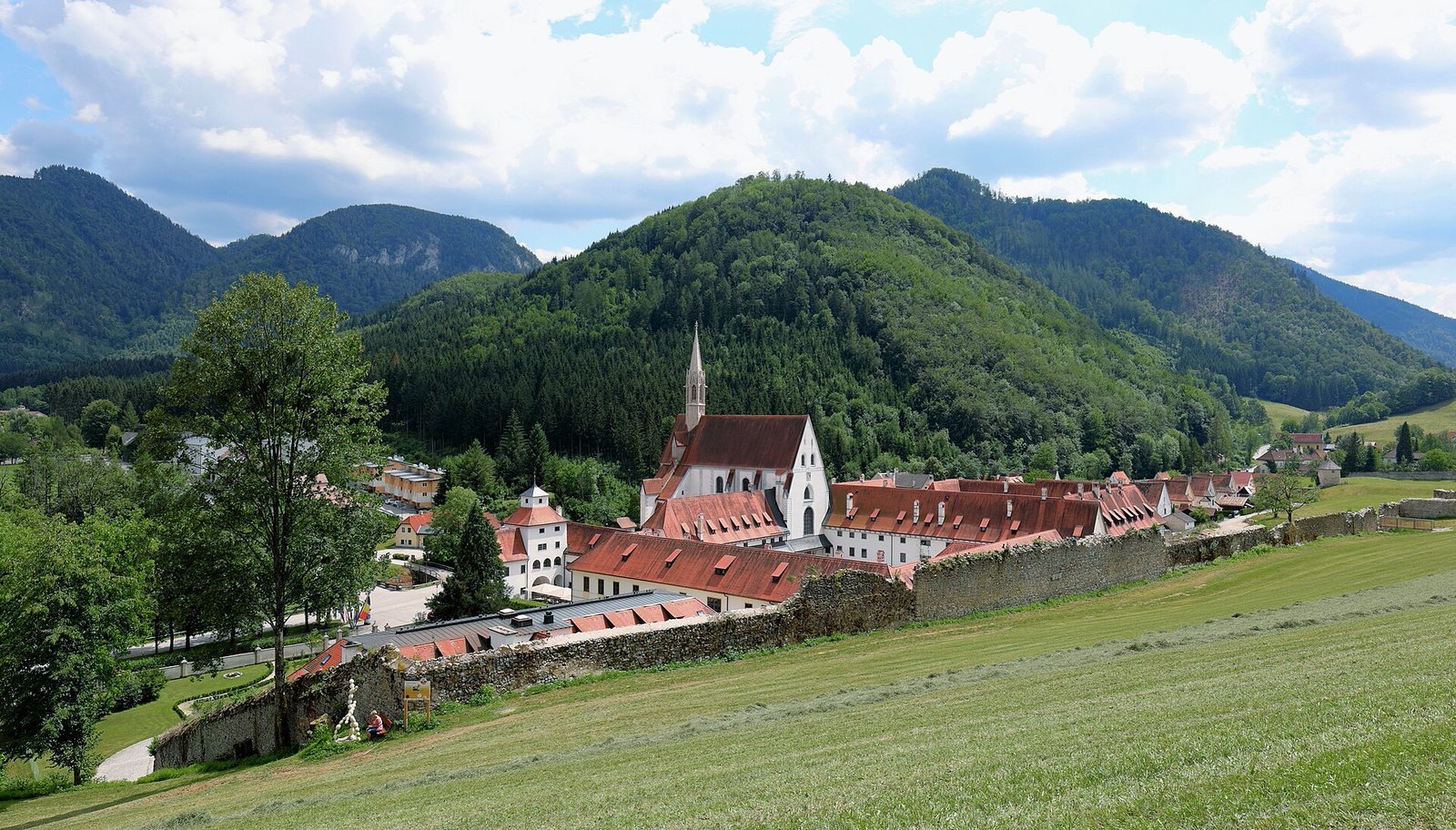
Gaming Charterhouse, a Carthusian monastery whose monks combined communal worship with solitary life in individual cells, is in Gaming, Lower Austria, Austria. Albert II, Duke of Austria, founded it in 1330 as a burial place for his dynasty. At times, it ranked among Europe’s largest Carthusian houses.
Foundation and dynastic burial
The foundation fulfilled a vow Albert had made with his brother Leopold before the Battle of Mühldorf in 1322, fought between supporters of rival claimants to rule in the Holy Roman Empire, Louis the Bavarian and Frederick the Fair. A later story that the brothers promised to build the monastery to secure Frederick’s release from captivity is considered unfounded. Leopold had first planned a monastery at Malters, near Lucerne. After his death in 1326, Albert chose Gaming, in part to establish a ducal burial place in the Austrian lands, distinct from the Habsburg family burial site at Königsfelden.
Frederick’s death in January 1330 and Albert’s serious illness two months later probably hastened the foundation. Albert selected the Carthusian order, likely with the influence of Gottfried, prior of Mauerbach Charterhouse and an associate of the duke. Monks from Mauerbach formed Gaming’s first community. Albert laid the foundation stone on 13 August 1332. The house joined the Carthusian order in 1337, when monastic life was already possible; its chapter house was consecrated in 1340 and its church on 13 October 1342.
The monastery was designed for 24 monks, twice the usual number in a Carthusian house. Albert, local nobles, and the town of Scheibbs endowed it generously. Its estates and rights extended across the Gaming area, Scheibbs, Lake Lunzer, parts of Styria, Baden in Lower Austria, and Vienna. These included mining rights and authority in territorial courts, helping make Gaming one of the region’s wealthiest monasteries.
Albert’s wife, Joanna of Pfirt, was buried at Gaming after her death in 1351, and Albert joined her in 1358. Their daughter-in-law Elizabeth of Bohemia was buried in the family tomb in 1373; no later Habsburg burials took place there. The monastery also secured confirmations of its property rights and privileges. Charles IV confirmed a provision in its foundation charter in 1352 and renewed the confirmation with a golden bull in 1357. Albert’s sons Rudolf IV and Albert III confirmed its privileges and possessions in 1358 and 1371.
Scholarship and expansion
Gaming developed strong literary and scholarly ties with the University of Vienna, which continued to the end of the fifteenth century. Conrad of Hainburg, a Carthusian writer, served as prior in 1350–54 and 1358–60. In 1375, monks from Gaming established a Carthusian house at Königsfeld, near Brno.
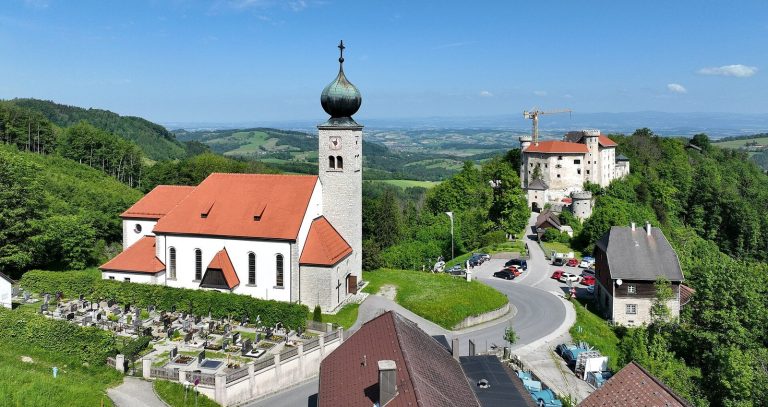
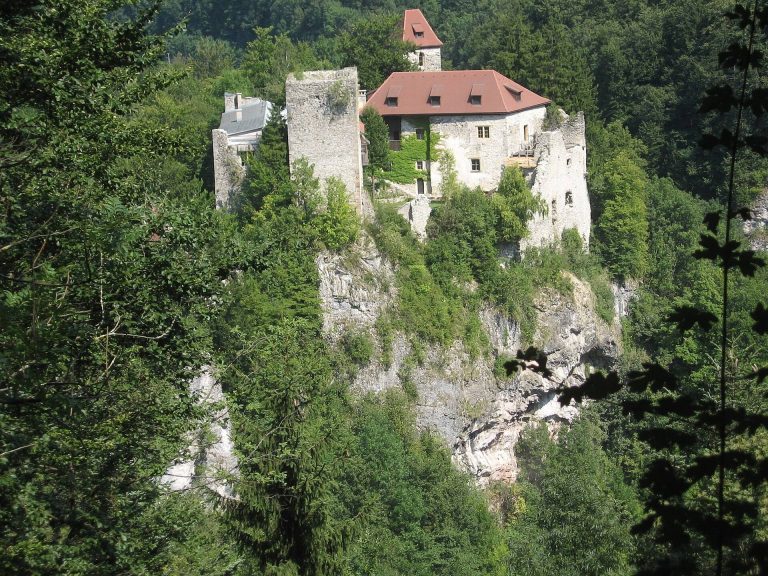
The monastery also extended its influence across the surrounding region. In 1357, a multi-part hilltop castle complex known as Haus ze Hippleinsdorf passed to Gaming; its transfer may help explain why the site was abandoned or not further developed. Gaming acquired other medieval castles, including Scheuernberg, Liebegg, Jeßnitz, and Frankenstein, and had them demolished with rebuilding prohibited. Scheibbs served as the area’s secular centre while Gaming was its spiritual one, and the prior held a seat at Scheibbs Castle.
Gaming reached a high point under Priors Nikolaus Kempf, in office from 1451 to 1458, and Sigismund, who led the house from 1458 to 1483. Under Sigismund, 39 professed monks lived at Gaming, while another 13 served as priors or guests at other monasteries. Nine monks from Gaming held priories elsewhere. The community grew larger than the Carthusian order’s principal house, La Grande Chartreuse near Grenoble.
Conflict and rebuilding
In 1529, at the direction of the future Emperor Ferdinand I, Gaming surrendered a quarter of its wealth as a contribution to the war against the Ottomans. Its properties around Vienna suffered losses during the Ottoman wars, but the advance was turned back before it reached Gaming, leaving the monastery itself undamaged. Few monks left during the Reformation, but the house faced unrest among its Lutheran subjects. Prior Paulinus Maringius was humiliated twice during this period; conditions later settled and monastic life recovered.
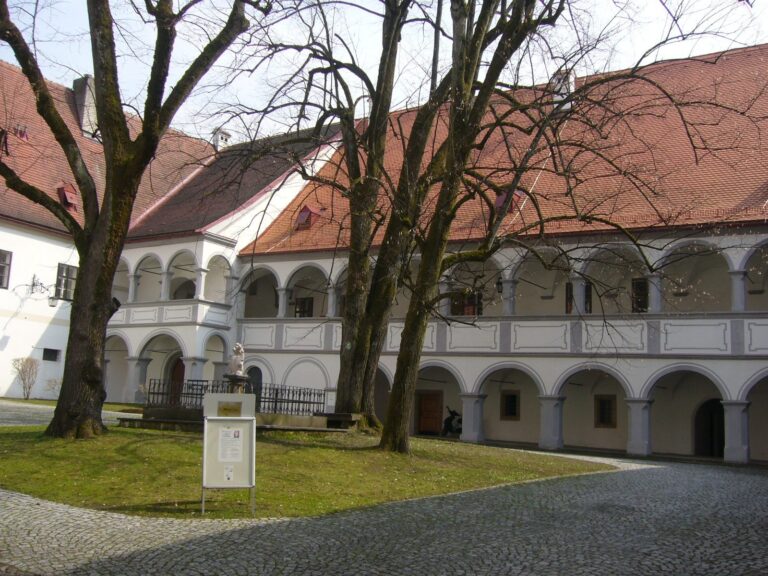
Building work gathered pace from the late sixteenth century. Arcades were added to the east range of the Prelate’s Court in 1585, 1591, and 1597, and an inner portal was made for the Carthusian cellar. During Prior Hilarion Danichius’s tenure, from 1609 to 1640, the monastery undertook broader rebuilding and furnishing. Work included the Prelate’s and Library Courts, a new library, the enlargement of four cell buildings, a new church portal, and decoration of the Prelate’s Hall.
In 1670, Emperor Leopold I gave Carthusian priors the rank of prelate, a senior church dignity, without episcopal liturgical insignia. Gaming’s regional role also continued. A monastery and church were established at Scheibbs in 1678–84, and Gaming administered the parish there. The parish church at St. Anton an der Jeßnitz was built with its original altars from Gaming’s monastery church.
Under Prior Joseph Kristelli, who led the house from 1702 to 1739, the library was expanded and received an elaborate Baroque interior. Prior Johann VIII Jerumb oversaw the remodelling of the church interior from 1742 to 1746.
Dissolution and changing ownership
Emperor Joseph II dissolved Gaming Charterhouse by decree on 27 January 1782, as part of his suppression of many monasteries. The commission charged with carrying out the order had arrived the previous evening. The monks were dispersed, useful furnishings were removed, and the church was badly damaged. Agricultural buildings and livestock were auctioned, most employees were dismissed, and the buildings began to deteriorate without maintenance.
The founders’ remains were transferred to Gaming parish church in 1797. Count Albert Festetics de Tolna bought the charterhouse in 1825. His son later sold much of its hunting land to a forestry company. After the company collapsed in 1875, the property passed to banker Albert Salomon Anselm von Rothschild, who used it as a hunting lodge. Melk Abbey acquired the charterhouse in 1915.
Restoration and new uses
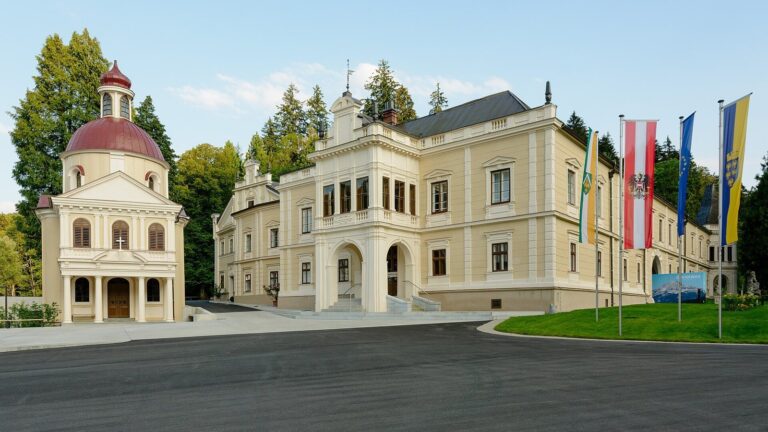
Melk Abbey sold the charterhouse, apart from its forest, to architect Walter Hildebrand in 1983. He undertook its restoration and supported exhibitions and scholarly activities. The founders’ remains returned to the former monastery church in 1985, and a museum about Gaming Charterhouse and the Carthusians opened in 2004. A Greek Catholic Byzantine chapel was consecrated in 2007. The complex has also been adapted for hotel, conference, and university uses, including by the European branch of Franciscan University of Steubenville.
Remains
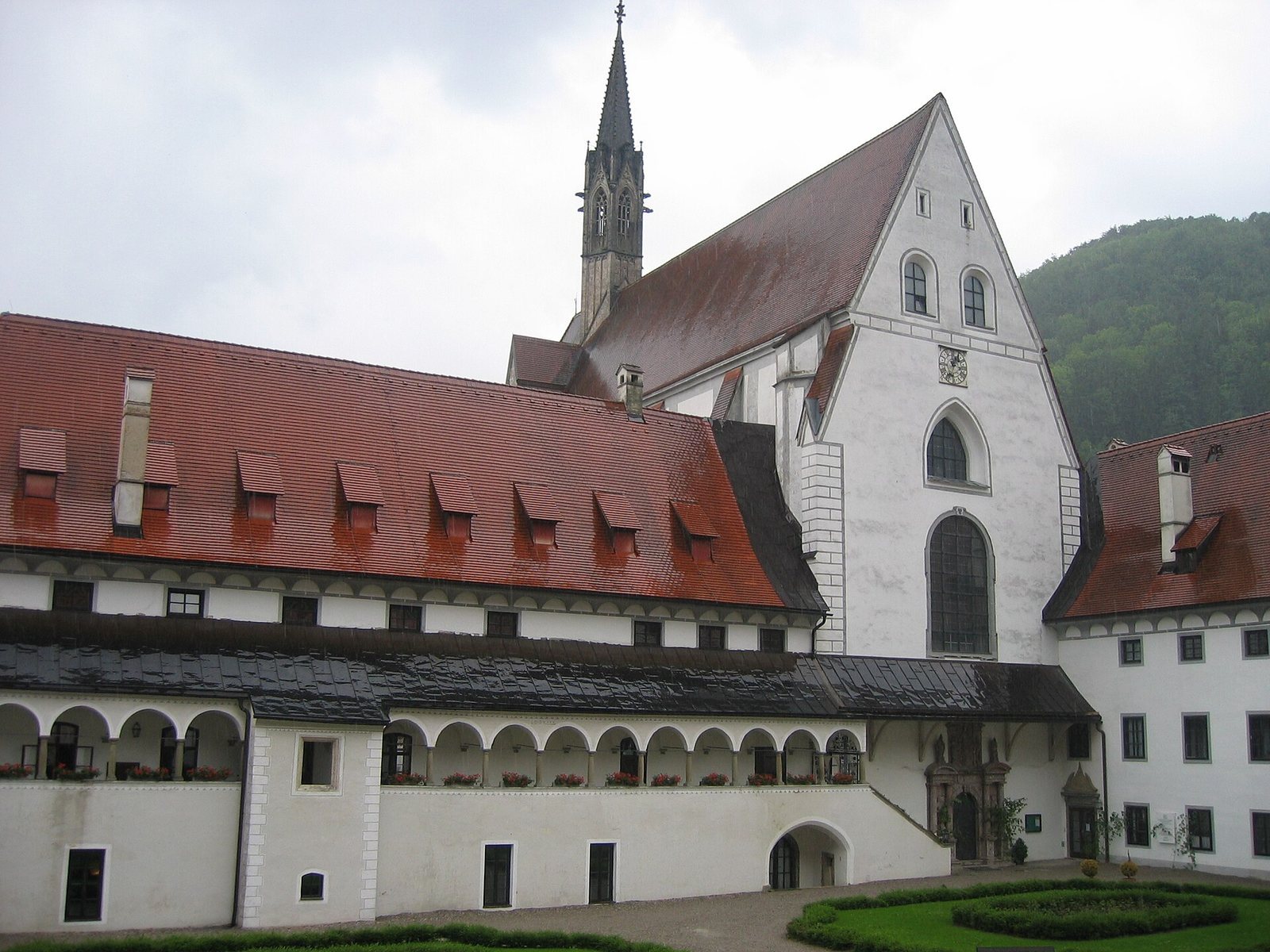
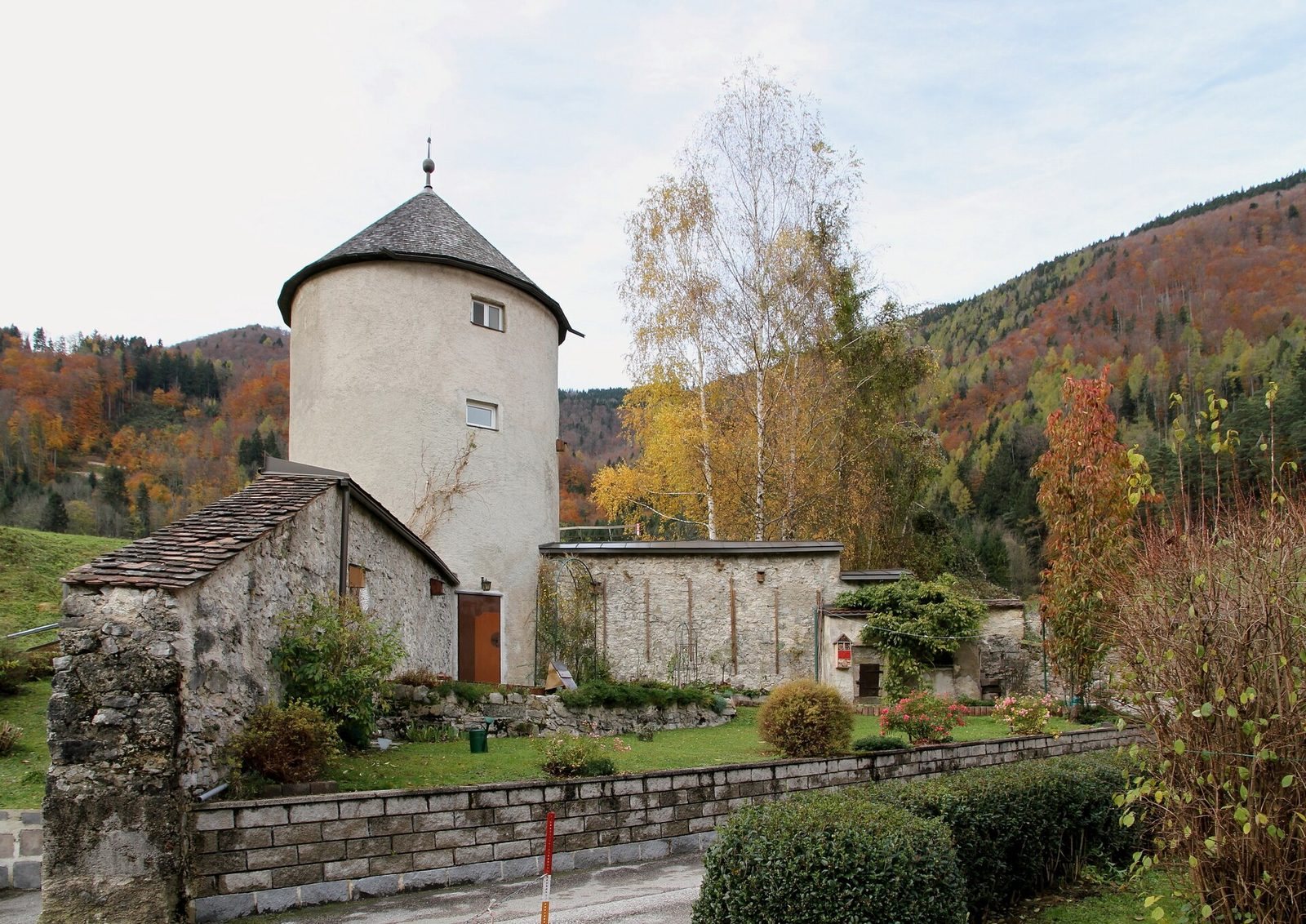
The church and monastery were built for a community of 24 monks, with 24 individual cells rather than the usual 12. The complex includes the main church and large monastery court, along with the Prelate’s and Library Courts. Its surviving structures and decoration reflect building campaigns from the medieval period through the Baroque remodelling of the eighteenth century.
Church and burial
Main church
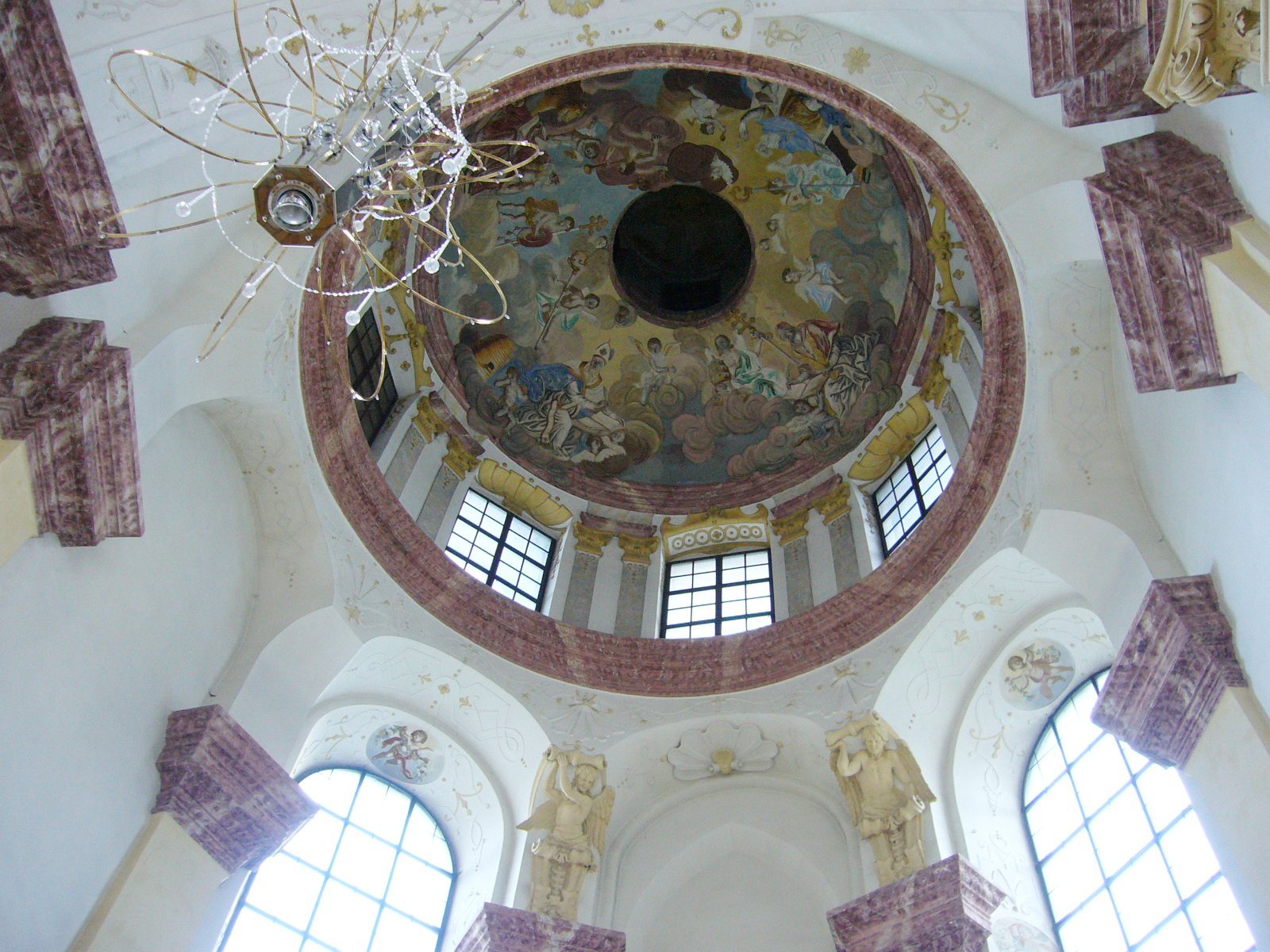
The church retains almost all of its original coloured rib vault, a ceiling supported by intersecting masonry ribs. About six metres below it is a later, late-Gothic net-rib vault, whose ribs form a mesh-like pattern. Vienna master builder Laurenz Spenning inserted this vault, and a complete set of architectural drawings for the work survives. The church portal is made of Peutenburg marble. Its interior includes stucco, frescoes, and furnishings from the remodelling of 1742–46.
Founders’ tomb
The founders’ tomb stood in the church choir, directly before the high altar. Its original design is unknown. Coffins found there in 1739 were large and made of wood, with heavy metal fittings and lead epitaph plaques. The plaques named the people buried there and gave their death dates, titles, children, and burial place. They also bore the arms of Austria, Styria, Pfirt, and Carinthia. The duke’s inscription includes the words “hoc est verum,” a phrase associated with the involvement of his son Rudolf IV in composing the text. After disappearing following the monastery’s suppression, the plaques were rediscovered in 1985 when the burial place at Gaming parish church was opened.
Courts, library, and cells
Prelate’s Court
The east range of the Prelate’s Court has arcades added in 1585, 1591, and 1597. The west wing also has arcades and a central projection, as well as the inner portal to the Carthusian cellar. The courtyard façades of this court and the Library Court were remodelled. The Prelate’s Hall has stucco decoration, while the church portal and enlarged cell buildings belong to the rebuilding under Prior Hilarion Danichius.
Library
The library occupied a new building whose portal bears the date 1619; the west tract of the Library Court was also adapted for library use. Its Baroque decoration includes frescoes by Wenzel Lorenz Reiner dated 1723, stucco marble and stucco work by Balthasar Haggenmüller, and paintings in the window recesses by J. G. Schreyer.
Monks’ cells
Four cell buildings at the southern end of the west wing of the large monastery court were enlarged into double-cell houses. This alteration formed part of the seventeenth-century rebuilding programme.
Chapels and associated features
Cemetery chapel
The former cemetery chapel, dedicated to the Holy Trinity and now secularized, stood in the northeastern part of the large monastery court. Its design included two small side chapels projecting like transepts, echoing the paired side chapels in the choir of the main church.
Byzantine chapel and transferred altars
The Greek Catholic Byzantine chapel is in the west wing of the main court. Its icons were made by Ioan Gotia of Romania and Tomas Labanic of Slovakia. The original altars from the monastery church are now in the parish church at St. Anton an der Jeßnitz.