Church of the Holy Trinity, Košice: A Jesuit and University Church
Site at a Glance
- Popularity
- Medium
- Country
- Slovakia
- Primary era
- Early Modern
- Eras represented
- Early Modern, Modern
- Civilizations
- Austrian Empire, Habsburg, Hungarian
- Site type
- Religious
- Remains
- Church
On this page9 sections
History
The Church of the Holy Trinity is an early Baroque Roman Catholic church in Košice, Slovakia, built for the Jesuits between 1671 and 1681. Its history is tied to the Catholic revival in a predominantly Protestant city, the memory of three clergy killed in 1619, and the nearby university that gave the church its alternative names, the School Church and University Church.
The Royal House and the Košice martyrs
A Royal House, the seat of the Royal Chamber, once stood on the site. The Chamber was a royal administrative and financial institution. In 1618, during the Counter-Reformation, the Catholic Church’s response to the spread of Protestantism, Upper Hungarian captain Ondrej Dóczy arranged a residence and chapel there for Jesuits, members of the Society of Jesus. They served Košice’s Catholic minority.
In early September 1619, during the Thirty Years’ War, a European conflict fought from 1618 to 1648, forces associated with George I Rákóczi took control of Košice. They arrested three clergy linked to the chapel: Jesuits Melchior Grodziecki and Stephen Pongrácz, and canon Marek Križin, a member of the clergy of a cathedral or collegiate church. Accused of treason, including inviting Polish forces, the three were imprisoned and tortured, and all died in the persecution. Their deaths became known as the martyrdom of the Košice martyrs, who are venerated as saints.
Jesuit church and later custodianship
The Royal House was abandoned, and the Royal Chamber moved to new premises elsewhere in Košice. Zsófia Báthory, wife of George II Rákóczi and daughter-in-law of George I, later bought the ruined building and had it demolished for a Jesuit church. The project was intended to make amends for events of the Thirty Years’ War. Nearby, Bishop Benedict Kishdy founded Košice’s first university in 1657; it was then the country’s second university. The church’s connection with the institution is reflected in its names, the School Church and University Church.
Construction began in 1671, and the church was opened and consecrated in 1681. Its design followed Il Gesù, a Jesuit church in Rome that influenced Baroque church architecture. The Jesuits belonged to the church from 1671. A fire damaged it in 1700, and it was fully renovated afterward. Following the suppression of the Jesuit order in 1773, the church passed to the Premonstratensians in 1811. They administer it as part of the Premonstratensian Order of Jasov Abbey, within the Roman Catholic Archdiocese of Košice. A second fire damaged the church in 1793, followed by another full renovation. Slovakia designated it a National Cultural Monument in 1963.
Remains
Exterior
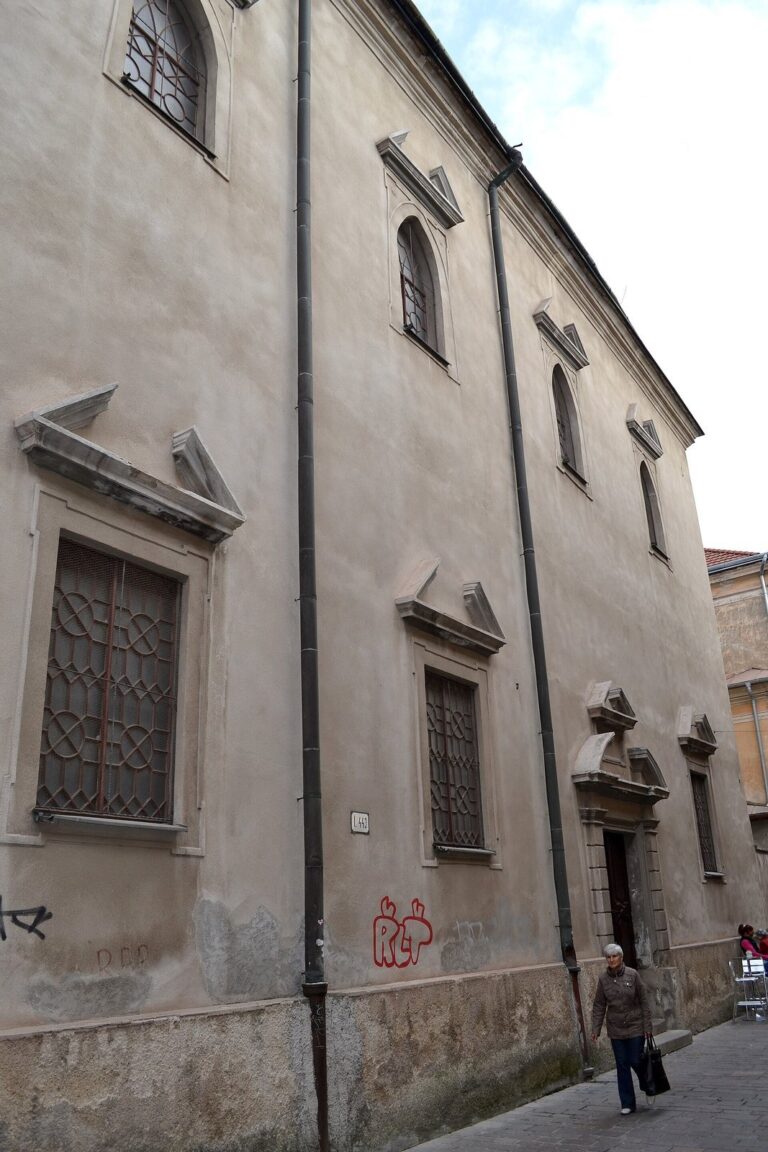
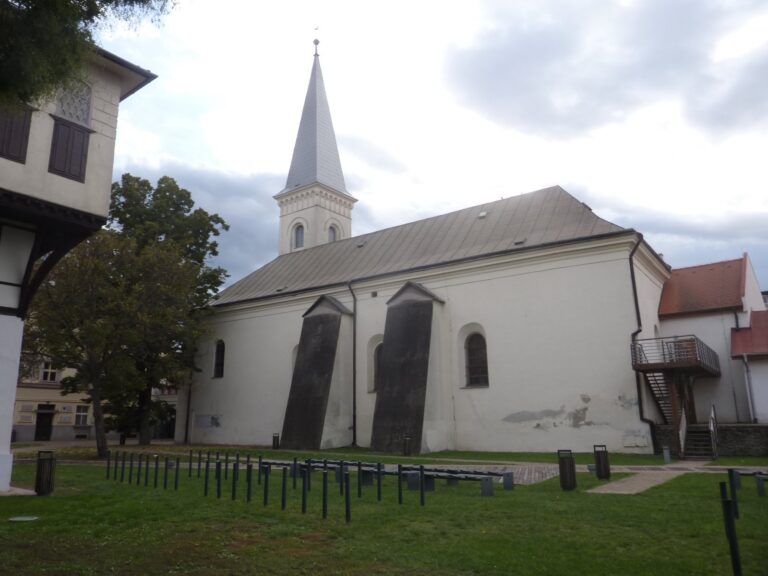
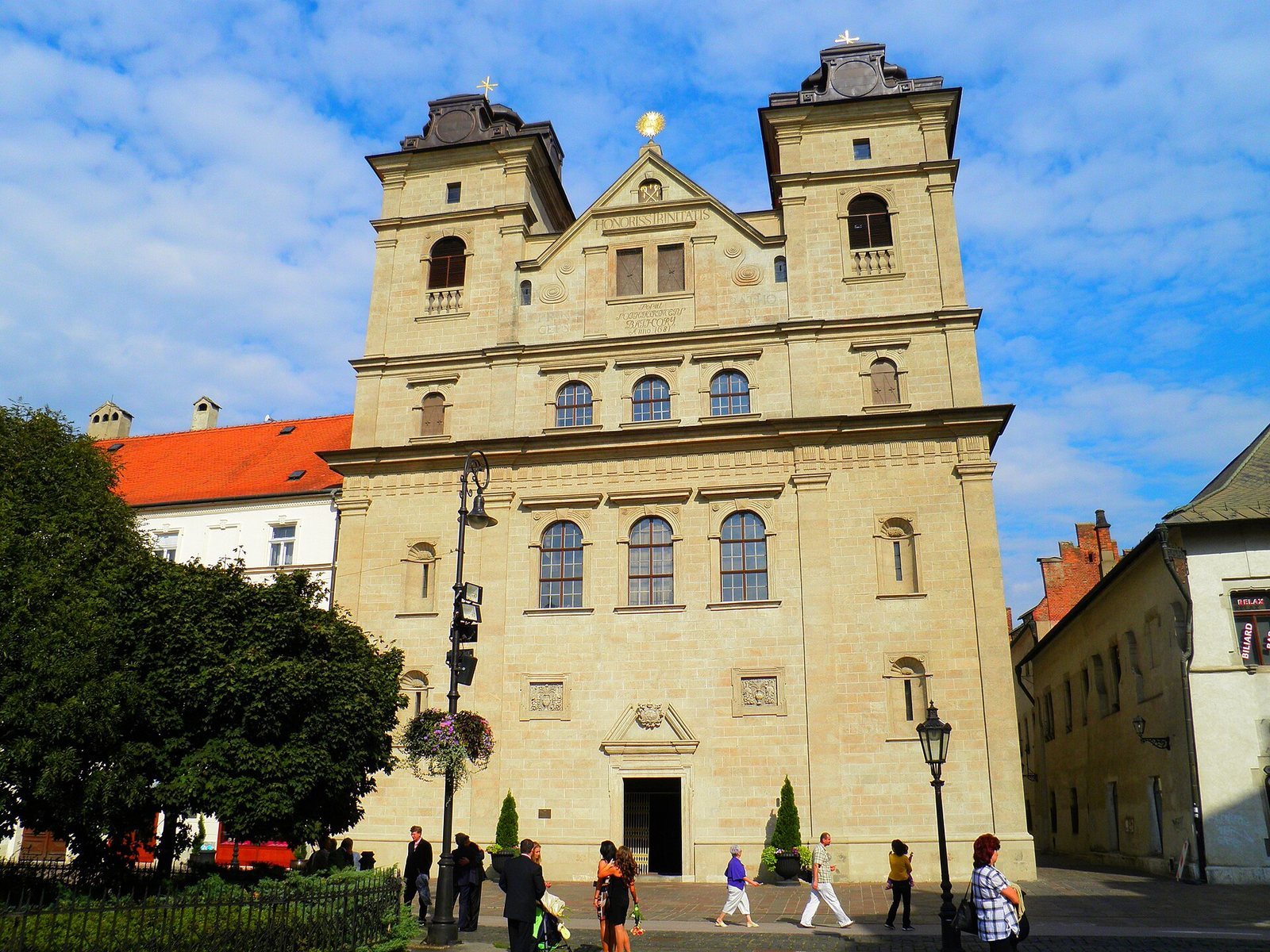
The substantial stone church has a single nave and two towers. It stands on Hlavná Street at the corner of Univerzitná Street, a short distance from the Cathedral of St Elisabeth. Renaissance features survive on its façade, including niches with shell-shaped vaulting and framed panels decorated with carved flowers. Above the entrance, the gable bears sculpted coats of arms of the Báthory and Rákóczi families. A Latin inscription there commemorates Zsófia Báthory as the church’s founder.
Nave and sanctuary
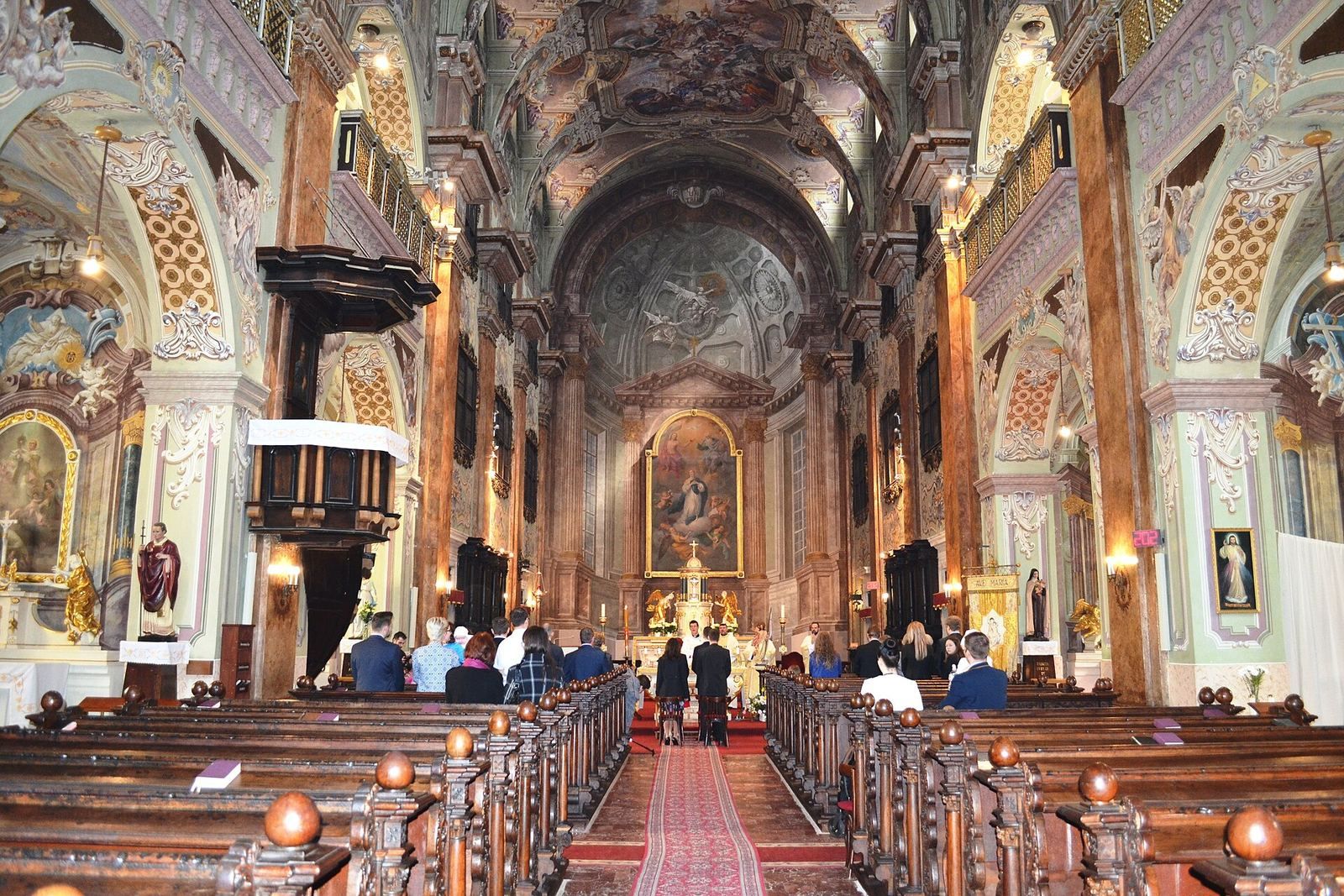
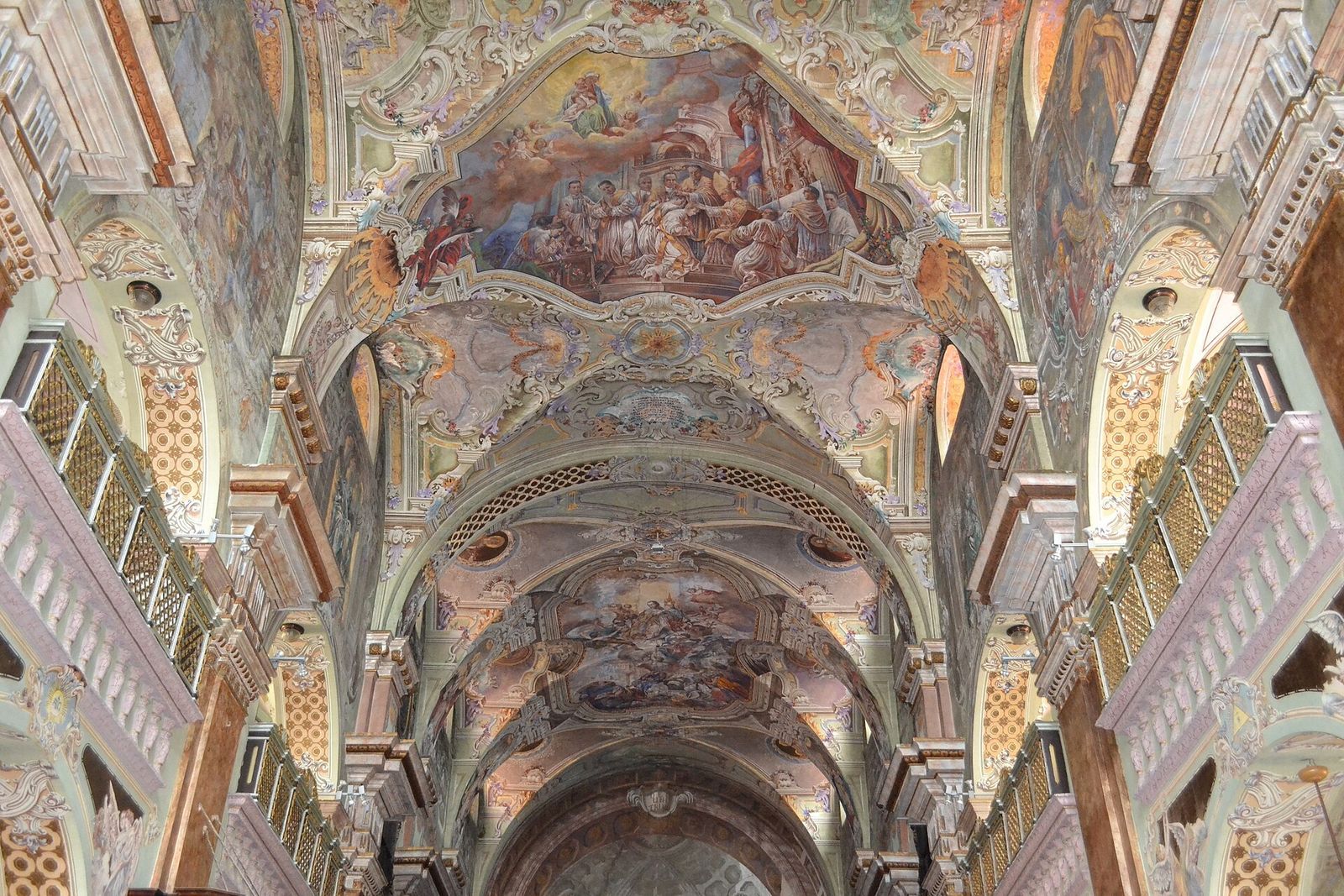
The interior follows a Baroque layout, with an extended sanctuary and three chapels containing side altars. Oratories, enclosed prayer spaces, open above the chapels onto the main nave. The decoration is notably simple and retains its Jesuit character.
Paintings and altar
An illusionistic painting by Erasmus Schott, dated 1786, uses perspective to create an impression of three-dimensional depth. The main altar’s decoration, made by painter Jozef Pešky in 1854, depicts the Holy Trinity, the Christian doctrine of one God in three persons.
Carved furnishings
Fine carving appears on the pews, pulpit, window frames, and oratories. The side altars, sanctuary stalls, and carved pews date from the last quarter of the seventeenth century.
Memorial and burial crypt
A wooden epitaph to Francis I Rákóczi, dated 1676, is fixed to the sanctuary’s north wall. The burial crypt was originally intended for the Rákóczi family. Zsófia Báthory and her son Francis I are buried there.