Calden II Gallery Grave: A Prehistoric Burial Chamber in Germany
Site at a Glance
- Popularity
- Very Low
- Country
- Germany
- Primary era
- Stone Age
- Eras represented
- Stone Age
- Civilizations
- Unclassified
- Site type
- Burial
- Remains
- Tomb
On this page9 sections
History
The Calden II Gallery Grave is a prehistoric megalithic burial chamber near Calden in northern Hesse, Germany. Radiocarbon dates from human bones place burial activity around 3100 BC, later than at nearby Galeriegrab I. The evidence does not support construction substantially earlier than 3200 BC.
Dating and relationship to Galeriegrab I
The grave’s date accords with pottery from use phase B of the nearby Calden earthwork, a human-made structure formed chiefly from earth, and with the dating of deeply incised pottery. Galeriegrab I is dated to around or before 3400 BC, near the beginning of the Wartberg culture, a prehistoric culture centered in Hesse and neighboring parts of central Germany.
The two graves share architectural and burial traditions, and their burial practices and grave goods closely correspond. Their connection places Calden II within a wider local tradition of gallery-grave construction and burial.
Later activity
The beginning of the grave’s dismantling is unknown. Beaker pottery found above a displaced wall stone indicates activity at the site during the Single Grave culture, a prehistoric Central European culture named for individual grave burials, around 2800 to 2300 BC.
At the end of the Middle Bronze Age, around 1600 to 1300 BC, a stone was removed and a fire lit in the resulting pit. After the embers had cooled, a six-month-old sheep was placed there and covered with stones. A nearby wall stone may also have been deliberately sunk as part of these activities. Concentrated pottery fragments point to further activity into the Iron Age. In the High Middle Ages, the massive stone at the southeastern end of the grave was removed.
Discovery and investigation
A water-pipe trench cut through the grave in 1969, exposing quartzite blocks and human bones. A later inspection raised the possibility that the remains formed a gallery grave, and trial trenches confirmed the identification. From 1990 to 1992, the grave was investigated alongside the Calden earthwork.
Remains
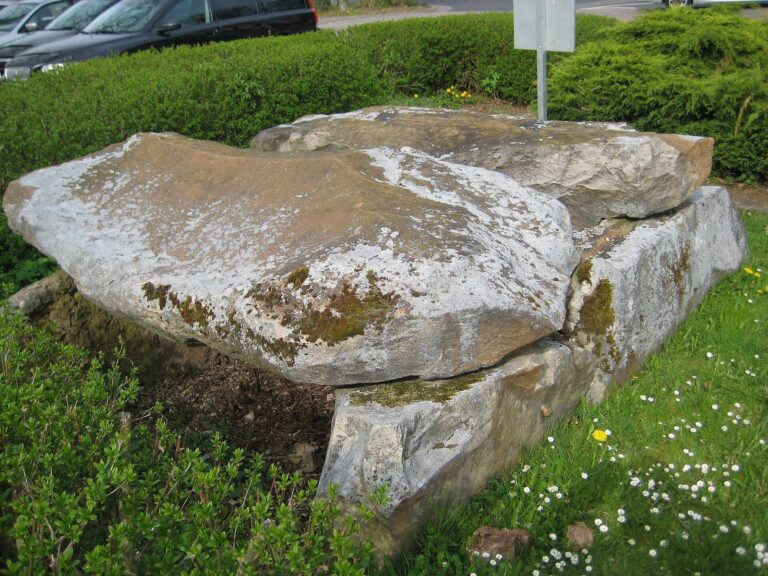
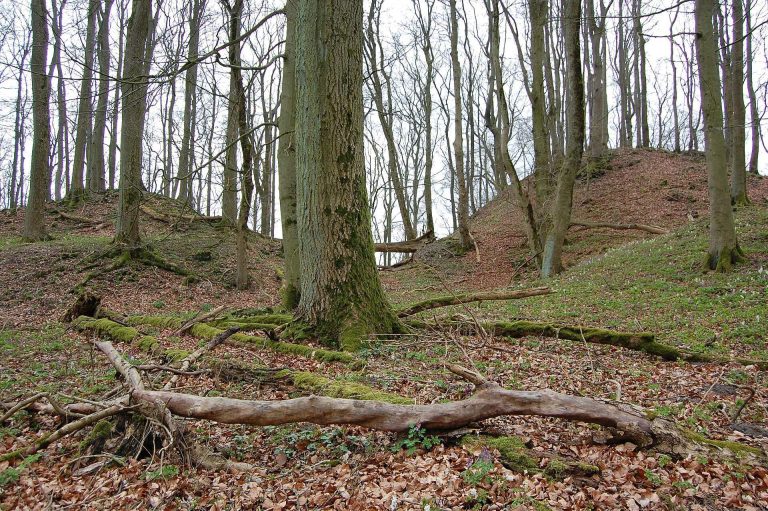
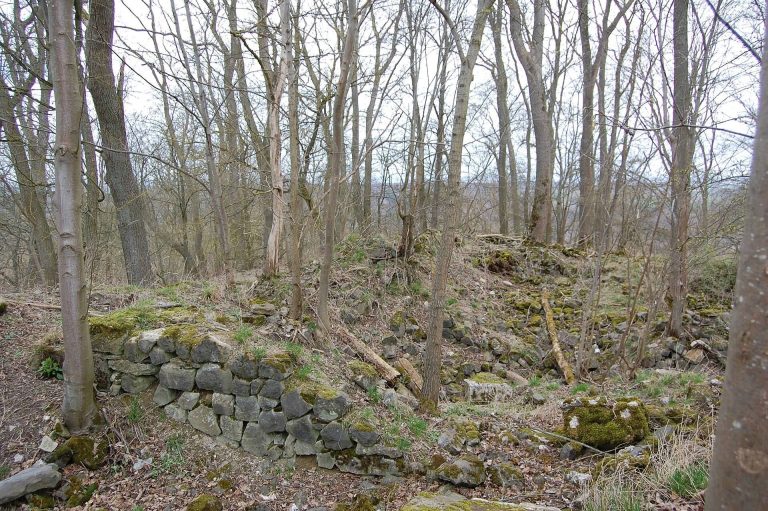
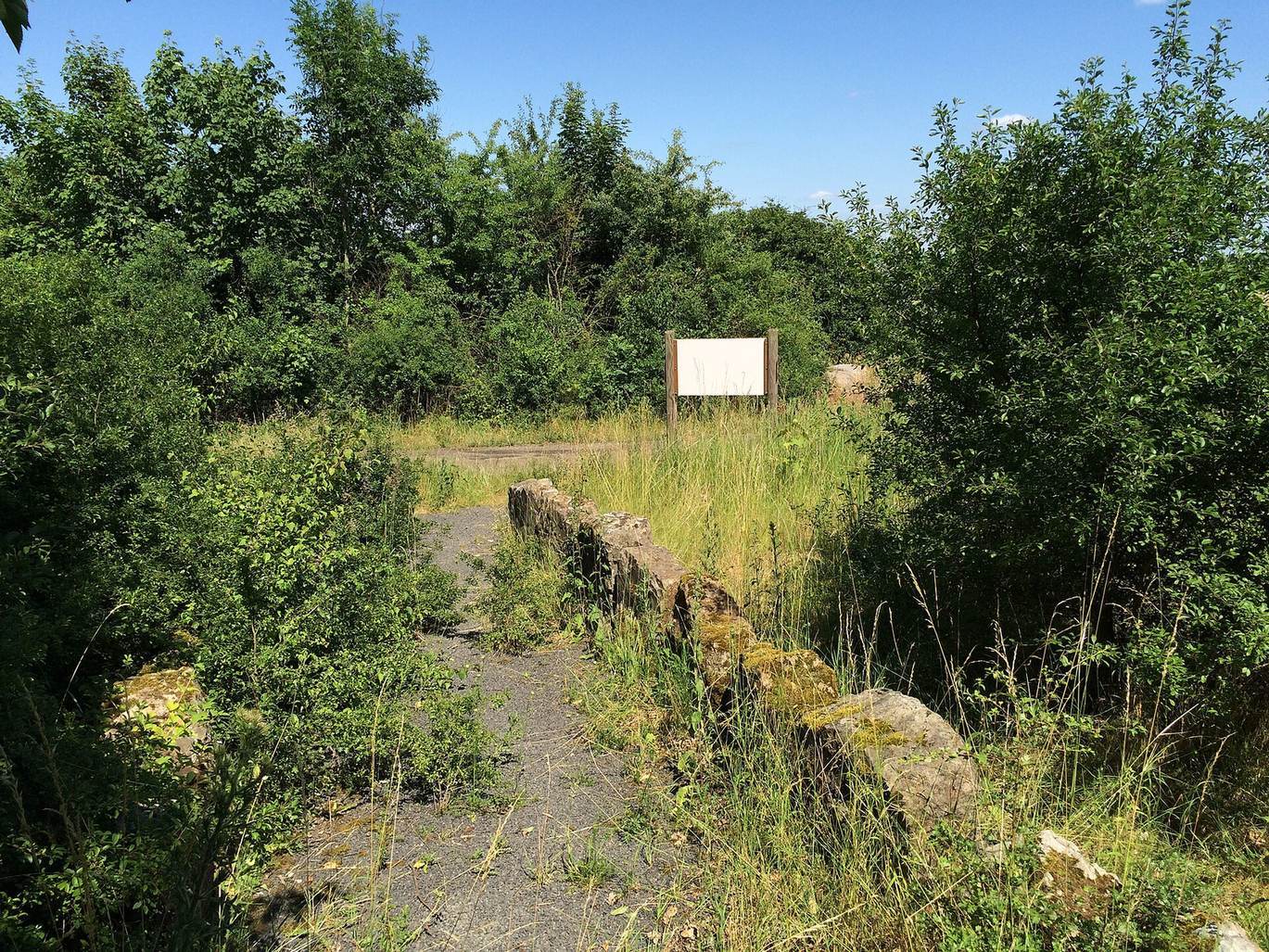
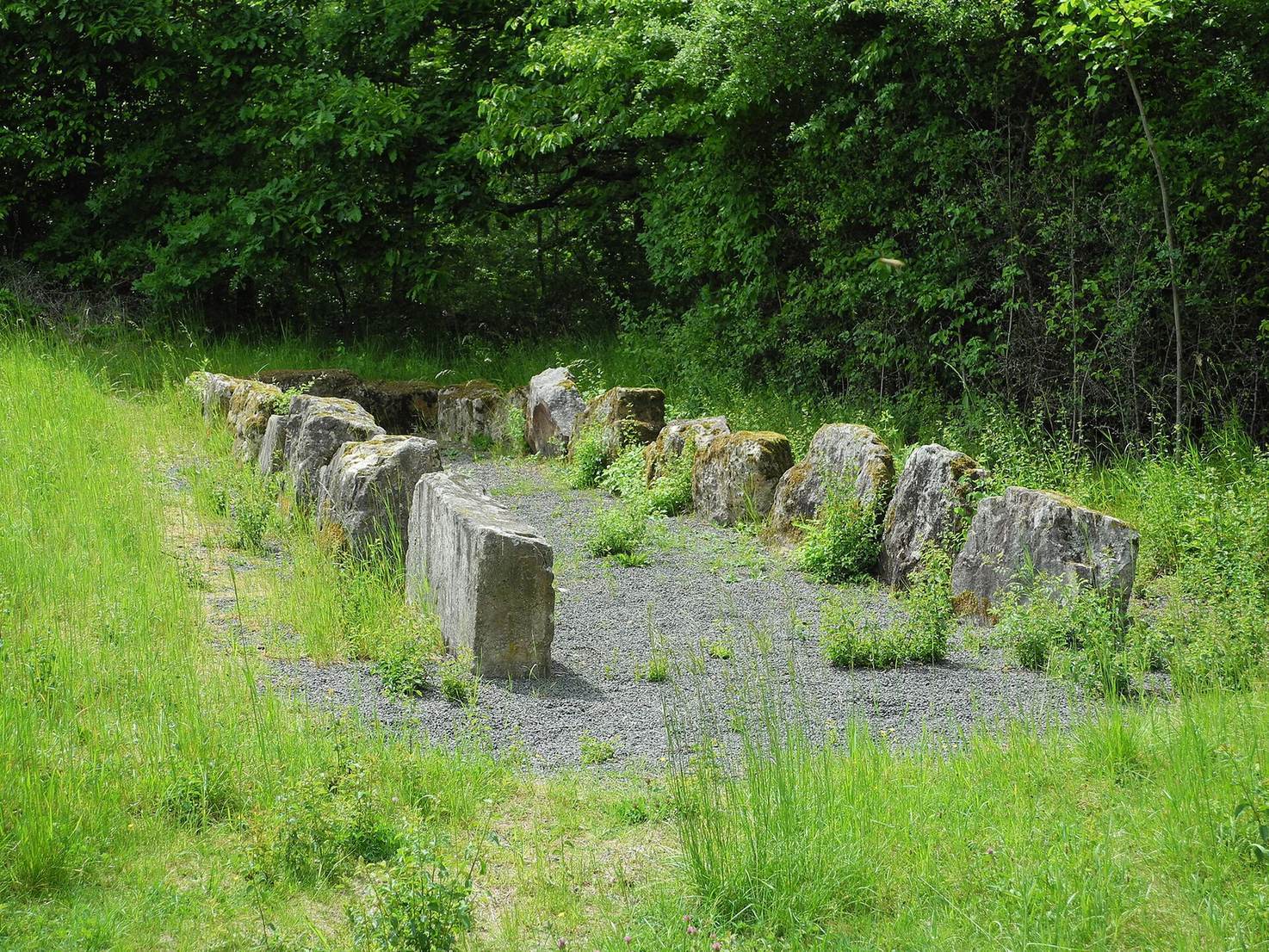
The grave lies about 100 m south of the Calden earthwork, beyond its double ditch ring and beneath an agricultural track. Its chamber runs southwest to northeast, with the entrance at the northeastern end. The exterior measures 11.9 m long and up to 3.8 m wide. Builders cut the foundations and floor into natural shell-limestone bedrock and used locally available quartzite for the structure.
Chamber and entrance
Traces of standing stones and pits left by stone removal indicate that 18 stones once formed the walls: eight along each side and one at either end. The surviving supports suggest a clear chamber height of about 1.4 m near the entrance and 1.05 m at the rear. Its construction is sufficiently understood to make reconstruction possible. The entrance design remains uncertain. Comparison with Züschen-type graves, a regional category of gallery graves from northern Hesse, suggests an antenna-like arrangement with a proposed small opening known as a soul hole. The number of roof stones is unknown, though seven is one possibility. A mound probably covered the grave; limestone and sandstone slabs may indicate a base of stones laid without mortar and a similar facing at the entrance. Galeriegrab I appears to have been longer by one pair of wall stones.
Burial deposits
Burials survived particularly well in the rear third of the chamber. The dead were laid on their backs along the chamber’s axis, with their heads toward the northeastern entrance. Some evidence suggests that children may have been placed across the chamber. Both uncremated and cremated human remains were found. At least 78 people are represented, and the full chamber may have held about 200 burials.
Pottery and clay drums
Pottery was concentrated in front of the entrance, where vessels appear to have been broken in place. The finds include a clay drum decorated with raised bosses and perforations around its foot, a deeply incised bowl, a hemispherical bowl with a band-shaped handle, and part of a collar bottle. Rim fragments from ovoid pots have deep impressions beneath the rim. A second clay drum came from inside the chamber and was probably used in funerary rites.
Other grave goods
A fragment of a large rectangular axe made from Wieda slate came from the entrance area. Other objects from the burial layer include pierced teeth from brown bears, badgers, foxes, dogs, horses, and wolves; flint blades; and triangular arrowheads and arrowheads with broad crosswise edges made from flint and siliceous slate. A ring-shaped amber bead and a polished, perforated bone disk were also recovered.
Later disturbance, including more recent intervention, affected this grave more heavily than Galeriegrab I. Its recessed foundations and chamber floor nevertheless proved resistant to disruption. The spacing between the centers of the foundation trenches, 2.65 to 2.80 m, is twice the recorded measure for entrance widths at the Calden earthwork.