Frosinone Cathedral: A Roman Catholic Cathedral in Frosinone, Italy
Site at a Glance
- Rating
- 4.7
- Popularity
- Very Low
- Country
- Italy
- Primary era
- Early Modern
- Eras represented
- Medieval, Early Modern, Modern
- Civilizations
- Italian, Papal States
- Site type
- Religious
- Remains
- Cathedral
On this page12 sections
History
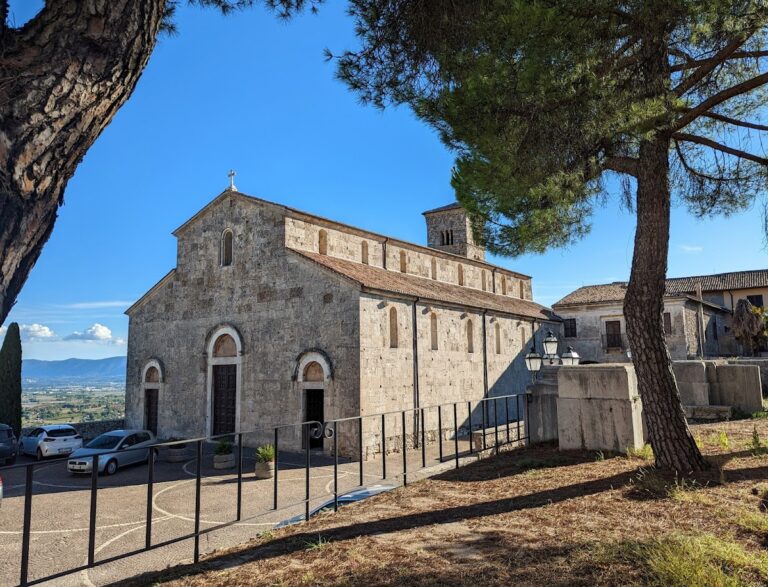
Frosinone Cathedral is a Roman Catholic church in the historic centre of Frosinone, Italy, dedicated to the Assumption of Mary, the Catholic belief that Mary was taken body and soul into heaven. It follows the Roman rite, the principal liturgical tradition of the Latin Church. The church has early Christian origins, was rebuilt in the Romanesque style during the Middle Ages, and was substantially remodelled in the eighteenth century, drawing inspiration from Rome’s Basilica of Sant’Andrea della Valle. Romanesque is a medieval architectural style characterized by rounded arches.
Early Christian and medieval origins
The first church was built over the remains of a Roman temple dedicated to Mars, the Roman god associated with war. It stood on the hill occupied by the acropolis, the elevated central precinct, of ancient Frusino, the settlement at the site of modern Frosinone. The church is traditionally identified as the cathedral of an early diocese, a territory administered by a bishop. That diocese merged with the Diocese of Veroli in the eighth century. During the Middle Ages, the church was rebuilt in the Romanesque style.
Eighteenth-century remodelling and church status
The eighteenth-century remodelling took inspiration from the Basilica of Sant’Andrea della Valle in Rome. On 15 July 1755, Pope Benedict XIV raised the church to the status of a distinguished collegiate church, served by a body of clergy, and granted its parish priest the title of archdeacon, a senior clerical office. In 1850, Pope Pius IX authorized the use of his papal throne, the pope’s ceremonial seat, as an episcopal chair, the formal seat of a bishop.
Wartime damage and diocesan changes
Bombing on 11 September 1943 severely damaged the church and the square in front of it. Part of the façade collapsed, and a nave, one of the church’s principal lengthwise divisions, was destroyed. The municipal reservoir beside the church was razed, as were buildings on the south side of the square. The church was rebuilt after the war with contributions from people from Ciociaria, a historical region of Lazio, who had emigrated abroad.
On 11 April 1965, the church became a co-cathedral, sharing cathedral status within the Diocese of Veroli-Frosinone. Since 27 February 1987, it has been the cathedral of the Diocese of Frosinone-Veroli-Ferentino, whose seat is in Ferentino.
Remains
Exterior and bell tower
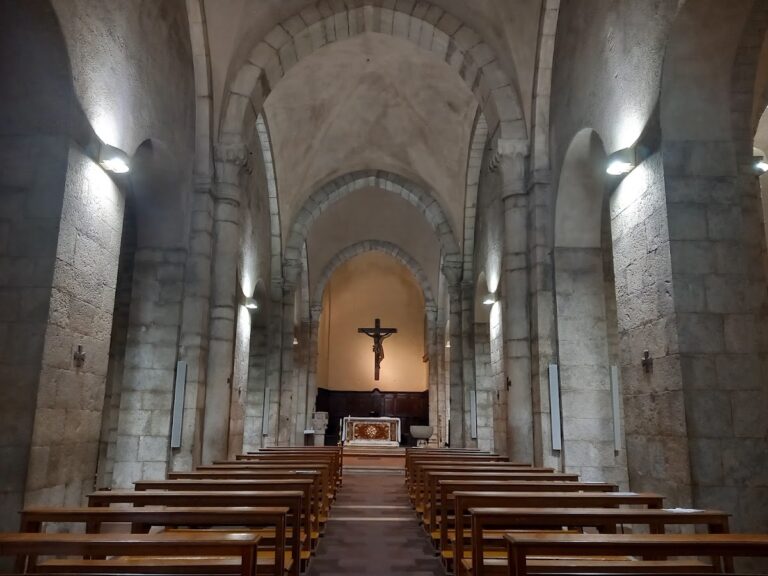
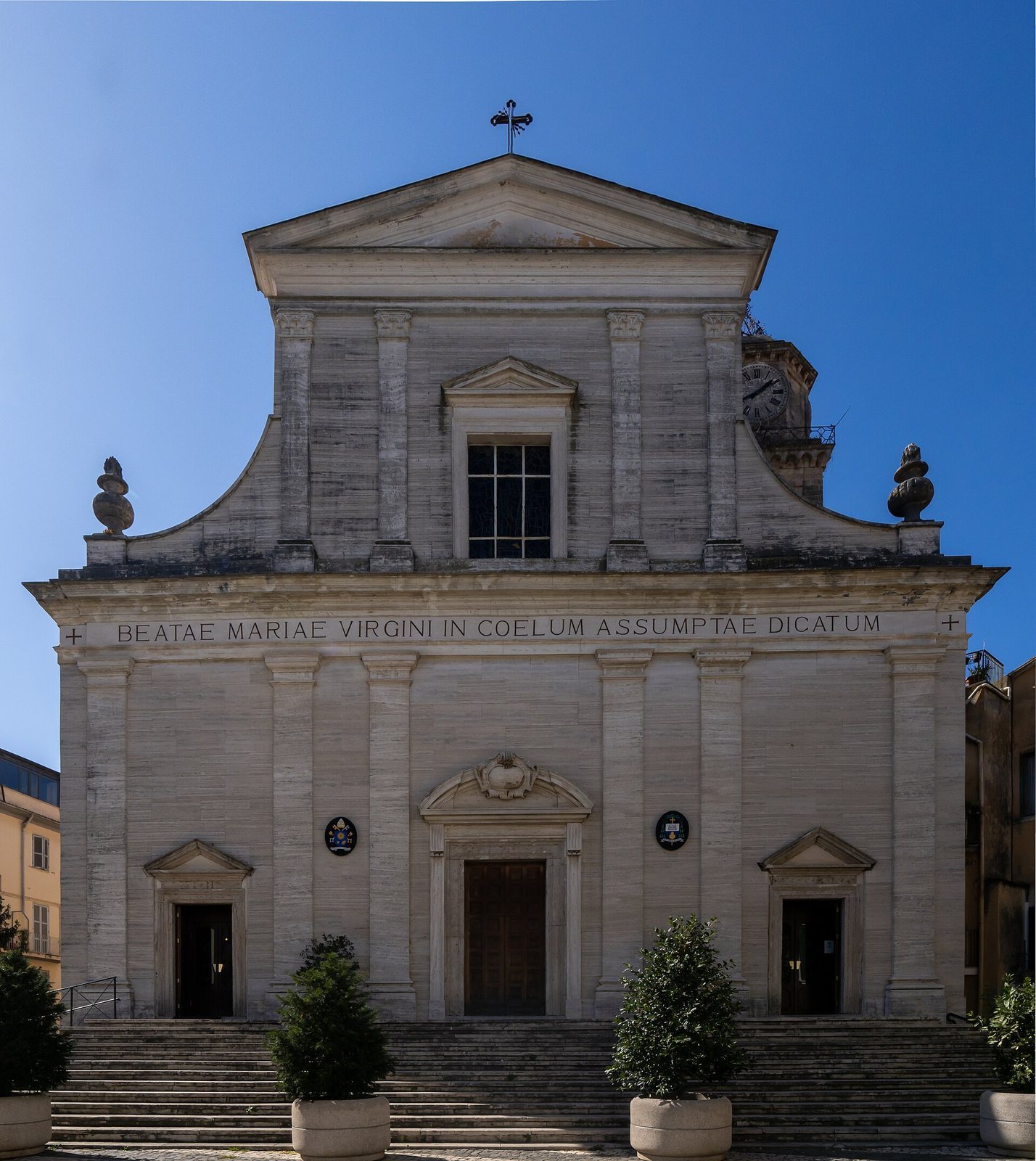
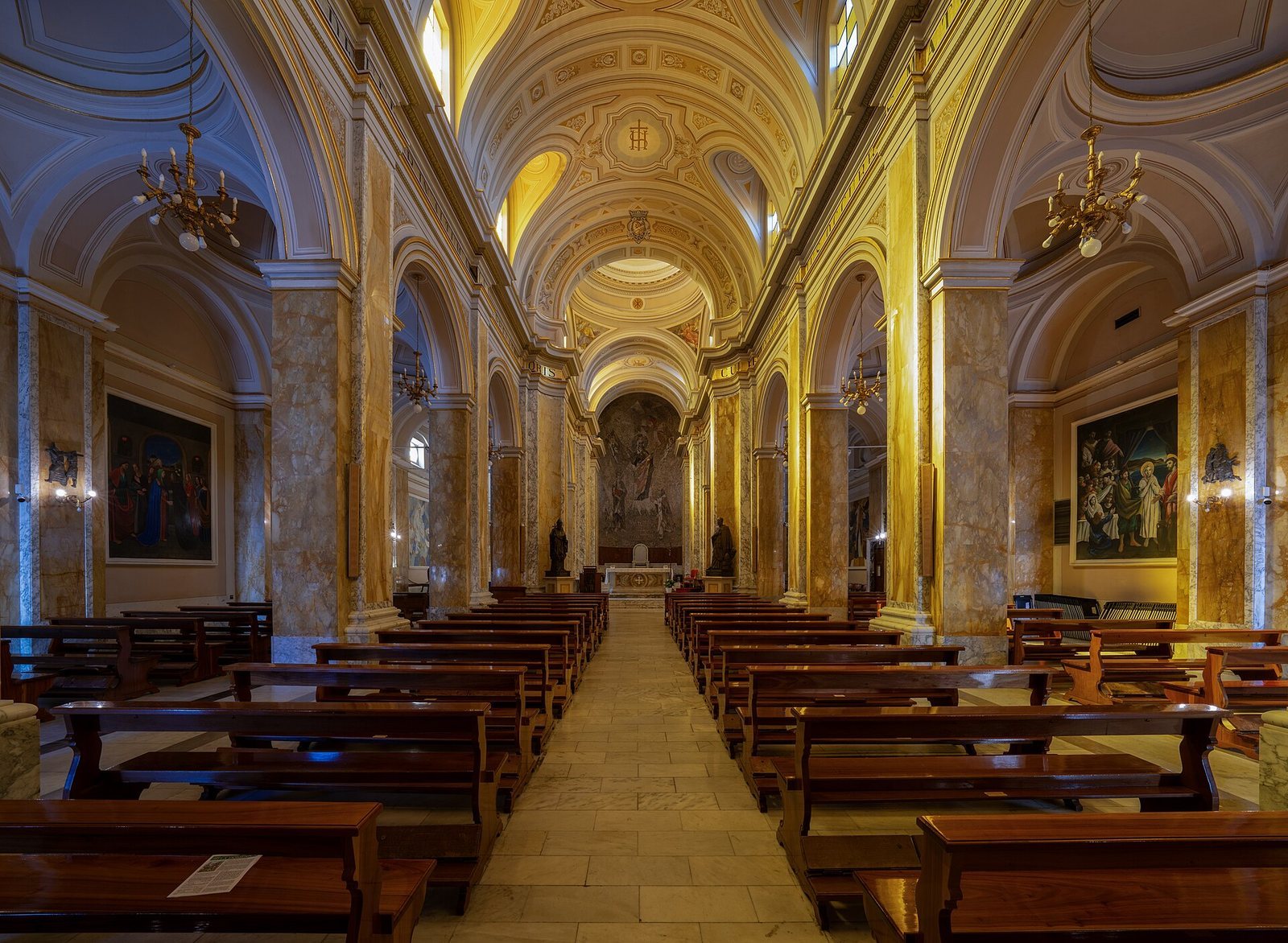
The cathedral stands in Piazza Santa Maria. Its exterior includes a stepped façade and a bell tower on the church’s right side; inside, pillars divide the space into three lengthwise naves.
Façade
A stone staircase stands at the façade, whose stepped roofline rises above two levels divided by a horizontal molding. Six marble pilasters, shallow vertical features resembling attached columns, frame three entrances. Each entrance has a pediment, a decorative gable-like crown. Above them, a rectangular window aligns with the central nave, and a triangular gable crowns the façade.
Bell tower
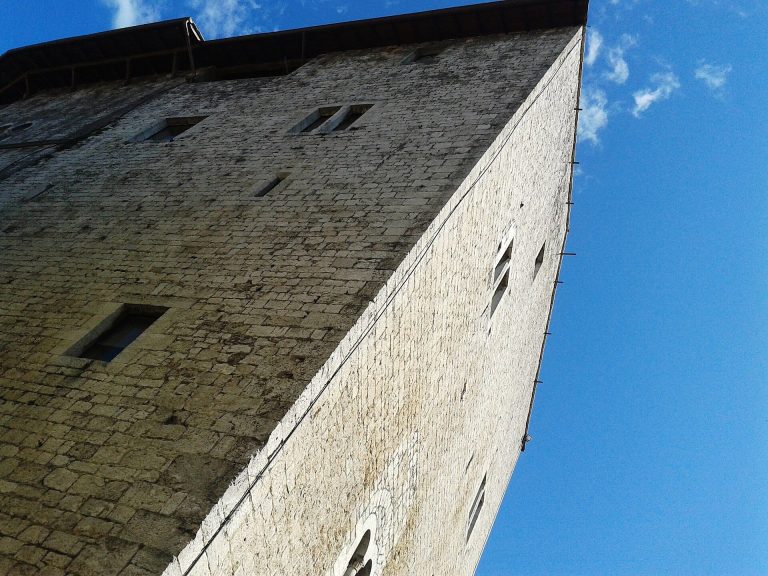
The sixteenth-century Romanesque bell tower is the principal surviving element of the medieval church. It stands at Frosinone’s highest point, 291 metres above sea level, and rises 62 metres. An eight-sided dome tops three tiers of paired windows with rounded arches, supported by small white-marble columns. The lowest-tier windows had been bricked up before the Second World War and were reopened afterward. The tower survived the bombing of 11 September 1943, though one of the large clocks facing the main street was pierced; the clocks stopped at 10:10. A siren on the tower warned residents of air raids until the control unit in the fortress was destroyed. An iron weather vane near the cross on the dome was removed in the 1950s.
Interior and furnishings
Three-nave interior
The interior has three naves, or lengthwise divisions, separated by pillars bearing Corinthian pilasters. These shallow wall features have capitals in the ornate classical Corinthian style.
Paintings and statues
A surviving round painting from 1641 shows the Virgin Mary with Saint Anne, the young Saint John, and angels. It is by Sementi, a pupil of Guido Reni. The cathedral also holds contemporary paintings by Gisberto Ceracchini, Domenico Purificato, Eliano Fantuzzi, Giovanni Colacicchi, Luigi Montanarini, and Manlio Sarra, depicting episodes from the lives of Mary and Christ. Bronze statues beside the high altar represent Hormisdas and Silverius, sixth-century popes of Rome who are venerated as saints and patron saints of Frosinone.
Pipe organ
Built by Pinchi in 1957 and restored and enlarged in 2015, the pipe organ stands on the choir loft above the entrance. It has electric mechanisms that operate 19 stops, which select sets of pipes, two hand-operated keyboards, and a foot-operated pedal.