Frejštejn: A Medieval Castle Ruin in Czechia


Site at a Glance
- Rating
- 4.6
- Popularity
- Low
- Country
- Czechia
- Primary era
- Medieval
- Eras represented
- Medieval, Early Modern
- Civilizations
- Holy Roman Empire, Margraviate of Moravia
- Site type
- Military
- Remains
- Castle
On this page12 sections
History
Frejštejn is a medieval castle ruin in Czechia near Podhradí nad Dyjí, founded in the thirteenth century on the right bank of the Dyje at its confluence with the Křeslický stream. Also recorded as Vreyensteyn, it stood on the periphery of the Bítov castellany, a territorial district administered from a castle. The site was founded by descendants of Wernhard of Trnava, whose control of the area was connected with service to Vladislav Jindřich, the medieval margrave of Moravia.
Foundation and early development
In 1251, Oldřich, known as Liber or Frei, and his son Gaytmar appeared at Frejštejn as witnesses to a donation made by their relative Vikart of Trnava to Geras Monastery. The castle later became associated with raiding after the death of Přemysl Otakar II. Like the Lower Austrian castle of Trnava, Frejštejn provided refuge for raiders operating in the region.
In 1286, Oldřich Frej of Frejštejn was recorded at the castle. With the approval of Wenceslaus II, king of Bohemia, Albert I, duke of Austria, captured and damaged it. During Wenceslaus II’s reign, Frejštejn was reoccupied and substantially enlarged. Marquart of Frejštejn witnessed a document in 1310, and Oldřich Vrey appeared in records from 1322 and 1323 concerning donations to Zwettl Monastery.
Administration and noble control
From the 1330s, the castle was managed by burgraves, officials responsible for administering and defending a castle or castle district. Konrád of Bítov and his wife Budislava held this office in 1331. Petr Hecht of Rosice was burgrave in 1354 and 1371, while also holding the same office at Vranov Castle.
Probably during the tenure of Oldřich of Frenštejn, a representative palace and a chapel dedicated to Saint Catherine were built in the northern part of the lower castle, the outer or less elevated section of the complex. The chapel is mentioned in 1347.
Fifteenth-century conflict and destruction
In 1422, Sigismund, king of Hungary and Bohemia, granted Frejštejn to Lipolt I of Krajek as a hereditary pledge. This form of tenure gave control of property in return for a debt or obligation and allowed the holding to pass by inheritance. Lipolt later left the castle to his younger brother Jan Krajíř of Krajek, whose raiding expeditions made him feared throughout the surrounding region.
Jan Krajíř pledged in January 1440 to observe the land peace, but the Moravian estates later denounced him as an enemy of the Moravian land. They proposed that Frejštejn should be redeemed and destroyed, although it is uncertain whether this order was carried out because Jan was still recorded at the castle in 1447. The proposal may also have reflected political opposition to Jan, who supported Frederick III, guardian of the underage Ladislaus the Posthumous, and served as captain of Drozdovice.
Jan’s nephew Volf, another supporter of Frederick III, inherited Frejštejn in 1454 along with Cizkrajov and the estates of Landštejn and Nová Bystřice in Bohemia. In 1458, George of Poděbrady, king of Bohemia, rewarded Volf for supporting him in the war in Austria and during the siege of Cornštejn Castle by granting him the confiscated Cornštejn estate.
Frejštejn was probably attacked during the war against Matthias Corvinus, king of Hungary and a major opponent in the regional conflicts of the period. By 1487, it was described as destroyed. Its later history was connected with Volf Krajíř’s sons, Lipolt II and Jindřich. In 1493, Vladislaus II confirmed the release of Lipolt and his Krajek brothers from feudal obligations.
Later ownership and protection
In 1628, the imperial councillor Jakub Berchtold acquired Frejštejn and was raised to the rank of baron of Uherčice in 1633. According to the historian Ladislav Hosák, rebuilding of the fortifications took place during the sixteenth century, after which the castle shared the history of the Uherčice estate. The ruins are now owned by the municipality of Podhradí nad Dyjí and protected as a cultural monument of the Czech Republic.
Remains
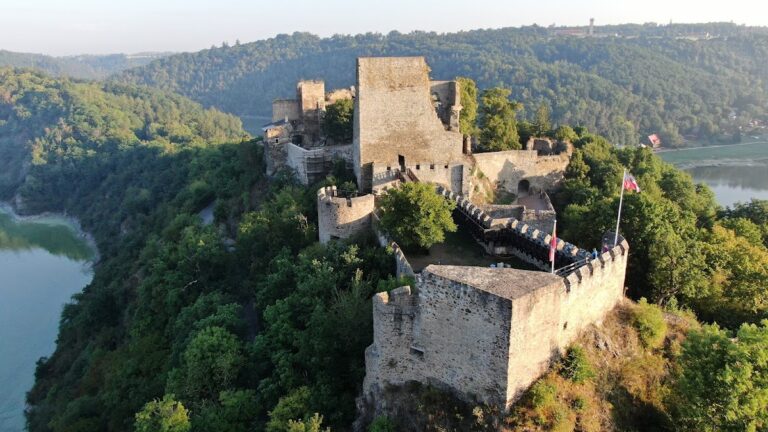
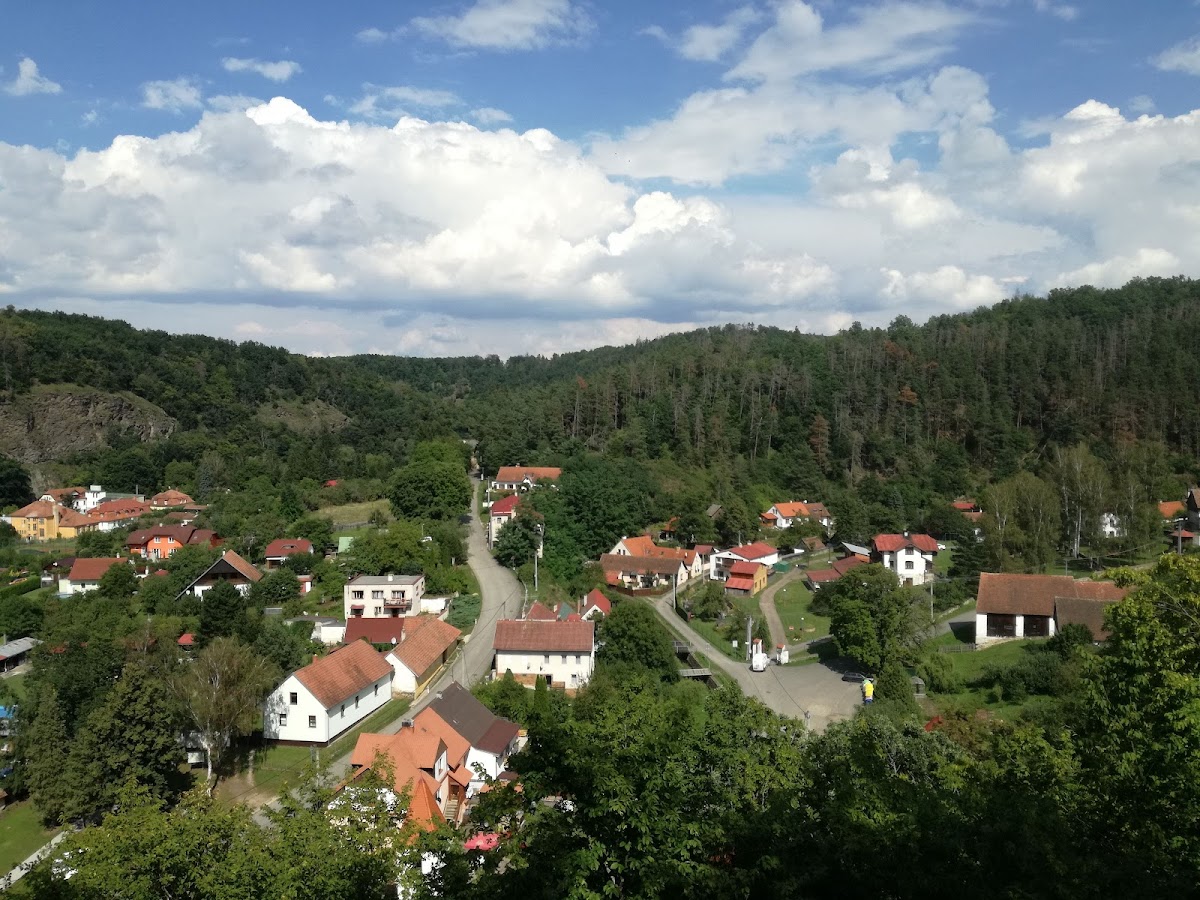
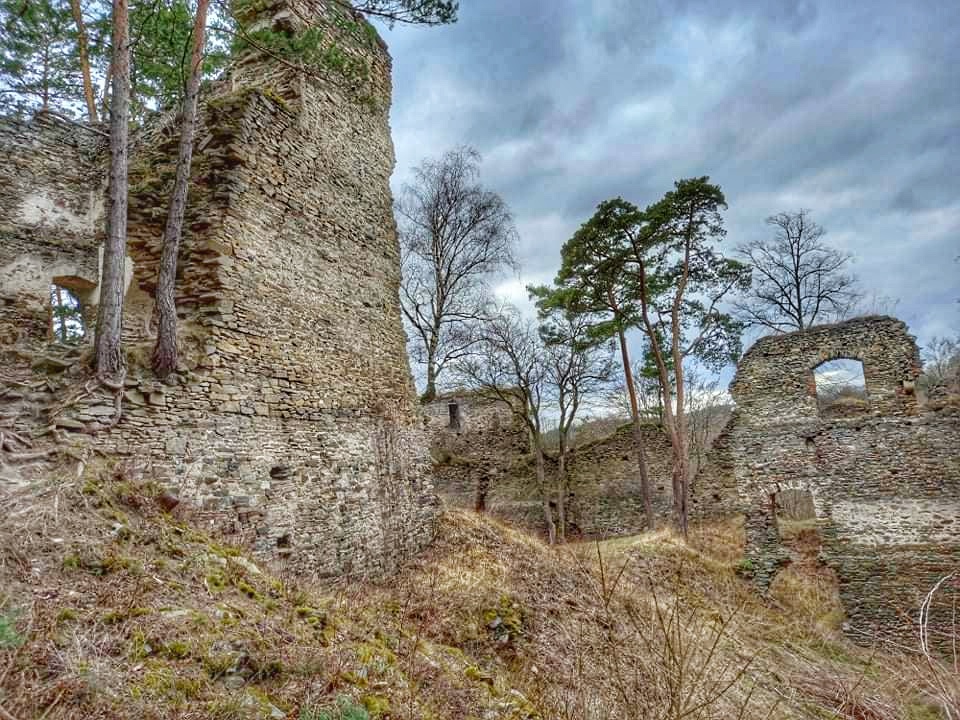
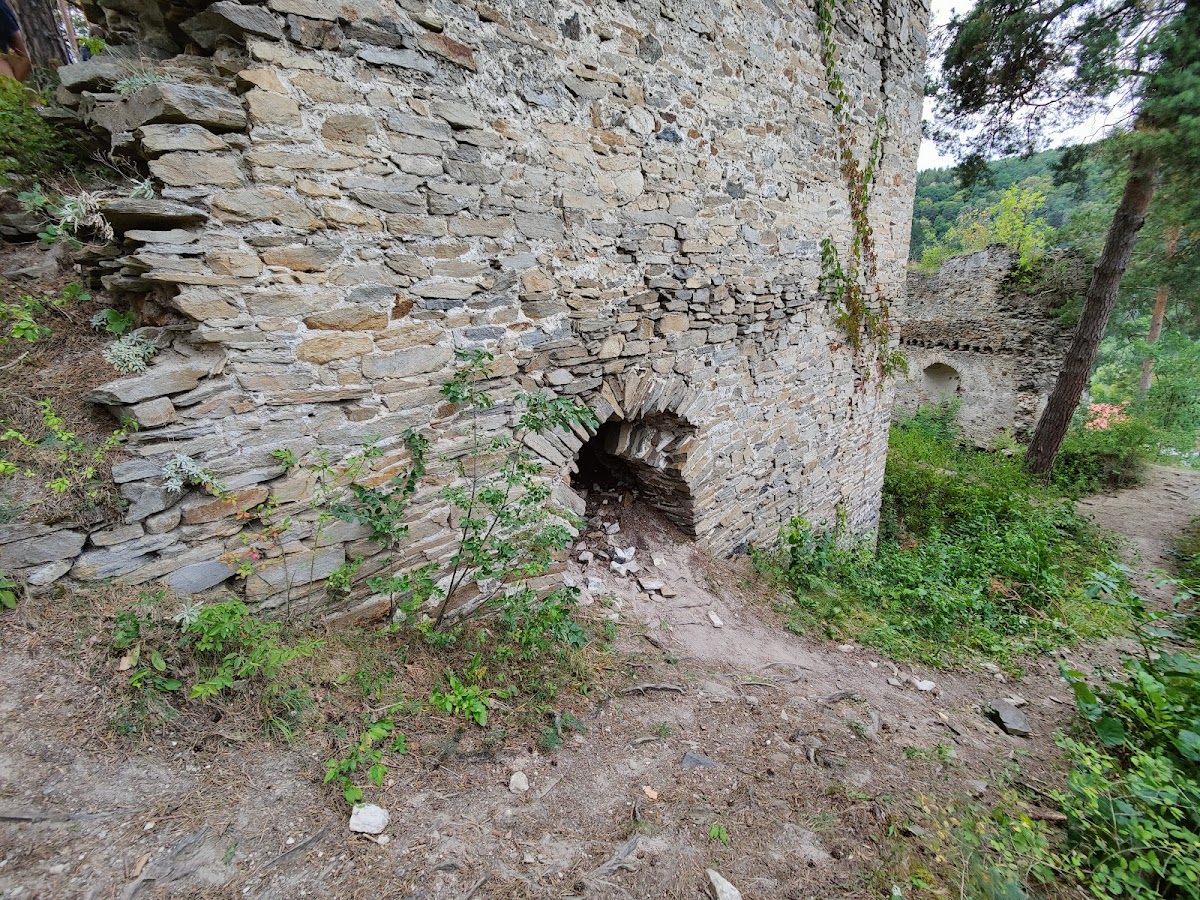
Frejštejn is a relatively small ruin standing immediately south of Podhradí nad Dyjí. The Dyje runs along its left side, while the Podhradské skály natural monument lies to the north. The surviving complex includes parts of the northern wall and fortifications, the remains of a small palace, a gate, a chapel, a southwestern bastion, and a tower with loopholes, narrow openings used by defenders for firearms or other weapons.
Northern lower castle
Palace
A representative three-storey palace occupied the northern part of the lower castle. It formed part of the later medieval residential core and was connected with the castle chapel. The surviving palace is one of the principal architectural elements of the ruin.
Chapel of Saint Catherine
The castle chapel dedicated to Saint Catherine stood beside the palace in the northern lower castle. It is mentioned in 1347 and belonged to the phase when the residential and representative buildings of Frejštejn were developed.
Walls and defensive works
Southwestern bastion
A bastion, meaning a projecting defensive structure, survives in relatively good condition on the southwestern side of the castle. It belongs to the defensive system that protected the small castle complex.
Sixteenth-century tower
A tower with loopholes remains from the rebuilding of the fortifications in the sixteenth century. Its narrow openings indicate provision for the use of firearms or other weapons, linking the surviving structure with the later defensive modifications to Frejštejn.