Schloss Drosendorf: A High-Baroque Castle-Palace in Austria



Site at a Glance
- Rating
- 4.3
- Popularity
- Low
- Country
- Austria
- Primary era
- Early Modern
- External website
- Open
- Eras represented
- Medieval, Early Modern
- Civilizations
- Habsburg, Holy Roman Empire
- Site type
- Military
- Remains
- Castle
On this page10 sections
History
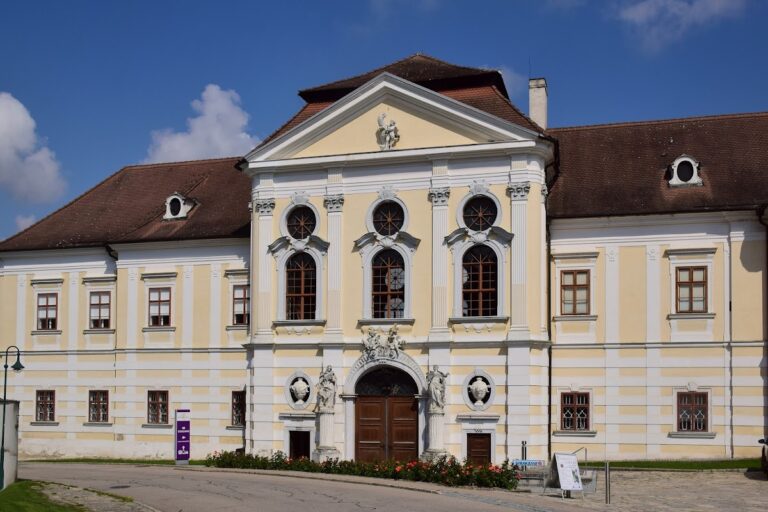
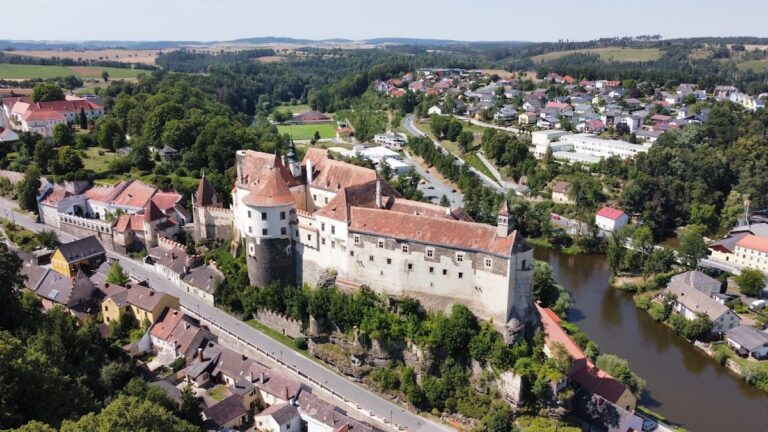
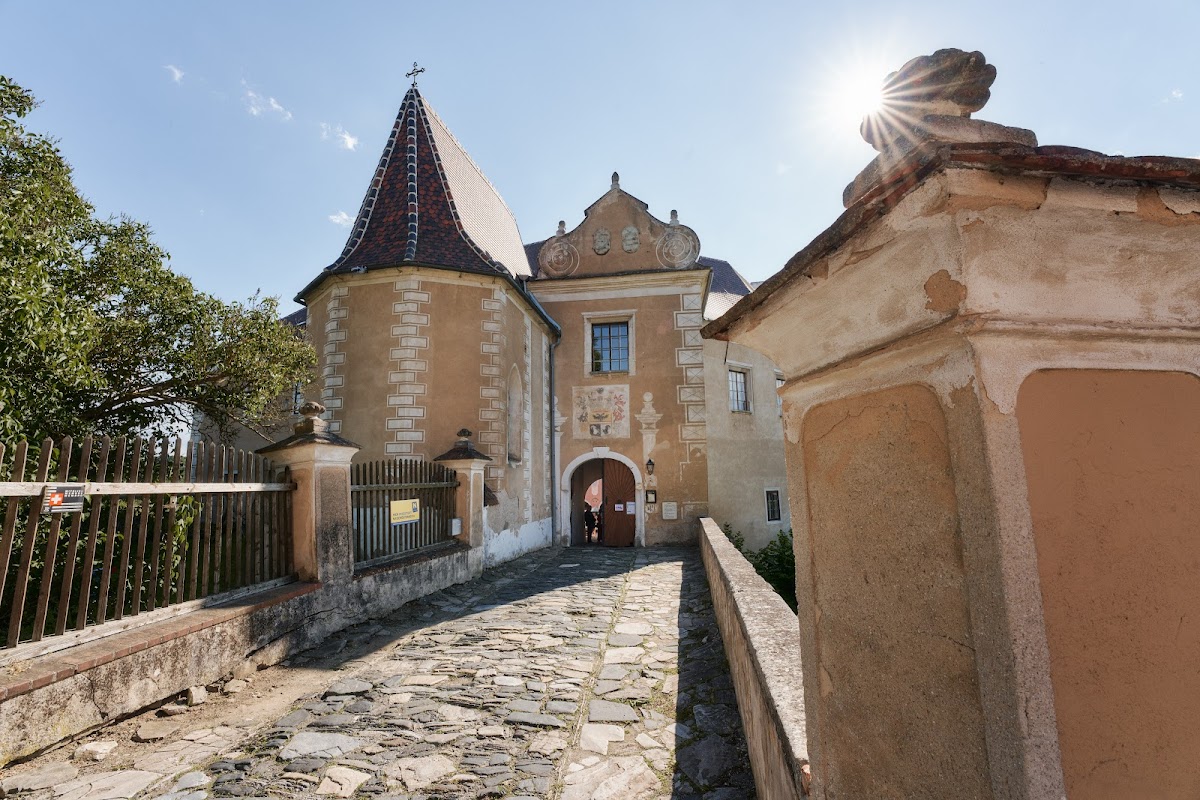
Schloss Drosendorf is a high-Baroque castle-palace in Drosendorf-Zissersdorf, Austria, built and remodeled within the medieval and early-modern fortifications of the town. Its fortress-like character was retained until a comprehensive rebuilding after a fire in 1694, after which the complex acquired the form associated with a late seventeenth-century castle-palace, combining defensive elements with residential functions.
Medieval Origins and the Town of Drosendorf
The lordship of Drosendorf reaches back to the High Middle Ages. Albero de Drozendorf, named as a witness in the second foundation charter of Geras Premonstratensian monastery, may have been connected with an earlier castle near the parish church of Saints Peter and Paul in Drosendorf’s Altstadt. The Premonstratensians were a Catholic religious order founded in the twelfth century for communities of clerics following the rule of Saint Augustine.
Around 1200, the planned settlement of present-day Drosendorf began on a broad meander hill of the Thaya, alongside the construction of the town wall. The Altstadt, with its large churchyard and cemetery, parish rectory, and parish church, lay northeast of the later medieval town center. After the Counts of Pernegg died out around 1220, their possessions passed to the Babenbergs, the medieval dynasty that ruled the margraviate and later duchy of Austria before the Habsburg succession. Drosendorf was first identified as a town around 1240.
Lordship, Conflict, and Changing Holders
Drosendorf was besieged in 1278 during the conflict between Rudolf I and Ottokar II Přemysl. Rudolf I, a Habsburg ruler who became King of the Romans in 1273, was contesting regional power with Ottokar II, the king of Bohemia. In 1279, Drosendorf passed to the Habsburgs. They first pledged it to Ulrich von Kapellen and later to Stephan von Maissau. Pledge holding transferred control or revenues to a creditor or administrator as security for an obligation.
After 1327, the Lords of Wallsee became holders of the lordship. From 1332, Eberhard VI von Wallsee, son of Friedrich I and regarded as the founder of the Wallsee-Drosendorf line, served as captain of Drosendorf. A captain was the territorial military and administrative official responsible for a town or castle’s defense and governance.
From 1438, the Lords of Eitzing held the castle as custodians and pledge holders. The lordship passed to Johann Mrakesch von Noskau in 1506 and to the Barons of Mollart in 1574. From 1607, it became hereditary property, while the town itself remained in the possession of the territorial prince. The Mollarts were followed by the Muschinger family and the Counts of Kurz. The Counts of Sprinzenstein acquired the lordship in 1660 and transferred it to the Counts of Lamberg in 1671.
Baroque Remodeling and Modern Use
Schloss Drosendorf is often described as a Renaissance building, but that classification results from a misconception. Before the fire of 1694, the castle still had a fortress-like appearance. Matthäus Merian’s 1645 town view, produced by the seventeenth-century engraver and publisher known for detailed town views, provides evidence for this earlier form. The subsequent comprehensive remodeling created the high-Baroque castle-palace seen in its later architectural history.
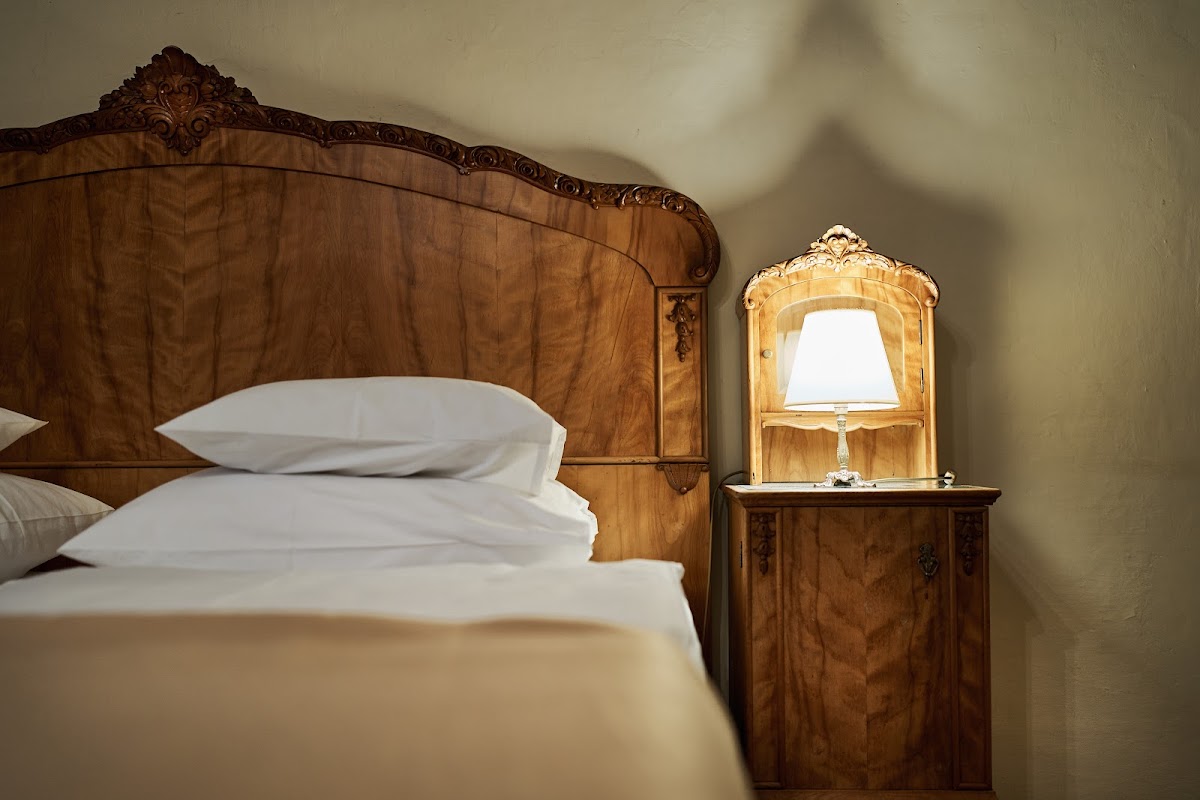
From 1822, the lordship belonged to the Hoyos-Sprinzenstein family. Markus Hoyos is the present owner of Schloss Drosendorf. The building suffered severe damage at the end of the Second World War. In 1960, it was converted into a bed-and-breakfast establishment, a use that it has partly retained.
From 1978, the castle was leased to the Lower Austrian Chamber of Agricultural Workers, which operated an educational institution there. The lease ended in 2020 after 42 years, and the educational bed-and-breakfast facility closed on 15 June 2021. Since spring 2022, the complex has had mixed use under lessee Baudouin de Troostembergh. It continues as the Schlosshotel Drosendorf bed-and-breakfast, while the “landuni” cooperation between the Vienna University of Technology and the Province of Lower Austria carries out practice- and project-based research in and for rural areas. Schloss Drosendorf is protected as a listed monument by the Austrian Federal Monuments Office.
Remains
The surviving complex is organized as a high-Baroque castle-palace with a fortress-like character, incorporated into the medieval and early-modern defenses of Drosendorf. Its documented components include a courtyard, a gate building, a portal, and direct connections with the town wall. The building has been renovated, while the courtyard retains features associated with the later history of the lordship.
Castle Complex and Courtyard
Courtyard
The courtyard forms part of Schloss Drosendorf and contains a fountain, a clock, and coats of arms associated with the Counts of Lamberg and the Counts of Kurz. These elements remain within the castle-palace complex and connect its present physical appearance with families who held the Drosendorf lordship during the early-modern period.
Gate Building and Portal
A gate building and a portal are identified as components of Schloss Drosendorf. They belong to the complex’s access and enclosure system, in which the residential character of the Baroque castle-palace remains linked to its earlier defensive organization.
Town Fortifications
Town Wall
The castle is directly associated with Drosendorf’s town wall, including the wall on the southern side of the town. This relationship places Schloss Drosendorf within the surviving defensive framework that accompanied the planned settlement founded around 1200.