Frýdštejn Castle: A Medieval Rock Castle in Czechia


Site at a Glance
- Rating
- 4.7
- Popularity
- Medium
- Country
- Czechia
- Primary era
- Medieval
- External website
- Open
- Eras represented
- Medieval, Modern
- Civilizations
- Holy Roman Empire, Kingdom of Bohemia
- Site type
- Military
- Remains
- Castle
On this page9 sections
History
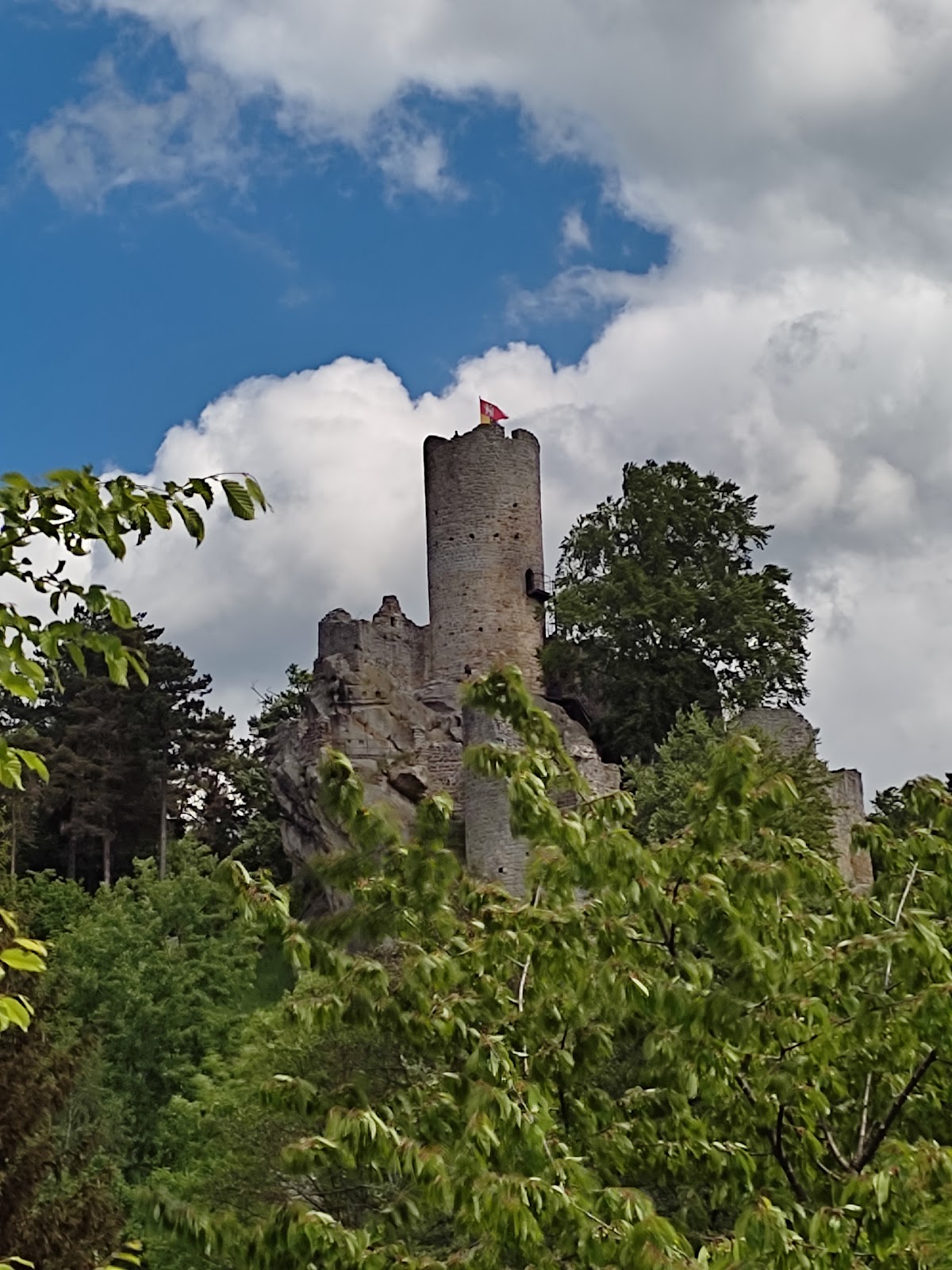
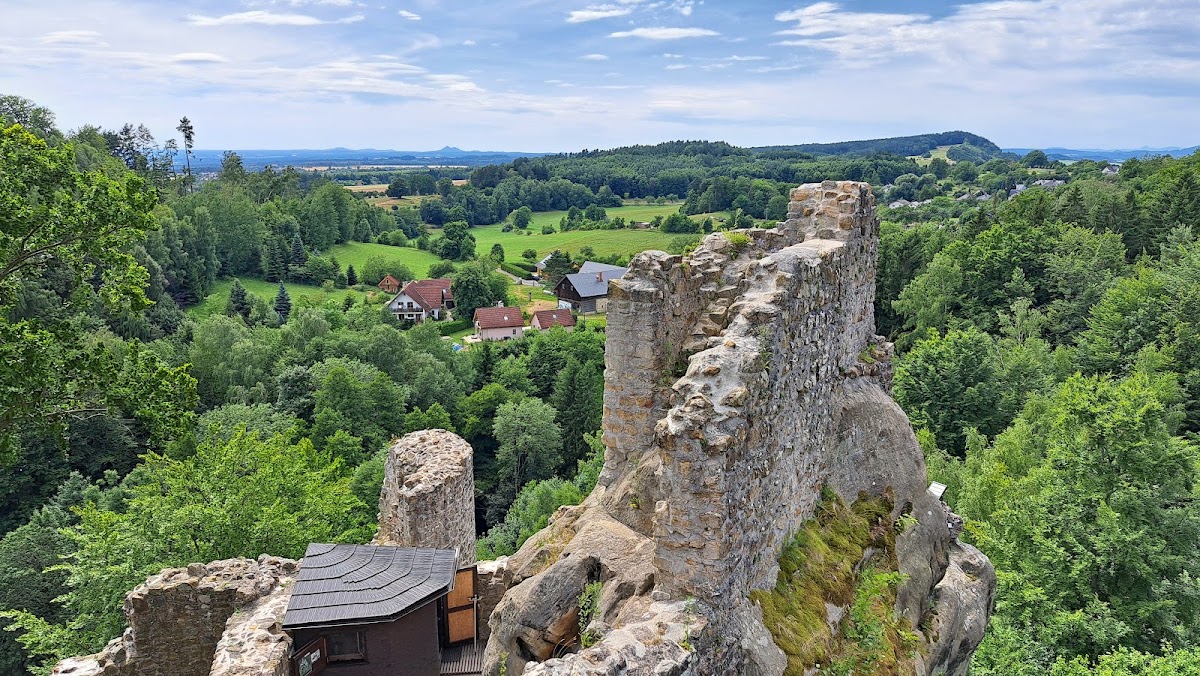
Frýdštejn Castle is a medieval rock castle in Czechia, built during the fourteenth century on a sandstone ridge above the Jizera River valley and an old trade route running north from Turnov. Its exact construction date is uncertain, although the castle existed before 1385. Its position gave it a role as a watch castle and allowed its principal tower to command views across the surrounding landscape, including toward Bezděz Castle.
Foundation and Early Lords
The Bibrštejn family, based at Frýdlant, probably played a part in the castle’s foundation. Jan II of Bibrštejn was recorded as controlling the surrounding area in 1376. The first documentary mention of Frýdštejn dates from 1385, when Bohuňka Puklíce of Frýdštejn was named. Around 1400, the castle belonged to the Kamencové of Střížovice and Čakovice.
The Hussite Wars
At the beginning of the fifteenth century, Bohuš of Kováně became lord of the estate. In August 1432, Hussite forces led by Ota of Loza and Jan Čapek of Sán besieged Frýdštejn because Bohuš was Catholic. The Hussites were a reform movement in Bohemia that fought Catholic and imperial forces during the Hussite Wars. Bohuš first reached an agreement with them, then joined their side. In 1448, he helped George of Poděbrady, king of Bohemia, capture Prague. After Bohuš died in 1460, Jan Zajíc of Hazmburk administered the estate.
Changing Ownership and Decline
Frýdštejn changed hands repeatedly during the late fifteenth and early sixteenth centuries. Jiří Berka of Dubá owned it in 1489, followed by Vilém Zub of Landštejn in 1498, Jan Dubecký of Dubeč, and, after 1508, Jan Chvalovský of Ledce. Jan of Vartenberk bought the castle and estate in 1540 and incorporated them into the extensive Vartenberk domain.
Adam of Vartenberk joined the Bohemian estates’ revolt against King Ferdinand I and lost several properties, including Frýdštejn and Český Dub, in 1547. Jan of Oppersdorf bought both estates from the king, but made Český Dub his residence and gradually sold the Frýdštejn estate in parts. This ended the estate’s importance and Frýdštejn’s role as a watch castle. The Oppersdorfs sold the uninhabitable castle and estate to Zikmund II Smiřický of Smiřice in 1591.
Abandonment and Preservation
By the end of the sixteenth century, Frýdštejn was uninhabited. During the Thirty Years’ War, a European conflict fought mainly from 1618 to 1648 amid religious, dynastic, and political struggles, marauders, deserters, and fugitives used the abandoned castle as a refuge.
After the Smiřický family, the estate passed to Albrecht of Wallenstein in 1623. Following Wallenstein’s death, it was acquired by the imperial colonel Count Jan Ludvík Isolani. One of Isolani’s daughters later bequeathed the estate to the Catholic Church, which retained it until 1838, when it passed to Kamil Rohan. The Turnov beautification association bought the ruins from the Rohan family in 1892, or during the 1890s, and reinforced the surviving masonry. The ruins have been open to the public since that period. Archaeological investigation produced finds from the castle’s occupation, now held in the Turnov Museum. Frýdštejn is currently owned by the municipality of Frýdštejn, which maintains the ruins in their existing state.
Remains
Ridge Layout and Construction
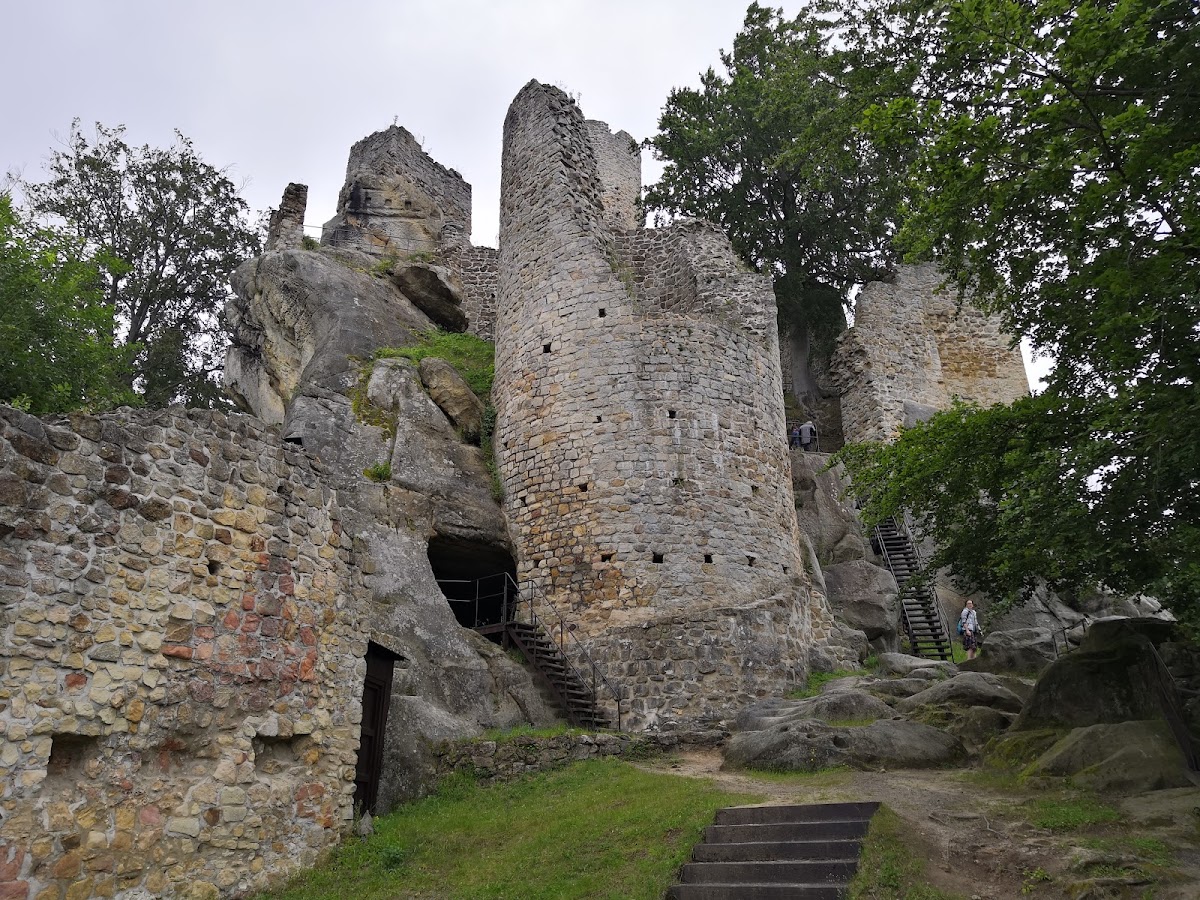
Frýdštejn follows the upper end of a long sandstone ridge, with the castle arranged along its highest section. The setting provided views over the Jizera River valley and helped define the site’s defensive character. Limited space led to the creation of several small rooms directly within the sandstone rock, including a chapel. An area southeast of the castle, on higher ground known locally as Prakovna, retains visible remains of siege fortifications.
Main Tower and Palace
The large main tower, or bergfried, stands on the highest sandstone rock and is the best-preserved part of the castle. A bergfried was the principal defensive and observation tower of a medieval Central European castle. Frýdštejn’s tower is approximately 15 metres high, about 9 metres in diameter, and has walls around 2 metres thick. Its only entrance was on the first floor, roughly 6 to 7 metres above courtyard level. The original route into the castle has not been identified, although it is believed to have passed to the right of the tower through the ground floor of the palace, the residence of the castle lord. The present entrance was built in modern times and is reached by an external metal staircase.
Archaeological Finds
Archaeological investigation at the castle recovered finds connected with its occupation. These objects are preserved in the Turnov Museum, where they provide material evidence for the history of the site.
Nearby sites