Fortaleza de Santo António de Tavira: A River-Mouth Fortress in Portugal


Site at a Glance
- Rating
- 3.8
- Popularity
- Low
- Country
- Portugal
- Primary era
- Early Modern
- Eras represented
- Early Modern
- Civilizations
- Portuguese
- Site type
- Military
- Remains
- Fort
On this page7 sections
History
Fortaleza de Santo António de Tavira is a Portuguese fortress in Portugal, built during the second half of the sixteenth century under King Sebastian to protect the entrance to the Gilão River and the city of Tavira from Muslim pirate attacks. Its bastioned design belonged to the period’s development of artillery defences. The fort was also known as Rato Fort and Lebres Island Fort.
Construction under King Sebastian
The fortress was still being built when King Sebastian visited Tavira in 1573. A record from 1577 placed the natural mouth of the Gilão River opposite the fort. During construction, however, changes along the coast gradually shifted the river mouth eastward. This movement weakened the position’s effectiveness because the waterway it was intended to control no longer faced it directly.
Seventeenth-century remodelling
After Portugal restored its independence from Spain in 1640, the fort was remodelled to work with Fort São João da Barra at Gomeira, whose construction began in 1672. By the time the newer fort was complete, the river mouth had moved toward Gomeira. Santo António consequently became a secondary part of Tavira’s defences, although it continued to support them. In 1654, the fortress was renamed under the invocation of Saint Anthony, a major Catholic saint commonly associated in Portugal with Saint Anthony of Padua.
Declining military use
Its garrison and armament diminished over time. In 1792, nine men served at the fort with two artillery pieces, one of which lacked equipment. By 1821, only three men remained, and the fort had no artillery. The gate was badly damaged, while the gunpowder store, a protected space for gunpowder and artillery supplies, had been abandoned.
The fortress remained active until 1840, when it lost its military purpose and was abandoned by order of Francisco de Paula Vieira da Silva Tovar, Governor of the Province of the Algarve and 1st Viscount of Molelos. Since the 1980s, consolidation and recovery have included repairs to the Gate of Arms and parts of the walls, together with cleaning and signposting inside the fort. It has been a Property of Public Interest since 1983. Once owned by the Kingdom of Portugal, it is now held by the Portuguese state and has a cultural function.
Remains
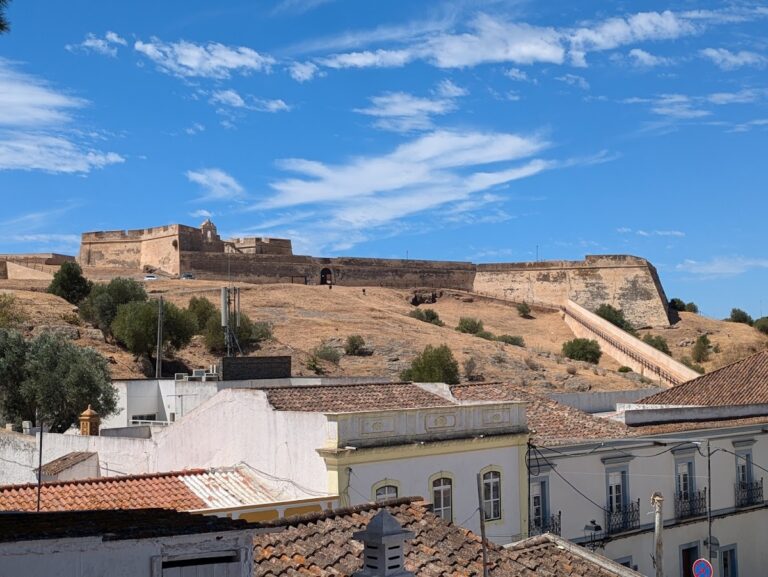
The fort stands east of Quatro Águas, beside Tavira’s river bar at the mouth of the Gilão River. Its plan is a polygonal bastioned layout, meaning a fortified arrangement with projecting bulwarks that allowed defensive fire along the walls and toward attackers. One flat side faces the land to the northwest, while another faces the river mouth to the southeast. Three bulwarks form part of the surviving defensive structure.
Walls and entrance
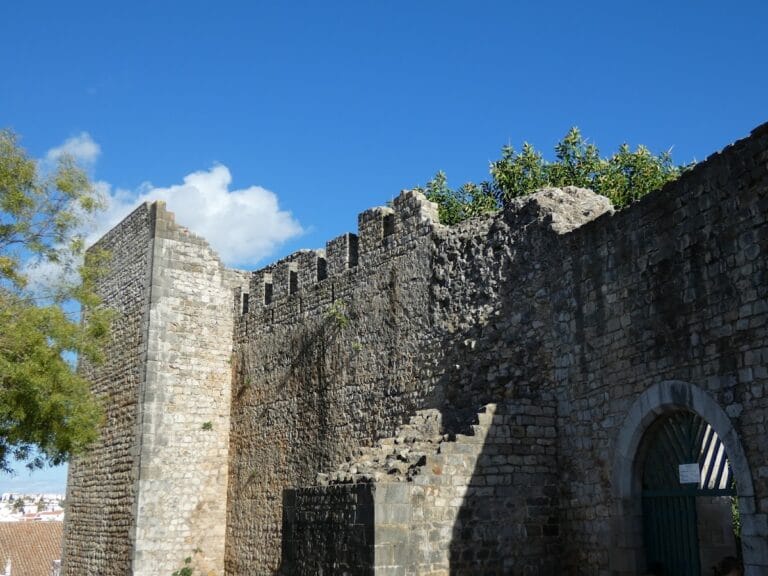
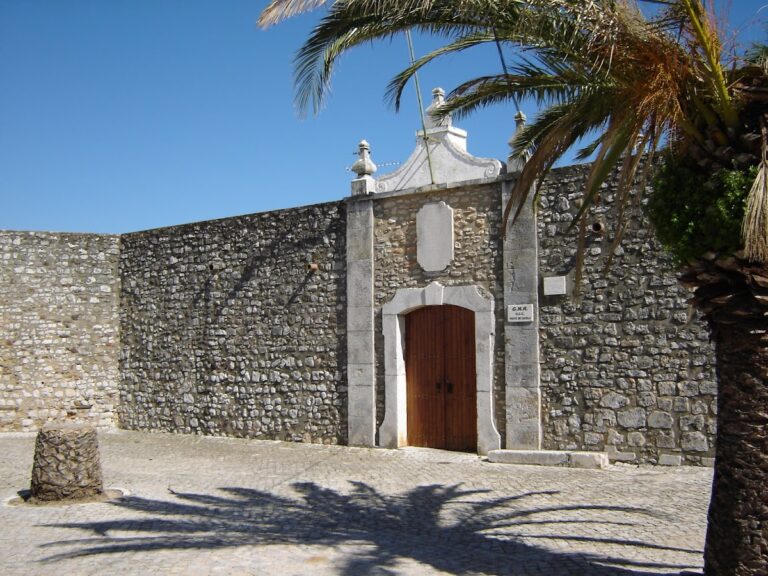
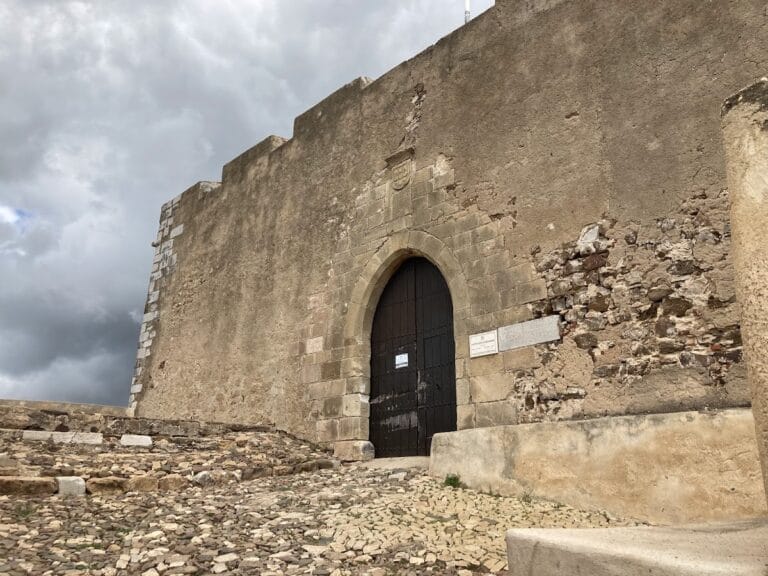
The Gate of Arms and sections of the ramparts have been consolidated and repaired since the 1980s. These works helped preserve the surviving military fabric of the former fortress, whose remains continue to express its original relationship with the landward approach and the river entrance.
Interior structures
Within the fort are the Troop Quarters, a powder magazine, and an open well. The interior has been cleaned and signposted, while the abandoned fortress survives as a former military structure with a present cultural function.
Nearby sites