Fortaleza de Nossa Senhora da Conceição: A Coastal Fortress in Póvoa de Varzim


Site at a Glance
- Rating
- 4.4
- Popularity
- Medium
- Country
- Portugal
- Primary era
- Early Modern
- External website
- Open
- Eras represented
- Early Modern, Modern
- Civilizations
- Portuguese
- Site type
- Military
- Remains
- Fort
On this page7 sections
History
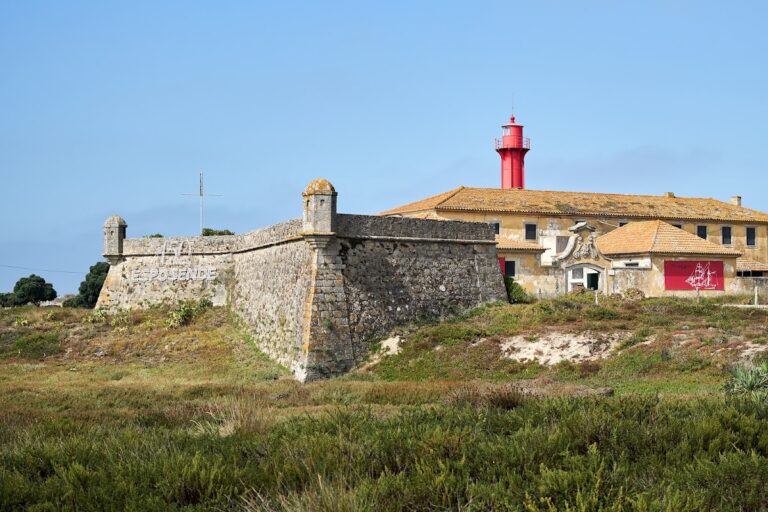
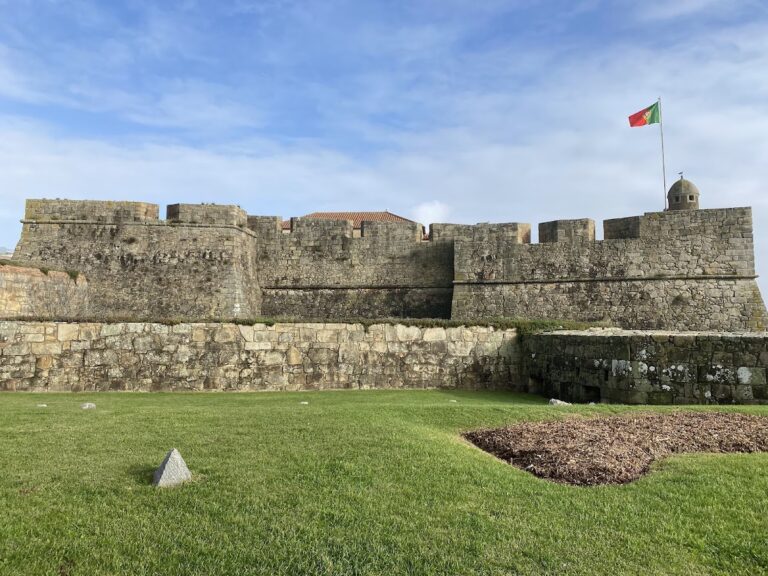
Fortaleza de Nossa Senhora da Conceição is an eighteenth-century coastal fortress in Póvoa de Varzim, Portugal, built as a quadrangular star fortification to defend the seaport. Also known as Castelo da Póvoa or the Fortress of Póvoa de Varzim, it replaced an earlier small fort and remains a listed property of Public Interest owned by the Republic of Portugal.
Forte de Torrão and the early defences
The fortress occupies the site of Forte de Torrão, traditionally believed to have been built in the fifteenth century during the reign of John I of Portugal. The smaller fort was still standing in 1685. Póvoa de Varzim Town Hall financed it to protect the local merchant community from privateer attacks. By that year, its garrison consisted of a lieutenant, a constable responsible for the fort’s defence, and two artillerymen, all appointed by the town hall.
Shipbuilding began to develop around the nearby Ribeira shipyard at the end of the sixteenth century, increasing the importance of protecting the seaport. At the end of the seventeenth century, the fort’s governor, João de Almeira Rêgo, proposed a larger and stronger fortress. Construction began in 1701 during the reign of Peter II, who ruled Portugal from 1667 to 1705, but stopped in 1703 because funding was insufficient.
Construction under John V
Work resumed in 1738 after John V ordered Diogo de Sousa, son of João de Sousa and Governor of Arms of Minho, to complete the project. John V, who reigned from 1705 to 1750, regarded the coastal fortification as important to the kingdom. Diogo de Sousa completed the fortress in 1740, and his family crest was placed above the gate on 22 October of that year, the monarch’s anniversary.
A chapel within the fortress became the centre of a brotherhood established by the Jesuits, members of the Society of Jesus, a Catholic religious order. At certain periods, the brotherhood had more than 2,000 members from Póvoa and the surrounding area. King Joseph suppressed it in 1761 when the Jesuits were expelled from Portugal.
Religious and military use
The fortress also formed part of local religious and civic ceremonies. During the Corpus Christi procession, a gun salute took place as the procession left through the gate. The terreplein, the level area behind a fortification parapet used by defenders and artillery, was a favoured place for local celebrations of Saint Peter.
During the Peninsular War, the conflict in Iberia from 1807 to 1814 in which Portugal, Spain, and Britain fought Napoleonic France, French troops captured the fortress and the nearby fortress of Vila do Conde in late March 1809. Marshal Jean-de-Dieu Soult led the invasion of Portugal described here. French forces controlled Póvoa de Varzim and Vila do Conde for almost two months before Soult retreated through the Marão and Gerês massifs in May to escape Anglo-Portuguese forces.
The fortress lost military importance during the nineteenth century. For much of the twentieth century, it served as a Guarda Fiscal barracks, and its buildings later housed the Fiscal Brigade of the Guarda Nacional Republicana. Because of this institutional use, access to the interior became restricted. In 2016, under the administration of Póvoa de Varzim City Hall, the fortress was recovered through an intervention that introduced contemporary architectural elements into its interiors, including a bar occupying the whole structure. A procession dedicated to Nossa Senhora da Conceição do Castelo continues to take place there annually on the night of 7 to 8 December.
Remains
Star-shaped defences
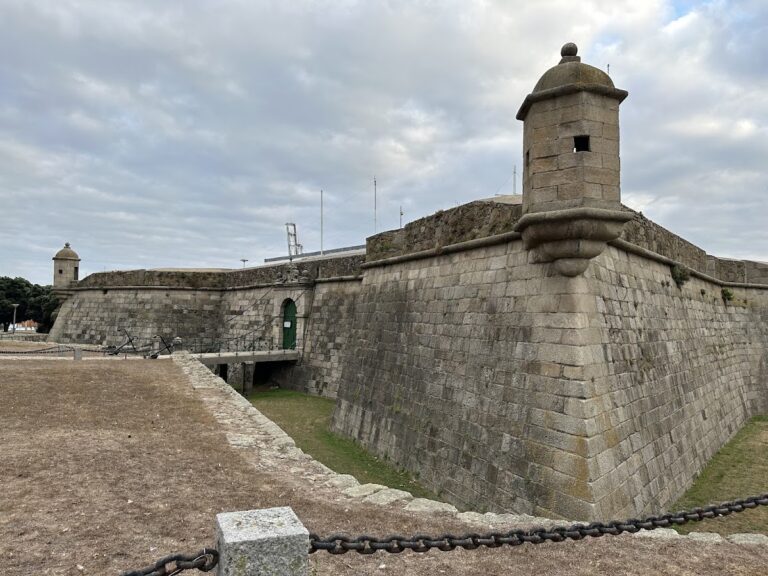
The surviving fortress has a quadrangular plan shaped by four projecting bastions, a defensive design that allowed overlapping fire along the walls. The Conceição and São Francisco de Bórgia bastions face the sea, while the São José and São Filipe e Diogo bastions face the land. Two groups of walls extend from the flanks of the seaward bastions and meet at a sharp angle toward the sea. These flanking walls rise 33 metres, while the resulting seaward group is 7 metres high and 60 metres long.
Chapel and interior structures
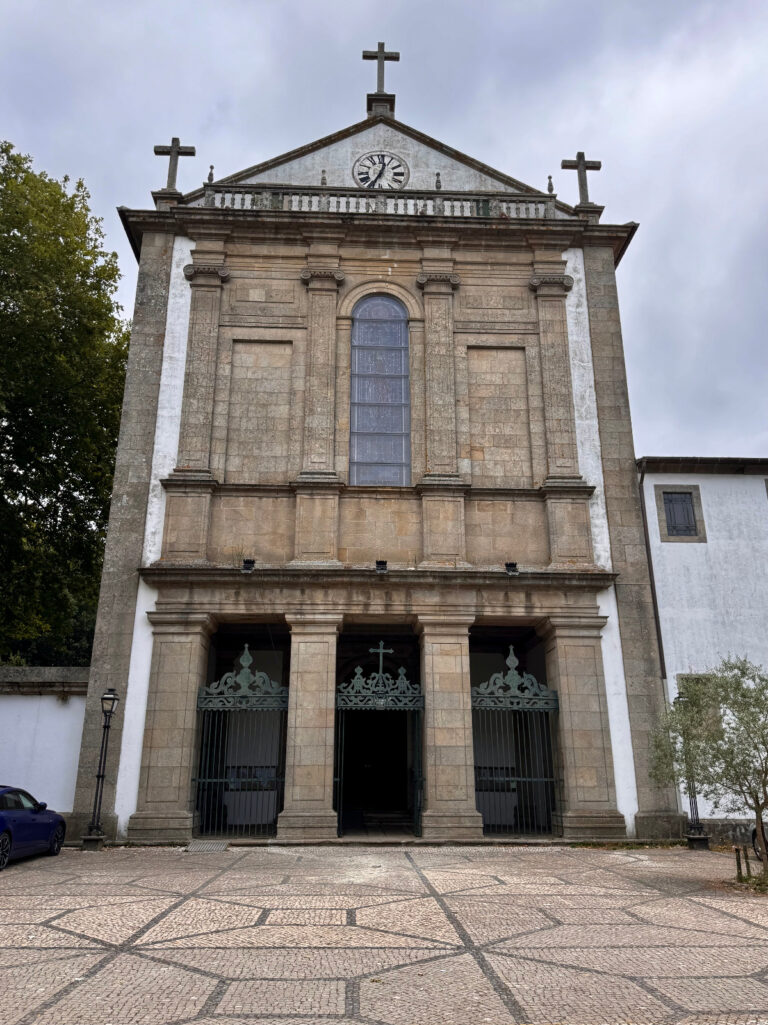
At ground level stands the Chapel of Our Lady of the Immaculate Conception, now called Capela de Nossa Senhora da Conceição do Castelo. Built in 1733 and formerly known as the Royal Chapel, it is very small and Baroque in style. Its stonework vault carries gilded woodcarving and includes a tabernacle. The chapel venerates Saint Barbara, the patron saint of artillery, as well as an image of the infant Jesus holding a heart associated with the former Jesuit congregation.
The interior also includes the terreplein and buildings adapted for later institutional and contemporary uses. These alterations form part of the fortress’s surviving physical fabric alongside its defensive walls and bastions.
Nearby sites