Fort Vera Cruz: A Seventeenth-Century Coastal Defence Fort in Portugal

Site at a Glance
- Rating
- 4.6
- Popularity
- Very Low
- Country
- Portugal
- Primary era
- Early Modern
- Eras represented
- Early Modern
- Civilizations
- Portuguese
- Site type
- Military
- Remains
- Fort
On this page6 sections
History
Fort Vera Cruz is a ruined seventeenth-century coastal fort in Portugal, built by the Portuguese around 1640 during the Restoration War. This conflict began when Portugal challenged Spanish Habsburg rule and restored its independent monarchy under the Braganza dynasty. The fort was probably constructed during the reign of King John IV, the first Braganza monarch, as part of the coastal defences near the important port of Lagos.
Defence of the Algarve coast
Also known as Fort Vera Cruz da Figueira or Figueira Fort, it belonged to a wider chain of coastal positions. The system included the forts of Meia Praia, Almádena, Zavial, Ponta da Bandeira, Pinhão, Ponta da Piedade, and Porto de Mós. Together, these works defended the coast near Lagos and the settlements and maritime approaches associated with it.
On May 4, 1670, North African pirates or privateers came ashore near the fort at night intending to attack Figueira. Local inhabitants, led by the fort’s officer Afonso Telo, detected the landing and defeated the attackers.
Decline and decommissioning
Laurent Brémont, an eighteenth-century cartographer associated with a map of the Algarve, depicted the fort on a map produced around 1760. Its military role later ended when a decree signed by Prince-Regent John on September 27, 1805, decommissioned the forts between Zavial and Meia Praia. Prince-Regent John later became King John VI.
By 1821, a bronze gun had fallen into the sea during a landslide. In 1940, the fort’s dependencies were offered for sale, but no buyer showed interest. Fort Vera Cruz is not classified as a Monument of Public Interest and lies within the protected area of the Southwest Alentejo and Vicentine Coast Natural Park.
Remains
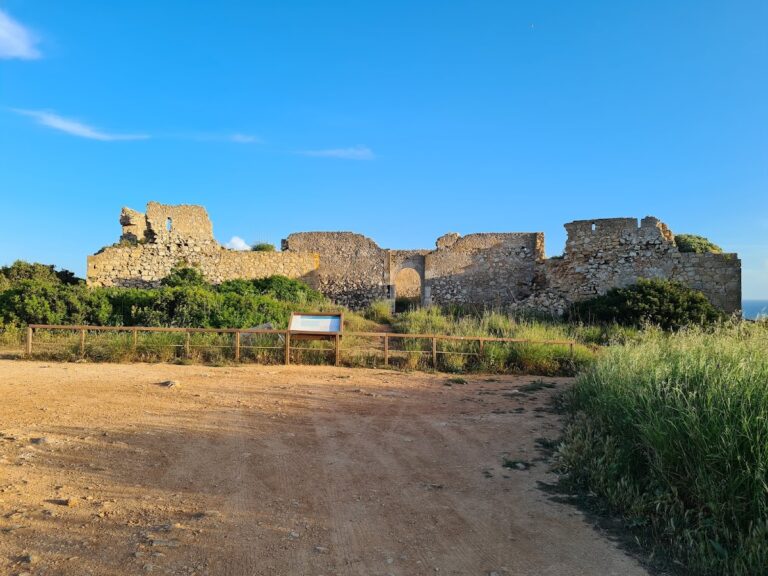
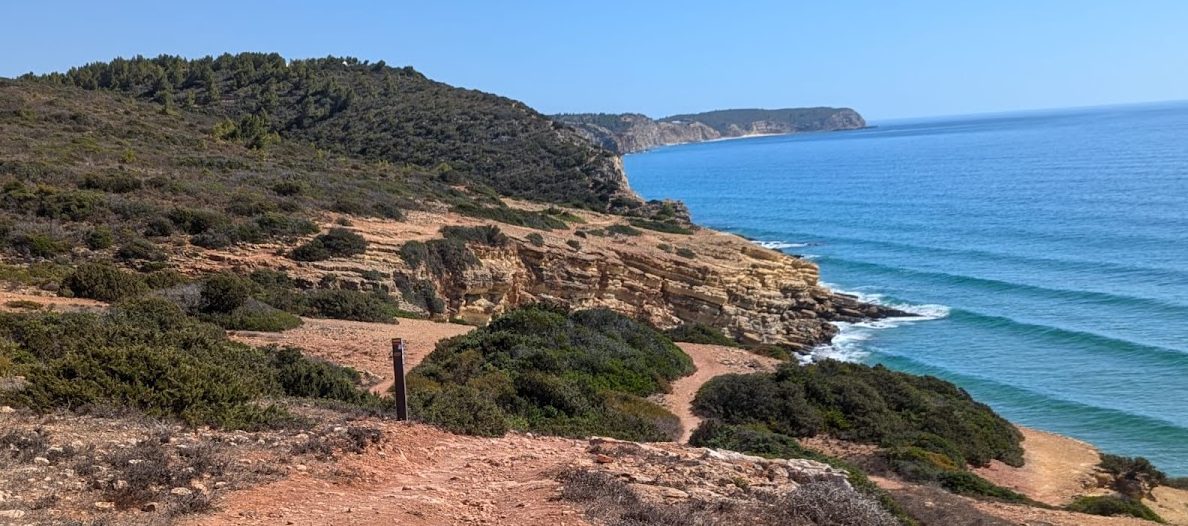
The ruined fort stands on the eastern side of Figueira Beach in Vila do Bispo, in Portugal’s Algarve. It was a small defensive work arranged with two artillery batteries, one positioned below the other. An artillery battery is a position designed to mount and operate one or more guns. The fort probably held four artillery pieces in total and also included quarters for its garrison.
Batteries and garrison
The surviving structure is in a ruined condition, but its arrangement as a compact fort with stepped artillery positions reflects its coastal defensive purpose. The two batteries provided the principal gun positions, while the associated quarters accommodated the soldiers responsible for operating and maintaining the fort.
Submerged artillery
Two artillery pieces originally installed inside Fort Vera Cruz were found underwater near the site. Father Themudo of the Figueira parish stated that the 1755 earthquake sent the guns into the sea. One was made of bronze and the other of iron, and they remained beneath rocks in the surf. Their recovery connects the surviving ruins with the fort’s former armament and with the physical damage caused by the earthquake.
Nearby sites