Fort of Almádena: A Seventeenth-Century Coastal Defence Fort in Portugal


Site at a Glance
- Rating
- 4.3
- Popularity
- Low
- Country
- Portugal
- Primary era
- Early Modern
- Eras represented
- Early Modern
- Civilizations
- Portuguese
- Site type
- Military
- Remains
- Fort
On this page6 sections
History
The Fort of Almádena is a Portuguese coastal fortification between Salema and Burgau in Portugal’s Algarve, built in 1632 during the Philippine Dynasty. This was the period from 1581 to 1640 when Portugal was ruled by the Spanish Habsburg monarchs, who also used the regnal name Philip. The fort was established to protect the area’s tuna fishery from privateers and pirates.
Construction under Philip III
The fort was built during the reign of Philip III of Portugal, the Habsburg monarch who ruled Portugal from 1621 to 1640. Luís de Sousa, 2nd Count of Prado and Governor and Captain General of the Kingdom of Algarve, ordered the construction and paid for the work. The new fortification stood over the ruins of an older defensive site, which has been variously identified as Roman or as a Muslim ribat, a fortified Islamic religious and military establishment often associated with frontier or coastal defence.
Military use and later changes
Fishermen initially manned the Fort of Almádena. The fort suffered damage during the earthquake and ensuing tsunami of 1 November 1755, although the effects were less severe than at other forts in the Algarve. A naval battle between English and French forces took place nearby in 1759.
Soldiers occupied the fort during the Portuguese Civil War of 1828–1834, a conflict over the country’s political succession and form of government. In the middle of the nineteenth century, soldiers of the 15th Infantry Regiment of Lagos used it as shelter while carrying out coastal surveillance, including attempts to control tobacco smuggling. The fort lost its military function and was abandoned in 1849.
Ownership and preservation
Ownership passed to the Portuguese Ministry of Finance in 1940 and to the Municipality of Vila do Bispo in 1946. The municipality remains the owner. The fort is in poor condition and has undergone only partial restoration, while improvements to the surrounding area received partial funding from the European Union.
Remains
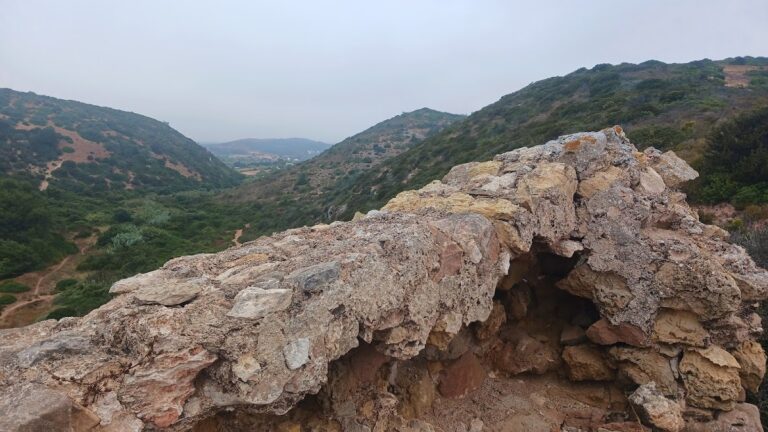
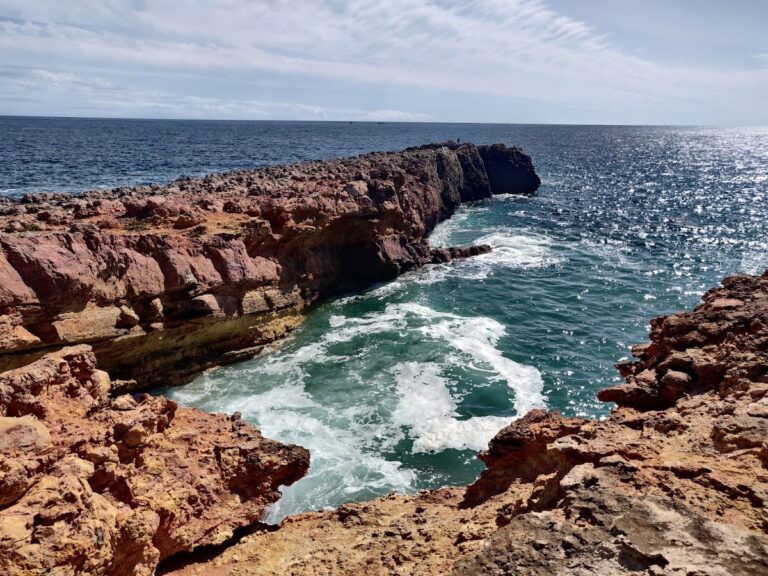
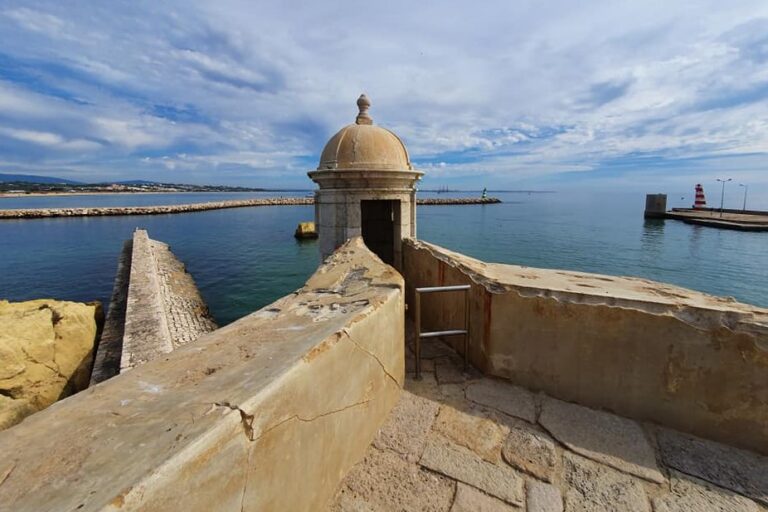
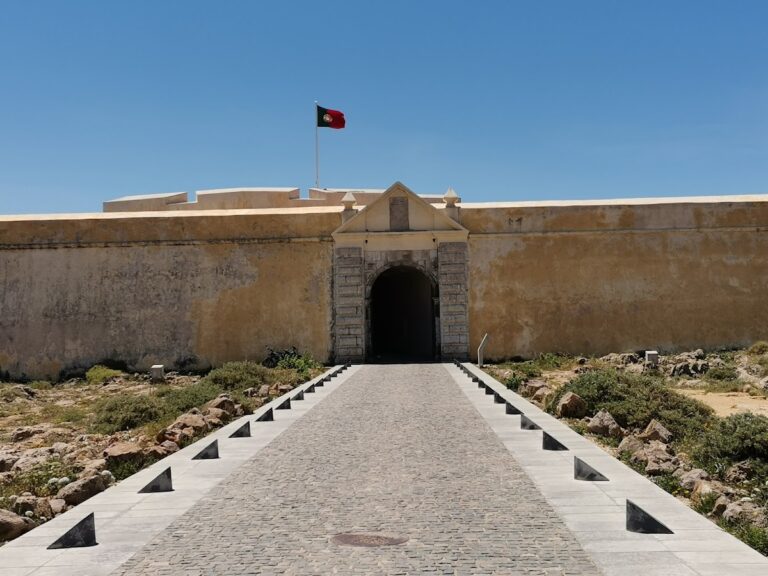
The Fort of Almádena occupies a cliff 78 metres above sea level and follows a polygonal plan. Its defensive arrangement included two ramparts, defensive walls or embankments, together with a moat crossed by a drawbridge and two artillery batteries. A battery was a fortified position designed to house and operate guns.
Buildings and defensive features
The complex contained military barracks and a chapel that also functioned as a watchtower. The entrance formerly carried an inscription stone, which is now held at the Lagos Regional Museum. The surviving fortification is in poor condition and has been only partly restored.