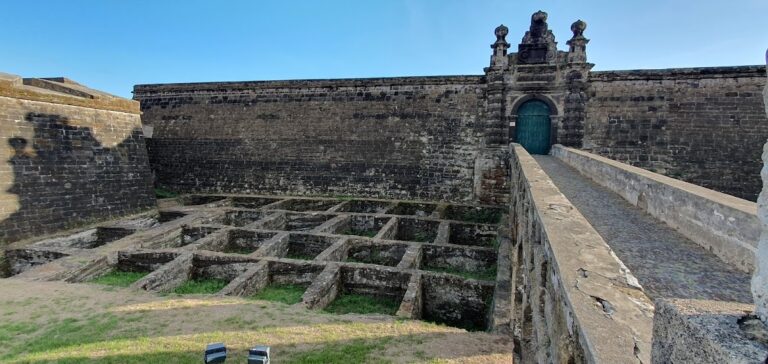
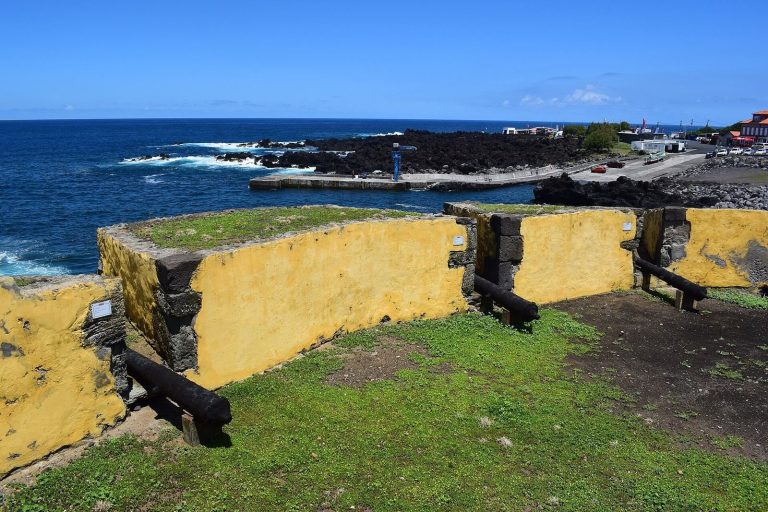
Fort of the Espírito Santo: A Sixteenth-Century Coastal Fortification in Portugal
Site at a Glance
- Rating
- 3.8
- Popularity
- Very Low
- Country
- Portugal
- Primary era
- Early Modern
- Eras represented
- Early Modern
- Civilizations
- Portuguese
- Site type
- Military
- Remains
- Fort
On this page9 sections
History
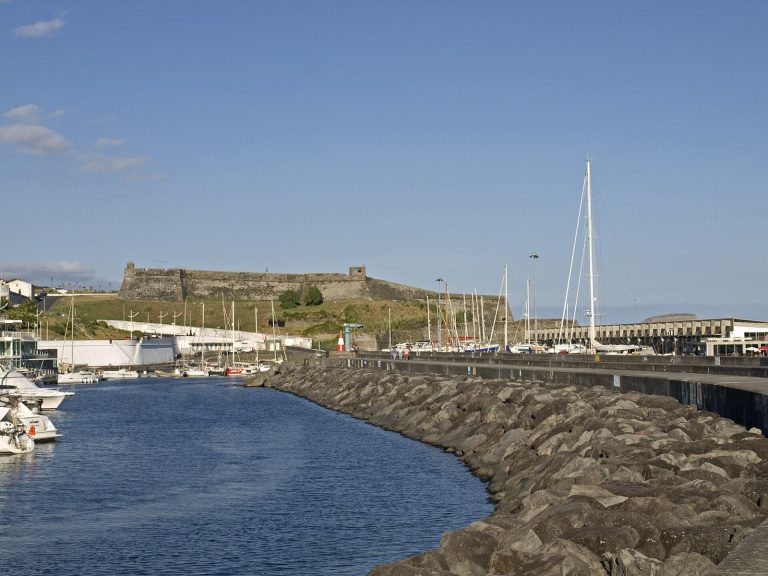
The Fort of the Espírito Santo is a sixteenth-century Portuguese coastal fortification in Praia da Vitória, Portugal, erected in 1576 in the bastion tradition to defend the Bay of Praia. Ciprião de Figueiredo e Vasconcelos, the corregedor of the Azores and a senior royal judicial and administrative official, ordered its construction according to defensive plans first prepared by the military engineer Tommaso Benedetto. Built into the cliffs at the northern edge of the bay, it protected the anchorage from pirates and corsairs operating in the mid-Atlantic.
Defence of the Bay
The fort was intended particularly to counter attacks on ships returning from the newly discovered territories of the Far East. Its guns worked together with those of the Fort of Nossa Senhora da Conceição and the Fort of the Port on the opposite side of the bay, creating crossed fields of fire across the anchorage.
During the War of the Spanish Succession, the European conflict fought from 1702 to 1714 over the succession to the Spanish throne, the fort appeared under the name “Fortress of the Holy Spirit on the Point of Facho” in a report of 1710. António Cordeiro wrote in 1717 that it had eleven artillery pieces made of iron and bronze.
Eighteenth-Century Repairs and Nineteenth-Century Conflict
A report from 1776 called the fort the last and principal defensive work in the bay. It also listed several necessary repairs. The guardhouse needed attention, the fort required grout, the garrison cots had to be replaced, and the wooden ceiling needed repair. The small powder-magazine building required a roof and lacked a door. Artillery was stored inside it during the winter.
The fort was included on a plan of Praia made in 1805. Around 1822, the port was described as reasonably defended by the Fort of the Holy Spirit, whose defence had been assigned to a local regiment of National Militia.
Its most severe recorded military action came during the Liberal Wars, the nineteenth-century Portuguese civil conflicts between constitutional liberals and supporters of absolute monarchy. On 11 August 1829, an Absolutist squadron attacked the fort. Ensign Manoel Franco commanded eight artillerymen and four auxiliaries, but the garrison possessed only two cannons. Continuous bombardment silenced the position, while rocks falling from the cliff damaged the structures and compelled the soldiers to withdraw.
On the same day, forces loyal to Miguel I of Portugal, the principal absolutist claimant and ruler during the attack, landed between the Fort of the Port and the Fort of the Espírito Santo. A small Liberal contingent halted their advance, causing the invading troops to converge on the fort and occupy its terreplein, the level platform behind a fortification’s parapet used by artillery and defenders. About 400 soldiers took the position and attempted to climb the escarpment toward the dominant ground above the cliffs of Serra de São Tiago. They were repelled and massacred while attempting to seize the semaphore station at the summit, a signal post used for visual communication.
Decline and Later Investigation
By 1881, the fort had fallen into ruin, and its wall stones were being systematically sold for use in other buildings. Its military role had therefore ended, while the physical fabric continued to be dismantled.
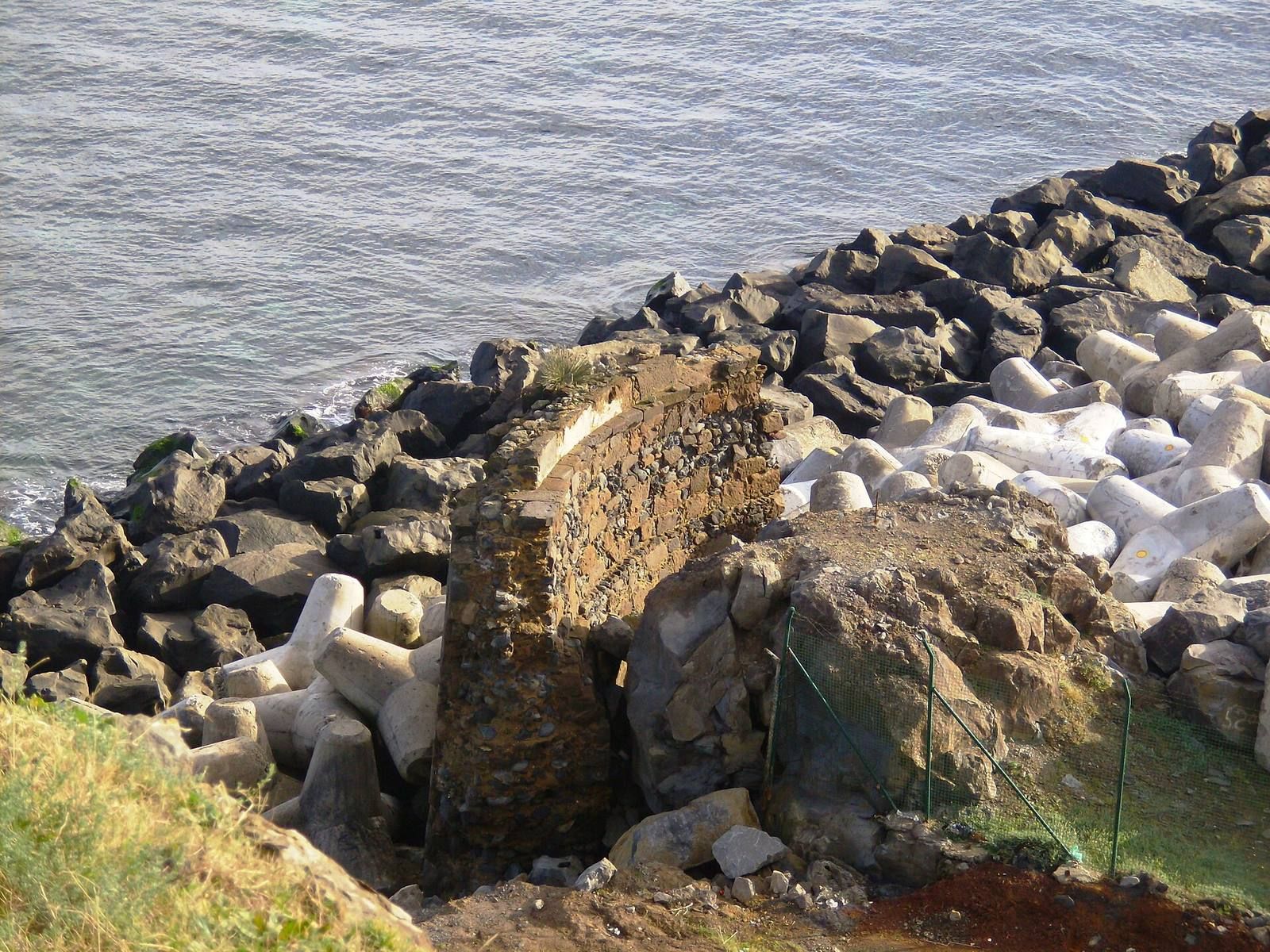
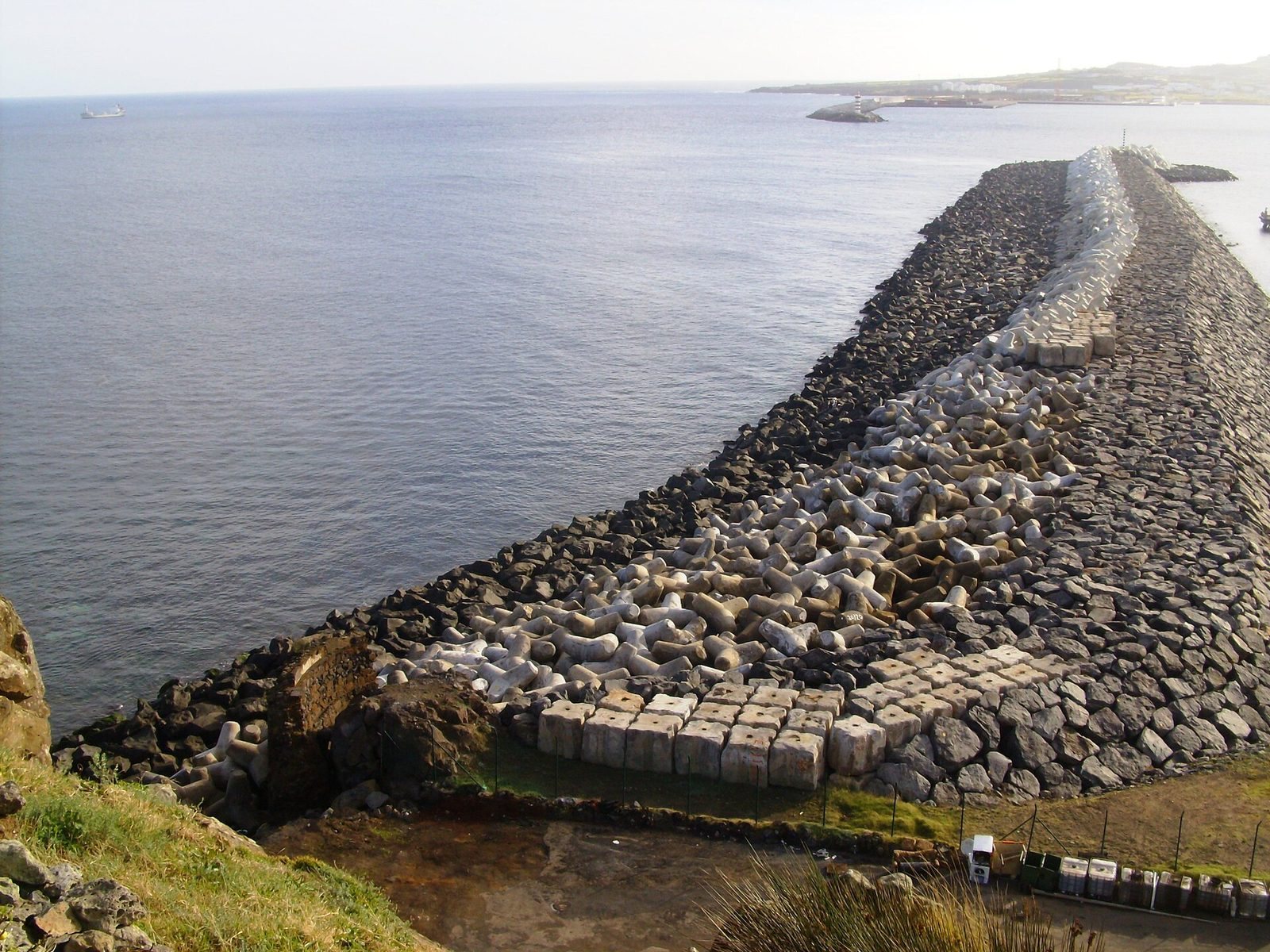
The ruins were investigated further during the construction of the northern protective pier by American military forces in the 1950s and 1960s. An agreement permitted the dock to be built on the condition that the old fort would be reconstructed, but that reconstruction was not completed. During the 1960s, the remaining structures were used to support the escarpment at the end of the bay, between Chagas and Ribeira de Beljardim.
A local tradition maintains that the fort’s royal coat of arms was reused in the construction of Praia’s municipal council hall. This tradition has not been proven.
Remains
The Fort of the Espírito Santo occupied the Point of Facho at the extreme northern edge of the Bay of Praia da Vitória, in the civil parish of Santa Cruz on Terceira Island. Its plan followed the natural relief of the cliff, giving the small defensive work a commanding position over the coastal stretch. The fort had an irregular polygonal layout, was built from mortar and natural basalt, and covered approximately 500 square metres. Its surviving remains consist mainly of sections of stone walling incorporated into the northern protective pier that shelters shipping and refuelling vessels supporting Lajes Air Field.
Fortification Layout
Walls and artillery positions
The fort was a small bastion-type work. A bastion is a projecting part of a fortification that enables defenders to fire along the faces of its surrounding walls. In 1776, the seaward walls contained six cannon emplacements, with another emplacement directed toward the town. The original arrangement had capacity for seven artillery pieces, while by 1881 the position supported a battery of five cannons.
Guardhouse and powder magazine
Inside the terreplein stood a two-volume guardhouse and a small powder-magazine building set against the western wall. Access was from the beach, linking the landing point directly with the fortified platform. The powder magazine housed artillery during the winter, and the 1776 report drew attention to its roof and door, as well as to repairs required elsewhere in the fort.
Surviving Stonework
Only portions of the stone walls and associated structures survive as part of the later pier and escarpment works. Their present setting reflects the fort’s earlier adaptation to the cliff and its later incorporation into coastal infrastructure. The unfinished reconstruction agreed during pier construction left the surviving fabric as fragmentary remains rather than a restored fortification.