Fort Pembroke: A British Defensive Fort in Malta
Site at a Glance
- Popularity
- Medium
- Country
- Malta
- Primary era
- Modern
- Eras represented
- Modern
- Civilizations
- British
- Site type
- Military
- Remains
- Fort
On this page9 sections
History
Fort Pembroke is a British defensive fort in Pembroke, Malta. Construction began on 24 January 1875 and was completed in December 1878, to defend Grand Harbour and part of the Victoria Lines, Malta’s defensive line of fortifications.
Planning and construction
A defence committee recommended the fort in 1873. British construction began two years later, and the completed fort entered military service in 1878.
Military service and changing use
Fort Pembroke served in the British military system until the military establishments at Pembroke closed in 1978. By the mid-1890s, its guns were considered obsolete. Instead of updating the fort’s armament, the British built the nearby Pembroke Battery. The fort was then used as an ammunition depot, including for small-arms ammunition.
During the Second World War, the fort was used as a prisoner-of-war camp for German prisoners.
School and heritage protection
After its military closure in 1978, the fort remained unused until 1987, when Verdala International School moved there from Fort Verdala. The school grew from 110 students to more than 500 by 2024, and its campus came to include nearby barrack blocks.
Malta’s planning authority scheduled the fort as a Grade 1 national monument in 1996. In 2009, the protection was extended to the surviving outer defensive earthwork.
Remains
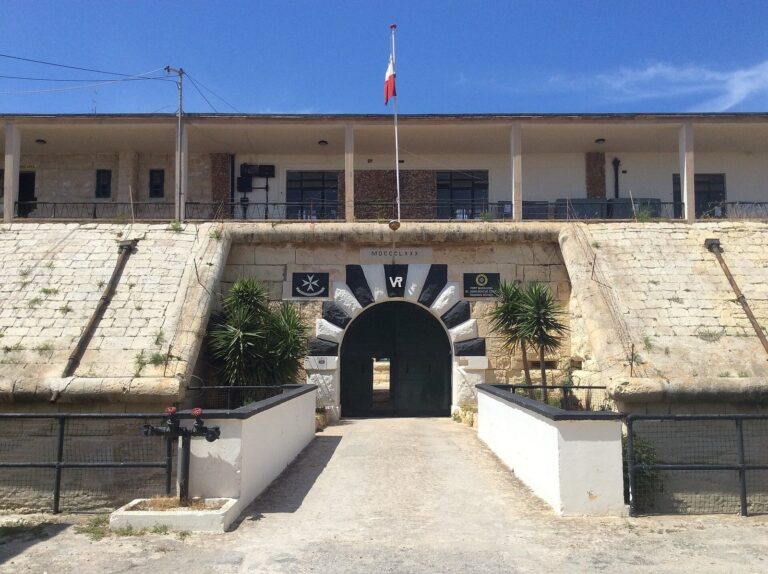
Fort Pembroke is an elongated, hexagonal polygonal fort built of limestone and concrete. Its structure is described as intact, with exterior defensive works, underground spaces and a modified entrance.
Fort layout and defensive features
Exterior works
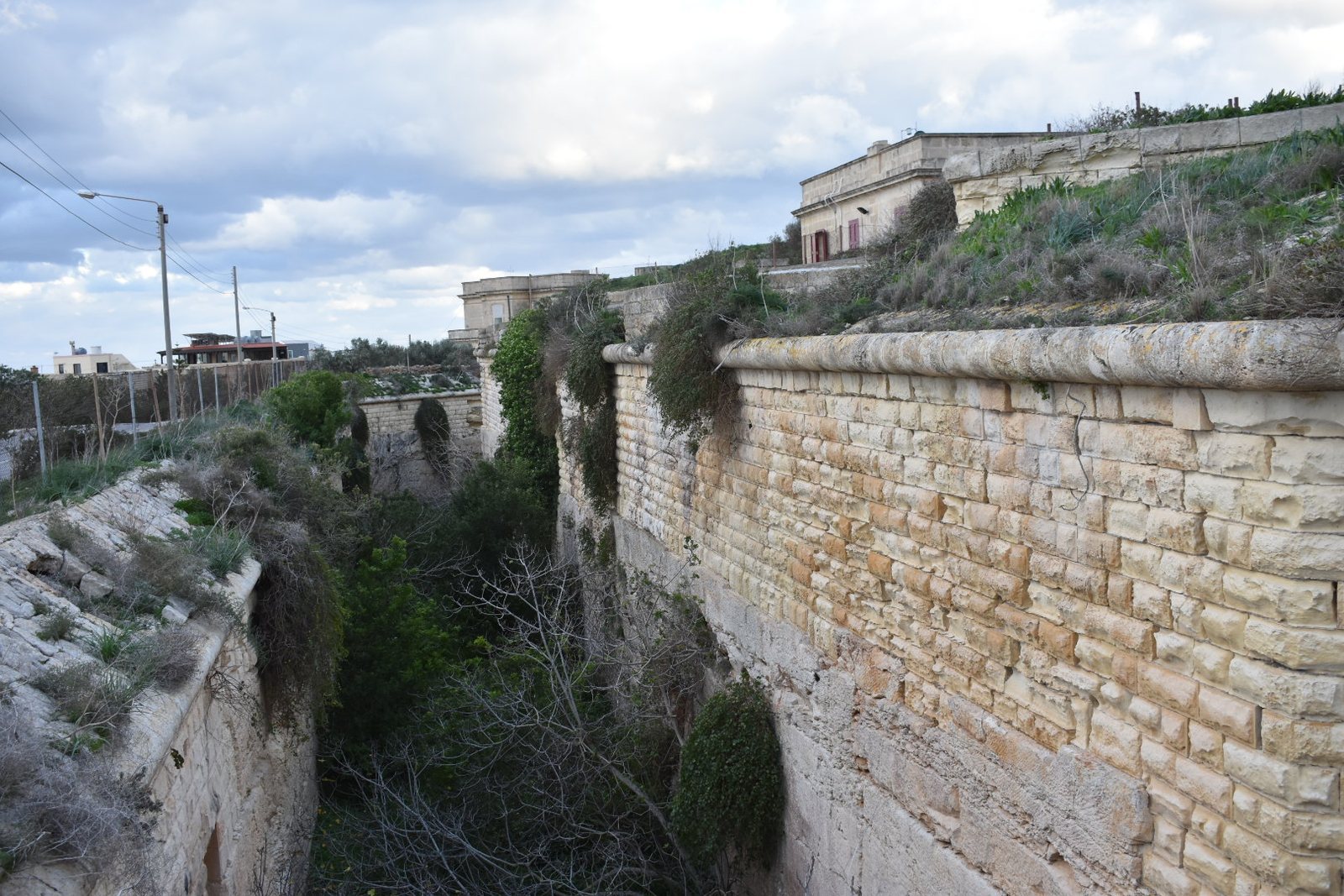
A ditch and glacis, a sloping defensive earthwork outside a fort, surround the structure. Together, these form its outer defensive works.
Interior and armament
Underground magazines provided ammunition storage, while vaulted, protected rooms housed the garrison. The fort’s original armament comprised three 11-inch guns weighing 25 tons each, loaded from the muzzle and with grooved barrels to spin their projectiles, and one 64-pounder. The guns were mounted to fire over a parapet rather than through an opening in it.
Entrance
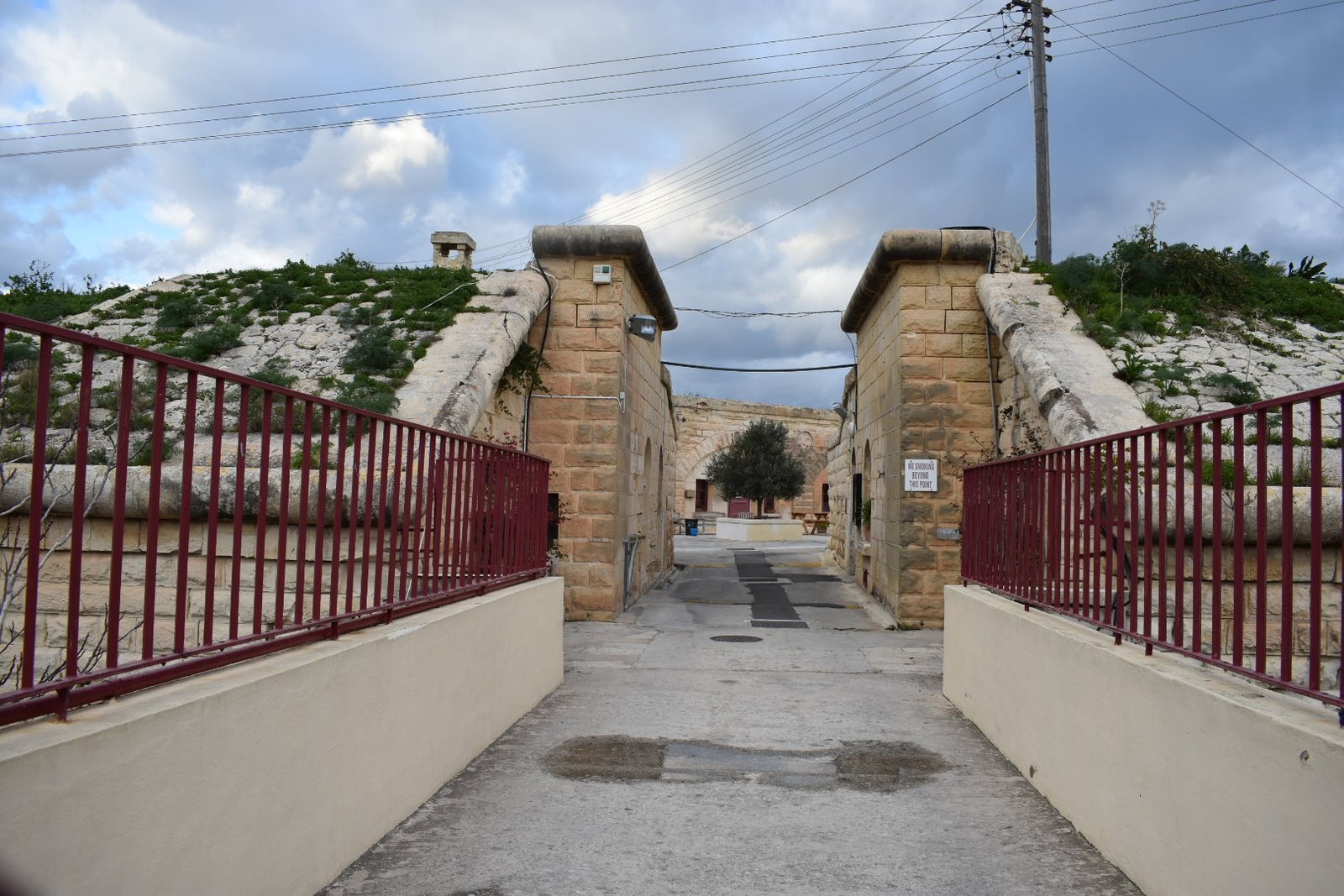
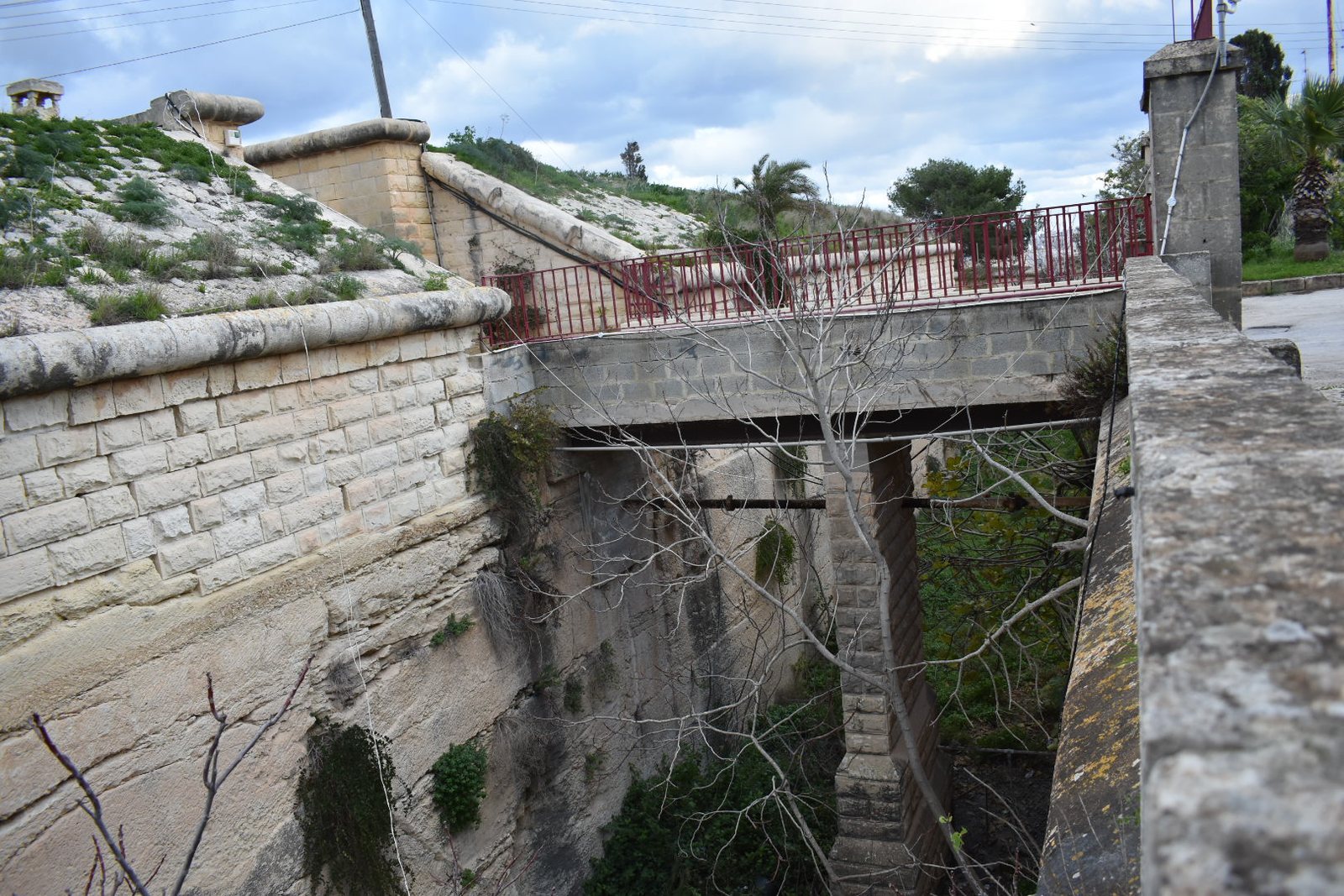
The entrance gate was widened, and the original rolling bridge was replaced with a fixed metal bridge.